 English
 Español
 عربى
عربى

Outdoor Weather-Resistant GRC Roman Columns are designed to combine classical elegance with modern d...
READ MOREMay 17, 2026
Content
Modern roads, parking areas, commercial plazas, industrial yards, and pedestrian zones demand drainage systems that do more than move water away from the surface. They must support daily traffic, reduce slipping hazards, resist abrasion, simplify maintenance, and maintain a clean architectural appearance. The anti-slip and wear-resistant linear drainage channel is designed for these conditions, combining efficient water collection with durable construction and practical installation features.
As part of a professional drainage channel series, this product is engineered for projects where safety, performance, and long service life are essential. Its linear structure quickly collects surface water along extended paved areas, while its anti-slip grating surface helps protect pedestrians, cyclists, maintenance workers, and vehicles in wet conditions. Compared with ordinary open drains or low-grade drainage channels, it offers a more integrated solution for water management, load-bearing reliability, and long-term site value.
Jiangsu Yameng Traffic Road Facilities Co., Ltd. develops and supplies drainage ditch products, cover plates, linear drainage channels, finished drainage ditches, polymer-based drainage ditches, slot drainage ditches, U-shaped drainage ditches, ductile iron cover plates, stainless steel stamped cover plates, steel gratings, resin concrete cover plates, composite manhole covers, stainless steel manhole covers, ductile iron manhole covers, drainage pipes, PE pipes, and related products. The company also supports GRC customization with professional design, mold development, CNC engraving, production, construction assistance, and after-sales service.
The anti-slip and wear-resistant linear drainage channel reflects this broad manufacturing and project-service background. It is not only a drainage component; it is a site safety product, a durability product, and a construction-efficiency product. For contractors, developers, municipal planners, and facility managers, it provides a reliable way to reduce surface water accumulation while preserving a durable and orderly paved environment.
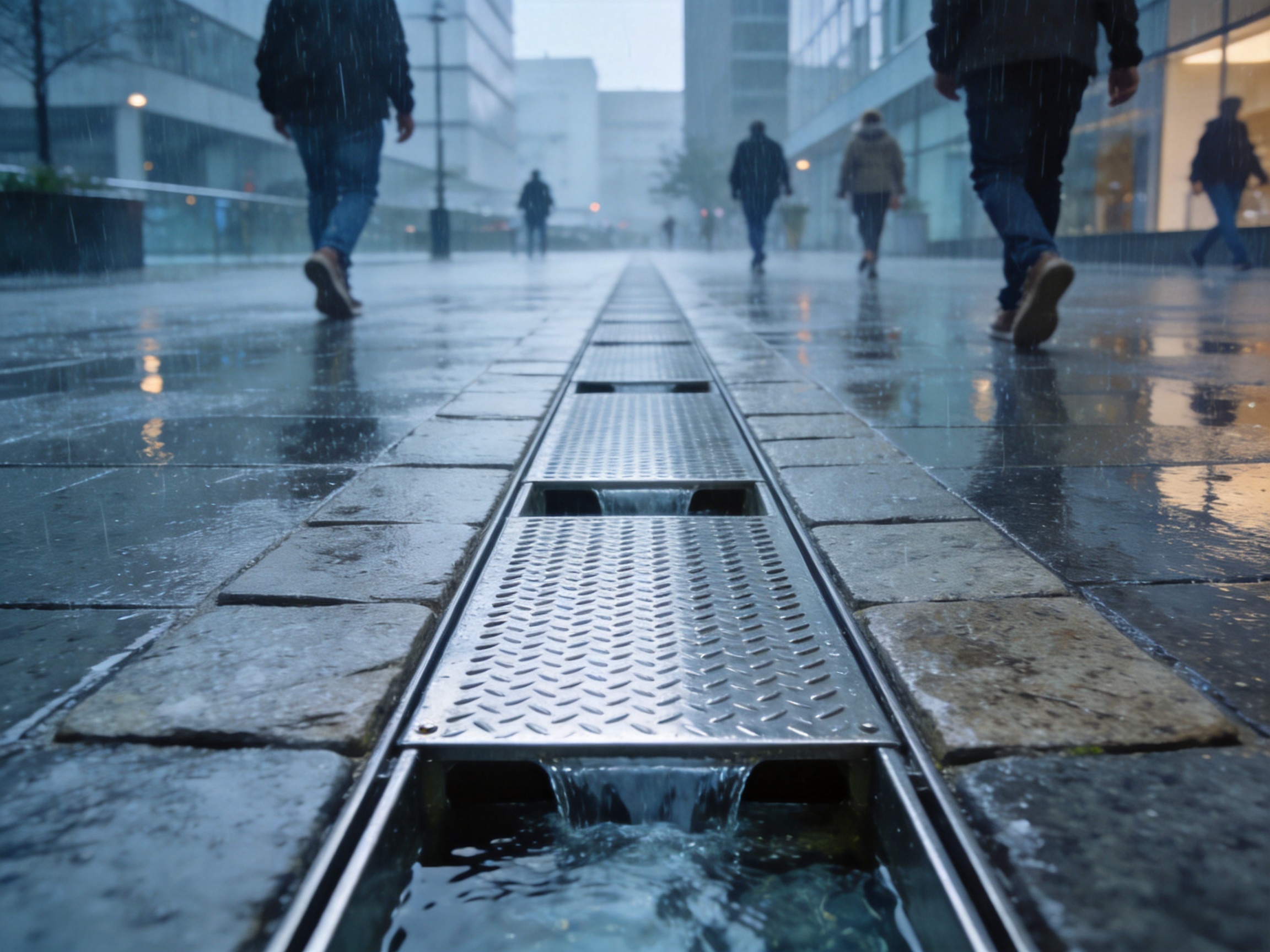
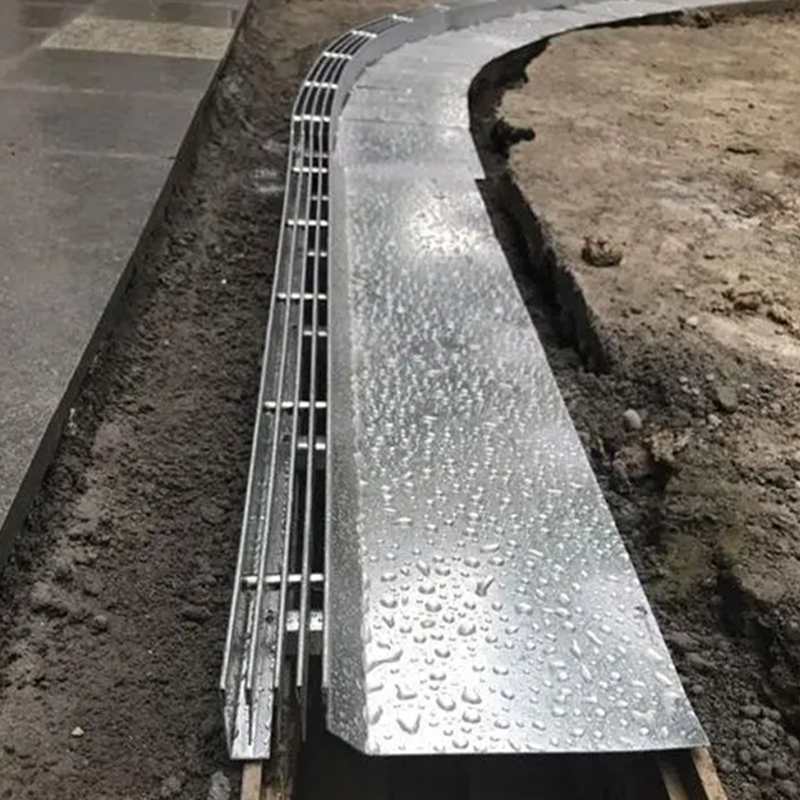
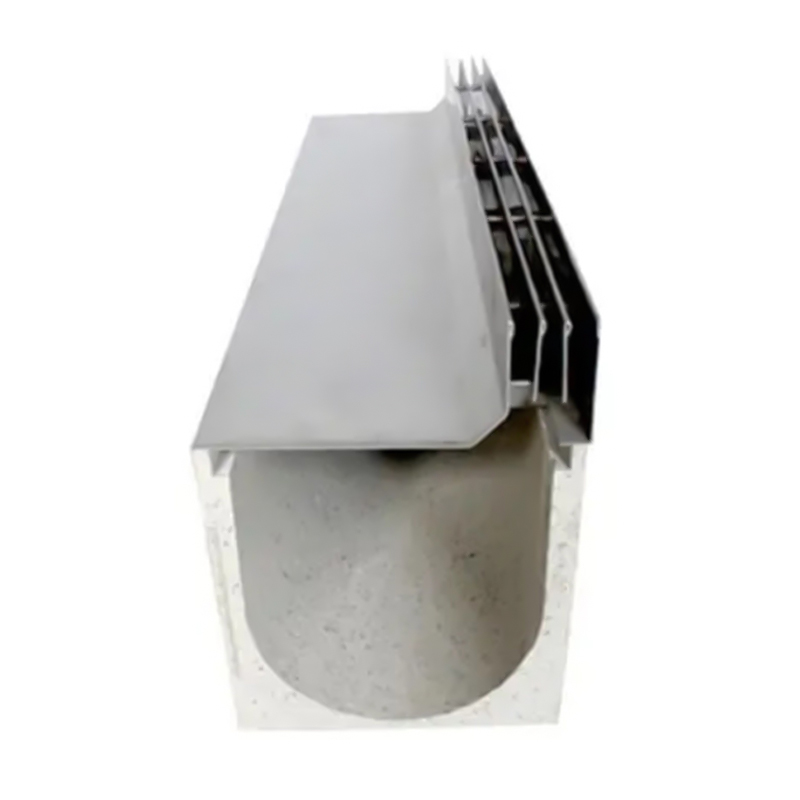
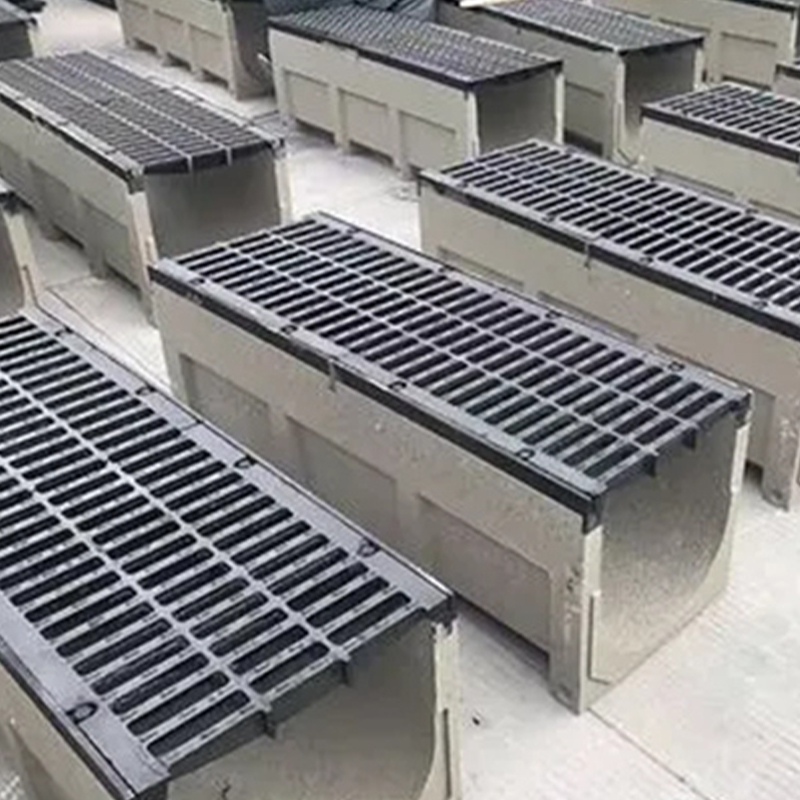
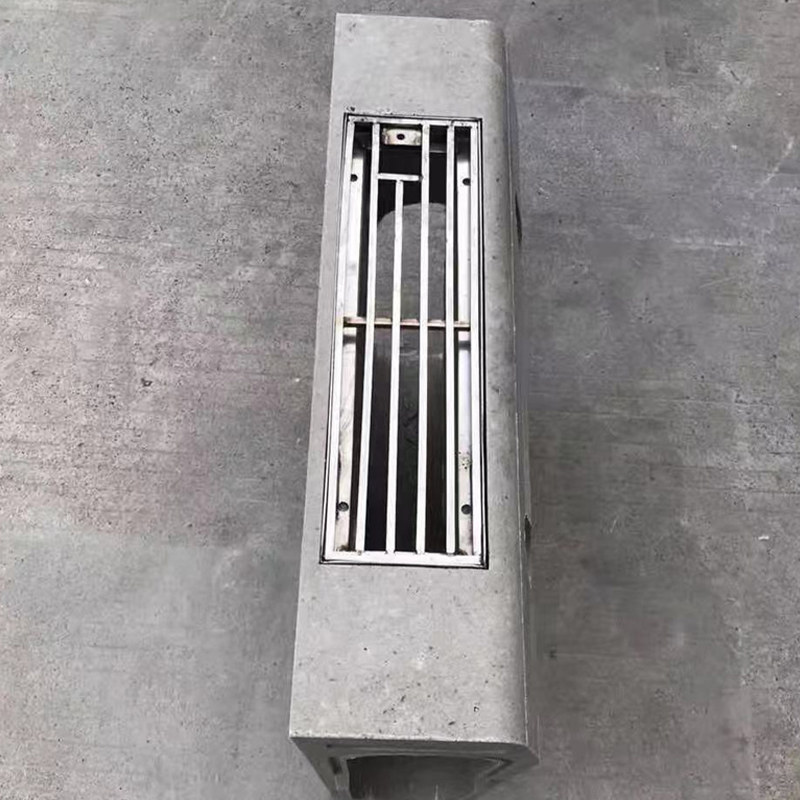
The anti-slip and wear-resistant linear drainage channel is a high-performance drainage system designed to collect, guide, and discharge surface water in a controlled manner. It is especially suitable for environments exposed to frequent rainfall, wash water, runoff from paved surfaces, and repeated pedestrian or vehicle movement. The channel body creates a continuous drainage path, while the grating or cover plate allows water to enter efficiently without leaving a large open trench on the surface.
The product is commonly used in sidewalks, pedestrian streets, parking lots, driveways, commercial complexes, industrial workshops, factory yards, logistics parks, urban road edges, plazas, municipal renovation projects, and other areas requiring fast water discharge. In these locations, drainage failure can lead to ponding, slippery surfaces, pavement deterioration, traffic interruption, and increased maintenance costs. A linear drainage channel helps avoid these problems by collecting water across a long surface line rather than relying only on scattered point drains.
The anti-slip design is an important advantage. In wet conditions, smooth metal or concrete surfaces can become dangerous. The grating structure of this drainage channel is designed to provide traction and reduce slipping risk. This is especially valuable in pedestrian areas, commercial entrances, public transport access zones, and industrial workplaces where people may walk quickly, carry goods, or operate equipment during rainy conditions.
Wear resistance is another major performance feature. Drainage channels installed in vehicle areas may experience tire friction, sand abrasion, chemical exposure, temperature variation, and repeated loading. Low-quality drains may crack, deform, loosen, or lose surface texture after extended service. By using reinforced polymer concrete, stainless steel, ductile iron, resin concrete, or other suitable materials according to project requirements, the product is designed to withstand demanding use while maintaining structural stability.
Traditional drainage methods often depend on slope direction and individual catch basins. While these methods can be effective in some projects, they may not perform well in wide paved areas, flat sites, or places with concentrated runoff. Water may travel a long distance before reaching a drain, creating puddles and increasing the risk of hydroplaning, slipping, or pavement damage. Linear drainage channels solve this issue by collecting water along an extended line, reducing the distance water needs to flow across the surface.
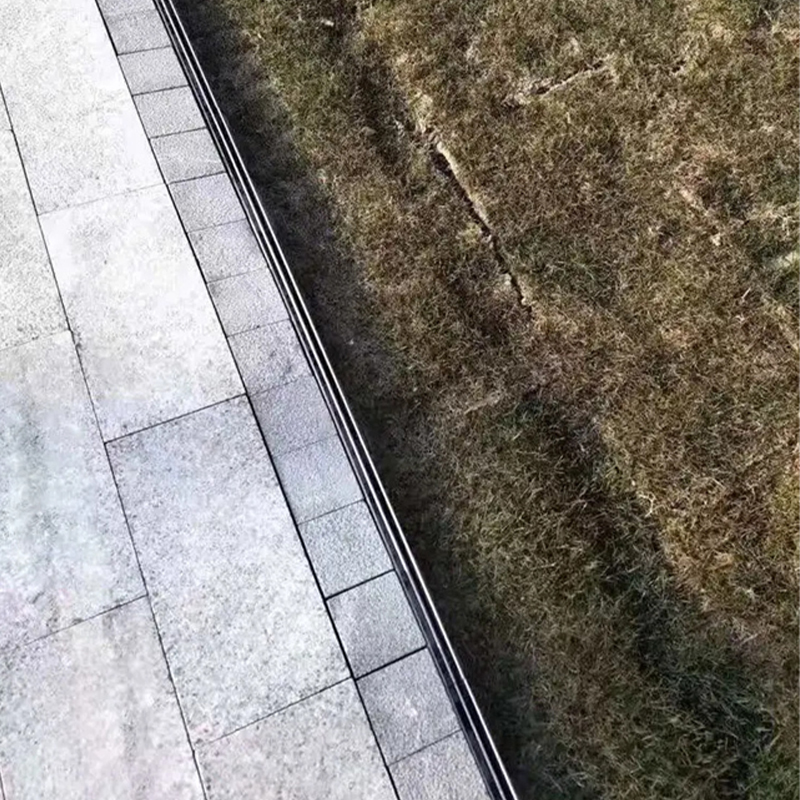
In urban design, linear drainage also supports cleaner visual planning. A long, narrow drainage line can be integrated with paving patterns, curbs, entrances, and landscape layouts. It can be positioned along road edges, building thresholds, parking aisles, pedestrian corridors, or industrial equipment zones. This makes it easier to combine technical drainage performance with architectural order.
In commercial projects, drainage performance is directly related to user experience. Customers and visitors notice puddles near entrances, slippery crossings, and poorly maintained grates. A reliable drainage channel can help preserve a dry, safe, and professional environment. In industrial sites, drainage affects worker safety, vehicle movement, cleaning operations, and production continuity. In municipal road projects, it protects pavement layers and reduces the burden on maintenance teams.
The anti-slip and wear-resistant linear drainage channel is therefore not just a construction accessory. It is part of a larger surface-water management strategy. By improving the speed, safety, and durability of water removal, it contributes to better infrastructure performance and lower lifecycle costs.
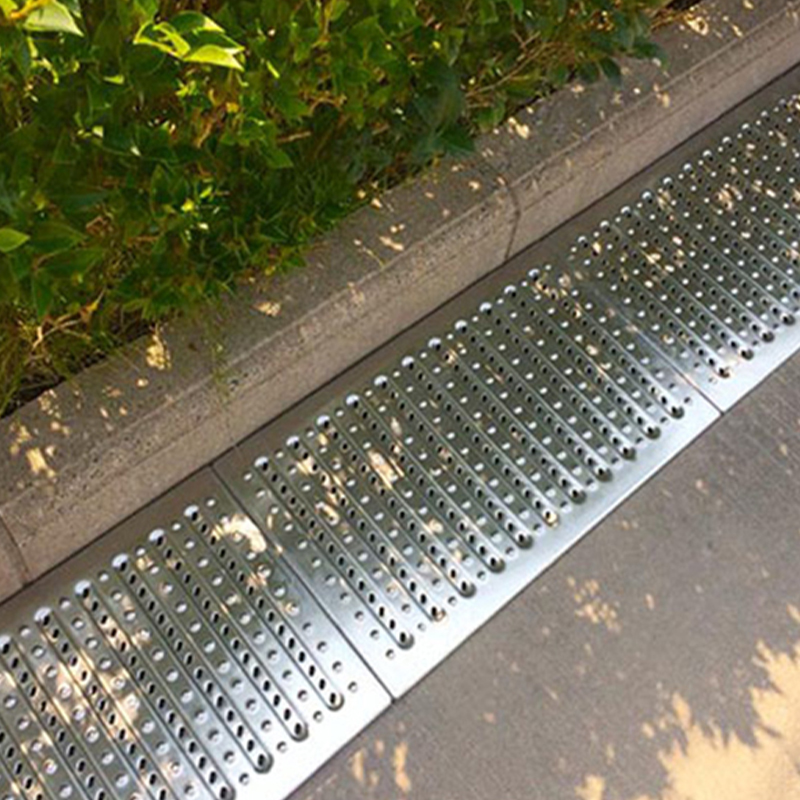
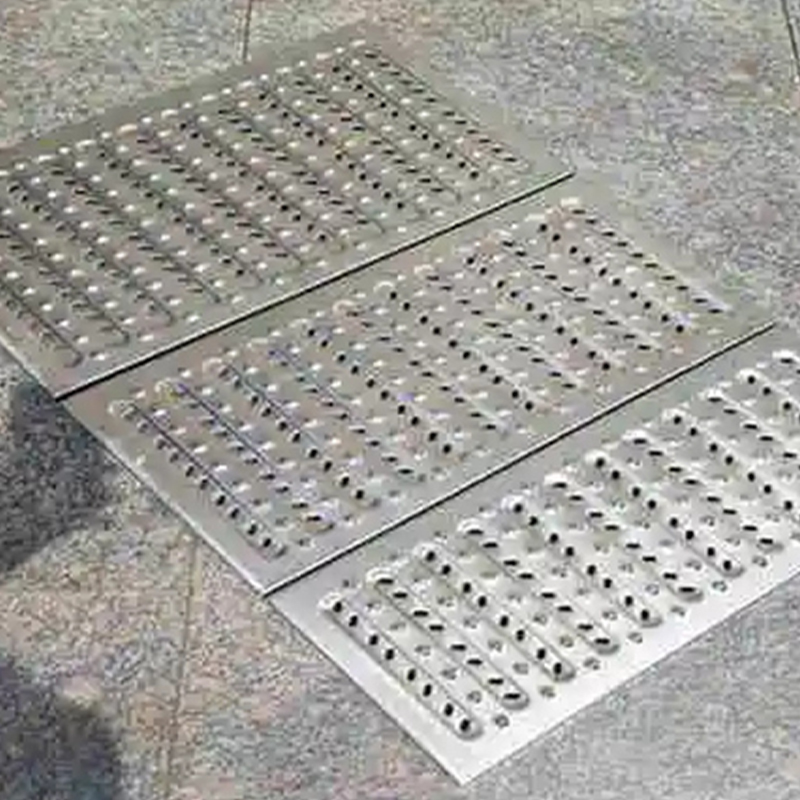
The anti-slip surface is one of the most important features of this drainage channel. The grating pattern is designed to provide friction and stable contact under wet conditions. This helps reduce slipping risks for pedestrians and improves tire contact for light vehicles, carts, bicycles, and maintenance equipment.
In many public and commercial areas, safety requirements continue to increase. Property owners, municipal authorities, and project contractors need drainage systems that reduce hazards instead of creating new ones. A smooth, low-friction cover may allow water to enter, but it may also become dangerous when wet. The anti-slip surface of this product is developed to balance drainage efficiency with safe passage.
This advantage is particularly relevant for sidewalks, pedestrian zones, shopping centers, building entrances, ramps, bus stops, and other places where people frequently walk across drainage lines. It also supports safer operation in industrial areas where workers may move across wet floors while carrying tools or materials.
Wear resistance determines whether a drainage channel can maintain its performance over years of service. Surfaces exposed to foot traffic, tires, grit, and environmental chemicals can deteriorate if the material is weak. When grates become polished, bent, corroded, or cracked, both safety and drainage performance are reduced.
The anti-slip and wear-resistant linear drainage channel can be manufactured with materials selected for abrasion resistance and load performance. Reinforced polymer concrete can provide a strong, corrosion-resistant channel body with smooth hydraulic performance. Stainless steel can provide an attractive, hygienic, and corrosion-resistant surface for commercial or specialized environments. Ductile iron and steel grating options can be selected for heavier vehicle areas where strength is a priority.
By matching the material to the application, the product can provide dependable service in different environments. This flexibility gives it an advantage over one-size-fits-all drainage products that may be either under-designed for heavy use or unnecessarily expensive for moderate-duty areas.
Drainage efficiency depends on channel geometry, cover opening design, inlet capacity, slope arrangement, and outlet connection. The linear drainage channel is engineered to collect runoff rapidly from paved surfaces and guide it toward the drainage outlet. Its continuous structure helps prevent water from spreading across the pavement and forming large puddles.
Efficient water flow is especially important in areas with sudden rainstorms or large impermeable surfaces. Parking lots, logistics yards, commercial plazas, and industrial floors can generate significant runoff within a short time. If the drainage system cannot collect water quickly enough, site operations may be interrupted and safety risks may increase.
The product’s engineered slots, grating openings, and modular channel sections help support rapid water entry and smooth flow. When installed with proper slope and outlet planning, the system helps reduce flooding, surface deterioration, and cleaning difficulty.
Construction projects vary in length, layout, load demand, and design style. A modular drainage channel system allows contractors to assemble sections according to site requirements. Sections can be extended, aligned, connected, and maintained more conveniently than cast-in-place drainage structures.
The modular design helps reduce installation complexity. It supports straight drainage lines, customized lengths, and integration with inspection outlets, end caps, corner arrangements, and different cover plate types. For contractors, this can save labor time and reduce the risk of dimensional errors. For owners, it can simplify future replacement or expansion.
Compared with traditional drainage trenches made entirely on site, a prefabricated modular channel can improve quality consistency. Factory-produced sections are manufactured under controlled conditions, which helps ensure dimensional accuracy, surface quality, and material performance. This is one of the key reasons linear drainage channels are widely adopted in modern infrastructure projects.
Drainage systems must remain clean to perform well. Leaves, sediment, packaging waste, sand, and construction debris may accumulate inside the channel. If cleaning is difficult, maintenance may be delayed, causing blockage and water accumulation.
The removable grating design simplifies inspection and cleaning. Maintenance teams can lift the cover, remove debris, flush the channel, and reinstall the grating. This helps reduce labor cost and downtime. In commercial, municipal, and industrial environments, easy maintenance is a major advantage because drainage problems often become expensive when they are not detected early.
A low-maintenance drainage product also supports long-term site appearance. Clean drainage lines prevent unpleasant odors, standing water, and visible dirt accumulation. For shopping areas, office parks, residential communities, and public spaces, this contributes to a better user experience.
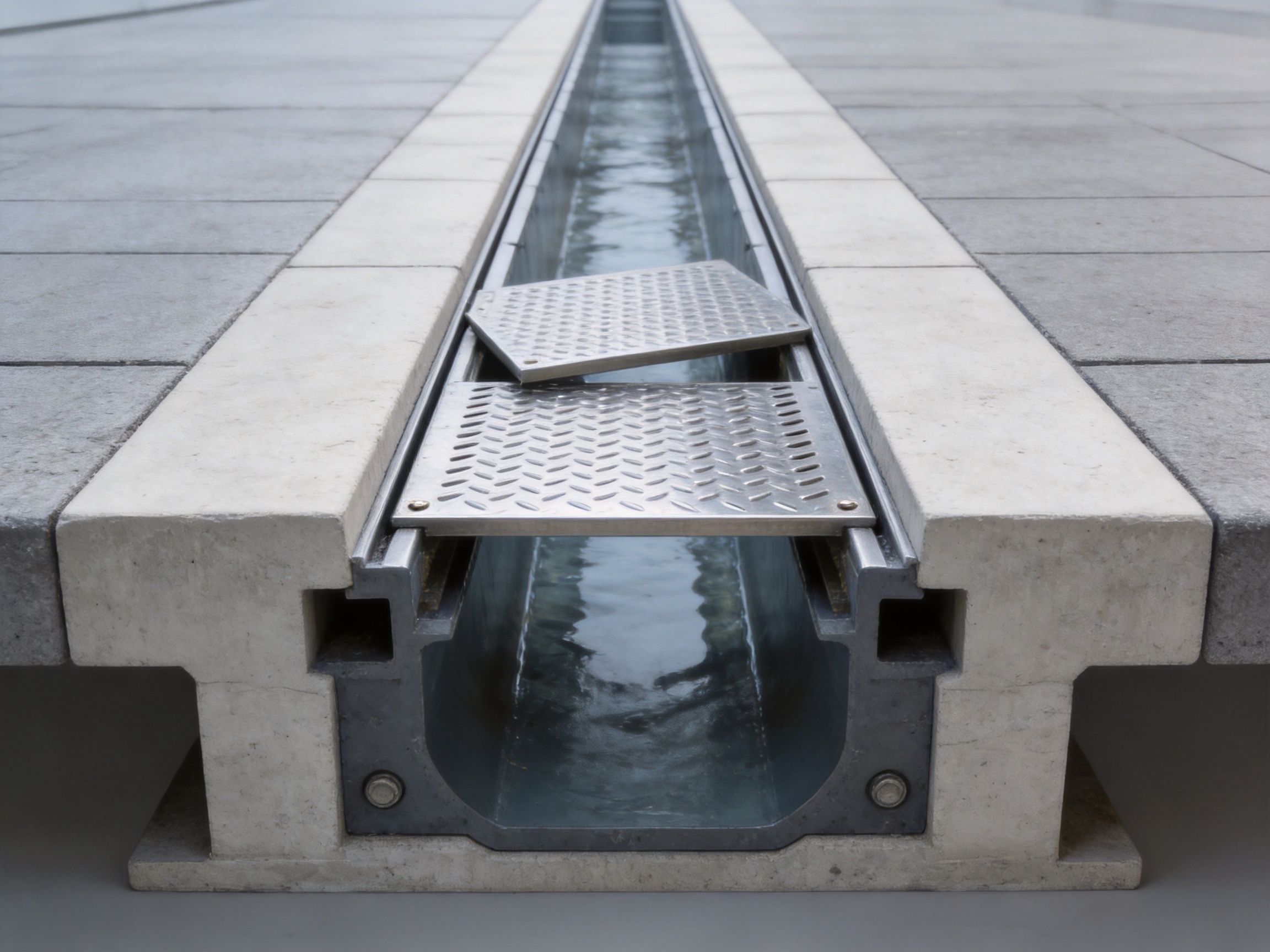
Many drainage products can move water, but not all can maintain safety, durability, and appearance under demanding conditions. The anti-slip and wear-resistant linear drainage channel is designed to provide a stronger overall value than ordinary drainage ditches, low-grade plastic channels, poorly finished concrete trenches, or smooth cover plates.
One advantage is safety-focused surface design. Ordinary drains may use simple flat covers that become slippery in wet weather. This product uses an anti-slip grating concept to help improve traction. For public projects and commercial properties, reducing slipping risk is a practical and responsible investment.
A second advantage is material adaptability. Some drainage systems are limited to one material type, making them unsuitable for diverse project environments. This product can be supplied with material solutions such as reinforced polymer concrete, stainless steel, ductile iron cover plates, steel gratings, or resin concrete options, depending on the required load, corrosion resistance, appearance, and budget.
A third advantage is manufacturing consistency. Factory-controlled production, mold development, CNC processing support, and experienced technical teams help improve the accuracy and repeatability of drainage components. In contrast, channels formed entirely on site may vary in dimension, surface smoothness, and hydraulic performance.
A fourth advantage is project customization. Drainage systems must often fit paving thickness, slope requirements, outlet positions, cover styles, and architectural layouts. The company’s experience in drainage ditch projects and GRC customization allows it to support design details, drawings, mold making, production, on-site construction coordination, and after-sales service.
A fifth advantage is lifecycle cost. A cheaper product may appear economical at purchase, but it can become expensive if it cracks, corrodes, blocks easily, requires frequent replacement, or causes safety incidents. A wear-resistant, easy-maintenance channel can reduce long-term repair needs and protect the value of the entire pavement system.
| Performance Factor | Anti-Slip and Wear-Resistant Linear Drainage Channel | Ordinary Low-Grade Drainage Option | Project Benefit |
|---|---|---|---|
| Surface Safety | Anti-slip grating surface designed for wet conditions | May use smooth covers or inconsistent textures | Reduced slipping risk for pedestrians and vehicles |
| Wear Resistance | Material options selected for abrasion, load, and weather exposure | May deform, crack, polish, or corrode faster | Longer service life and fewer replacements |
| Water Collection | Continuous linear collection with engineered openings | Often depends on limited point drainage or uneven trenches | Faster removal of runoff and fewer puddles |
| Installation | Modular sections support efficient layout and extension | May require more on-site forming and correction | Shorter construction time and better dimensional control |
| Maintenance | Removable grates simplify cleaning and inspection | Cleaning may be difficult or time-consuming | Lower maintenance effort and better long-term performance |
| Customization | Can be adapted to load, material, cover, and layout needs | Limited size and cover choices | Better fit for municipal, commercial, and industrial projects |
The performance of a drainage channel depends heavily on material selection. Different sites create different demands. A pedestrian plaza may emphasize appearance, anti-slip comfort, and corrosion resistance. A parking lot may emphasize load-bearing performance and tire abrasion resistance. An industrial workshop may require chemical resistance, easy cleaning, and strong grating support. A municipal road may require long-term durability under environmental exposure.
Reinforced polymer concrete is often valued for its high strength, smooth inner surface, low water absorption, and resistance to many forms of chemical attack. Its smooth internal wall can help improve hydraulic efficiency by reducing friction. Compared with traditional concrete, polymer-based materials may offer improved surface density and durability in many drainage applications.
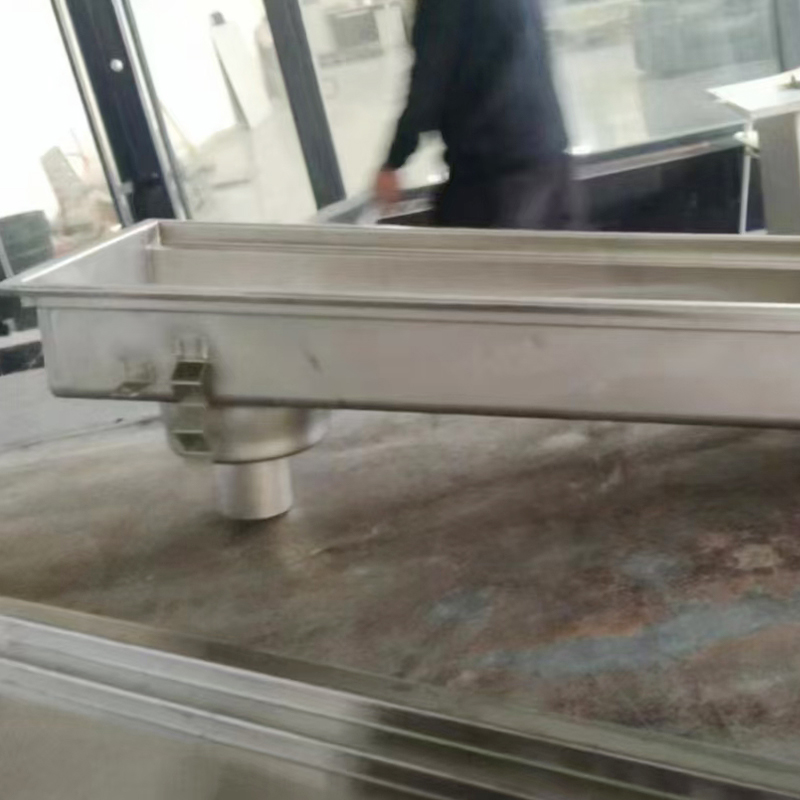
Stainless steel is suitable for projects requiring clean appearance, corrosion resistance, and precise surface finishing. It is often used in commercial buildings, food-related areas, architectural plazas, and areas where hygiene or visual quality matters. Stainless steel cover plates or stamped grates can provide a modern finish while maintaining drainage function.
Ductile iron cover plates are widely used where strength and load-bearing capacity are critical. They can support vehicle movement and resist impact better than many lightweight alternatives. Steel gratings may also be selected for industrial or heavy-duty drainage zones where open area, strength, and drainage capacity are important.
Resin concrete cover plates and resin composite products may provide corrosion resistance, lower weight, and design flexibility. In certain applications, they can reduce installation effort while providing reliable service. The choice of material should be based on load classification, environment, expected service life, drainage flow, maintenance plan, and aesthetic requirements.
The anti-slip and wear-resistant linear drainage channel is strengthened by the ability to combine channel bodies and cover plates appropriately. This integrated approach helps ensure that the body, grating, and surrounding pavement work together as a stable drainage system rather than separate parts with mismatched performance.
Reliable drainage products begin with reliable manufacturing. The company’s production strength includes professional design support, mold design, CNC engraving, manufacturing teams, construction technical experience, and after-sales service. These capabilities are important because drainage channel performance depends on precise dimensions, stable material quality, smooth assembly, and correct installation details.
The manufacturing process begins with project understanding and product design. Engineers and technical personnel consider channel length, width, height, load requirements, cover type, drainage capacity, installation environment, and connection method. For custom projects, drawings may be prepared to ensure that the channel fits site conditions and construction requirements.
Mold design is a key step. A well-designed mold helps ensure consistent product shape, smooth surfaces, correct alignment, and repeatable production accuracy. Poor mold quality can lead to dimensional variation, uneven surfaces, and installation problems. The company’s mold design capability supports both standard drainage products and customized GRC-related components.
CNC engraving and precision processing help improve detail accuracy. For drainage channels, cover plates, and customized architectural components, precision work can improve fit, appearance, and assembly efficiency. This is especially important when products must align with paving modules, building edges, road facilities, or decorative construction elements.
Material preparation and forming are controlled to support product strength. Depending on the product type, the process may include mixing, reinforcement placement, casting, curing, stamping, welding, surface finishing, or assembly inspection. The goal is to produce components with stable mechanical properties and reliable performance in the field.
Quality inspection is essential before shipment. Dimensional checks, surface inspection, fit testing between channel and grating, load-related evaluation, and packaging review help reduce installation problems. In drainage engineering, small errors can create visible alignment issues or water-flow problems, so factory quality control provides direct value to contractors and owners.
After production, packaging and delivery planning help protect products during transportation. Drainage channels and cover plates must arrive without cracks, deformation, or surface damage. Proper packaging supports efficient unloading and reduces project delays.
Beyond manufacturing, technical service is also part of the company’s strength. Product selection, installation advice, maintenance guidance, and after-sales support help customers use the drainage system correctly. This full-process capability is an important advantage over suppliers that only provide basic products without project support.
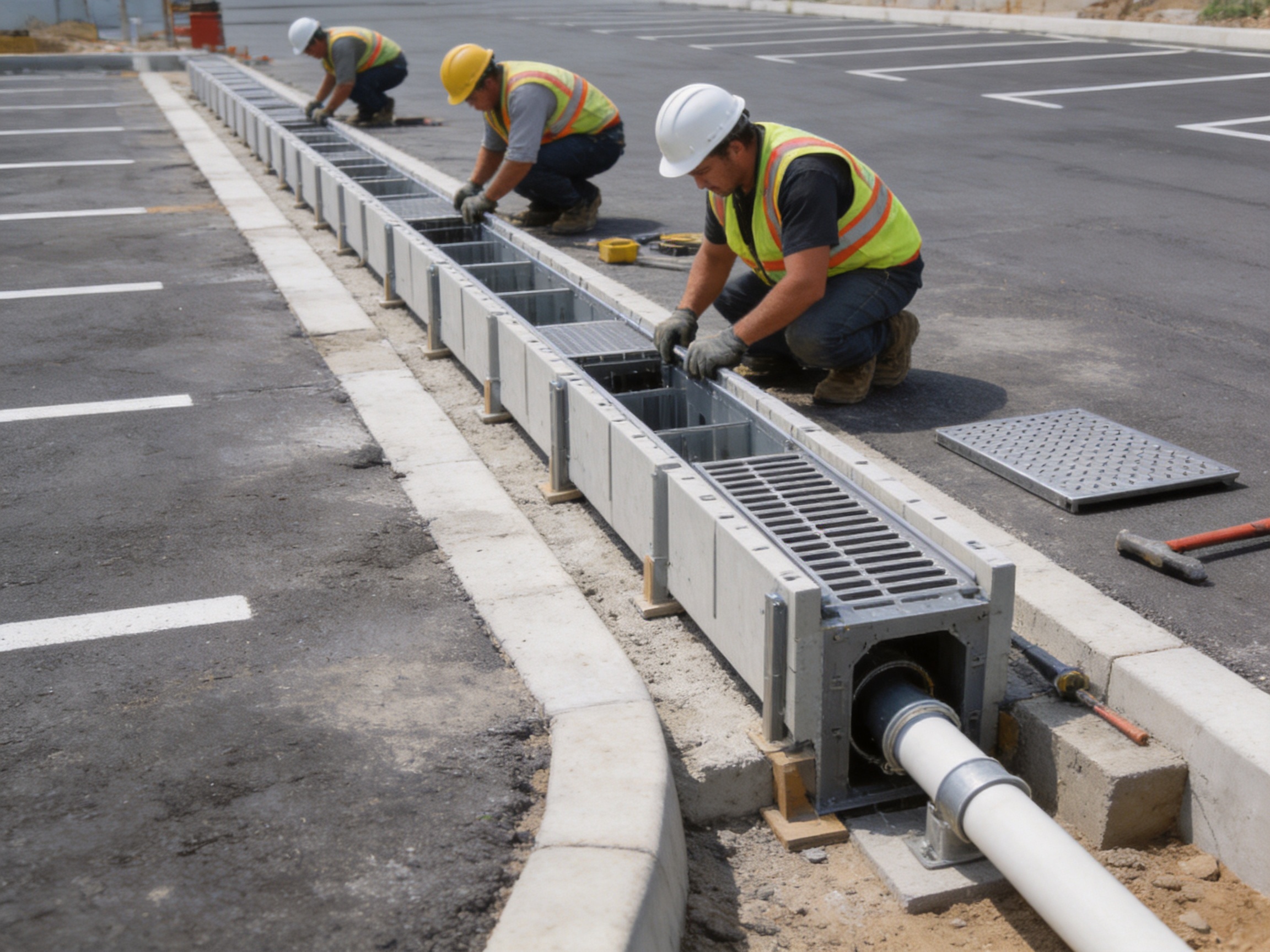
Correct installation is essential for any drainage channel. Even a high-quality product may not perform properly if the slope is wrong, the base is weak, or the outlet connection is poorly planned. The anti-slip and wear-resistant linear drainage channel is designed to support efficient installation, but contractors should still follow good engineering practice.
The first consideration is drainage layout. The channel should be positioned where surface runoff naturally collects or where water needs to be intercepted before reaching a building entrance, traffic area, or sensitive zone. Common positions include road edges, parking lot boundaries, building thresholds, garage entrances, pedestrian street centerlines, and industrial wash-down areas.
The second consideration is slope. Water must move toward the outlet. Depending on site design, the channel may be installed with a built-in slope, external pavement slope, or a combination of both. Proper elevation control prevents standing water inside the channel and supports full drainage performance.
The third consideration is foundation support. The channel should be installed on a stable base with suitable bedding and surrounding concrete or pavement support. Vehicle-load areas require stronger structural support than pedestrian-only areas. If the surrounding pavement is weak, the channel may shift or the cover may loosen over time.
The fourth consideration is cover selection. Different covers are suitable for different load and safety requirements. Pedestrian areas may use stainless steel or decorative anti-slip covers. Vehicle areas may require ductile iron or heavy-duty steel grating. Industrial areas may require high open-area gratings for rapid water intake.
The fifth consideration is maintenance access. Removable grates should remain accessible after installation. Paving, landscaping, or equipment should not permanently block cleaning access. Inspection points and outlet locations should be planned so that sediment and debris can be removed efficiently.
The sixth consideration is connection with the wider drainage network. A linear drainage channel is only one part of the system. It must connect properly to stormwater pipes, collection wells, municipal drainage networks, or treatment systems. Outlet capacity should match expected runoff volume.
Urban roads need drainage systems that can handle rainfall, road washing, and runoff from surrounding paved areas. Poor drainage can damage road surfaces, increase splash, create unsafe driving conditions, and accelerate freeze-thaw deterioration in colder climates. Linear drainage channels placed along road edges, curb zones, pedestrian crossings, or public squares can improve water collection and reduce surface accumulation.
For municipal projects, durability and maintenance efficiency are especially important. Public infrastructure must serve large numbers of users and remain reliable under repeated exposure. The anti-slip and wear-resistant linear drainage channel supports these goals by combining strong material options with removable grates and efficient water intake.
Parking areas often have broad paved surfaces and many low points where water can collect. Standing water may inconvenience drivers, damage pavement markings, and create safety risks. Driveway entrances also require effective drainage to prevent water from entering garages, basements, or building interiors.
A linear drainage channel can be installed across driveway thresholds, at parking lot edges, or between traffic lanes. Wear-resistant covers help withstand tire movement, turning friction, and occasional impact. Anti-slip surfaces improve safety for pedestrians walking between parked vehicles.
Shopping centers, office parks, hotels, schools, hospitals, and public plazas require drainage systems that are safe, attractive, and reliable. Visitors may not notice a well-designed drainage system, but they quickly notice puddles, slippery entrances, or loose grates. For this reason, commercial drainage must combine engineering performance with visual quality.
The anti-slip and wear-resistant linear drainage channel can be coordinated with paving designs and building entrances. Stainless steel or decorative cover options can provide a clean appearance, while the linear form helps maintain a neat architectural rhythm. Easy cleaning is also valuable because commercial facilities must maintain a high standard of appearance.
Industrial environments place heavy demands on drainage systems. Water, oils, cleaning fluids, dust, metal particles, and vehicle traffic may all be present. Drainage channels must resist wear, provide sufficient flow capacity, and remain accessible for cleaning. Failure can lead to production delays, worker hazards, and equipment damage.
In these environments, strong grating options and durable channel bodies are essential. Steel gratings, ductile iron covers, reinforced polymer concrete bodies, or other suitable combinations can be selected based on the operating conditions. The anti-slip surface helps protect workers, while removable covers support regular cleaning and inspection.
Residential areas require drainage systems that are reliable but also visually acceptable. Linear drainage channels can be used along community roads, garden paths, garage entrances, swimming pool surroundings, courtyards, and landscape edges. They help prevent water from accumulating near buildings and improve the usability of outdoor spaces after rainfall.
For landscape design, the narrow linear appearance can be easier to integrate than bulky catch basins. The product’s modular structure also allows flexible installation around different site features.
Although the anti-slip and wear-resistant linear drainage channel belongs primarily to the drainage channel series, the company’s GRC series capability strengthens its overall project service. GRC, or glass fiber reinforced cement, is widely used in architectural decoration and customized construction components. The ability to design, mold, engrave, produce, and install GRC products demonstrates a broad technical foundation in customized construction manufacturing.
This capability matters because many drainage projects are not completely standard. A commercial plaza may require drainage channels that align with decorative paving. A municipal project may require special cover dimensions. A landscape project may need drainage components to coordinate with curbs, planters, or architectural edges. An industrial facility may require special load-bearing cover plates or customized outlet positions.
Professional designers can help translate project requirements into practical product details. Mold designers can develop custom forms when standard dimensions are not sufficient. CNC engraving improves precision in detailed components. Experienced production and construction teams help ensure that the final product can be manufactured and installed effectively.
This integrated service reduces communication gaps between design intent, manufacturing reality, and site installation. Customers benefit from a supplier that understands both product manufacturing and practical construction conditions.
Drainage systems are often hidden or overlooked after construction, but their value becomes clear during heavy rain and long-term use. A reliable system protects pavement, improves safety, and reduces maintenance. A weak system causes repeated problems. For this reason, product quality and supplier responsibility are critical.
The company adheres to integrity and quality as foundational principles. This approach is important in infrastructure products because customers need confidence that the supplied channels, cover plates, and related components will match specifications and perform as expected. Quality is not only a production target; it is a long-term commitment to project safety and customer trust.
The company’s product research and development efforts also support long-term value. Drainage needs continue to evolve as cities expand, rainfall patterns change, commercial sites become larger, and industrial operations become more complex. Product improvement in materials, grating patterns, modular connections, and manufacturing precision helps meet these changing demands.
With products serving both domestic and international markets, manufacturing consistency and adaptability are especially important. Different markets may have different project habits, climate conditions, load requirements, and aesthetic expectations. A strong product range and customization capability make it easier to support varied customer needs.
Even durable drainage systems require periodic maintenance. The advantage of a well-designed linear drainage channel is that maintenance can be simple and predictable. Removable grates allow cleaning teams to inspect the channel, remove sediment, and restore flow capacity before serious blockage occurs.
A recommended maintenance routine includes visual inspection after heavy rainfall, removal of leaves and debris from grating openings, periodic lifting of covers, flushing of the channel body, checking of outlet connections, and inspection of surrounding pavement. In industrial environments, maintenance frequency may be higher due to sediment, dust, or process residues.
Wear inspection is also useful. Over time, all high-traffic surfaces experience some degree of abrasion. The anti-slip surface should be checked to ensure it remains effective. Covers should sit firmly without rocking. Fasteners, if used, should remain secure. Damaged covers should be replaced promptly to prevent safety hazards.
Lifecycle cost should be considered from the beginning of a project. A drainage channel with better materials, easier cleaning, and stronger cover options may cost more initially than a low-grade alternative, but it can reduce replacement, repair, accident, and maintenance costs over time. For public and commercial environments, this long-term perspective is often the most economical approach.
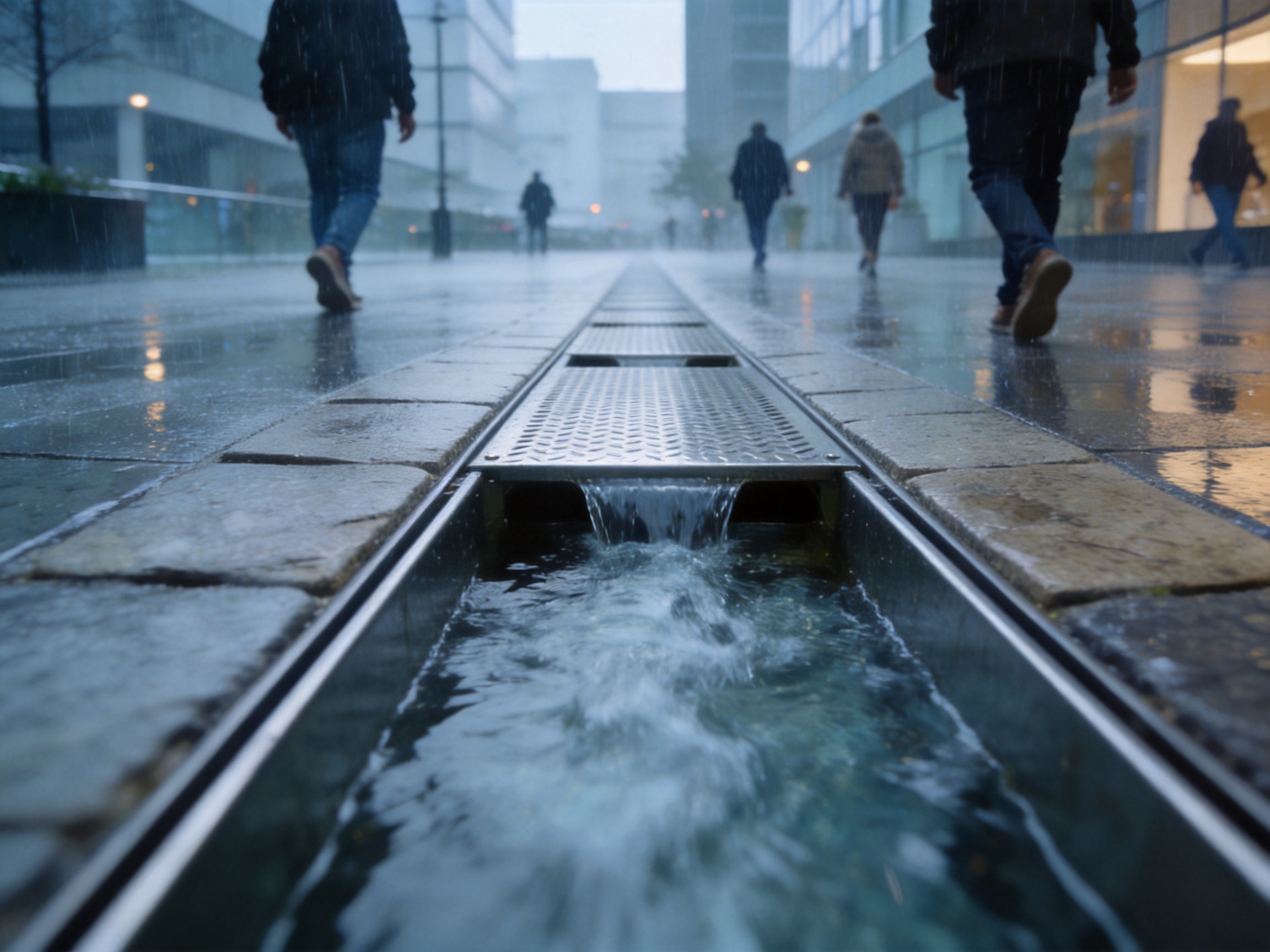
The main purpose is to collect and discharge surface water quickly while providing a safer, more durable surface for pedestrians and vehicles. It helps prevent puddles, flooding, slippery areas, and pavement deterioration in roads, parking lots, commercial zones, industrial sites, and pedestrian spaces.
The grating or cover surface is designed with traction-enhancing patterns or openings that reduce slipping risk in wet conditions. This is especially important in pedestrian areas, entrances, ramps, parking lots, and industrial workplaces where water and movement are common.
The product can use durable material combinations such as reinforced polymer concrete, stainless steel, ductile iron cover plates, steel gratings, resin concrete, or composite materials according to project needs. These materials are selected to resist abrasion, weather exposure, load pressure, and long-term use.
It can be installed in sidewalks, pedestrian streets, parking areas, driveways, commercial complexes, factory yards, industrial workshops, logistics parks, residential communities, landscape areas, and municipal road projects. It is suitable wherever efficient surface drainage and safe passage are required.
Yes. The removable grating design allows maintenance teams to open the channel, remove debris, flush sediment, inspect outlets, and reinstall the cover. This helps maintain water-flow efficiency and reduces long-term maintenance difficulty.
Compared with ordinary drainage ditches, it provides better surface safety, stronger wear resistance, modular installation, more material options, easier maintenance, and more consistent factory-controlled quality. It is designed as a complete drainage and safety solution rather than a simple water channel.
Yes. The company has capabilities in design, drawing support, mold making, CNC engraving, production, construction technical service, and after-sales support. This allows the drainage channel and related cover plates to be adapted to different dimensions, materials, load requirements, and layout needs.
Modular design allows channel sections to be assembled, extended, replaced, and maintained more efficiently. It helps contractors reduce installation time, improve alignment, and adapt the system to different project lengths and site layouts.
Important considerations include drainage layout, site slope, outlet capacity, foundation support, cover load rating, pavement integration, maintenance access, and connection to the larger stormwater drainage network. Proper installation ensures long-term performance.
A professionally manufactured drainage channel offers better dimensional accuracy, smoother flow surfaces, controlled material quality, safer cover design, easier maintenance, and a more finished appearance. It reduces the risk of inconsistent site work and improves overall project reliability.
The anti-slip and wear-resistant linear drainage channel is a practical, durable, and safety-focused solution for modern surface water management. It addresses the core challenges faced by roads, parking areas, commercial spaces, industrial sites, and pedestrian zones: rapid water removal, safe movement, load resistance, wear resistance, easy maintenance, and long service life.
Its advantages come from a combination of product design and manufacturing strength. The anti-slip grating surface improves safety in wet conditions. The wear-resistant material options support long-term durability. The linear structure collects runoff efficiently across extended paved areas. The modular system simplifies installation and future maintenance. The removable cover design reduces cleaning difficulty and supports reliable operation over time.
Compared with ordinary drainage products, this system provides stronger overall value. It is not limited to basic water discharge; it supports safer public spaces, cleaner commercial environments, more reliable industrial operations, and longer-lasting pavement systems. When combined with professional design assistance, mold development, CNC processing, production control, and after-sales service, it becomes a dependable solution for projects that require both performance and accountability.
For contractors, municipal planners, developers, facility managers, and engineering buyers, choosing a high-quality anti-slip and wear-resistant linear drainage channel is an investment in safety, durability, and lifecycle efficiency. It helps ensure that drainage infrastructure performs when it is needed most, remains manageable throughout its service life, and contributes to a better built environment.
1. Butler, D., and Davies, J. W. Urban Drainage. CRC Press.
2. Mays, L. W. Stormwater Collection Systems Design Handbook. McGraw-Hill Education.
3. Construction Industry Research and Information Association. The SUDS Manual. CIRIA.
4. American Concrete Institute. Guide to Durable Concrete. ACI Committee Reports.
5. British Standards Institution. Drainage Channels for Vehicular and Pedestrian Areas: Classification, Design, and Testing Principles.
6. International Organization for Standardization. Standards Relating to Surface Water Drainage, Load Resistance, and Construction Product Quality Management.
Related Products
Outdoor Weather-Resistant GRC Roman Columns are designed to combine classical elegance with modern d...
READ MOREOutdoor Weather-Resistant GRC Roman Columns are designed to combine classical elegance with modern d...
READ MOREOutdoor Weather-Resistant GRC Roman Columns are designed to combine classical elegance with modern d...
READ MOREOutdoor Weather-Resistant GRC Roman Columns are designed to combine classical elegance with modern d...
READ MOREOutdoor Weather-Resistant GRC Roman Columns are designed to combine classical elegance with modern d...
READ MOREOutdoor Weather-Resistant GRC Roman Columns are designed to combine classical elegance with modern d...
READ MORE
Contact us
Factory Address
Group 12, Quanxin Village, Donghai Town, Qidong City, Nantong City, Jiangsu Province, China
phone
+86-13914963840
+86-13451754670
products
QR CODE
 Wholesale Drainage Ditch Manufacturers