 English
 Español
 عربى
عربى

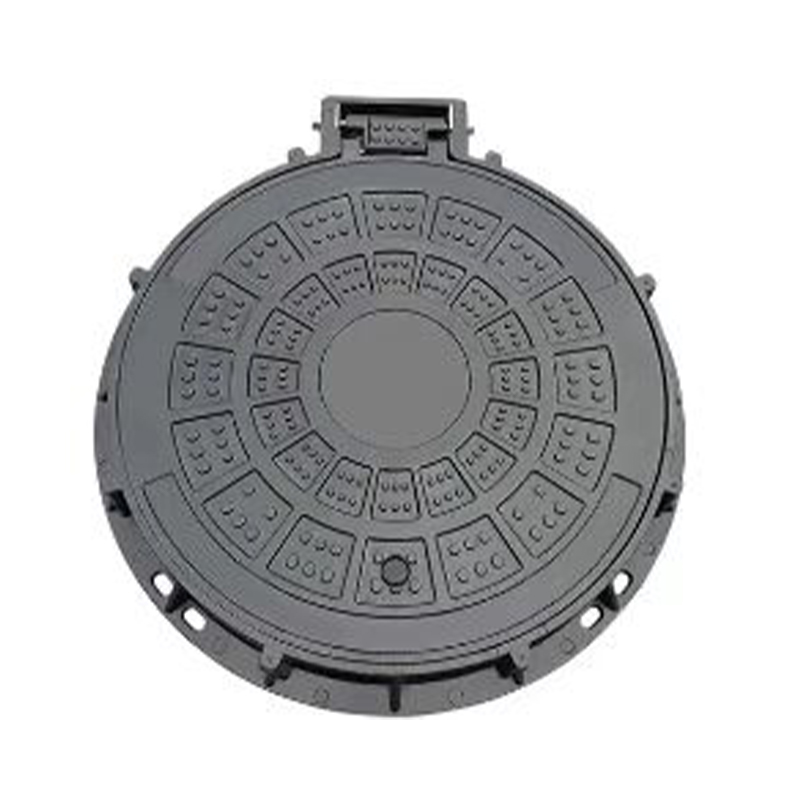
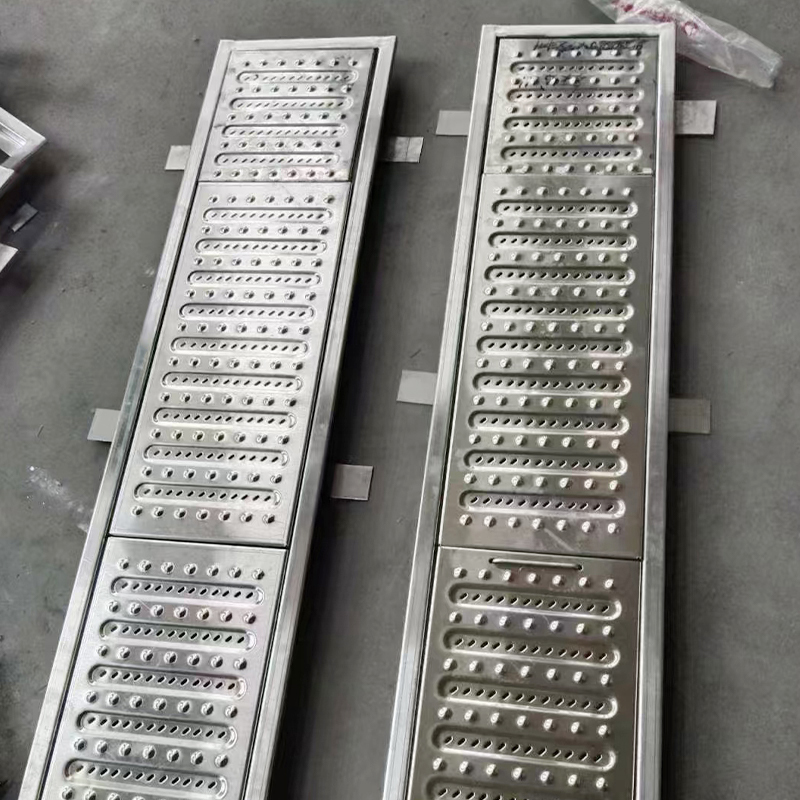
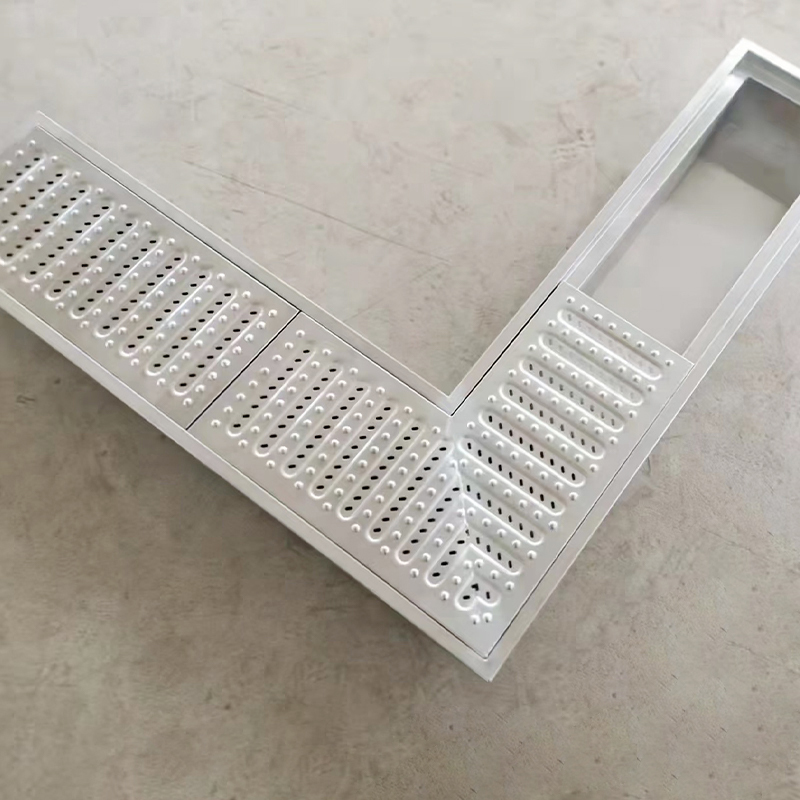
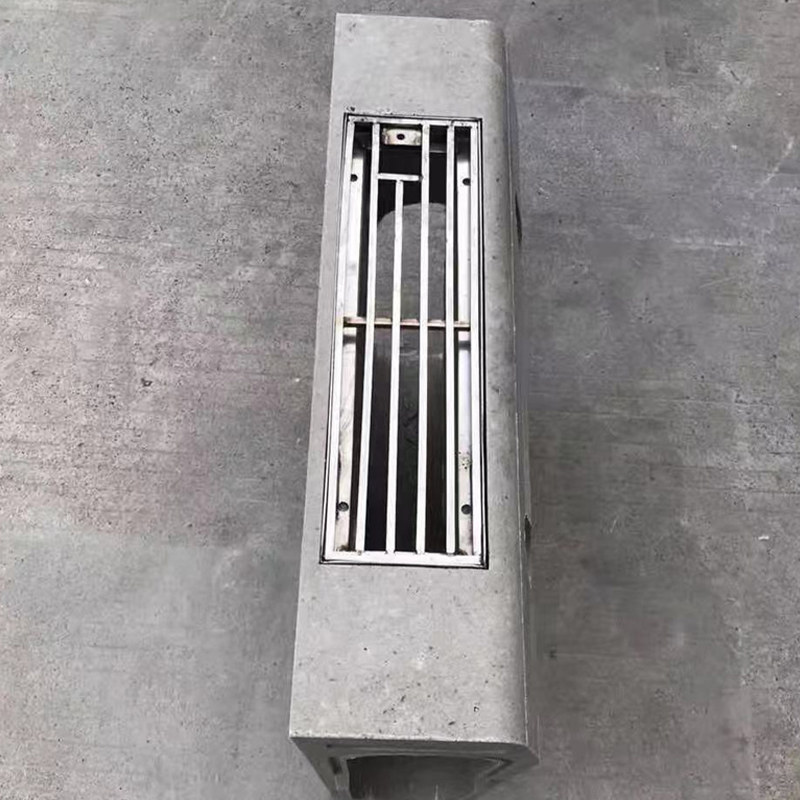
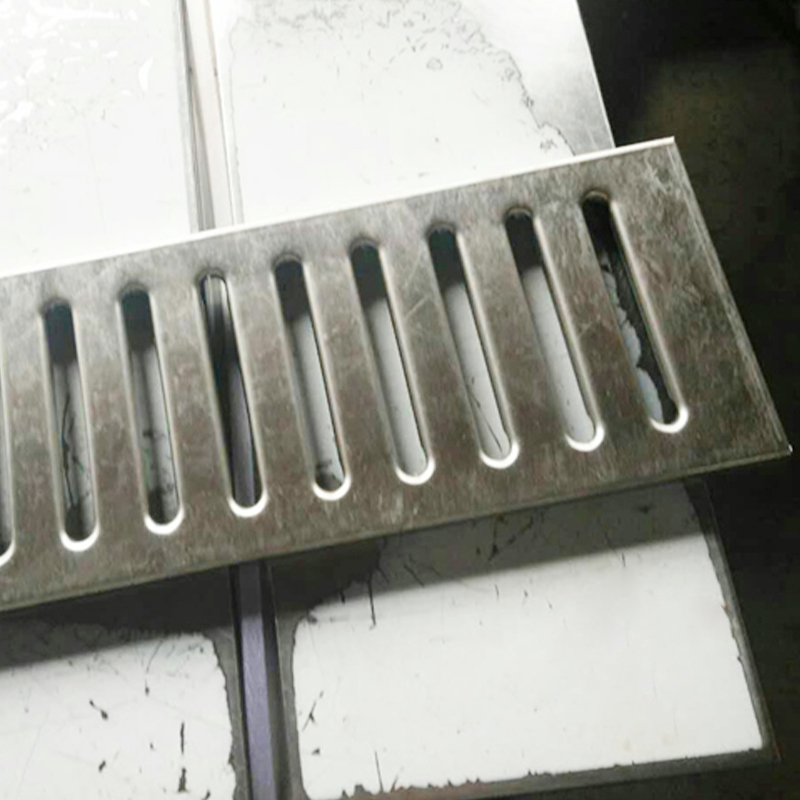
Engineered to address the long-term challenges of chemical erosion and structural aging in architect...
READ MOREJul 08, 2026
Content
Modern drainage systems are expected to do more than move water away from paved surfaces. They must protect buildings, roadbeds, public spaces, industrial floors, landscaped areas, and underground infrastructure from long-term moisture damage. A waterproof resin drainage channel is designed for these demanding conditions, combining sealed channel performance, high-density resin construction, corrosion resistance, modular installation, and strong load-bearing capability in one engineered drainage solution.
This product belongs to the resin drainage channel category and is suitable for municipal drainage, industrial sites, public facilities, parking areas, plazas, logistics yards, airport-related infrastructure, stadiums, and other projects requiring stable water collection and discharge. Compared with traditional cast-in-place concrete trenches or ordinary plastic channels, the waterproof resin drainage channel offers a more consistent structure, a smoother internal flow surface, better resistance to chemical attack, and easier installation on site.
Waterproof resin drainage channel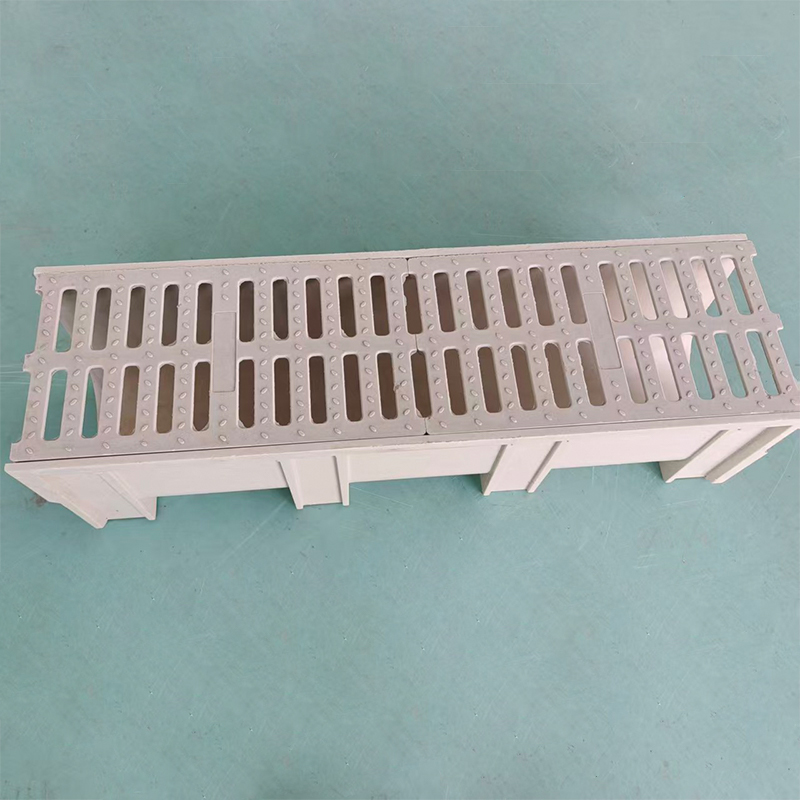
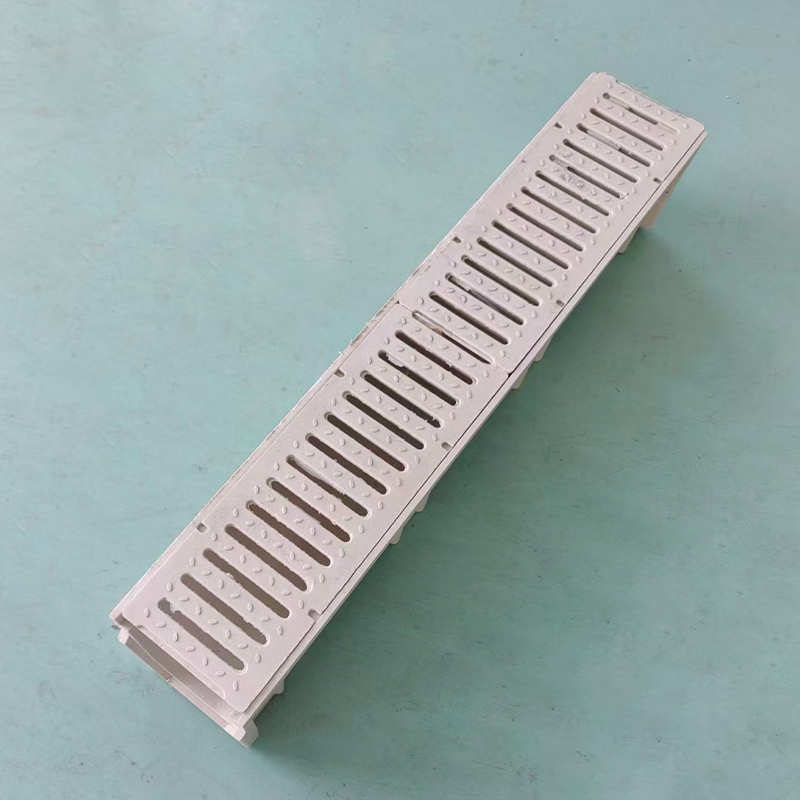
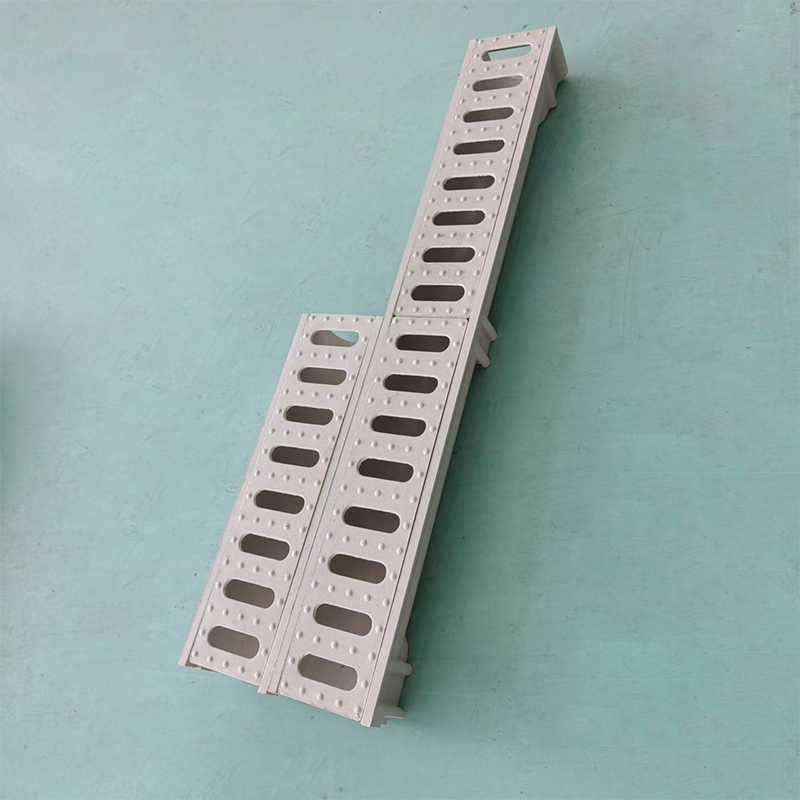
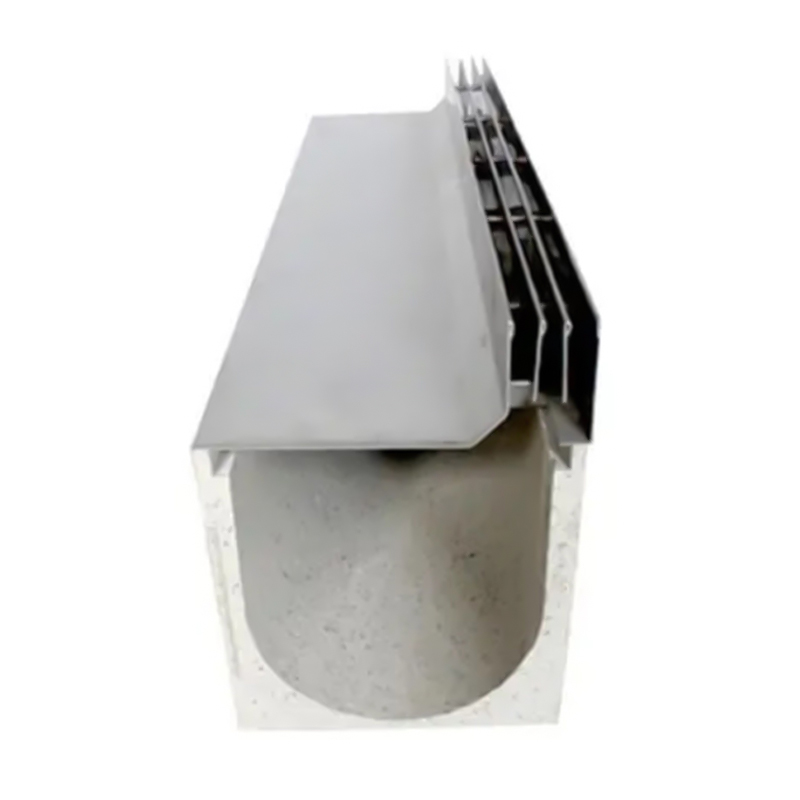
The waterproof resin drainage channel is a prefabricated U-shaped linear drainage component manufactured from high-density resin-based material. Its sealed design helps prevent rainwater, surface runoff, or wastewater from leaking into the surrounding pavement foundation. This waterproof performance is important in areas where water seepage may lead to soil settlement, concrete cracking, corrosion of nearby metal components, frost damage, or premature pavement failure.
The channel is supplied in modular lengths, generally designed for efficient alignment and connection during construction. A typical specification format is inner width, total height, and length, such as U100-150-1000 or U300-400-1000. This naming method allows engineers, contractors, and procurement teams to quickly match the drainage channel with hydraulic demand, installation depth, available space, and cover plate selection.
The product can be matched with resin covers and other cover plate options depending on project requirements. In pedestrian zones, lighter covers may be selected for comfort and appearance. In parking lots, road shoulders, logistics warehouses, and industrial areas, stronger cover systems may be used to withstand vehicle pressure and repeated traffic loads. The modular design makes the system flexible enough for straight lines, collection points, and large-scale drainage networks.
The main advantage of this product is its waterproof structure. The dense resin material and sealed channel body reduce the risk of water penetration through the side walls or base. This is especially valuable in projects where the drainage channel is installed near building foundations, underground garages, retaining walls, road subgrades, or sensitive landscaped zones.
Traditional concrete drainage trenches may absorb water because concrete is naturally porous. Over time, water infiltration can weaken the surrounding bedding layer, cause freeze-thaw damage in cold climates, and increase maintenance costs. By contrast, a waterproof resin drainage channel has a compact structure that helps maintain stable drainage performance and protects the surrounding construction layers.
Drainage systems are often exposed to rainwater, deicing salts, oils, weak acids, alkalis, cleaning chemicals, industrial wastewater, and ultraviolet radiation. Ordinary materials may crack, rust, deform, or age after long exposure. Resin-based channel material offers strong resistance to acids, alkalis, salts, and weathering, making it suitable for municipal roads, chemical plant areas, factory floors, and public outdoor facilities.
The material does not rust like metal, and it does not easily crumble like low-grade concrete under chemical exposure. In coastal environments or areas with frequent salt spray, this corrosion resistance can significantly extend the service life of the drainage system. In industrial applications, it helps maintain a clean and stable drainage route even when water contains mild chemical contaminants.
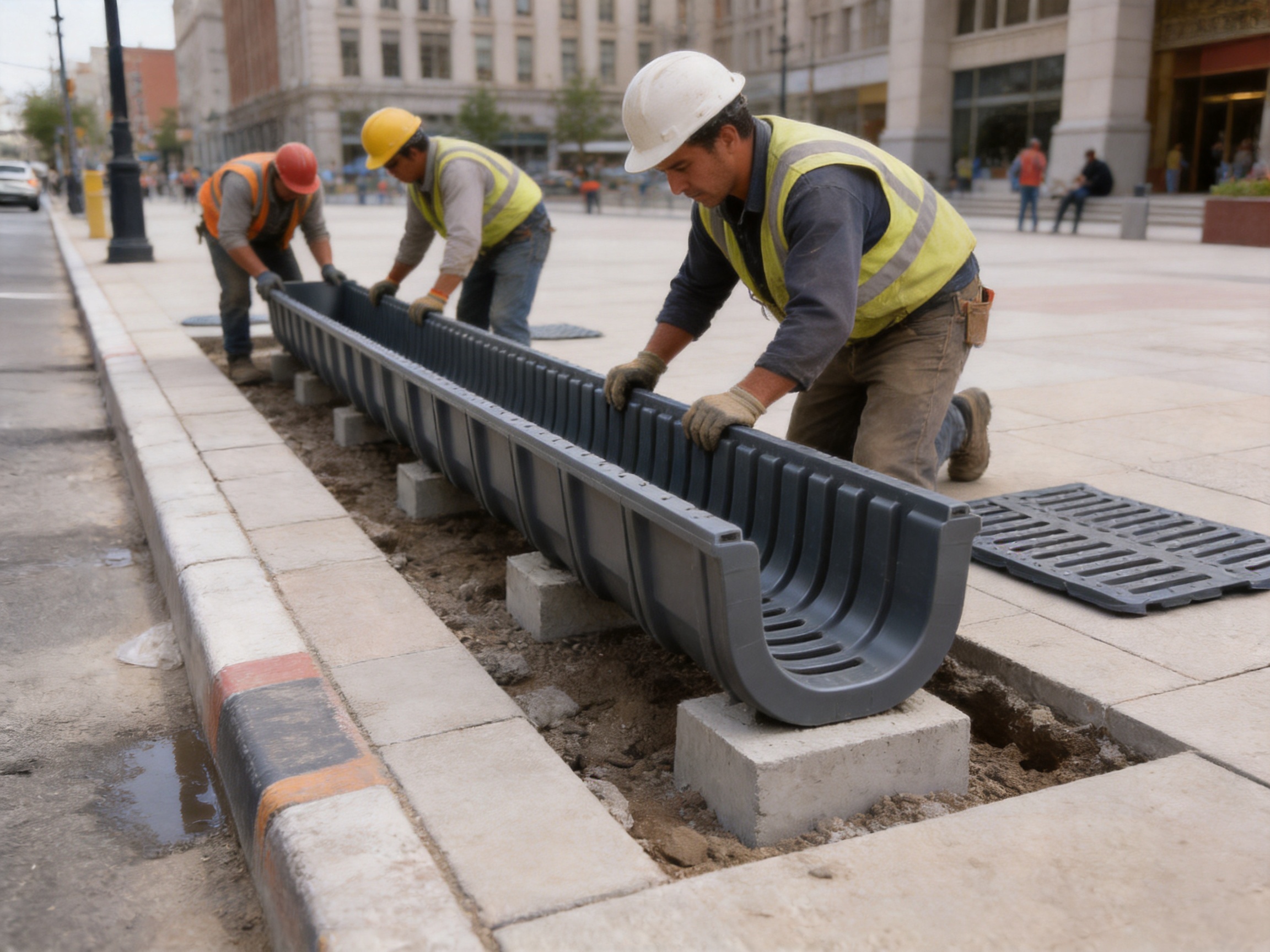
Prefabricated resin drainage channels are lighter and more standardized than traditional concrete trench units. This reduces handling difficulty on site and helps contractors complete installation faster. The modular structure supports efficient alignment, connection, slope adjustment, and cover installation. For projects with tight schedules, such as road renovation, warehouse construction, commercial plaza upgrades, or factory drainage improvement, faster installation can reduce labor cost and shorten interruption time.
Because the channel is manufactured under controlled factory conditions, each piece has consistent dimensions. This helps avoid the uneven width, rough inner surface, and irregular slope problems that may occur in cast-in-place construction. A more precise prefabricated system also simplifies later maintenance because cover plates can be removed and replaced more easily.
The waterproof resin drainage channel is designed to distribute load efficiently. When properly installed with a suitable foundation and cover plate, it can withstand pressure from pedestrians, bicycles, passenger vehicles, service vehicles, industrial equipment, and other traffic conditions according to the selected specification and project design. This makes it suitable for public squares, parking lots, logistics areas, municipal roads, warehouse floors, and industrial plants.
Load-bearing performance is not only related to the channel body. It also depends on the cover type, installation bedding, concrete encasement, edge protection, and drainage layout. A well-designed resin drainage channel system provides a balanced combination of structural strength, waterproofing, and hydraulic efficiency.
The product is durable and recyclable, helping reduce long-term maintenance and replacement frequency. A drainage system with a longer service life is more sustainable because it reduces material waste, construction disturbance, and repeated repair work. The smooth internal surface also supports efficient water flow and reduces sediment accumulation, which can lower cleaning frequency when compared with rough concrete channels.
Drainage channels are available in many forms, including cast-in-place concrete trenches, polymer concrete channels, plastic channels, metal channels, and resin-based channels. Each has its place, but waterproof resin drainage channels provide an attractive balance of performance, construction efficiency, and long-term value.
Compared with ordinary concrete drainage ditches, resin channels have better waterproof performance, lower water absorption, smoother flow surfaces, and more consistent factory-controlled dimensions. Concrete trenches are often heavy and labor-intensive, and their surfaces may become rough or cracked after long-term exposure. Resin drainage channels help minimize these weaknesses.
Compared with low-cost plastic channels, high-density resin channels provide better rigidity, greater dimensional stability, and stronger resistance to outdoor aging. Plastic channels may deform under heat, heavy load, or improper installation. Resin drainage channels are better suited for projects that demand higher strength and longer service life.
Compared with full metal drainage structures, resin channels avoid rust, reduce weight, and provide better resistance to many corrosive environments. Metal channels may be strong, but they often require anti-corrosion treatment and can be noisy under traffic loads. Resin channels offer a more stable solution for many civil and industrial drainage applications.
Compared with many competing prefabricated channels, this waterproof resin drainage channel offers a broad specification range, compatibility with cover systems, strong customization capability, and manufacturing support from an experienced drainage ditch and GRC customization enterprise. The result is not only a product, but a complete drainage solution that can be adapted to different site conditions.
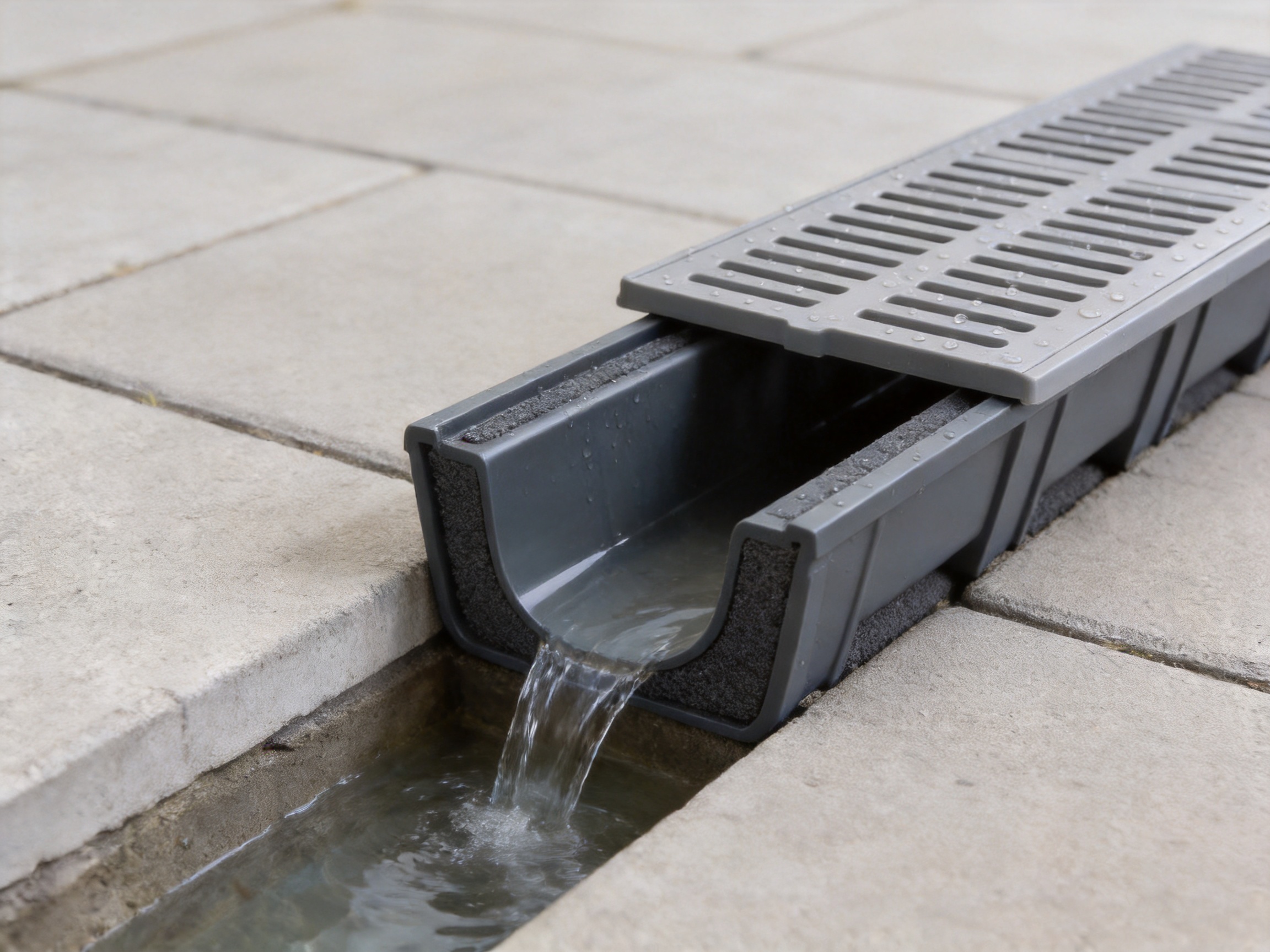
The product series covers multiple inner widths, outer widths, heights, and cover plate dimensions. This wide range allows designers to choose a model according to rainfall intensity, catchment area, paving structure, traffic load, installation depth, and maintenance access requirements.
| Drainage Channel Specification | Inner Width | Outer Width | Outer Height | Resin Cover Size per Piece |
| U80-60-1000 | 80 mm | 110 mm | 60 mm | 600-100-10 mm |
| U100-150-1000 | 100 mm | 140 mm | 150 mm | 500-115-20 mm |
| U130-250-1000 | 120 mm | 170 mm | 250 mm | 500-170-20 mm |
| U150-300-1000 | 150 mm | 190 mm | 300 mm | 500-170-20 mm |
| U200-300-1000 | 200 mm | 240 mm | 300 mm | 500-220-20 mm |
| U250-350-1000 | 250 mm | 290 mm | 350 mm | 500-270-20 mm |
| U300-400-1000 | 300 mm | 340 mm | 400 mm | 500-325-30 mm |
| U400-500-1000 | 400 mm | 460 mm | 500 mm | 500-441-30 mm |
| U500-600-1000 | 500 mm | 580 mm | 600 mm | 500-550-30 mm |
The above table shows representative models from the available product range. Smaller channels such as U80 and U100 are commonly used in pedestrian areas, landscape drainage, small plazas, and residential or commercial surface water collection. Medium channels such as U150, U200, and U250 are suitable for parking lots, factory passages, public facilities, and municipal drainage branches. Larger channels such as U300, U400, and U500 can be applied in high-flow areas, industrial yards, logistics centers, and large paved surfaces where water discharge demand is greater.
When selecting a model, the inner width is important for hydraulic capacity, while the total height influences water storage volume and installation depth. The cover size and thickness should be matched with load requirements and user safety. For areas with frequent vehicle traffic, the cover plate and channel support structure must be selected carefully to ensure long-term stability.
Municipal drainage projects require systems that can handle changing weather, traffic loads, construction constraints, and long maintenance intervals. Waterproof resin drainage channels are well suited for city roads, sidewalks, commercial streets, plazas, bus stations, public squares, rainwater collection systems, and urban renovation projects.
In road and plaza applications, surface water must be collected quickly to prevent ponding, slippery surfaces, and damage to pavement layers. A linear drainage channel creates a continuous collection line, allowing water to enter the drainage system through the cover plate and flow toward an outlet. Because the inner surface is smooth, water discharge is efficient and sediment is less likely to remain compared with rough cast-in-place trenches.
In public spaces, appearance and safety are also important. The channel can be matched with different cover plates to suit pedestrian use, landscape design, and accessibility needs. The modular system helps maintain straight lines and clean edges, improving both drainage performance and visual order.
Industrial environments often place heavier demands on drainage systems. Factory floors, logistics warehouses, loading zones, chemical plants, machinery maintenance areas, and production workshops may experience water, oil, cleaning liquids, chemical residues, and heavy traffic. A drainage channel in these locations must be resistant to corrosion, strong enough for equipment movement, and easy to maintain.
The waterproof resin drainage channel is highly suitable for such applications because it resists many common chemical influences and does not rust. Its sealed body helps prevent wastewater from entering the subgrade or surrounding floor structure. This is valuable in facilities where cleanliness, environmental protection, and floor durability are priorities.
For logistics warehouses, the channel can be installed near loading docks, doorways, truck access routes, and washing zones. Its modular nature allows contractors to create long drainage lines with predictable slope and discharge direction. For chemical plants and industrial workshops, the corrosion-resistant material helps reduce the risk of deterioration caused by aggressive liquids.
Public facilities such as parking lots, stadiums, airport service areas, pedestrian plazas, exhibition centers, schools, hospitals, and transport terminals require drainage products that are safe, durable, and low-maintenance. Water accumulation in these areas can lead to slip hazards, traffic inconvenience, structural damage, and poor user experience.
The resin drainage channel provides a reliable water collection path while maintaining structural stability under daily use. In parking lots, it can be installed along drive lanes, entrances, exits, ramps, and boundary lines. In stadiums and public squares, it can help remove stormwater from large paved areas. In airport-related facilities and transport zones, drainage reliability is especially important because standing water may affect safety and operational efficiency.
A high-quality drainage channel depends on more than material selection. Manufacturing control determines dimensional accuracy, structural consistency, surface smoothness, waterproof performance, and long-term durability. Jiangsu Yameng Traffic Road Facilities Co., Ltd. supports its drainage ditch and GRC customization business with professional designers, mold designers, CNC engraving capability, production technicians, construction teams, and after-sales service.
The manufacturing process begins with careful raw material selection. High-density resin materials are chosen for their strength, waterproof properties, corrosion resistance, and weathering performance. The formula must provide stable curing, reliable bonding, and consistent mechanical properties. Quality control at this stage helps prevent problems such as brittleness, uneven density, poor surface finish, or premature aging.
Compared with manufacturers that rely on inconsistent raw material sourcing, a controlled formula allows the drainage channel to maintain predictable performance across batches. This is important for large projects where hundreds or thousands of channel sections must connect accurately and perform uniformly.
Drainage channels must have accurate dimensions to ensure easy installation, smooth connection, and correct cover seating. The company’s experience in mold design and CNC engraving supports precise production. Good mold accuracy helps produce clean edges, stable wall thickness, consistent inner width, and reliable cover plate positioning.
In drainage engineering, dimensional inconsistency can create many site problems. A channel that is too wide may not fit the cover properly. A channel that is uneven may create standing water. A rough edge may complicate pavement finishing. Precision molding reduces these risks and improves the efficiency of installation.
During production, resin material is formed under controlled conditions to achieve the required density and structure. Proper curing is essential for strength, waterproofing, and resistance to deformation. The process must avoid internal voids, weak zones, incomplete curing, or surface defects.
Factory-controlled curing gives prefabricated resin drainage channels a major advantage over on-site cast concrete trenches. Site conditions such as temperature, humidity, mixing quality, and workmanship can vary greatly. Factory production provides a more stable environment and reduces uncertainty.
After forming and curing, the channel body is inspected for surface smoothness, dimensional accuracy, wall integrity, and edge quality. A smooth inner surface is not only an aesthetic benefit; it directly improves hydraulic efficiency and reduces sediment buildup. Good surface finish also makes cleaning easier during maintenance.
Quality inspection may include checking inner width, outer width, height, cover seating dimensions, surface defects, and overall straightness. For selected projects, performance verification can also include load-related assessment, water tightness evaluation, and fit testing with cover plates.
The drainage channel can be matched with resin covers of different sizes and thicknesses. Cover plate compatibility is essential because the cover transfers traffic load to the channel and surrounding pavement structure. A properly matched cover sits securely, reduces movement, and improves safety.
The product range includes cover sizes such as 500-115-20 mm, 500-170-20 mm, 500-220-20 mm, 500-325-30 mm, 500-441-30 mm, and 500-550-30 mm, depending on the channel specification. These options allow the system to serve narrow drainage lines as well as larger industrial and municipal installations.
Jiangsu Yameng Traffic Road Facilities Co., Ltd. is located in Nantong, Jiangsu Province, China, an area with convenient transportation and waterway access. The company focuses on drainage ditch projects and GRC customization, serving customers with an emphasis on integrity, quality, responsibility, and innovation.
The company’s product scope includes linear drainage ditches, finished drainage ditches, polymer-based drainage ditches, slot drainage ditches, U-shaped drainage ditches, ductile iron cover plates, stainless steel stamped cover plates, steel gratings, resin concrete cover plates, resin composite manhole covers, stainless steel manhole covers, ductile iron manhole covers, drainage pipes, PE pipes, and related products. This broad product portfolio allows customers to source complete drainage and access system components from one supplier.
For projects that require design support, the company can provide services from detailed design and drawing preparation to mold making, production, on-site construction, and after-sales assistance. This integrated service capability is an important advantage over suppliers that only sell standard products without technical support.
The company’s GRC series is supported by professional designers, mold designers, CNC engravers, and experienced production and construction technicians. Although the waterproof resin drainage channel belongs to the resin drainage channel category, the company’s broader expertise in customized molded products supports stronger design flexibility, better mold accuracy, and more responsive project service.
One of the strongest competitive advantages is the broad specification range. The product covers small, medium, and large channel sizes, from compact U80 series products to larger U500 series products. This allows buyers to select a channel according to real project needs rather than forcing one standard size into unsuitable conditions.
Many competitors offer limited sizes, which may create design compromises. A channel that is too small may not discharge water fast enough, while a channel that is too large may increase installation cost and occupy unnecessary space. A broad range supports optimized design and better cost control.
Because the manufacturer also supplies cover plates, grating products, manhole covers, drainage pipes, and related components, customers can build more complete drainage systems with coordinated products. This reduces procurement complexity and helps avoid compatibility problems between channels, covers, outlets, and inspection access components.
Not every project can be solved with a standard drainage channel. Some sites require special dimensions, special cover matching, special connection structures, or customized appearance. The company’s experience in mold design, CNC engraving, GRC customization, and drainage engineering gives it stronger customization capability than many ordinary suppliers.
This is especially useful for commercial plazas, cultural facilities, municipal renovations, landscape projects, and industrial plants where existing structures or design requirements may restrict standard installation methods.
A drainage product must be practical on site. Manufacturers with construction experience understand installation challenges such as bedding preparation, slope control, cover alignment, concrete encasement, outlet connection, and maintenance access. This experience helps improve product design and customer guidance.
The company provides support from drawings and production to construction and after-sales service. This service chain helps reduce risk for contractors and project owners, especially in larger or more complex drainage projects.
Some drainage products compete mainly on low purchase price. However, drainage failure can be expensive. Poor waterproofing may damage pavement and foundations. Weak material may crack under traffic. Corrosion may require early replacement. Inaccurate dimensions may delay construction. A high-quality waterproof resin drainage channel provides long-term value by reducing maintenance, improving durability, and supporting reliable installation.
Hydraulic efficiency is central to drainage channel performance. The purpose of a linear drainage system is to collect surface water quickly and guide it toward an outlet without excessive standing water. The smooth internal surface of the resin drainage channel reduces flow resistance compared with rough concrete trenches. This can help improve discharge efficiency, especially in long drainage runs.
Channel size selection should consider rainfall intensity, catchment area, slope, outlet capacity, debris load, and maintenance frequency. Larger inner widths and greater heights can handle more water volume, but the final system must also include adequate outlets, connection pipes, and inspection points. A high-quality channel body is one part of a complete drainage design.
The waterproof characteristic of the resin channel also contributes to hydraulic reliability. If water leaks through a channel wall or base, the drainage system loses efficiency and may damage the surrounding structure. By keeping water inside the channel until it reaches the designed outlet, the system performs more predictably.
Although the product is designed for easy installation, correct construction remains important. The foundation should be prepared according to load requirements and site conditions. In light pedestrian areas, the bedding design may be simpler. In vehicle or industrial areas, concrete support and edge reinforcement are typically required to ensure load transfer and long-term stability.
Channels should be aligned carefully to maintain a smooth drainage line. The required slope should be established before final fixing. Cover plates should be installed securely and checked for stable seating. Outlets and pipe connections should be positioned to prevent water backup. After installation, the surrounding pavement should be finished neatly to guide surface runoff toward the channel.
For projects involving heavy traffic, contractors should avoid leaving unsupported channel edges. Load from vehicles must be transferred through the cover and surrounding structure, not concentrated on weak points. Proper installation greatly extends service life and ensures that the drainage channel performs as designed.
The waterproof resin drainage channel is designed to reduce maintenance, but no drainage system is completely maintenance-free. Periodic inspection is recommended, especially after heavy rainfall, construction activity, or seasonal debris accumulation. Leaves, sand, mud, gravel, and waste should be removed from the channel and cover openings to maintain flow capacity.
The removable cover design makes cleaning more convenient. Compared with rough concrete trenches, the smooth resin surface is easier to wash and less likely to trap sediment. Corrosion resistance also reduces the risk of structural deterioration during long-term exposure to water, salts, and common chemicals.
With correct selection, installation, and maintenance, the product can provide long service life in municipal, industrial, and public facility environments. Its durability helps reduce lifecycle cost and supports stable drainage performance over many years.
Sustainability in drainage engineering is not only about recycled materials. It also involves reducing construction waste, preventing water damage, minimizing maintenance, extending service life, and supporting efficient stormwater management. The waterproof resin drainage channel contributes to these goals in several ways.
First, the product is durable and recyclable, helping reduce replacement waste. Second, factory production improves material efficiency and reduces on-site construction errors. Third, the sealed design helps prevent unwanted water seepage into pavement bases and surrounding structures, reducing repair needs. Fourth, the smooth channel surface supports efficient water movement, helping stormwater systems respond quickly during rainfall events.
In urban projects, effective drainage can also protect green spaces, road structures, basements, underground garages, and public facilities. By helping control surface water, the channel contributes to safer and more resilient infrastructure.
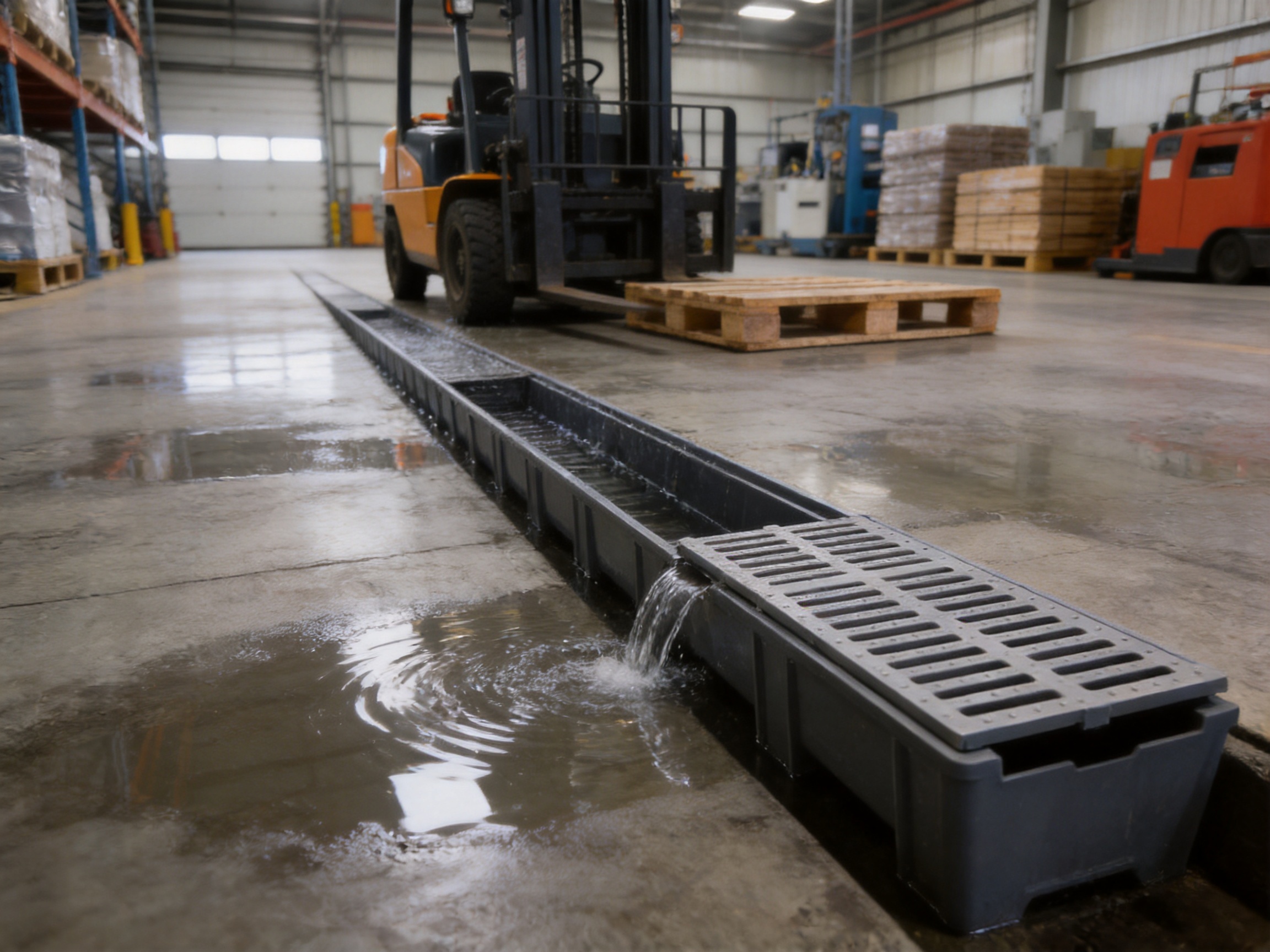
It is a prefabricated linear drainage channel made from high-density resin-based material. It is designed to collect and discharge surface water while reducing leakage through the channel body. It is commonly used in roads, plazas, parking lots, factories, warehouses, public facilities, and industrial drainage systems.
Compared with traditional concrete drainage ditches, the waterproof resin drainage channel has lower water absorption, better corrosion resistance, smoother internal surfaces, more accurate factory-controlled dimensions, and easier installation. It is also lighter than many concrete alternatives, helping reduce labor intensity on site.
Yes, it can be used in vehicle traffic areas when the correct channel size, cover plate, foundation, and installation method are selected. Parking lots, logistics areas, industrial floors, and municipal roads can all use resin drainage channels with appropriate structural design.
The resin material resists many acids, alkalis, salts, and weathering influences. This makes it suitable for industrial plants, chemical-related areas, coastal environments, and locations where ordinary materials may corrode or deteriorate.
The product range includes many specifications, such as U80, U100, U130, U150, U170, U200, U250, U300, U400, and U500 series models. Heights and cover sizes vary according to the channel specification. This wide range helps meet different hydraulic and installation requirements.
Routine maintenance mainly includes removing debris, checking cover stability, inspecting outlets, and ensuring that water flows freely. The smooth resin surface makes cleaning easier than rough concrete channels, and corrosion resistance helps reduce long-term maintenance demand.
Yes. The manufacturer has design, mold-making, CNC engraving, production, construction, and after-sales capabilities. This allows support for customized drainage solutions, special dimensions, cover matching, and project-specific requirements.
Common applications include municipal roads, plazas, rainwater collection systems, factory floors, logistics warehouses, chemical plants, parking lots, airport-related areas, stadiums, and other public facilities requiring dependable waterproof drainage.
The waterproof resin drainage channel is a practical and durable solution for modern drainage engineering. It combines excellent waterproof performance, corrosion and weather resistance, easy installation, high load-bearing capacity, broad specification coverage, and long-term environmental value. For municipal drainage, industrial applications, and public facilities, it offers clear advantages over many traditional concrete, plastic, and metal drainage options.
Its sealed high-density resin construction helps protect pavement foundations and surrounding structures from water damage. Its modular design saves installation time and improves construction accuracy. Its smooth internal surface supports efficient water flow and easier maintenance. Its corrosion resistance makes it reliable in challenging environments involving salts, chemicals, UV exposure, and repeated wetting.
Supported by the manufacturing strengths of Jiangsu Yameng Traffic Road Facilities Co., Ltd., including professional design, mold development, CNC engraving, production expertise, construction support, and after-sales service, the product is more than a drainage component. It is part of a complete drainage solution for projects that require quality, durability, and long-term performance.
For buyers seeking a dependable drainage ditch system, a waterproof resin drainage channel provides strong lifecycle value. It reduces leakage risk, supports efficient stormwater management, improves installation speed, and delivers the durability required by roads, plazas, factories, warehouses, parking lots, stadiums, and other demanding environments.
1. Stormwater Drainage Design Manual, general principles of linear drainage, hydraulic capacity, and surface water collection.
2. Urban Road Drainage Engineering Guidelines, requirements for pavement drainage, roadbed protection, and municipal stormwater systems.
3. Materials Performance in Drainage Infrastructure, corrosion resistance and weathering behavior of resin-based construction materials.
4. Prefabricated Drainage Channel Installation Practices, recommendations for bedding, alignment, cover installation, and maintenance.
5. Industrial Floor Drainage Design Handbook, drainage selection principles for factories, warehouses, logistics areas, and chemical facilities.
Related Products
Engineered to address the long-term challenges of chemical erosion and structural aging in architect...
READ MOREEngineered to address the long-term challenges of chemical erosion and structural aging in architect...
READ MOREEngineered to address the long-term challenges of chemical erosion and structural aging in architect...
READ MOREEngineered to address the long-term challenges of chemical erosion and structural aging in architect...
READ MOREEngineered to address the long-term challenges of chemical erosion and structural aging in architect...
READ MOREEngineered to address the long-term challenges of chemical erosion and structural aging in architect...
READ MORE
Contact us
Factory Address
Group 12, Quanxin Village, Donghai Town, Qidong City, Nantong City, Jiangsu Province, China
phone
+86-13914963840
+86-13451754670
products
QR CODE
 Wholesale Drainage Ditch Manufacturers