 English
 Español
 عربى
عربى


The Minimalist Linear GRC door and window frames are specifically designed for architectural project...
READ MOREJun 30, 2026
Content
Industrial Grade Stamped Non-slip Plates are engineered safety components designed for demanding industrial, municipal, commercial, and infrastructure environments where walking and vehicle surfaces must remain stable under oil, rainwater, frost, mud, vibration, and heavy traffic. As a specialized stainless steel stamped cover plate product, they combine raised anti-slip patterns, high-strength metal substrates, modular installation, and drainage-friendly apertures to create a dependable surface for platforms, stair treads, catwalks, drainage channels, maintenance corridors, factory walkways, and loading areas.
Unlike ordinary flat plates, simple checker plates, or low-grade grating covers, industrial stamped non-slip plates are produced through precision stamping technology. This process forms repeated traction structures directly into the metal surface, improving friction without relying on coatings that may peel, wear away, or become ineffective after exposure to moisture and abrasion. The result is a long-lasting access solution suitable for facilities that prioritize safety, durability, easy maintenance, and efficient installation.
For companies, contractors, and project owners, the value of these plates goes beyond surface grip. They help reduce slip-and-fall risks, support pedestrian and forklift movement, protect drainage systems, resist corrosion, and maintain structural stability in high-load conditions. When supplied by an experienced drainage channel and cover plate manufacturer with advanced fabrication capabilities, the product can be tailored to project dimensions, load requirements, installation methods, and site conditions.
Industrial Grade Stamped Non-slip Plates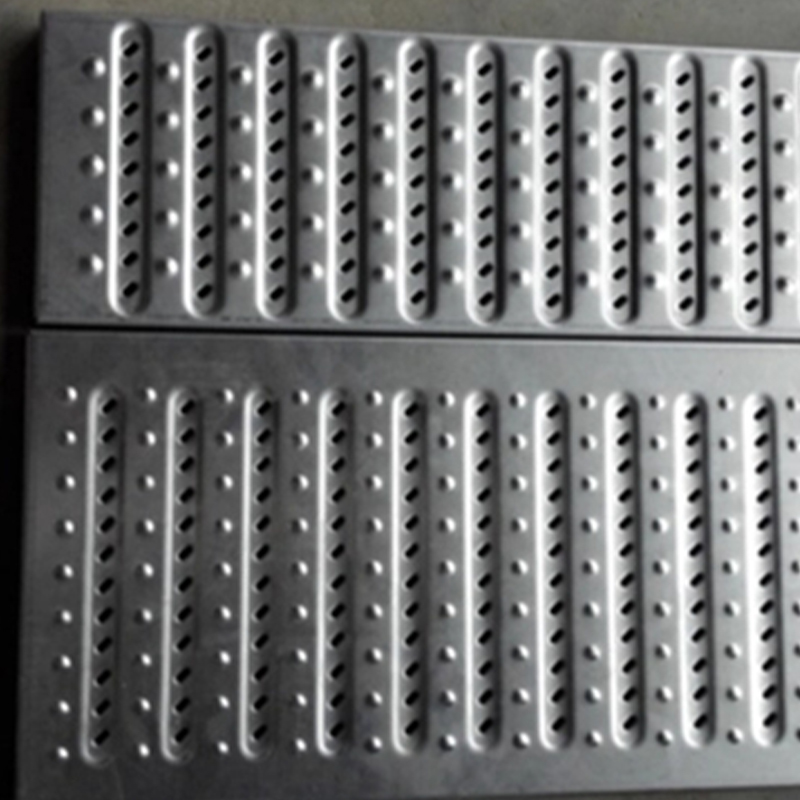
Industrial Grade Stamped Non-slip Plates belong to the stainless steel stamped cover plate category and are widely used as anti-slip surfaces for drainage channel covers, industrial floors, ramps, equipment platforms, stair treads, inspection passages, and municipal access zones. Their core function is to provide secure footing and load-bearing coverage while allowing moisture, debris, or surface contaminants to move away from the working area.
The product is especially valuable in environments where conventional plates often fail to meet safety expectations. Oil-processing workshops, food production facilities, chemical plants, shipyards, logistics warehouses, wastewater treatment plants, underground parking areas, outdoor walkways, and heavy equipment service areas all require surfaces that can handle repeated loads while minimizing slip hazards. Industrial stamped non-slip plates are designed precisely for these conditions.
The stamping pattern is not merely decorative. Raised points, serrated formations, punched holes, and specially arranged traction elements work together to increase friction from multiple angles. When shoes, boots, trolley wheels, or forklift tires pass over the surface, the pattern helps maintain contact and stability. At the same time, aperture combinations can support drainage and reduce water accumulation, which is essential for exterior access areas and drainage ditch systems.
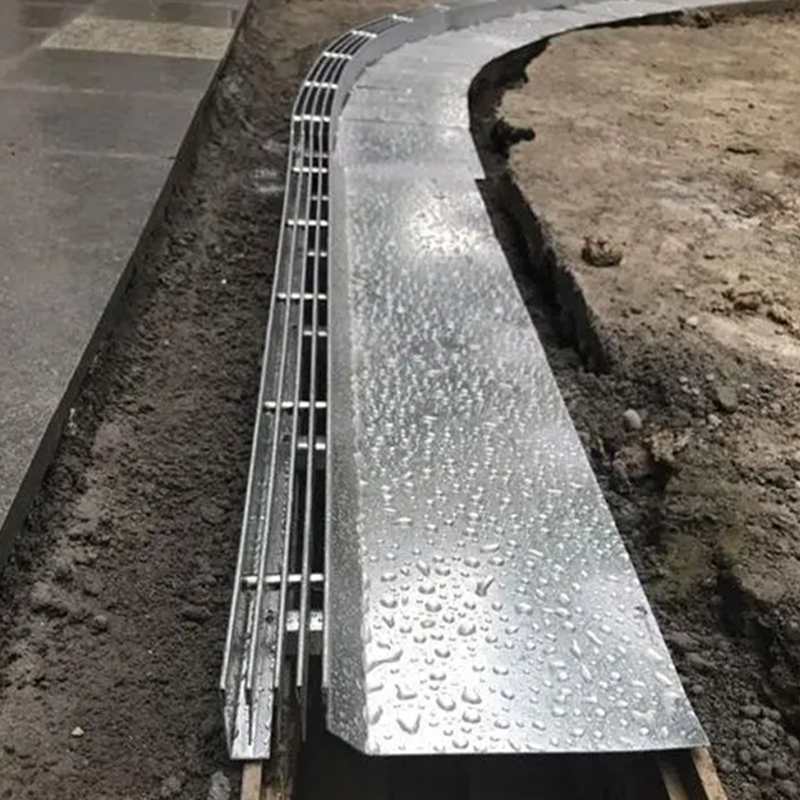
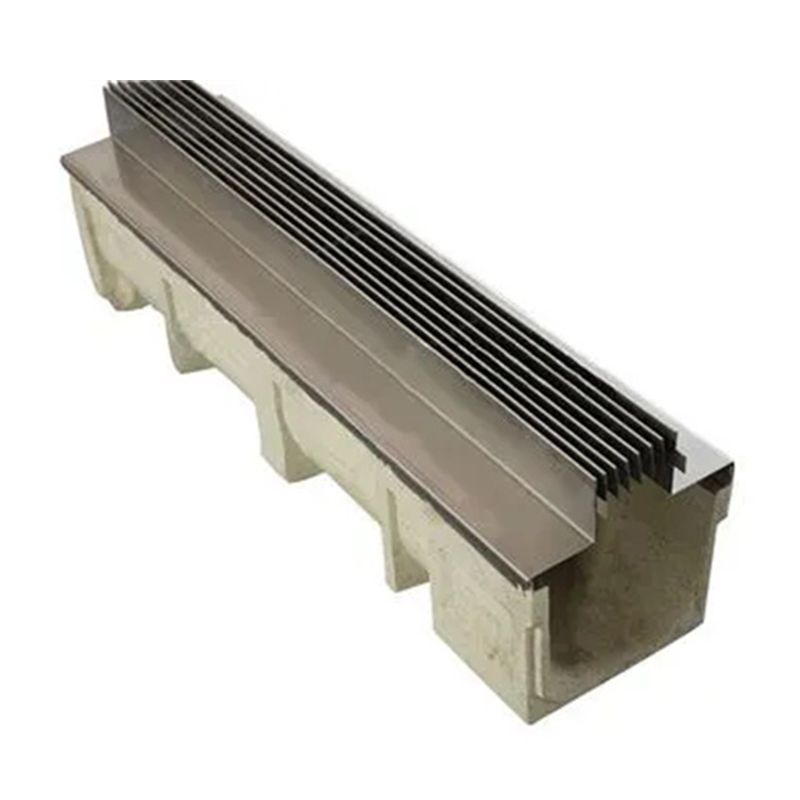
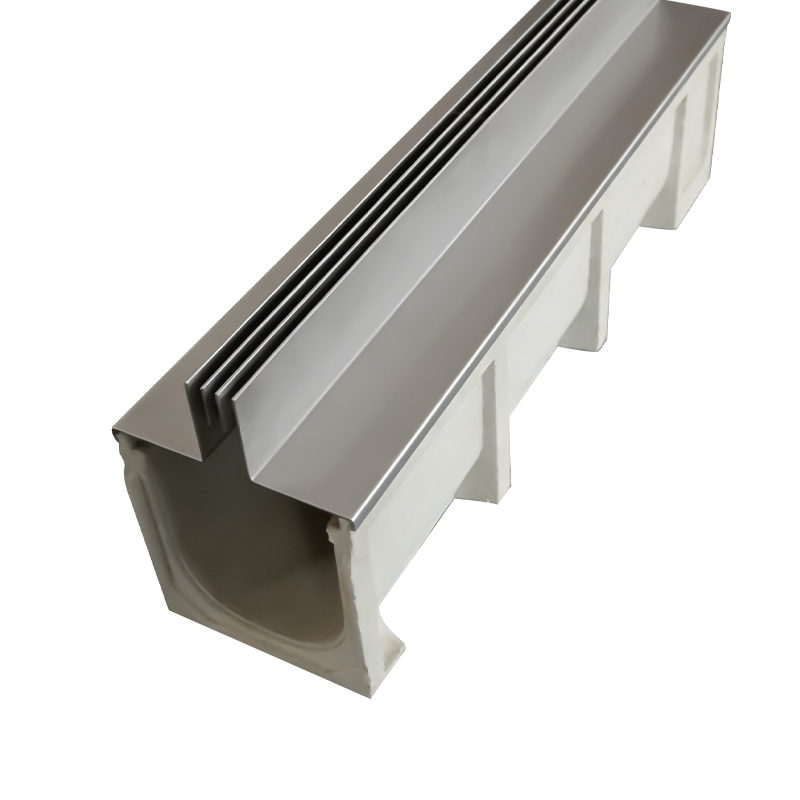
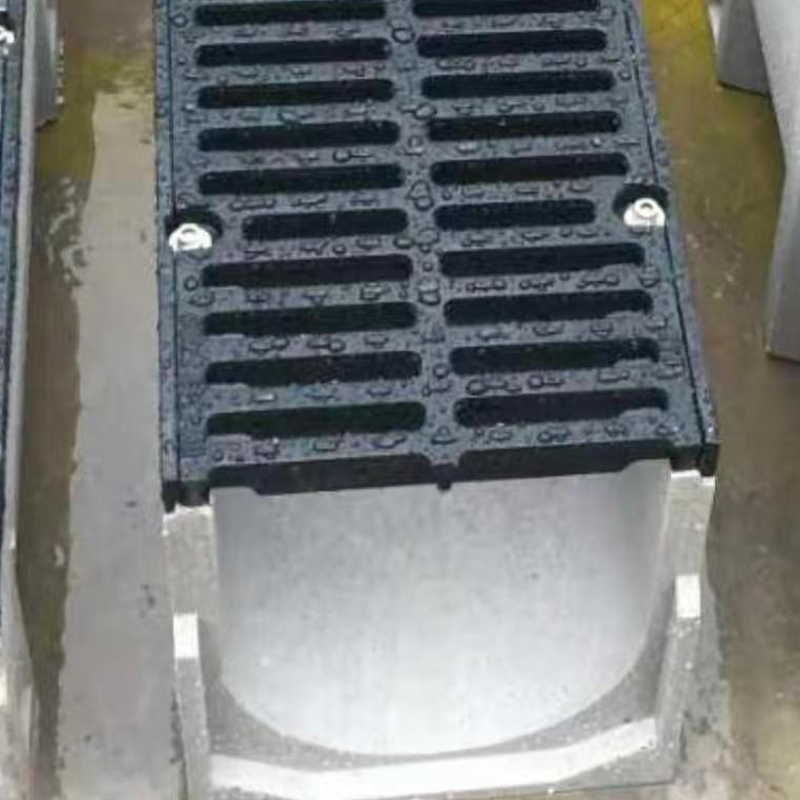
In drainage channel projects, these plates can serve as functional cover plates over linear drainage ditches, finished drainage channels, polymer-based drainage ditches, slot drainage systems, and U-shaped drainage channels. They protect the channel below while allowing water flow and surface access. Compared with solid flat covers, stamped non-slip plates can provide better traction and, depending on design, more effective water discharge.
The primary advantage of Industrial Grade Stamped Non-slip Plates is slip resistance. Industrial facilities often face surfaces contaminated by oil, coolant, grease, rainwater, cleaning water, snow, frost, or dust. A smooth metal plate may become dangerous under these conditions. Even common checker plates can lose traction when oil films cover the raised pattern. Stamped non-slip plates address this issue through more aggressive and scientifically distributed patterns.
The raised formations create multiple contact points that increase friction. In many designs, holes or slots around the raised features provide edges that improve grip further. This combination is particularly important on inclined walkways, stair treads, loading ramps, and maintenance platforms where users face additional risk from gravity, carried tools, and limited visibility.
For pedestrians, the anti-slip surface helps reduce unexpected sliding during normal walking, turning, climbing, or descending. For workers wearing safety boots, the raised stamped design engages the boot sole and improves confidence when moving across wet or oily areas. For light vehicle traffic, including carts and forklifts, the textured surface contributes to improved wheel contact, especially where surfaces are exposed to water or industrial residue.
Another safety advantage is drainage support. Standing water is one of the most common causes of slip incidents. By combining traction patterns with suitable apertures, the plates can reduce surface accumulation and guide water toward drainage channels. This makes them particularly suitable for areas connected with trench drains, linear drainage ditches, and outdoor infrastructure where rapid surface water removal is necessary.
Visibility and workplace discipline also benefit from a clearly textured walking surface. Workers can easily identify designated access paths, stair tread zones, or drainage cover areas. When a plate has a recognizable anti-slip pattern, it communicates that the surface is intended for safe passage, maintenance access, and controlled movement.
Industrial Grade Stamped Non-slip Plates are designed for heavy-duty service. Depending on the application, they can be made from stainless steel, galvanized steel, or other steel materials selected for corrosion resistance, load-bearing strength, and wear performance. Stainless steel is ideal for environments requiring enhanced corrosion protection, hygiene, chemical resistance, or long service life. Galvanized steel offers a practical balance of strength, surface protection, and cost efficiency for many industrial and municipal projects.
Durability begins with material selection. A plate used in a pedestrian walkway does not need the same thickness or support design as a plate exposed to forklifts, maintenance vehicles, or heavy machinery. Experienced manufacturers evaluate load class, span, channel width, support edge conditions, environment, and installation method before recommending specifications. This engineering approach helps avoid two common problems: under-designed plates that deform too early and over-designed plates that increase unnecessary cost.
Impact resistance is another important factor. Industrial access surfaces may be struck by tools, spare parts, equipment wheels, pallets, pipes, or construction materials. A well-stamped heavy-duty plate retains its shape because the substrate and formed pattern distribute stress effectively. The stamping process can also increase local rigidity in certain surface zones, helping the plate resist bending and wear.
Wear resistance is critical in high-traffic areas. Painted anti-slip surfaces, adhesive tapes, and low-grade coatings may perform well initially but deteriorate quickly when exposed to frequent foot traffic, forklift tires, chemicals, and cleaning equipment. In contrast, stamped metal traction is part of the plate itself. There is no separate layer that must remain bonded to the surface. This gives stamped non-slip plates a major advantage in long-term maintenance planning.
Corrosion resistance further extends service life. In outdoor drainage projects, plates may face rainwater, deicing salts, mud, and temperature changes. In industrial plants, they may be exposed to chemicals, steam, washdown water, and wastewater. Stainless steel or properly galvanized surfaces help preserve structural strength and appearance. When matched to the environment, these materials reduce replacement frequency and life-cycle cost.
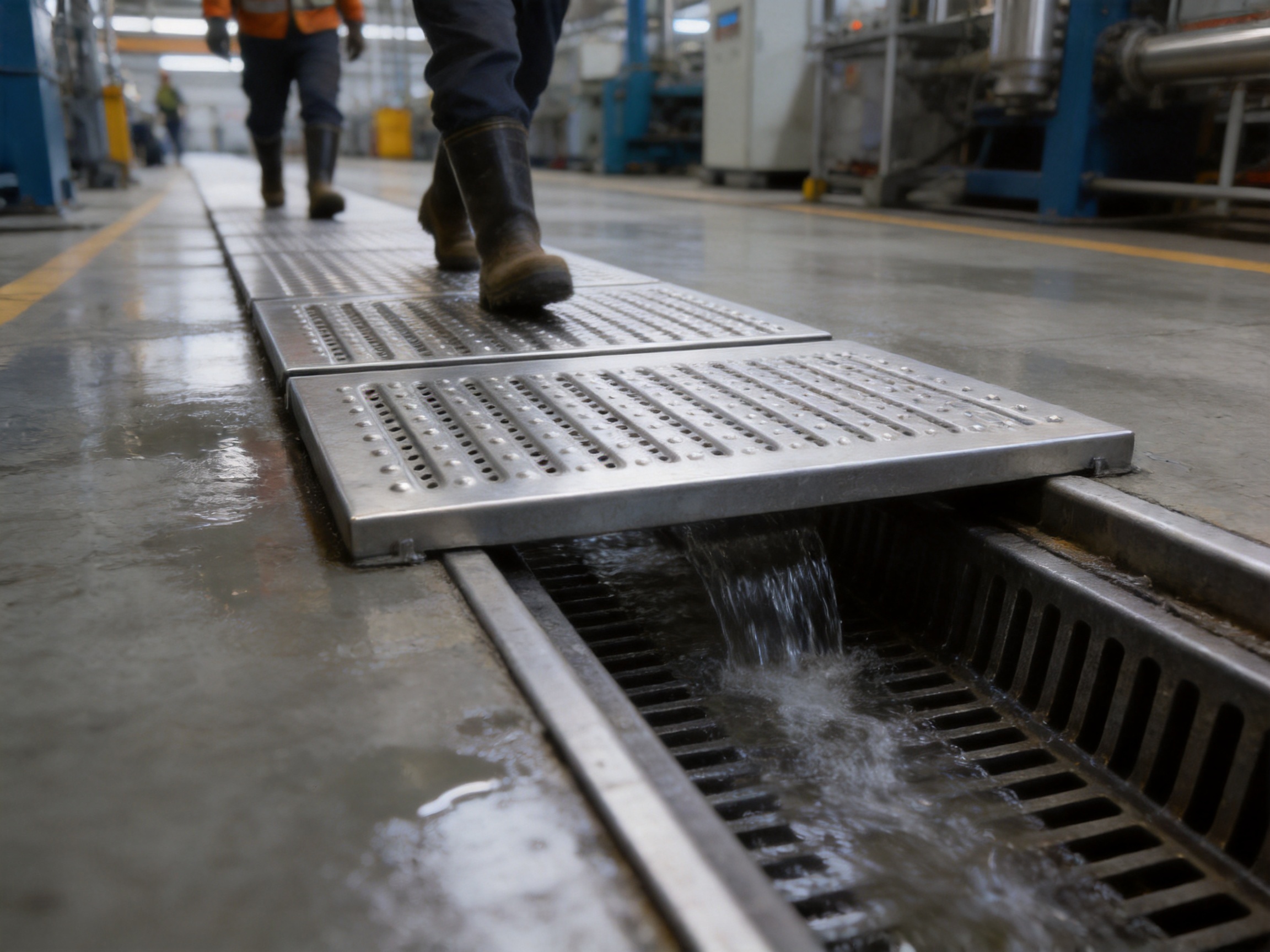
Project buyers often compare Industrial Grade Stamped Non-slip Plates with several alternatives, including smooth steel plates, checker plates, welded gratings, perforated sheets, resin covers, ductile iron covers, and coated anti-slip panels. Each product has a suitable application, but stamped non-slip plates offer a unique combination of traction, drainage, strength, customizability, and cost-effective maintenance.
Smooth plates are simple and strong, but their anti-slip performance is poor when wet or oily. They are rarely ideal for active industrial walkways unless additional treatment is added. However, coatings and tapes can wear out, creating maintenance obligations. Stamped non-slip plates solve this by forming traction into the material itself.
Checker plates are common, but the raised diamond pattern may not provide enough grip in severe oil or frost conditions. The pattern can become smooth over time due to wear, and water may remain on the surface. Stamped non-slip plates can use more aggressive raised apertures and edge structures that better handle contaminants and water discharge.
Welded steel gratings provide drainage and ventilation, but they may not be ideal in every pedestrian area. Small tools, debris, or footwear edges can interact with grating openings, depending on the bar spacing. Gratings may also require specific support systems and can create vibration or noise under traffic. Stamped plates provide a more continuous walking surface while still allowing drainage through controlled openings.
Perforated sheets allow drainage but may have limited traction if the perforations are flat or smooth. Stamped non-slip plates combine perforation with raised deformation, producing both openings and traction points. This gives them a stronger safety profile in wet industrial settings.
Resin or composite covers can offer corrosion resistance and lower weight, but they may not match metal plates in high-temperature exposure, severe impact, or heavy mechanical wear. Ductile iron covers are very strong and useful for many municipal applications, but they can be heavier and less convenient for modular walkway or platform installations. Stainless steel stamped plates fill the gap by offering strength, corrosion resistance, and practical handling.
| Surface Option | Main Strength | Common Limitation | Stamped Non-slip Plate Advantage |
|---|---|---|---|
| Smooth steel plate | Simple and strong | Low traction in wet or oily conditions | Raised stamped patterns provide stable grip |
| Checker plate | Common anti-slip surface | May lose grip under oil, water, or frost | More aggressive traction and drainage options |
| Welded grating | Good drainage and ventilation | Openings may be unsuitable for some pedestrian zones | More continuous walking surface with controlled apertures |
| Coated anti-slip panel | Strong initial friction | Coating can peel or wear away | Traction is formed into the metal itself |
| Resin or composite cover | Lightweight and corrosion resistant | May be limited under impact or heat | Metal substrate supports heavy-duty applications |
The performance of an Industrial Grade Stamped Non-slip Plate depends heavily on manufacturing quality. A reliable plate is not simply a sheet of metal with holes punched into it. It requires controlled material procurement, precise cutting, advanced stamping, pattern consistency, edge processing, surface treatment, inspection, and packaging. Each stage influences the final product’s strength, safety, and installation accuracy.
Manufacturing begins with material selection and verification. Steel coils or sheets are chosen according to thickness, grade, surface finish, corrosion-resistance requirements, and mechanical performance. For stainless steel products, material grade selection is especially important because chemical exposure, chloride levels, cleaning agents, and environmental humidity can influence corrosion behavior. For galvanized products, coating quality and uniformity affect long-term outdoor performance.
Precision cutting prepares the sheet for stamping. Accurate dimensions reduce installation problems and ensure that plates fit drainage channels, frame systems, stair structures, or platform supports. CNC cutting, shearing, or other controlled methods can be used depending on plate thickness and batch size. Dimensional accuracy is critical when plates are installed in modular rows or when they must match prefabricated drainage ditch systems.
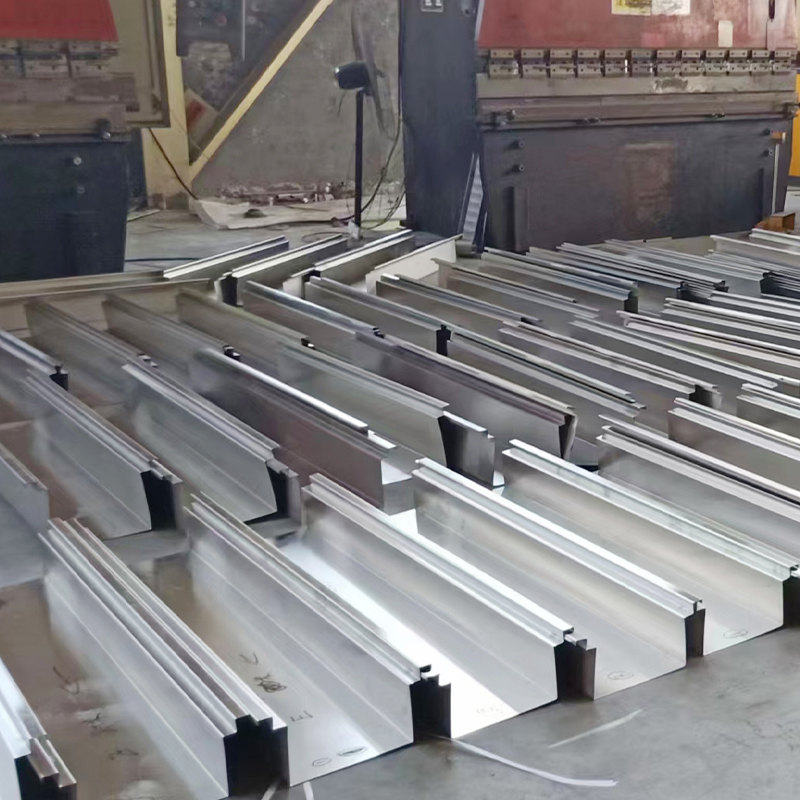
High-precision stamping is the central process. The die design determines the height, spacing, shape, and direction of the raised traction pattern. A well-designed die produces consistent anti-slip features across the plate while preventing excessive stress concentration or unwanted deformation. The stamping equipment must apply controlled pressure so that every raised element is formed correctly without cracking, tearing, or uneven distortion.
Pattern engineering is both a manufacturing and safety discipline. The arrangement must provide friction in multiple movement directions, especially where users may turn, stop, climb, or push loads. In industrial environments, slip risk does not always come from straight walking. Workers may rotate while carrying objects, step sideways around equipment, or move backward during maintenance. A balanced pattern supports safer movement in these real-world conditions.
After stamping, plates may undergo leveling, deburring, trimming, bending, welding preparation, frame fitting, or hole finishing. Smooth and controlled edges are essential because sharp burrs can create injury risks and installation difficulties. When plates are designed for bolting, mounting holes must align precisely with support structures. When plates are designed for welding, edge preparation must support strong and clean welds.
Surface treatment follows according to project requirements. Stainless steel may be cleaned, passivated, brushed, or otherwise finished. Galvanized steel may be supplied with protective zinc coating. In some cases, additional treatments may be requested for appearance, corrosion resistance, or identification. However, the primary anti-slip function remains mechanical rather than dependent on a fragile surface layer.
Quality inspection completes the manufacturing cycle. Inspectors check dimensions, thickness, flatness, pattern consistency, aperture quality, load-bearing suitability, edge condition, and visual appearance. For project-based supply, sample approval, batch traceability, and specification confirmation help ensure that delivered plates match design expectations. This systematic approach supports stable performance in drainage, industrial, and municipal installations.
Jiangsu Yameng Traffic Road Facilities Co., Ltd. is positioned as a manufacturer focused on drainage ditch projects, cover plates, and GRC customization. Located in Nantong, Jiangsu Province, China, the company benefits from convenient transportation and waterway access, supporting efficient material movement, production coordination, and shipment. Its product scope includes linear drainage ditches, finished drainage ditches, polymer-based drainage ditches, slot drainage ditches, U-shaped drainage ditches, ductile iron cover plates, stainless steel stamped cover plates, steel gratings, resin concrete cover plates, resin composite manhole covers, stainless steel manhole covers, ductile iron manhole covers, drainage pipes, PE pipes, and related products.
This broad product background is important because stamped non-slip plates are often part of larger drainage or infrastructure systems. A manufacturer familiar with both cover plates and drainage channels can better coordinate plate dimensions, channel openings, load requirements, water flow, frame details, and site installation needs. Instead of treating the cover plate as an isolated component, the company can consider how the plate interacts with the entire drainage system.
The company’s strengths also include customization. Industrial sites rarely have identical requirements. One project may need stainless steel plates for a food-processing washdown area. Another may require galvanized plates for outdoor loading platforms. A municipal drainage project may need plates designed to fit linear channels with pedestrian and light vehicle loads. A factory renovation may need non-standard sizes to match existing trenches. Custom manufacturing capability allows the product to serve these varied needs.
The GRC series capability further reflects the company’s project-oriented manufacturing mindset. With professional designers, mold designers, CNC engravers, and an experienced production and construction technical team, the company can provide services from detailed design and drawings to mold making, production, on-site construction, and after-sales support. This integrated approach is valuable for customers who require more than standard catalog items.
Advanced manufacturing strength is also expressed through process control. Precision stamping, mold development, cutting accuracy, material management, and inspection procedures all contribute to consistent product quality. In competitive markets, low price alone is not enough. A cover plate must arrive with the correct size, stable pattern, clean finish, and dependable load performance. Production discipline reduces rework, installation delays, and safety concerns.
The company’s commitment to research and development supports continuous product improvement. Drainage and access systems must adapt to new construction methods, stricter safety expectations, environmental challenges, and customer demand for longer service life. By focusing on product development, manufacturing refinement, and practical engineering, the company can provide stamped non-slip plates that meet current use conditions while allowing future customization.
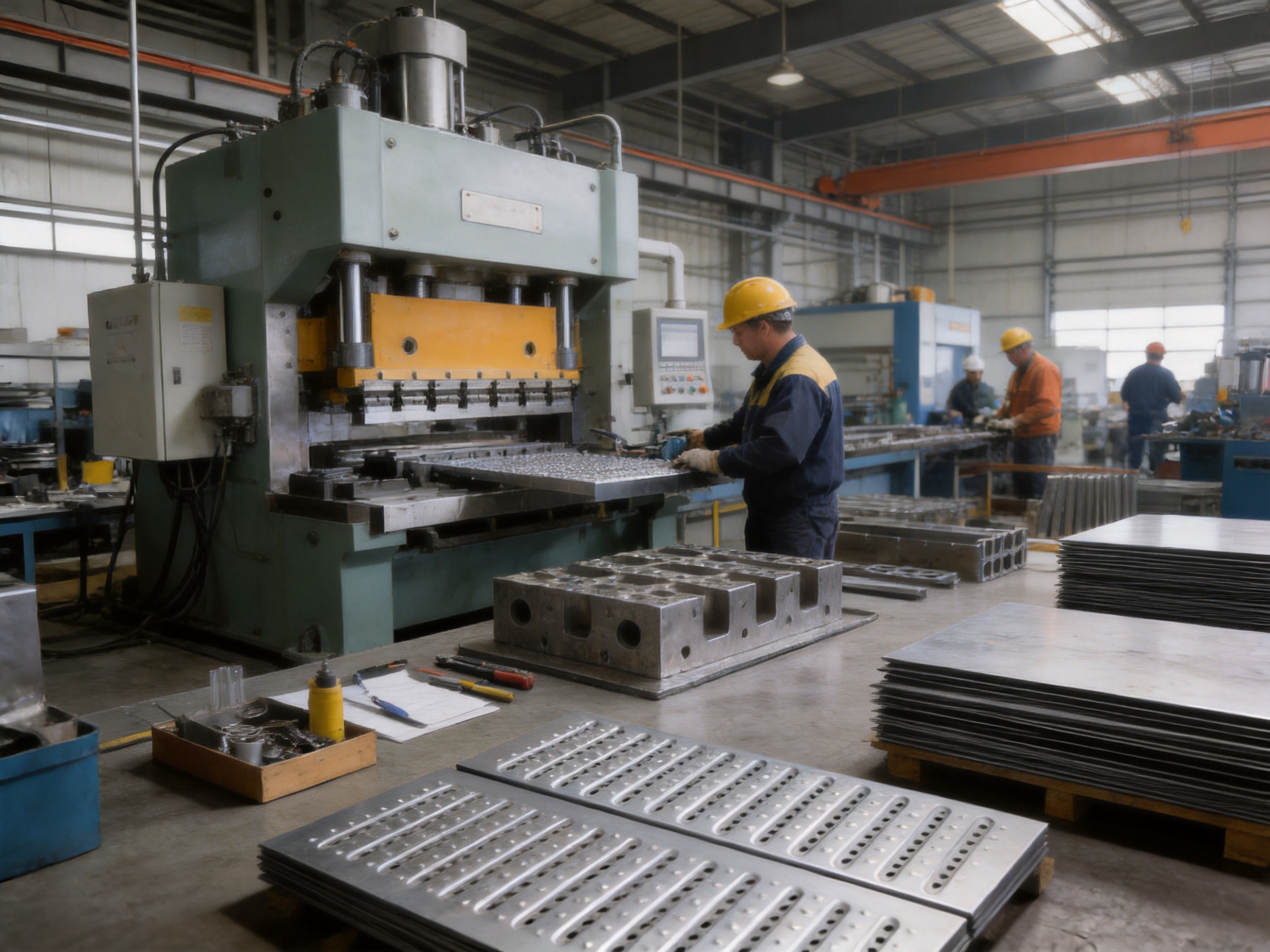
Industrial Grade Stamped Non-slip Plates achieve performance through a combination of pattern design, material strength, aperture layout, installation flexibility, and structural compatibility. Each feature contributes to field usability.
The raised traction pattern is the most visible feature. It increases friction and helps users maintain footing even when contaminants are present. A properly arranged pattern provides grip from multiple directions, unlike simple linear ribs that may only perform well along one movement axis. For stair treads and ramps, multi-directional friction is especially important because users may shift their weight at different angles.
Aperture design supports self-cleaning and drainage. Industrial surfaces can collect dust, metal chips, food residue, mud, and other debris. If contaminants remain trapped on a walking surface, they can reduce traction and create cleaning burdens. Openings in the plate can allow smaller debris and liquid to pass through to a drainage channel or collection area. This keeps the top surface drier and easier to maintain.
Structural thickness and reinforcement are selected according to load conditions. Heavy-duty plates may require greater thickness, closer support spacing, or reinforced edges. The objective is to prevent deformation under repeated traffic. Once a plate bends or rocks, it can create trip hazards, noise, and accelerated wear. Correct engineering at the specification stage helps prevent these issues.
Modular dimensions simplify installation and replacement. A modular plate can be bolted, welded, lifted, replaced, or rearranged with less disruption than large monolithic covers. In industrial plants, maintenance downtime is costly. Modular stamped non-slip plates allow targeted replacement if one section is damaged, reducing the need to remove an entire access system.
Installation flexibility is another major advantage. Plates can be supplied for welding, bolting, frame placement, or integration with drainage channel systems. Bolted installations support removability for cleaning and inspection. Welded installations provide permanence and stability in areas where unauthorized removal or movement must be prevented. Frame-supported installations are common in drainage channels and trenches.
Compatibility with drainage systems is essential. A cover plate must not block water flow, create pooling, or interfere with channel cleaning. When the stamped design is coordinated with the drainage ditch geometry, the system can manage both surface access and water discharge. This dual function is one of the reasons stamped non-slip plates are valuable in modern drainage infrastructure.
In manufacturing plants, stamped non-slip plates are used on production platforms, inspection walkways, maintenance corridors, equipment access floors, and drainage trenches. Machinery areas often have oil mist, coolant, vibration, and metal debris. A textured metal surface helps workers move safely while the plate’s strength supports tools, carts, and occasional equipment loads.
In food and beverage facilities, hygiene and washdown performance are important. Stainless steel stamped plates can support wet cleaning environments, provide corrosion resistance, and reduce standing water. Drainage-compatible openings help wash water move away from operating areas. Smoothly finished edges also help reduce dirt accumulation and cleaning difficulty.
In logistics and warehousing, ramps, loading zones, and forklift passages benefit from durable anti-slip surfaces. Repeated wheel traffic can damage weaker coverings. Stamped steel plates provide mechanical traction without relying on surface coatings. Their ability to handle heavy loads makes them useful near loading docks and material transfer points.
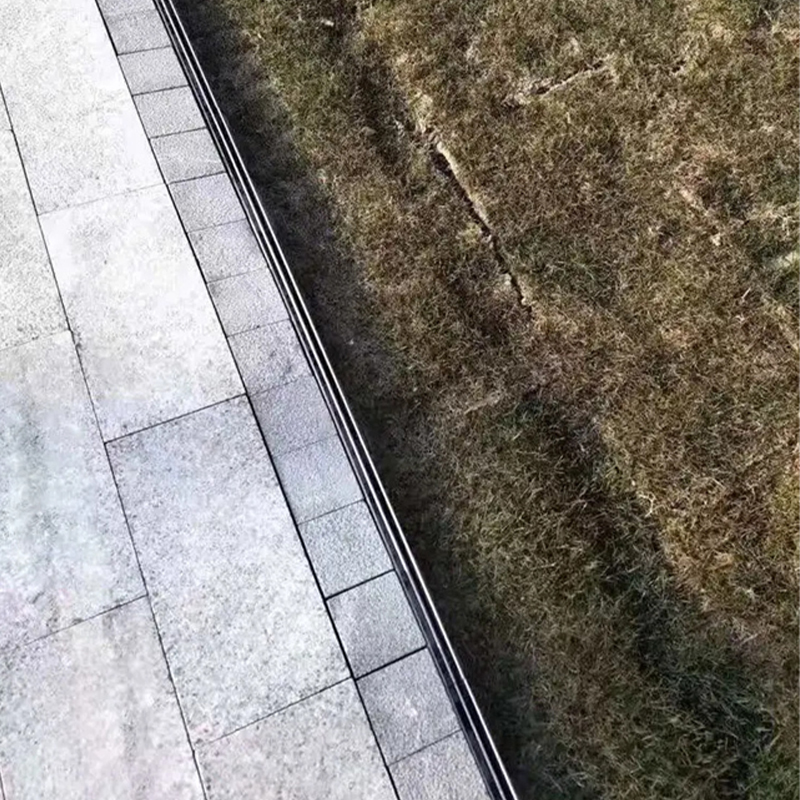
In municipal infrastructure, stamped cover plates can be applied over pedestrian drainage channels, public maintenance access points, and outdoor walkway systems. Rainwater, leaves, sand, and temperature changes require covers that resist corrosion and maintain safe footing. The plates can be integrated with finished drainage ditches and linear drainage systems for sidewalks, plazas, stations, and commercial developments.
In chemical and wastewater facilities, corrosion resistance and drainage are critical. Stainless steel stamped plates can be selected to suit chemical exposure and washdown requirements. Their open pattern allows liquid to drain while providing a stable surface for operators. Proper grade selection and maintenance planning are essential in such aggressive environments.
In marine, port, and outdoor industrial zones, surfaces are exposed to humidity, salt air, rain, and heavy mechanical activity. Stainless or galvanized stamped plates provide better long-term reliability than untreated steel surfaces. Non-slip performance is particularly important where workers move between wet exterior platforms, gangways, and maintenance routes.
Successful installation begins with accurate measurement. The clear opening, support width, channel depth, frame level, traffic direction, and expected load must be confirmed before production. If a plate is too small, it may shift or become unsafe. If it is too large, it may not fit properly or may require site modification. Precision fabrication reduces these risks.
Support conditions are critical. A plate’s load capacity depends not only on its material and thickness but also on how it is supported. Continuous edge support provides better stability than uneven or narrow bearing surfaces. For drainage ditch covers, the support frame or channel edge must be strong enough to transfer loads safely to the surrounding structure.
Bolting is suitable where plates need to be removable for cleaning, inspection, or maintenance. Bolt holes must be accurately placed, and fasteners should be selected for corrosion resistance and vibration conditions. Anti-loosening measures may be required in areas with repeated vehicle movement.
Welding provides a fixed installation for platforms, stairs, and permanent access structures. Welding should be performed by qualified personnel using appropriate procedures for the selected material. Stainless steel welding requires attention to heat input, distortion control, and corrosion protection around welded areas.
For stair treads, tread width, nosing visibility, drainage direction, and user comfort should be considered. The pattern must provide grip without creating excessive discomfort or tripping risk. For ramps, the direction of travel and slope angle influence pattern selection. More demanding slopes may require more aggressive traction features.
Maintenance access should never be overlooked. Drainage channels below cover plates require periodic cleaning. If all plates are permanently fixed, inspection may become difficult. A practical layout may combine fixed plates in high-security areas with removable plates at maintenance points.
Industrial Grade Stamped Non-slip Plates are designed to reduce maintenance burden, but they still benefit from regular inspection and cleaning. The main maintenance tasks include removing accumulated debris, checking fasteners, inspecting support frames, cleaning corrosive deposits, and confirming that the stamped pattern remains effective.
Because the anti-slip function is formed directly into the metal, there is no coating layer that must be frequently renewed. This is a major life-cycle advantage compared with painted or taped anti-slip solutions. In high-traffic industrial environments, replacing worn coatings can interrupt operations and increase labor costs. Stamped traction remains functional as long as the metal surface and raised features remain in good condition.
Cleaning frequency depends on the environment. Food processing facilities may clean daily. Outdoor drainage systems may require seasonal cleaning, especially where leaves, sand, or sediment accumulate. Chemical plants may need cleaning procedures that match the materials involved. Stainless steel surfaces should be cleaned with suitable methods to preserve corrosion resistance and avoid contamination.
Fasteners and supports should be inspected periodically. A high-quality plate can still become unsafe if its frame corrodes, bolts loosen, or the supporting structure settles. Maintenance planning should treat the plate, frame, channel, and surrounding floor as a system.
Life-cycle value is measured not only by initial purchase price but by service duration, safety performance, reduced downtime, lower replacement frequency, and fewer accident-related costs. Industrial stamped non-slip plates often offer strong value because they combine long-term durability with built-in traction and drainage capability.
Customization is one of the strongest advantages of working with a capable manufacturer. Plates can be tailored by material, thickness, size, pattern type, aperture shape, surface finish, edge detail, mounting method, and load requirement. This ensures that the product matches the environment rather than forcing the project to adapt to a generic plate.
Material options may include stainless steel for corrosion-sensitive or hygienic areas and galvanized steel for cost-effective outdoor or industrial use. Thickness can be selected according to span and load. Larger drainage channels or vehicle-access areas may require stronger specifications than pedestrian-only walkways.
Pattern selection affects both traction and user comfort. Very aggressive patterns may be ideal for oily industrial ramps but unnecessary for light pedestrian areas. A balanced design improves safety without making cleaning difficult or causing discomfort. Aperture shape and spacing also influence drainage rate, debris passage, and small-object retention.
Edge design can include straight edges, folded edges, reinforced borders, frame-compatible dimensions, or custom mounting details. For modular drainage covers, precise edge geometry ensures stable seating and reduces noise. For platform panels, edge treatment can support welding or bolting.
Custom plate shapes may be needed for corners, equipment bases, curved structures, or retrofit projects. Advanced cutting and fabrication allow non-standard designs to be produced more efficiently. This is especially useful in renovation projects where existing drainage trenches or floor openings do not follow standard dimensions.
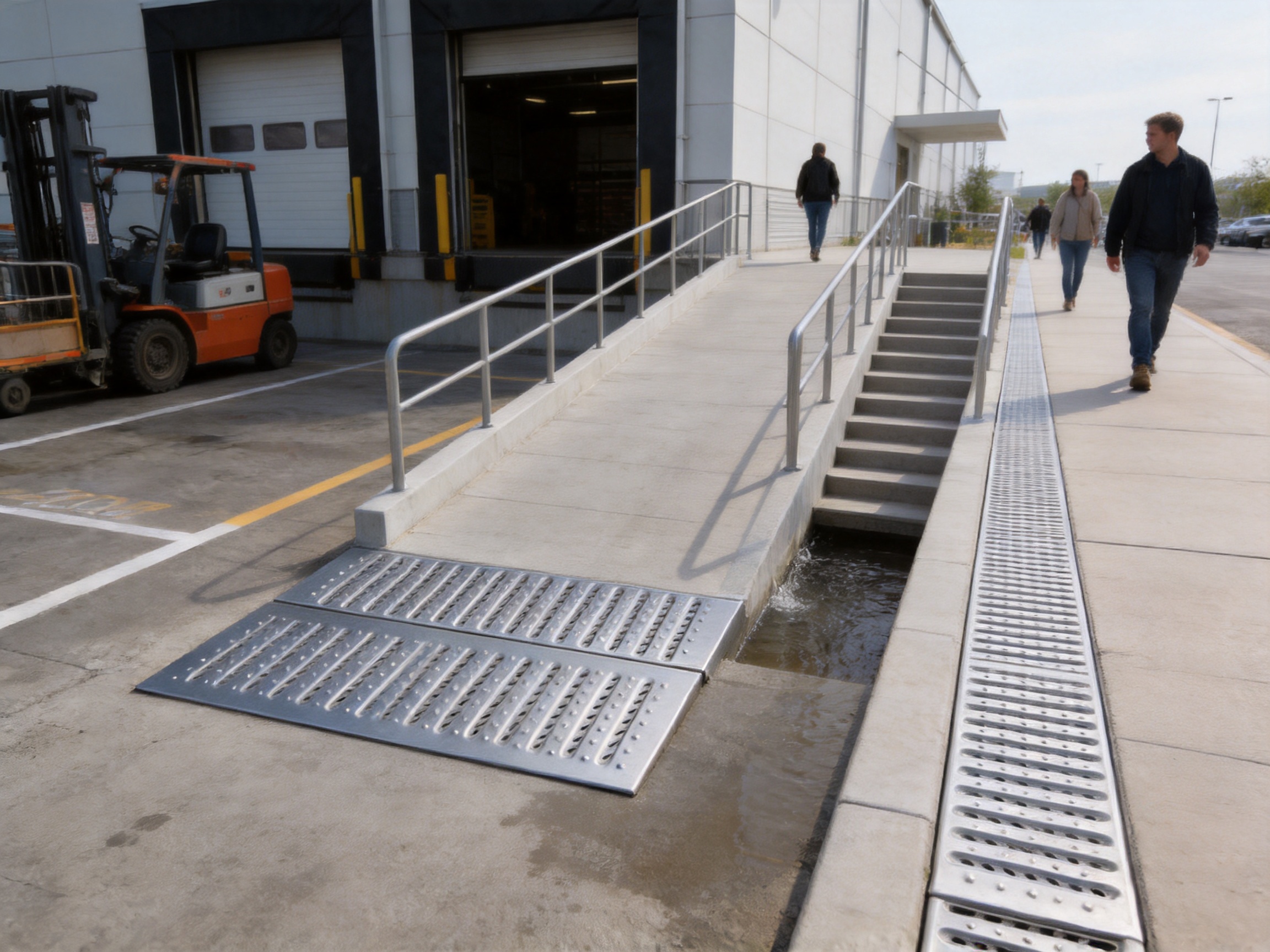
Quality control should be embedded throughout production rather than performed only at the end. Material certificates, dimensional checks, stamping inspection, flatness testing, burr removal verification, surface evaluation, and packaging control all contribute to reliable product delivery.
Dimensional tolerance is important for installation. If plates are inconsistent, site teams may waste time adjusting frames, grinding edges, or replacing sections. Accurate production supports faster installation and a cleaner final appearance.
Pattern consistency affects safety. A plate with uneven stamping may have weak traction zones or visual defects. Consistent raised pattern height and spacing ensure that the entire walking surface performs as intended. This consistency depends on die quality, equipment stability, operator skill, and inspection discipline.
Load performance must match project expectations. For heavy-duty applications, the manufacturer should understand the required traffic type, support span, and safety margin. A plate intended for pedestrians should not be used for forklifts unless properly designed. Clear communication between buyer and manufacturer is essential.
Surface quality influences corrosion resistance and appearance. Scratches, contamination, poor galvanizing, or improper stainless steel handling can reduce long-term performance. Clean processing and protective packaging help ensure that plates arrive in usable condition.
Packaging and logistics also matter. Plates are heavy industrial products that may be shipped in batches for project installation. Proper stacking, separation, bundling, and protection reduce transport damage. Accurate labeling helps site teams identify plate sizes and installation positions quickly.
A stamped non-slip plate may appear simple, but successful application requires manufacturing and project experience. An experienced supplier understands how drainage, load-bearing, anti-slip requirements, corrosion exposure, installation conditions, and maintenance access interact.
Jiangsu Yameng Traffic Road Facilities Co., Ltd. brings value through its involvement in drainage ditch products, cover plates, manhole covers, pipes, steel gratings, and GRC customization. This broad knowledge base helps customers select compatible components rather than isolated products. For example, a drainage channel cover must fit the channel body, meet surface load requirements, allow water intake, resist corrosion, and remain serviceable after installation.
The company’s professional design and mold capability are particularly relevant to stamped products. Stamping performance depends on die design and production repeatability. A manufacturer with mold design and CNC engraving resources can respond more effectively to custom patterns, dimensions, and project-specific requirements.
Production and construction technical experience also helps bridge the gap between factory design and site reality. A plate that looks good in drawings must still be installable on uneven floors, existing channels, new concrete structures, or steel platforms. Technical support can help customers avoid specification mistakes before production begins.
After-sales support is another indicator of manufacturing reliability. Industrial projects may require installation guidance, replacement sections, future expansion, or specification review. A responsible supplier can support long-term project performance rather than treating the sale as a one-time transaction.
When selecting Industrial Grade Stamped Non-slip Plates, buyers should begin by defining the application environment. Is the area indoor or outdoor? Will it be exposed to oil, water, chemicals, salt, or high temperatures? Is the surface for pedestrians only, or will carts, forklifts, or vehicles pass over it? These answers determine material, thickness, pattern, and installation method.
The second step is identifying load requirements. Load should be evaluated according to maximum expected weight, wheel contact area, support span, frequency of traffic, and safety margin. Forklift loads are different from static distributed loads because wheel pressure can be concentrated. If the plate covers a drainage channel, the channel width and bearing edges become especially important.
The third step is choosing the material. Stainless steel is suitable for corrosive, hygienic, wet, or premium environments. Galvanized steel may be suitable for general industrial and outdoor use where cost control is important. The final selection should consider both initial cost and expected service life.
The fourth step is selecting the pattern and aperture layout. Wet and oily ramps need high traction. Public pedestrian areas may need a balance between slip resistance, comfort, and appearance. Drainage areas require adequate water intake. Areas where small tools may fall should avoid overly large openings.
The fifth step is confirming installation details. Bolted plates, welded plates, and frame-supported covers each have different requirements. Maintenance access should be planned before production. If plates must be removed regularly, lifting points or manageable panel sizes may be needed.
The final step is confirming manufacturing drawings and tolerances. Clear drawings reduce misunderstandings and support efficient production. Buyers should review length, width, thickness, pattern direction, hole position, edge treatment, material grade, surface treatment, quantity, and packaging requirements before approving production.
They are used to create safe, durable walking and vehicle surfaces in industrial plants, drainage systems, platforms, stair treads, ramps, catwalks, loading zones, and municipal access areas. They provide traction while supporting drainage and load-bearing coverage.
They use raised stamped patterns and controlled apertures to increase friction and reduce water or debris accumulation. This helps prevent slipping in wet, oily, frosty, or dusty conditions.
In many demanding environments, yes. Checker plates provide basic texture, but stamped non-slip plates can offer more aggressive multi-directional traction and better drainage. They are especially useful where oil, water, or frost is present.
Yes. They are suitable for drainage channel cover applications when designed with the correct dimensions, load capacity, aperture pattern, and support conditions. They can be integrated with linear drainage ditches, U-shaped channels, finished drainage ditches, and related systems.
Stainless steel is generally better for corrosive, hygienic, wet, or chemical environments. Galvanized steel is often suitable for general industrial and outdoor applications where strength and cost efficiency are important. The best choice depends on exposure conditions and service-life expectations.
Yes. A capable manufacturer can customize material, thickness, length, width, pattern, apertures, edge treatment, mounting holes, and installation method according to project requirements.
Not for their primary anti-slip function. The traction is mechanically formed into the metal surface through stamping. This reduces reliance on coatings that can peel or wear away.
Maintenance includes regular cleaning, debris removal, fastener inspection, support frame inspection, and corrosion monitoring. The required frequency depends on the environment and traffic intensity.
They can be designed for forklift traffic if the correct material thickness, support span, edge bearing, and load rating are specified. Buyers should provide traffic and load information before production.
Manufacturer capability affects pattern consistency, dimensional accuracy, material quality, customization, load suitability, and delivery reliability. Experienced production and engineering support help ensure that the plates perform safely after installation.
Industrial Grade Stamped Non-slip Plates provide a strong and practical solution for environments where safety, drainage, durability, and installation efficiency must work together. By forming raised traction patterns directly into stainless steel or galvanized steel substrates, these plates deliver long-term anti-slip performance without depending on temporary coatings or tapes. Their ability to resist wear, support heavy traffic, drain water, and fit modular systems makes them valuable for industrial plants, drainage channels, public infrastructure, warehouses, platforms, stairways, and outdoor access areas.
The product’s advantages over many competing surfaces are clear. Compared with smooth plates, it offers far better traction. Compared with ordinary checker plates, it can provide more effective grip and drainage. Compared with coated panels, it offers longer-lasting mechanical anti-slip performance. Compared with some grating or composite solutions, it can provide a more continuous, durable, and customizable metal walking surface.
When produced by an experienced manufacturer with drainage channel expertise, stamping technology, mold capability, material control, and project support, Industrial Grade Stamped Non-slip Plates become more than simple cover plates. They become engineered safety components that contribute to efficient construction, reduced maintenance, improved workplace safety, and longer infrastructure service life.
For buyers and engineers seeking reliable stainless steel stamped cover plates, careful specification is essential. Material, pattern, thickness, load capacity, drainage function, installation method, and maintenance access should all be considered. With proper design and manufacturing, these plates can provide dependable performance in some of the toughest working environments.
American Society for Testing and Materials. Standard specifications for stainless steel sheet, strip, plate, and structural components.
International Organization for Standardization. General principles for slip resistance, surface safety, and industrial access design.
Occupational safety guidance literature on walking-working surfaces, industrial platforms, and fall prevention.
Steel Construction Institute. Design guidance for metal flooring, gratings, and access structures.
Corrosion engineering handbooks covering stainless steel selection, galvanized steel protection, and maintenance in wet environments.
Drainage engineering manuals for linear drainage channels, trench covers, load-bearing frames, and surface water management.
Related Products
The Minimalist Linear GRC door and window frames are specifically designed for architectural project...
READ MOREThe Minimalist Linear GRC door and window frames are specifically designed for architectural project...
READ MOREThe Minimalist Linear GRC door and window frames are specifically designed for architectural project...
READ MOREThe Minimalist Linear GRC door and window frames are specifically designed for architectural project...
READ MOREThe Minimalist Linear GRC door and window frames are specifically designed for architectural project...
READ MOREThe Minimalist Linear GRC door and window frames are specifically designed for architectural project...
READ MORE
Contact us
Factory Address
Group 12, Quanxin Village, Donghai Town, Qidong City, Nantong City, Jiangsu Province, China
phone
+86-13914963840
+86-13451754670
products
QR CODE
 Wholesale Drainage Ditch Manufacturers