 English
 Español
 عربى
عربى

Engineered to address the long-term challenges of chemical erosion and structural aging in architect...
READ MOREJul 10, 2026
Content
Modern roads, pedestrian areas, parking facilities, commercial developments, and industrial sites all face the same practical challenge: water must be removed quickly, safely, and reliably. When rainwater, washdown water, or surface runoff remains on paved areas, it creates hazards such as slipping, vehicle skidding, pavement deterioration, structural erosion, and long-term maintenance problems. The Anti-Slip and Wear-Resistant Linear Drainage Channel is designed to solve these issues with a strong, modular, efficient, and safety-focused drainage system suitable for demanding environments.
This product belongs to the linear drainage channel category and is engineered for projects that require high water discharge capacity, stable load performance, long service life, and safe surface contact. Its anti-slip grating design helps improve pedestrian and vehicle safety in wet conditions, while wear-resistant materials allow the drainage channel to perform reliably under frequent traffic, abrasion, and weather exposure. Compared with traditional point drains or basic trench drains, this linear system provides more consistent surface water collection across a wider area, reducing puddles and helping maintain safer, cleaner, and more durable paved surfaces.
Jiangsu Yameng Traffic Road Facilities Co., Ltd. manufactures drainage ditch products, cover plates, linear drainage channels, polymer-based drainage channels, slot drainage channels, U-shaped drainage channels, ductile iron cover plates, stainless steel stamped cover plates, steel gratings, resin concrete cover plates, manhole covers, drainage pipes, PE pipes, and GRC customized products. With experience in drainage engineering and GRC customization, the company combines product design, mold development, manufacturing, construction support, and after-sales service to provide integrated drainage solutions for domestic and international projects.
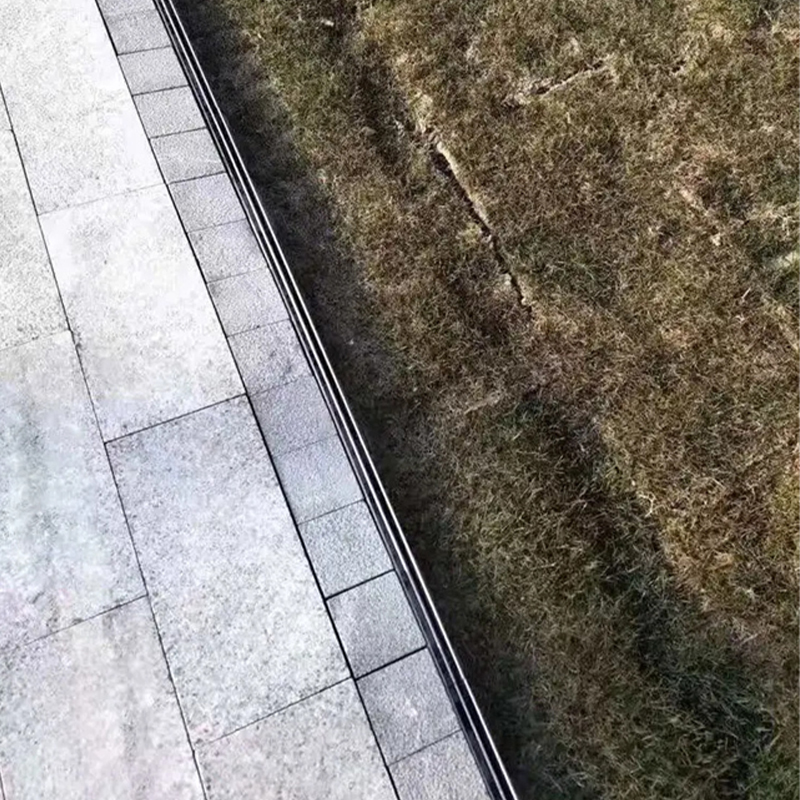
Anti-slip and wear-resistant linear drainage channel
Water management is one of the most important parts of site planning. A well-designed surface drainage system protects people, vehicles, pavement, building foundations, and surrounding infrastructure. In urban spaces, poor drainage can cause standing water on sidewalks and plazas, leading to slipping accidents and public complaints. In parking lots and driveways, inadequate drainage can cause water accumulation that increases tire slip and accelerates pavement damage. In industrial areas, water mixed with dust, oil, chemicals, or production residues must be discharged efficiently to keep work zones cleaner and safer.
Linear drainage channels collect water continuously along a line rather than at isolated points. This design is especially effective for flat or broad paved surfaces because water does not need to travel long distances before entering the drainage system. The result is faster collection, better control of runoff, and reduced dependence on steep surface slopes. In many projects, a linear drainage system can simplify grading design and improve the final appearance of the site.
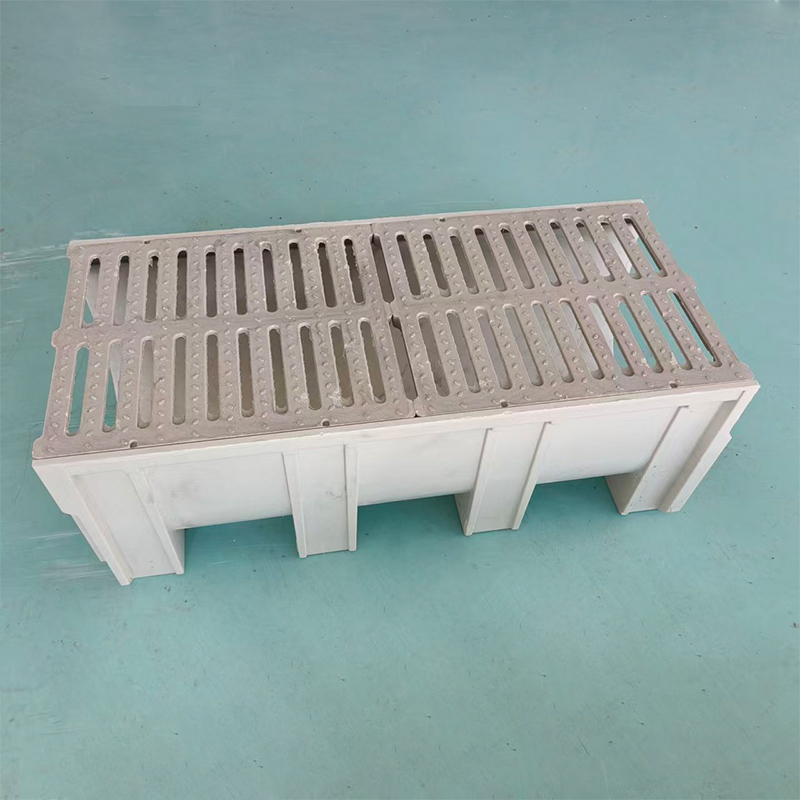
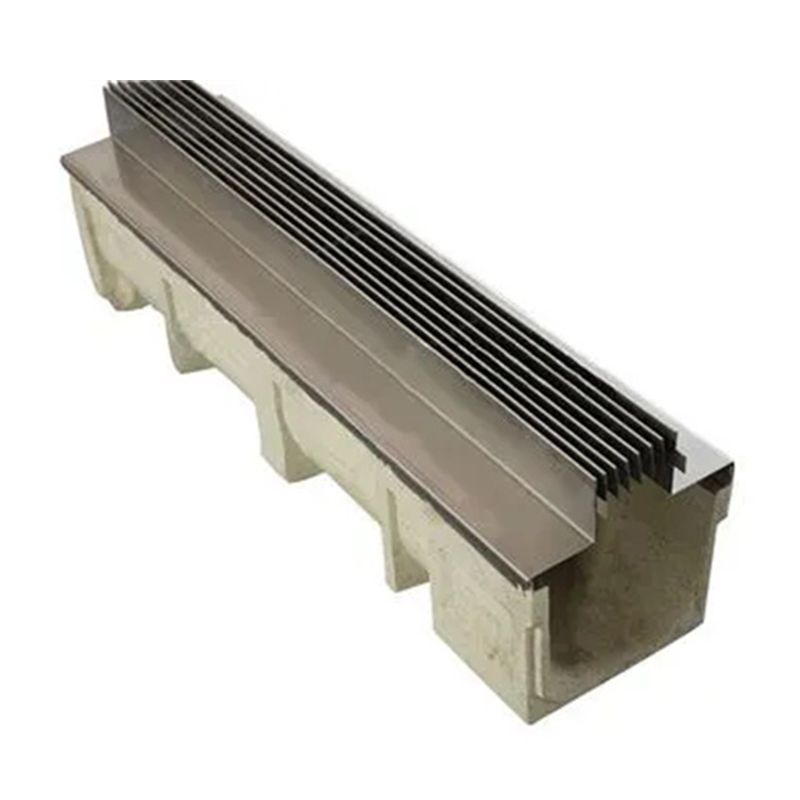
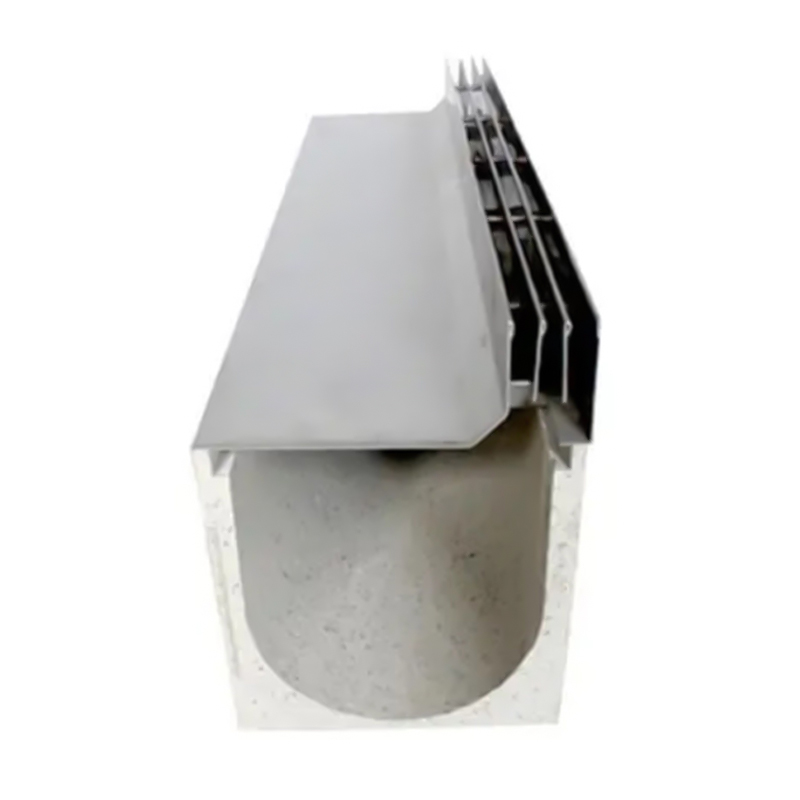
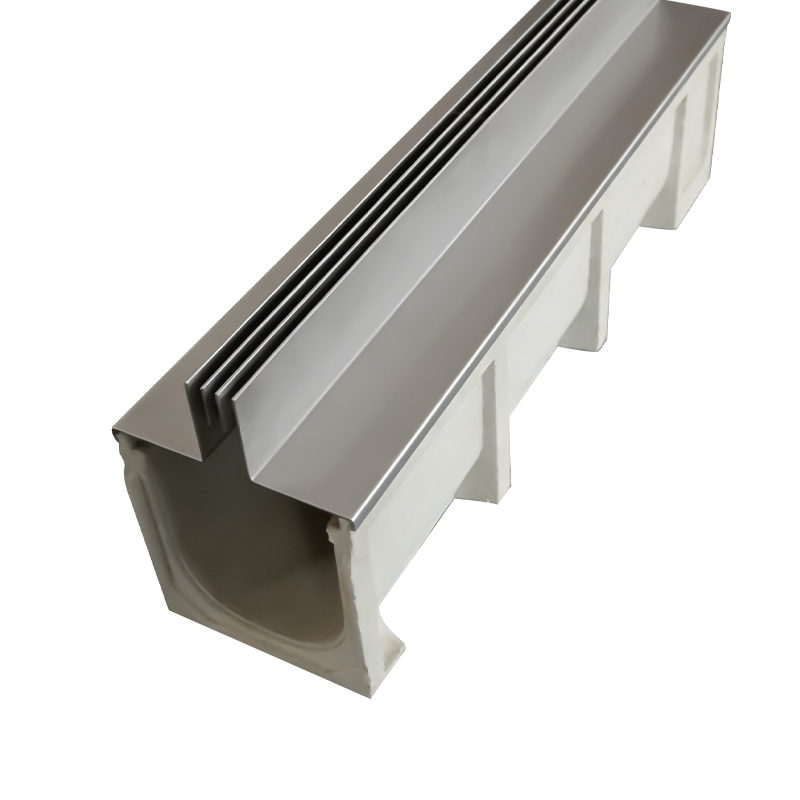
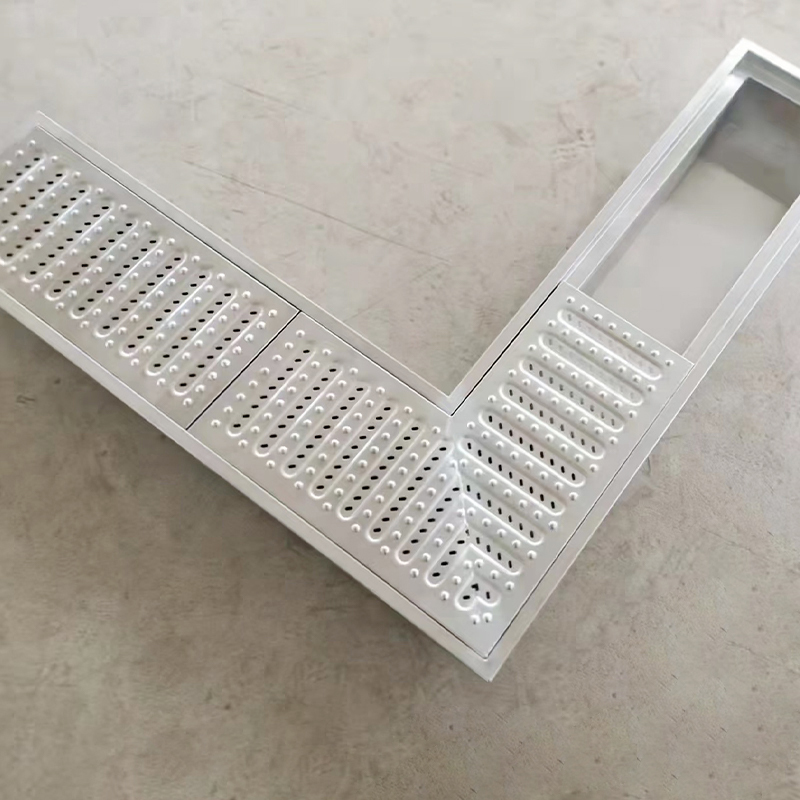
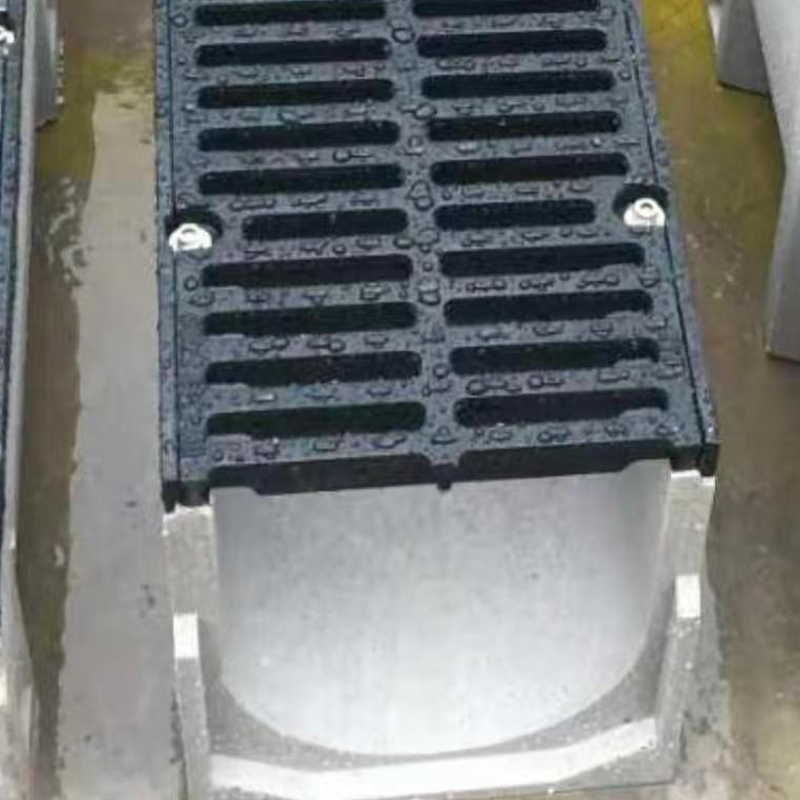
The Anti-Slip and Wear-Resistant Linear Drainage Channel is developed for precisely these situations. It combines a channel body with a removable grating or cover plate that is engineered for both drainage performance and surface safety. The grating openings allow water to pass quickly into the channel while maintaining a stable walking or driving surface. The channel body then guides water to the outlet system, helping prevent ponding, flooding, erosion, and operational disruption.
Compared with conventional drainage methods, linear drainage can provide a more professional, controlled, and visually organized solution. It is particularly valuable for commercial complexes, pedestrian streets, landscaped public areas, industrial workshops, logistics yards, municipal roads, and high-traffic parking zones. When combined with wear-resistant materials and anti-slip surface treatment, it becomes a long-term infrastructure component rather than a temporary drainage accessory.
The Anti-Slip and Wear-Resistant Linear Drainage Channel is a modular drainage product designed to handle heavy water flow and frequent contact from pedestrians, bicycles, cars, service vehicles, and industrial equipment. Its core features include anti-slip surface geometry, abrasion-resistant construction, strong load-bearing capability, efficient hydraulic performance, and convenient maintenance access.
The channel can be manufactured using reinforced polymer concrete, resin concrete, stainless steel, ductile iron cover plates, steel gratings, or related material combinations depending on project requirements. Polymer concrete and resin concrete are valued for their high compressive strength, smooth internal surface, low water absorption, and chemical resistance. Stainless steel and ductile iron cover solutions provide enhanced mechanical strength and surface durability. For projects requiring architectural customization, the manufacturer’s GRC-related design and mold capabilities support complex forms and coordinated site aesthetics.
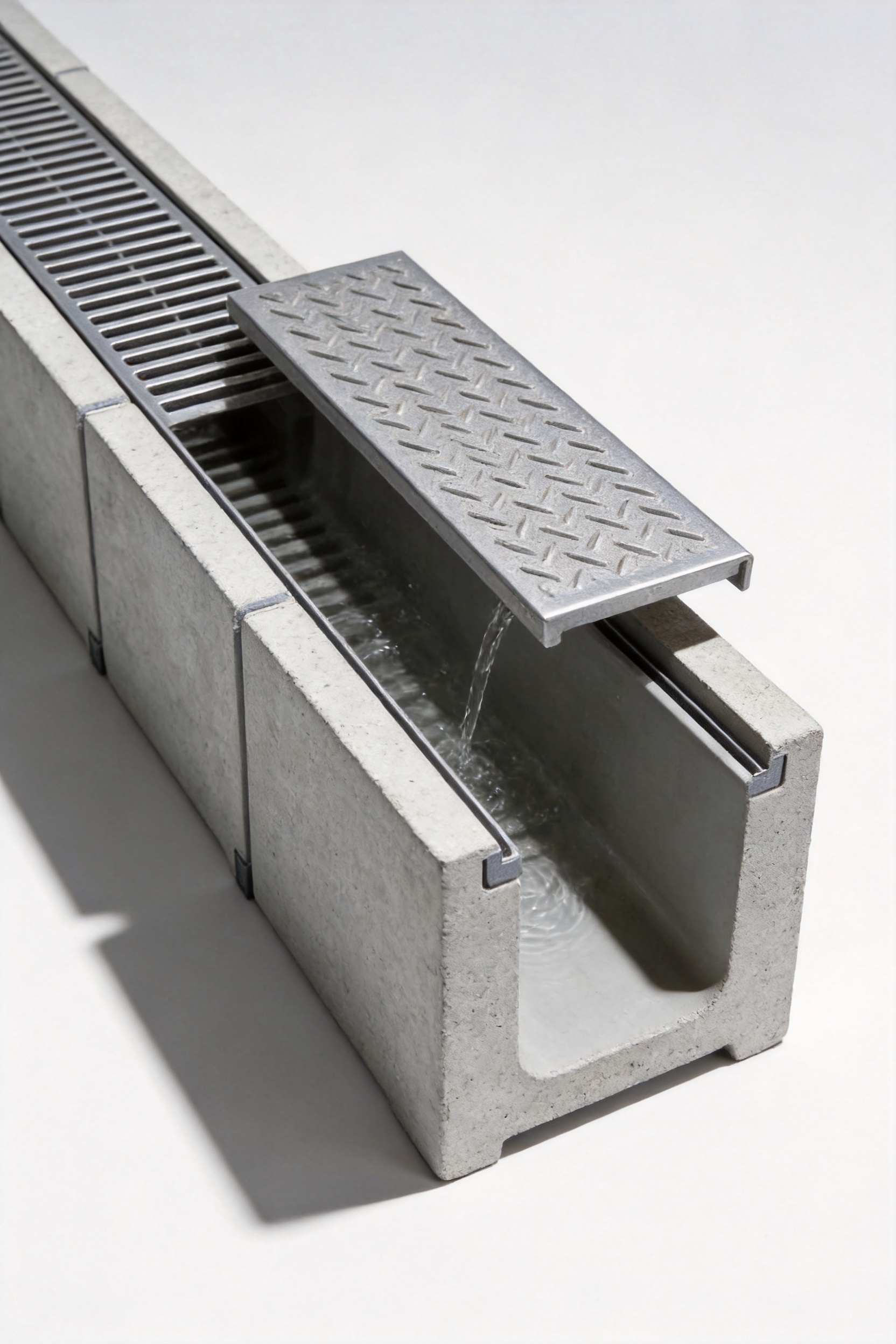
The product is typically supplied in modular sections. This modular format makes transportation, handling, alignment, installation, extension, replacement, and cleaning more practical. Contractors can assemble channels according to the project layout, connect them to catch basins or drainage pipes, and integrate them with surrounding pavement materials such as concrete, asphalt, tiles, stone, or industrial flooring. Removable grates make it easier to inspect the internal channel, remove debris, and maintain hydraulic performance over time.
What makes this product especially useful is its balance of safety and drainage efficiency. Some drainage channels may collect water but create slippery or unstable surfaces. Others may be strong but difficult to clean. Some may be easy to install but not suitable for heavy-duty use. The Anti-Slip and Wear-Resistant Linear Drainage Channel is designed to address all of these concerns together, making it suitable for projects where public safety, durability, water flow, and maintenance cost all matter.
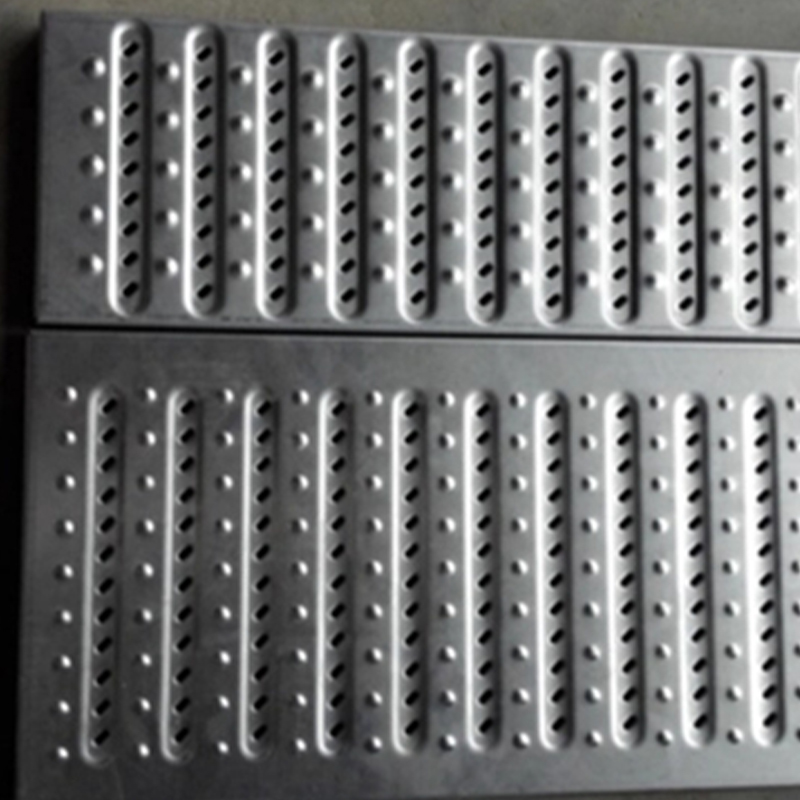
The anti-slip surface is one of the most important advantages of this drainage channel. In rainy weather or washdown environments, ordinary smooth covers can become dangerous. Pedestrians may slip, bicycles may lose traction, and vehicles may experience reduced tire grip. The grating design of this product is engineered to improve friction and provide more stable contact under wet conditions.
Anti-slip performance is achieved through surface texture, grating geometry, slot arrangement, edge design, and material selection. Openings are designed to allow efficient water intake while reducing the risk of unstable foot contact. In pedestrian zones, this can help reduce slip hazards. In vehicle areas, it supports safer tire movement across the drainage line. In commercial sites, it helps create a safer and more professional environment for customers, staff, and service vehicles.
Compared with flat, untreated metal plates or low-quality plastic covers, an anti-slip grating provides clear practical benefits. It is more suitable for wet outdoor environments, building entrances, underground parking ramps, loading areas, driveways, and public walkways. The result is a drainage system that does not merely remove water but also contributes to safer daily use.
Drainage channels are exposed to repeated wear. Pedestrian traffic, vehicle wheels, sand, gravel, cleaning tools, environmental particles, and waterborne debris can gradually damage weak materials. In industrial areas, abrasion can be even more severe due to forklift movement, production residues, and chemical exposure. Therefore, wear resistance is essential for long-term drainage performance.
This linear drainage channel uses durable materials such as reinforced polymer concrete, resin concrete, stainless steel, ductile iron, or steel grating options according to project needs. These materials are selected for strength, abrasion resistance, weather resistance, and dimensional stability. Polymer concrete and resin concrete offer a dense structure and smooth surface, reducing water penetration and supporting efficient flow. Stainless steel offers corrosion resistance and a clean appearance. Ductile iron and steel gratings provide excellent load-bearing performance for roads and vehicle zones.
Wear resistance reduces the need for frequent replacement. It also helps preserve the original anti-slip geometry and water intake capacity. A drainage channel that wears too quickly may lose surface texture, deform at the edges, collect debris more easily, or create uneven contact with pavement. By using stronger material systems and controlled manufacturing methods, this product helps protect project owners from premature maintenance costs.
The drainage channel is designed to move water quickly from the surface into the collection path. Its engineered slots and channel gradients help reduce standing water and improve runoff control. A smooth internal channel surface minimizes resistance and helps debris move toward cleaning points or outlet areas. When properly installed with the correct slope and outlet connection, the system can handle heavy rainfall, washdown water, and daily runoff with dependable efficiency.
Efficient water flow is not only a comfort feature; it is a structural protection measure. Standing water can penetrate pavement joints, weaken base layers, freeze in cold climates, stain surfaces, and contribute to algae or moss growth. In commercial and public spaces, puddles can lower user satisfaction and increase liability concerns. In industrial facilities, water accumulation can disrupt operations and damage materials or equipment.
The linear format allows the channel to collect water along an extended path. This is more effective than relying only on point drains, especially in wide areas where surface gradients are limited. Designers can place the channel at entrances, pavement edges, transition lines, low points, garage ramps, factory doorways, or across drive lanes to intercept water before it spreads.
Modular sections make the product practical for a wide range of project sizes. A small driveway may require only a short channel run, while a commercial plaza or industrial yard may require long continuous lines with multiple outlets. Modular design allows the same product concept to adapt to different site dimensions, drainage capacities, and installation conditions.
During installation, modular channels can be aligned, leveled, connected, and embedded into surrounding pavement. Contractors can extend or modify the layout as needed. If a section is damaged in the future, localized replacement may be possible without removing the entire system. This flexibility gives the product an advantage over drainage structures that require extensive casting or custom fabrication on site.
Modularity also supports project scheduling. Prefabricated sections can be delivered to the site and installed in sequence, reducing uncertainty and improving construction efficiency. This is especially important for commercial or municipal projects where traffic interruption and construction time must be controlled.
Drainage systems inevitably collect leaves, sediment, packaging fragments, stones, and other debris. If maintenance access is difficult, the channel can become blocked and lose performance. The Anti-Slip and Wear-Resistant Linear Drainage Channel includes removable grates or cover plates, allowing maintenance teams to inspect and clean the channel more efficiently.
Low maintenance design reduces labor cost and downtime. Cleaning can be performed periodically depending on site conditions. In public areas, easy maintenance helps preserve a clean appearance. In industrial facilities, it helps maintain operational safety. In parking lots, it reduces the risk of water backing up during heavy rain. A drainage product that is easy to maintain is more likely to perform well throughout its full service life.
Many drainage failures are not caused by the absence of drains but by the use of unsuitable drainage products. Low-grade channels may crack under vehicle loads, corrode in wet environments, become slippery, clog easily, or require difficult repairs. Traditional cast-in-place trench drains can be strong but may lack dimensional accuracy and finish consistency. Point drains are useful in certain locations but may not collect water evenly from broad surfaces. Plastic channels can be lightweight and economical but may not be ideal for high-load or abrasive environments.
The Anti-Slip and Wear-Resistant Linear Drainage Channel offers advantages because it is engineered as a complete performance system. It addresses hydraulic capacity, surface safety, structural strength, maintenance access, installation efficiency, and durability at the same time. This integrated approach is particularly valuable for customers who want long-term value rather than the lowest initial purchase cost.
| Evaluation Factor | Anti-Slip and Wear-Resistant Linear Drainage Channel | Common Low-Grade Drainage Option |
|---|---|---|
| Surface Safety | Anti-slip grating geometry supports safer pedestrian and vehicle contact in wet conditions. | Smooth or poorly designed covers may become slippery and increase risk. |
| Wear Resistance | Durable material options such as polymer concrete, stainless steel, ductile iron, and reinforced grating systems. | Materials may wear, deform, crack, or corrode faster under frequent use. |
| Drainage Efficiency | Linear intake and engineered flow path collect water continuously and reduce ponding. | Point collection or inconsistent channel shape may leave standing water. |
| Installation | Modular sections allow flexible layout, easier alignment, and faster project adaptation. | May require more site labor, custom forming, or difficult adjustment. |
| Maintenance | Removable grates support cleaning, inspection, and debris removal. | Access may be limited, increasing blockage risk and labor cost. |
| Service Life | Designed for repeated traffic, weather exposure, and long-term drainage performance. | Premature replacement may be needed if the system is under-designed. |
This comparison demonstrates why material selection, grating design, and manufacturing quality are critical. A drainage channel is often installed beneath or within expensive pavement. If it fails, repair can be disruptive and costly. Choosing a stronger, safer, and more maintainable system at the beginning helps reduce lifecycle cost and protects the surrounding infrastructure.
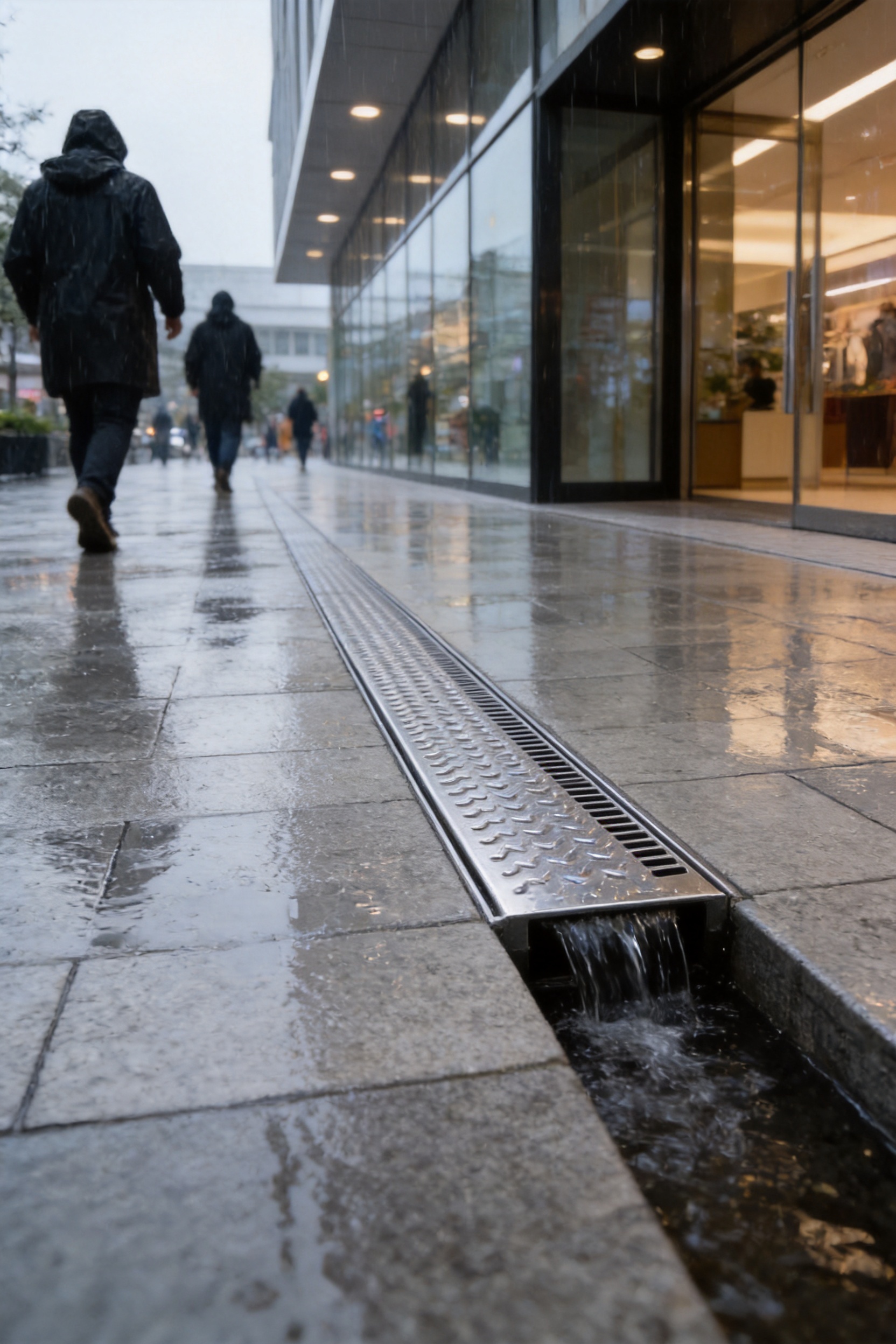
Sidewalks and pedestrian streets require drainage systems that are safe, attractive, and reliable. Water accumulation can make walking uncomfortable and unsafe, especially around shop entrances, public squares, parks, and transport stations. The anti-slip grating design makes this channel suitable for pedestrian environments where wet-weather safety is important.
Because the channel is linear, it can be installed along pavement edges, at low points, near building entrances, or across pedestrian flow lines. The removable grate allows regular cleaning, which is useful in areas with leaves, food packaging, dust, and urban debris. With suitable cover plate selection, the drainage line can coordinate with surrounding paving design while maintaining strong hydraulic performance.
Parking lots and driveways are exposed to both water and vehicle loads. During rainstorms, water can accumulate in low areas, creating inconvenience for drivers and pedestrians. In winter or colder regions, trapped water may freeze and create additional hazards. A linear drainage channel installed at key collection points can intercept runoff and guide it away from traffic areas.
The wear-resistant structure is important in parking applications because tires repeatedly pass over the channel. The cover must resist deformation, surface wear, and impact. The anti-slip feature also improves tire contact when vehicles cross the channel in wet conditions. For underground parking entrances, garage ramps, service roads, and private driveways, this product provides a clean and reliable drainage solution.
Commercial buildings need drainage products that combine function with appearance. Shopping centers, hotels, office buildings, schools, hospitals, exhibition centers, and public facilities must protect visitors while maintaining a professional environment. Surface water near entrances can damage flooring, create slipping hazards, and reduce the quality of the user experience.
The Anti-Slip and Wear-Resistant Linear Drainage Channel helps manage water at building thresholds, plaza areas, courtyards, loading entrances, and landscaped paths. Its modular design allows it to follow architectural lines, while durable material options support long-term operation. For developers and facility managers, the benefit is a drainage system that reduces maintenance problems and supports a safer public environment.
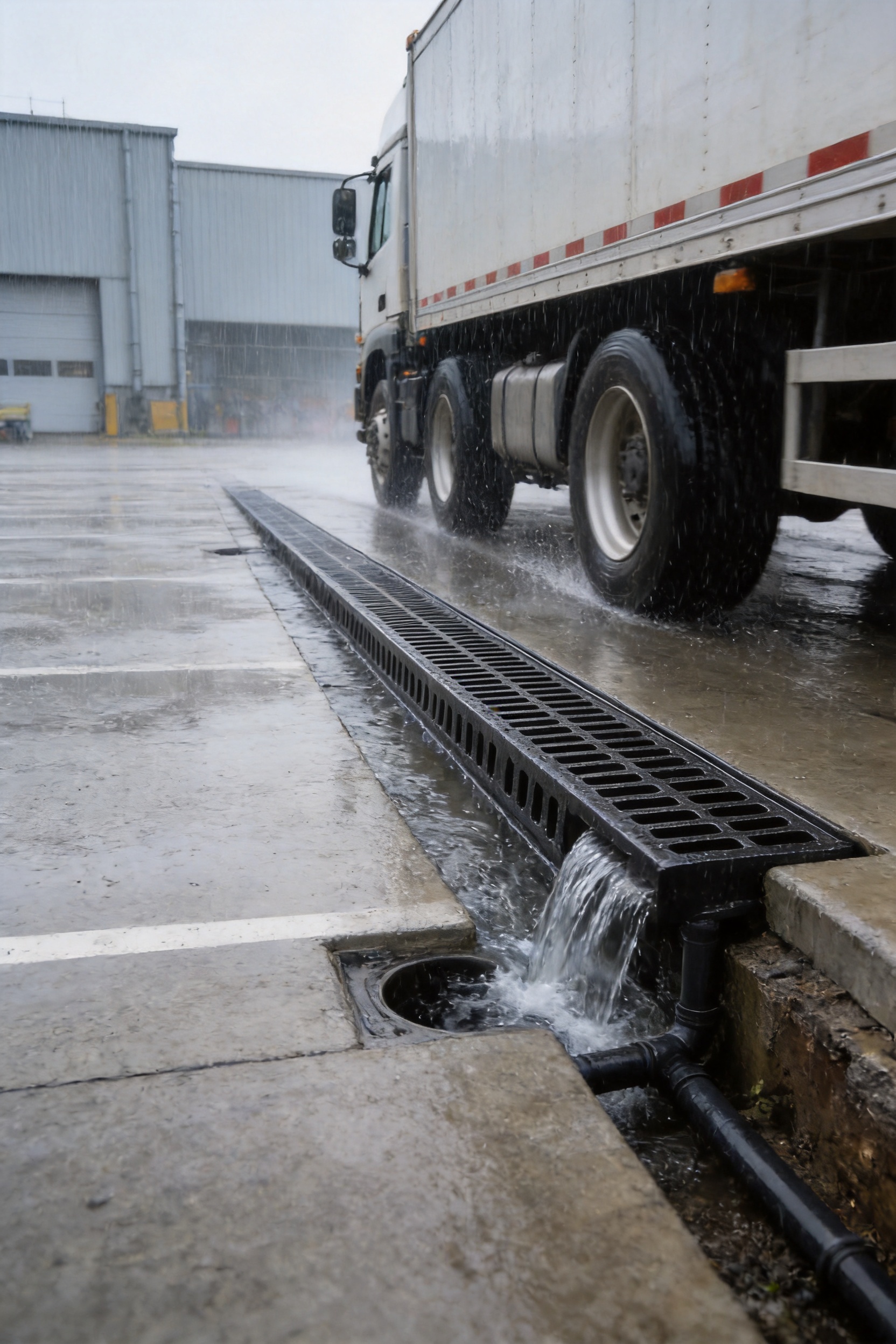
Industrial drainage conditions are often more demanding than commercial or residential environments. Channels may be exposed to forklift traffic, service vehicles, washdown water, abrasives, oils, chemicals, and heavy debris. Weak drainage products can crack, clog, corrode, or become unsafe. A wear-resistant channel with strong grating options is therefore essential.
This product is suitable for workshops, logistics centers, warehouses, factories, loading docks, maintenance zones, and equipment yards. The channel can help remove washdown water, rainwater, and operational runoff, improving cleanliness and reducing safety risks. Removable grates also allow periodic cleaning of sediment and debris, which is important in industrial maintenance programs.
Municipal drainage must withstand constant exposure to weather, traffic, street cleaning, and public use. Linear drainage channels can be used along road edges, pedestrian crossings, curb transitions, bus stations, bicycle lanes, and traffic facilities. When equipped with appropriate cover plates or gratings, the system can support road safety and improve runoff collection.
For municipal projects, long service life and easy maintenance are especially important. Public works departments need products that reduce repeated repairs and complaints. The combination of durable materials, anti-slip surfaces, and modular cleaning access makes this drainage channel a practical choice for urban infrastructure improvement.
The performance of a drainage channel depends heavily on material engineering. The channel body, grate, cover plate, edge reinforcement, connecting components, and outlet accessories must work together under real site conditions. Jiangsu Yameng Traffic Road Facilities Co., Ltd. provides a broad product range that allows drainage solutions to be matched to different project needs.
Reinforced polymer concrete and resin concrete are often chosen for channel bodies because they provide high strength, good dimensional accuracy, and low water absorption. Their dense composition helps resist freeze-thaw damage, chemical exposure, and surface degradation. A smooth internal surface supports better water flow and reduces sediment retention compared with rougher cast-in-place concrete surfaces.
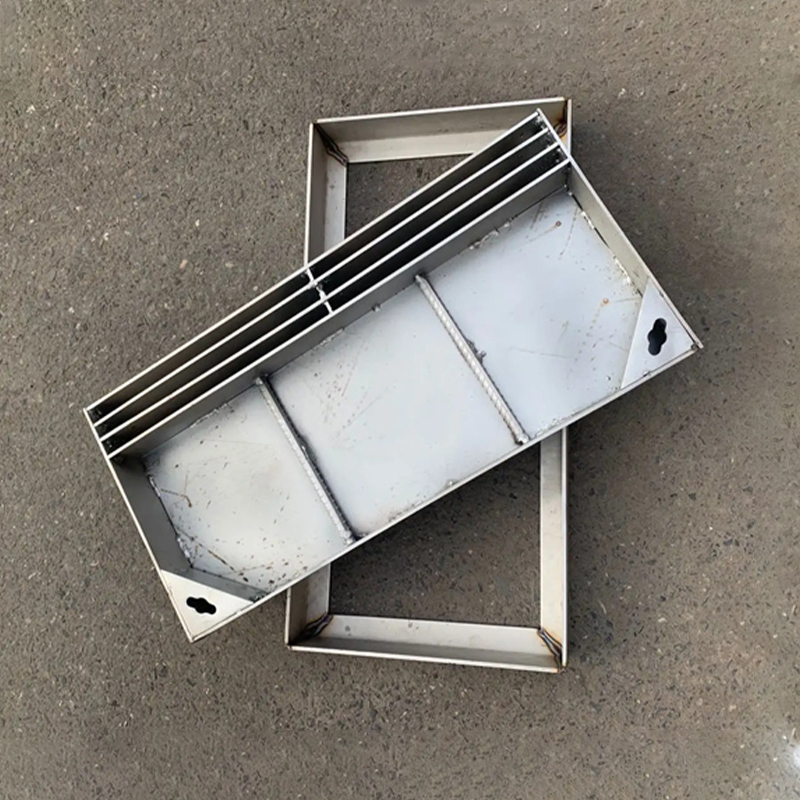
Stainless steel components are useful where corrosion resistance, clean appearance, and hygiene are important. Stainless steel stamped cover plates can be applied in architectural, commercial, and light industrial settings. Ductile iron cover plates are suitable for heavier load applications where toughness and impact resistance are important. Steel gratings offer high open area and strong drainage intake capacity, making them useful for roads, factories, parking lots, and service zones.
In some projects, resin composite manhole covers, stainless steel manhole covers, ductile iron manhole covers, drainage pipes, and PE pipes may be integrated into the overall drainage network. This allows customers to source related infrastructure components from a supplier familiar with drainage system requirements. The result is better product compatibility and more coordinated project execution.
GRC customization adds another layer of capability. Glass fiber reinforced concrete can be used for architectural and customized construction elements where shape, surface texture, and design coordination matter. With professional designers, mold designers, CNC engraving, and experienced production teams, the company can support customized drainage-related or site-facility components for projects that require special visual or structural forms.
High-quality drainage products begin with engineering design. Before production, product dimensions, hydraulic requirements, load conditions, installation method, material selection, and cover plate type must be considered. Jiangsu Yameng Traffic Road Facilities Co., Ltd. emphasizes detailed design and drawing support, helping ensure that each product can meet practical site requirements.
For drainage channels, design accuracy affects installation and performance. If the channel height is inconsistent, it may create uneven pavement transitions. If the grating fit is poor, it may rattle, shift, or become unsafe. If the outlet design is not coordinated, water discharge may be restricted. Careful engineering planning helps prevent these problems before manufacturing begins.
Accurate molds are essential for producing consistent drainage channel sections and cover components. The company’s mold design and CNC engraving capabilities support precise shape control. This is particularly important for modular products because each section must connect smoothly with adjacent sections. Dimensional consistency supports faster installation, better sealing, stable grating fit, and cleaner appearance.
CNC-assisted mold production allows complex shapes, accurate grooves, defined edges, and repeatable surface features. For anti-slip grating or architectural GRC products, surface geometry must be controlled carefully. Mold accuracy helps ensure that anti-slip patterns, slots, and connection features are formed consistently across production batches.
Material preparation is a critical manufacturing step. Aggregates, resin binders, cementitious components, fibers, stainless steel, ductile iron, or steel materials must be selected and processed according to product requirements. For polymer concrete or resin concrete products, controlled mixing helps achieve strength, density, and uniformity. For metal cover plates or gratings, forming, stamping, welding, galvanizing, or finishing processes must be properly managed.
Reinforcement improves product performance under load and long-term use. Depending on the product type, reinforcement may involve fiber addition, structural ribs, steel frames, edge protection, or optimized grating cross-section design. A well-reinforced channel resists cracking, deformation, and edge damage. This is particularly important in vehicle areas where dynamic loads are repeated thousands of times over the product’s service life.
After materials are prepared, channel sections and related components are formed through controlled production processes. For resin concrete or polymer concrete channels, the mixture is placed into molds, compacted, cured, and finished. Proper curing contributes to strength development and dimensional stability. For metal components, stamping, casting, cutting, welding, surface treatment, and finishing may be used depending on the design.
Surface finishing is especially important for anti-slip and wear-resistant performance. Grating surfaces must provide traction without creating unnecessary obstruction to water intake. Edges must be finished to reduce installation problems and improve safety. The internal channel surface should be smooth enough to promote flow but strong enough to resist abrasion. These details separate a professional drainage product from a simple trench component.
Quality control helps ensure that each product meets expected performance standards. Inspection may include dimensional checks, surface quality review, grating fit evaluation, material consistency, load-bearing assessment, and visual inspection. For drainage channels, small dimensional errors can create installation difficulties, so consistent measurement is important.
Quality control also supports reliability in larger projects. When hundreds or thousands of channel sections are installed, consistency across batches becomes essential. A project owner needs confidence that the first section and the last section will align properly and perform similarly. By emphasizing product research, development, and quality-focused production, the company strengthens its competitiveness in drainage infrastructure markets.
Jiangsu Yameng Traffic Road Facilities Co., Ltd. is located in Nantong, Jiangsu Province, China, with convenient transportation and waterway access. This location supports material supply, production logistics, and product shipment. The company focuses on drainage ditch projects and GRC customization, combining manufacturing capability with service support.
One important strength is the company’s broad product system. Customers often need more than a single drainage channel. A complete project may require linear drainage ditches, finished drainage ditches, polymer-based drainage ditches, slot drainage ditches, U-shaped drainage ditches, cover plates, manhole covers, drainage pipes, and related accessories. By offering a wide range of drainage and road-facility products, the company can support coordinated procurement and product matching.
Another strength is the company’s service process. For GRC and customized products, the company provides support from detailed design and drawings to mold making, production, on-site construction, and after-sales service. This complete service chain is valuable for complex projects because it reduces communication gaps between design, manufacturing, and installation. Customers can receive technical support at multiple stages rather than only purchasing standard items.
The company also emphasizes integrity, responsibility, focus, and innovation. These values matter in infrastructure manufacturing because drainage products must perform for many years after installation. A supplier that values quality and customer service can help reduce project risk. By committing to research and development, the company continues improving product performance, manufacturing methods, and market adaptability.
Domestic and international sales experience further supports competitiveness. Different markets may require different load ratings, materials, installation preferences, and design styles. Experience across multiple markets helps the company understand diverse customer needs and provide flexible solutions. This is important for drainage products because local climate, rainfall intensity, traffic conditions, and construction practices vary widely.
Some competing products focus mainly on price, which can lead to compromises in material strength, grating quality, and long-term performance. The Anti-Slip and Wear-Resistant Linear Drainage Channel is positioned as a high-performance product that combines safety and durability. It is not only designed to move water but also to withstand the real conditions of daily use.
The anti-slip feature directly addresses user safety, while wear-resistant material selection addresses lifecycle value. This combination is important because a drainage channel that is strong but slippery is not ideal, and a channel that is safe at first but wears quickly is not a long-term solution. By balancing these qualities, the product provides a competitive advantage for projects with high public exposure or heavy use.
Compared with drainage systems that require extensive on-site forming, modular channel sections reduce installation complexity. Contractors can work with preformed dimensions, align sections more easily, and manage construction schedules more effectively. Modular design also makes maintenance and future adjustment more practical.
This advantage is especially valuable in renovation projects where construction time is limited. Shopping centers, roads, industrial facilities, and parking lots may need to remain partially operational during drainage upgrades. A modular system can help reduce disruption and support staged installation.
Not every project requires the same drainage product. A pedestrian plaza has different load demands from a logistics yard. A decorative commercial area has different appearance requirements from an industrial workshop. The availability of polymer concrete, resin concrete, stainless steel, ductile iron, steel grating, and related cover plate options allows the product to be adapted to specific project conditions.
This flexibility gives the product an advantage over one-material drainage systems. Instead of forcing the same material into every application, the supplier can recommend combinations based on load, corrosion exposure, water volume, appearance, budget, and maintenance requirements. Better matching improves performance and customer satisfaction.
Competing products may be limited to standard catalog sizes or basic covers. Jiangsu Yameng Traffic Road Facilities Co., Ltd. has professional designers, mold designers, CNC engravers, and production and construction technical teams. This supports customization, improved dimensional control, and more complete project service.
For special projects, customization can be critical. A site may require unusual channel depth, special cover appearance, curved alignment, coordinated GRC elements, unique outlet connections, or specific load performance. Manufacturing capability and mold development experience allow the company to respond to these needs more effectively than suppliers with limited production flexibility.
Correct installation is essential for drainage channel performance. Even a high-quality product may not perform properly if it is installed without adequate slope, support, outlet connection, or surrounding pavement integration. Project designers and contractors should consider expected rainfall, catchment area, pavement slope, traffic load, channel depth, outlet spacing, and maintenance access before installation.
The channel should be placed at effective collection points such as low areas, building entrances, pavement transitions, road edges, garage ramps, or across runoff paths. The foundation must provide stable support so that the channel does not settle or tilt after traffic begins. Surrounding concrete or pavement should be properly compacted and finished to align with the grate surface. If the cover is too high, it may create a bump; if it is too low, water may collect at the edges or pavement may break down.
Outlet design should match the expected water volume. A channel with good intake capacity must still discharge water into a suitable pipe, catch basin, or drainage network. If the outlet is undersized or blocked, water may back up. Maintenance openings and removable grates should remain accessible after installation.
For vehicle areas, load class and cover plate selection are especially important. The selected grate or cover must match the type and frequency of traffic. Pedestrian-only areas may use lighter covers, while roads, parking lots, loading zones, and industrial yards require stronger solutions. Proper selection helps prevent deformation, noise, and safety hazards.
A drainage channel’s true value is measured over its service life, not only at purchase. Low initial cost can become expensive if the product clogs, cracks, corrodes, becomes slippery, or requires frequent replacement. The Anti-Slip and Wear-Resistant Linear Drainage Channel is designed to reduce lifecycle costs through durability, efficient flow, and easy cleaning.
Routine maintenance is straightforward. The removable grates can be lifted according to site maintenance schedules. Debris such as leaves, sediment, stones, and waste can be removed from the channel. Outlet points should be inspected to ensure water can discharge freely. In areas with heavy debris, more frequent cleaning may be needed before storm seasons or after major weather events.
Wear-resistant materials help maintain performance over time. The channel body resists abrasion from sediment and water flow. The cover plate resists repeated contact from feet, tires, and equipment. Anti-slip geometry supports safer use even after long exposure. This reduces the need for emergency repair and helps preserve site appearance.
Lifecycle value is particularly important for commercial and municipal customers. A drainage failure in a shopping center or public road can create complaints, safety risks, and repair expenses. For industrial sites, drainage problems can interrupt operations. Investing in a stronger, more maintainable drainage system can produce significant long-term savings.
Effective drainage contributes to environmental management by controlling runoff pathways. Instead of allowing water to spread randomly across paved areas, a linear drainage channel collects and directs it toward planned outlets, treatment systems, storage areas, or municipal networks. This can help reduce erosion, protect landscaping, and improve site cleanliness.
In industrial or commercial areas, controlled drainage can help separate surface water from sensitive zones. When combined with appropriate sediment traps, oil separators, or treatment systems, drainage channels can support more responsible water management. The product itself does not replace environmental treatment equipment, but it forms an important part of a controlled runoff system.
Operationally, better drainage reduces downtime. Parking lots remain more usable after rain. Pedestrian areas dry faster. Loading docks and workshops are easier to clean. Roads and service areas experience fewer water-related disruptions. These benefits may seem simple, but they directly affect the daily efficiency and safety of a site.
Drainage systems are often visible in finished spaces, so appearance matters. A poorly designed channel can disrupt pavement patterns, create uneven lines, or make a commercial area look unfinished. The Anti-Slip and Wear-Resistant Linear Drainage Channel can be integrated neatly into a variety of surfaces. Different cover plate materials and patterns allow designers to balance drainage capacity, safety, and visual requirements.
In public plazas and commercial buildings, stainless steel or refined grating options may be selected for a cleaner appearance. In roads and industrial areas, stronger ductile iron or steel grating options may be preferred. Slot-style drainage may be considered where a more discreet look is required. U-shaped and finished drainage channel options can be matched to functional and architectural goals.
The company’s GRC customization capability further expands design potential. GRC elements can support architectural coordination, customized forms, and decorative site features. When drainage infrastructure and architectural components are considered together, the final project can achieve both practical performance and visual unity.
It is a modular drainage system designed to collect surface water along a continuous line while providing a safer, more durable walking or driving surface. Its anti-slip grating helps improve traction in wet conditions, and its wear-resistant materials support long-term performance under frequent traffic and environmental exposure.
It is suitable for sidewalks, pedestrian zones, parking lots, driveways, commercial complexes, industrial areas, workshops, loading docks, municipal roads, public buildings, and other paved areas that require efficient surface water drainage and reliable load performance.
Point drains collect water at isolated locations, so surface grading must direct water toward each drain. A linear drainage channel collects water along a longer path, which can reduce ponding and make surface grading easier. It is especially useful for broad paved areas, entrances, ramps, and runoff interception lines.
Wet drainage covers can become slippery if they are poorly designed. Anti-slip grating geometry helps provide better surface contact for pedestrians, bicycles, and vehicles. This is important in public spaces, parking areas, driveways, and industrial zones where safety is a priority.
Depending on project requirements, the channel system may use reinforced polymer concrete, resin concrete, stainless steel, ductile iron cover plates, steel gratings, stainless steel stamped cover plates, resin concrete cover plates, or related drainage components. Material selection should be based on load, corrosion exposure, appearance, hydraulic demand, and maintenance needs.
Yes. The removable grates or cover plates allow access to the internal channel for cleaning and inspection. Regular removal of leaves, sediment, and debris helps maintain efficient water flow and reduces the risk of blockage during heavy rain.
Yes. Jiangsu Yameng Traffic Road Facilities Co., Ltd. has design, mold development, CNC engraving, production, construction support, and GRC customization capabilities. This allows the company to support special dimensions, cover plate types, surface requirements, and project-specific drainage solutions.
Its key differences include anti-slip surface design, wear-resistant material options, modular installation, efficient linear water collection, removable grates, and manufacturing quality control. Cheaper products may save cost initially but can create higher lifecycle expenses if they crack, clog, corrode, deform, or become unsafe.
The cover plate should be selected according to expected load and use conditions. Pedestrian areas may use lighter covers, while parking lots, roads, loading areas, and industrial facilities require stronger grates or ductile iron and steel options. Appearance, corrosion resistance, drainage opening size, and anti-slip performance should also be considered.
Proper slope helps water move efficiently toward the outlet. The required slope depends on channel length, flow volume, site conditions, and outlet arrangement. Designers should coordinate the channel layout with pavement grading and drainage pipe capacity.
The Anti-Slip and Wear-Resistant Linear Drainage Channel is a practical and high-performance solution for modern surface water management. It combines efficient linear water collection, anti-slip safety, wear-resistant materials, modular installation, and low-maintenance access. These qualities make it suitable for sidewalks, pedestrian areas, parking lots, driveways, commercial complexes, industrial facilities, municipal roads, and many other demanding environments.
Its advantages over conventional drainage solutions are clear. It collects water more continuously than point drains, offers safer surface contact than smooth covers, provides longer service life than low-grade materials, and simplifies maintenance through removable grates. With material options such as polymer concrete, resin concrete, stainless steel, ductile iron, and steel grating systems, it can be adapted to different load levels, visual requirements, and environmental conditions.
Behind the product is the manufacturing and service strength of Jiangsu Yameng Traffic Road Facilities Co., Ltd. The company’s capabilities in drainage ditch production, cover plate supply, GRC customization, professional design, mold development, CNC engraving, production management, construction support, and after-sales service allow it to provide more complete solutions for infrastructure and construction projects. Its commitment to integrity, responsibility, focus, and innovation supports continuous improvement and customer-oriented product development.
For project owners, contractors, municipal engineers, commercial developers, and industrial facility managers, selecting the right drainage channel is a long-term decision. A well-engineered channel protects pavement, improves safety, reduces maintenance burden, and supports reliable site operation. The Anti-Slip and Wear-Resistant Linear Drainage Channel offers a strong balance of safety, durability, hydraulic efficiency, and installation flexibility, making it a competitive choice for high-quality drainage infrastructure.
1. Butler, D., and Davies, J. W. Urban Drainage. CRC Press.
2. Mays, L. W. Stormwater Collection Systems Design Handbook. McGraw-Hill Education.
3. American Concrete Institute. Guide for the Design and Construction of Concrete Site Paving for Industrial and Trucking Facilities.
4. International Organization for Standardization. Standards for surface water drainage, construction materials, and product quality management.
5. Construction Industry Research and Information Association. Sustainable Drainage Systems: Hydraulic, Structural, and Maintenance Considerations.
6. Manufacturer technical materials and product information for linear drainage channels, cover plates, polymer concrete drainage systems, and GRC customized components.
Related Products
Engineered to address the long-term challenges of chemical erosion and structural aging in architect...
READ MOREEngineered to address the long-term challenges of chemical erosion and structural aging in architect...
READ MOREEngineered to address the long-term challenges of chemical erosion and structural aging in architect...
READ MOREEngineered to address the long-term challenges of chemical erosion and structural aging in architect...
READ MOREEngineered to address the long-term challenges of chemical erosion and structural aging in architect...
READ MOREEngineered to address the long-term challenges of chemical erosion and structural aging in architect...
READ MORE
Contact us
Factory Address
Group 12, Quanxin Village, Donghai Town, Qidong City, Nantong City, Jiangsu Province, China
phone
+86-13914963840
+86-13451754670
products
QR CODE
 Wholesale Drainage Ditch Manufacturers