 English
 Español
 عربى
عربى

Engineered specifically for harsh environmental conditions, the Weatherproof Outdoor GRC door and wi...
READ MOREJun 28, 2026
Content
Modern infrastructure depends on reliable drainage as much as it depends on strong pavements, durable structures, and efficient transportation systems. In industrial parks, highways, logistics centers, public plazas, commercial complexes, municipal roads, and heavy-equipment areas, stormwater is not simply an inconvenience. If it is not controlled quickly and predictably, it can reduce pavement service life, create safety hazards, interrupt operations, increase maintenance costs, and damage surrounding facilities. A high load-bearing capacity linear drainage channel is designed to solve this problem by combining structural strength, efficient hydraulic performance, modular installation, and long-term durability in one engineered drainage solution.
The High Load-Bearing Capacity Linear Drainage Channel is a heavy-duty linear drainage product developed for environments where ordinary drainage ditches may not be strong enough, stable enough, or efficient enough. It is suitable for demanding sites that must manage large volumes of surface water while also withstanding trucks, machinery, pedestrian movement, forklifts, service vehicles, and continuous traffic loads. Its design emphasizes load resistance, material stability, anti-slip safety, convenient maintenance, and effective water collection across wide paved areas.
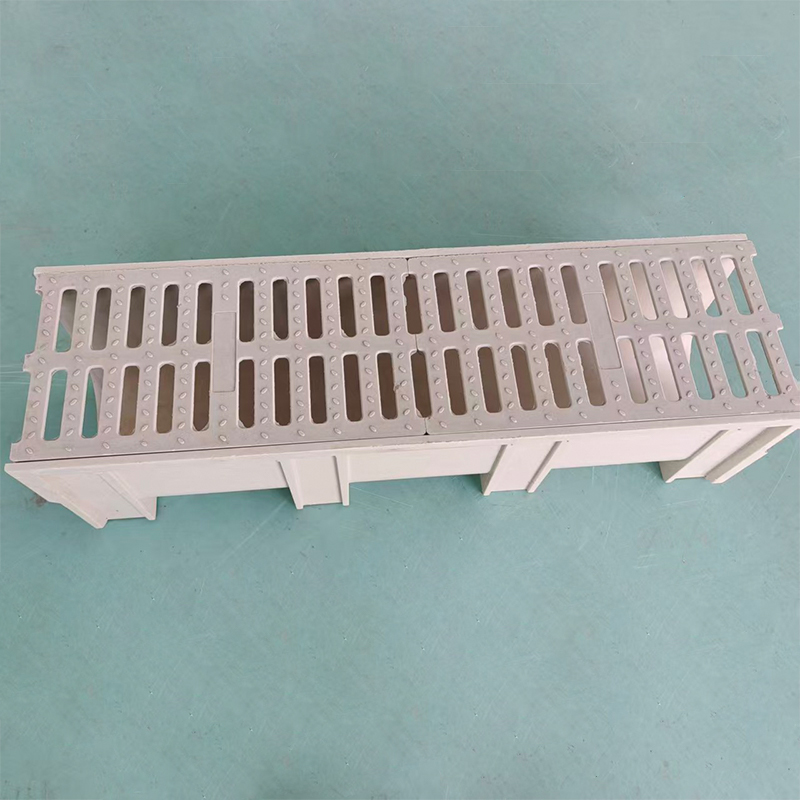
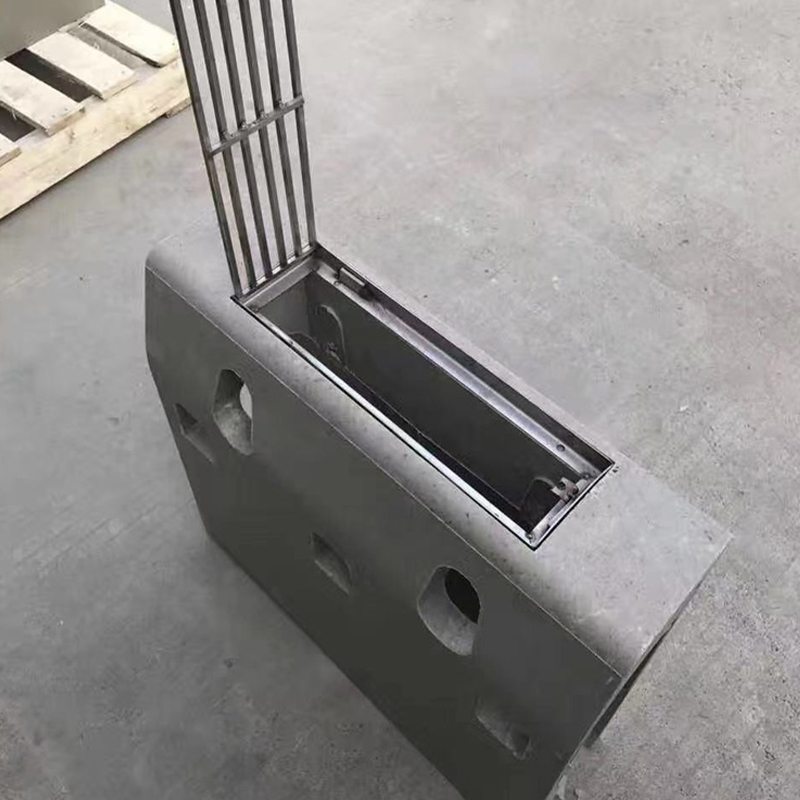
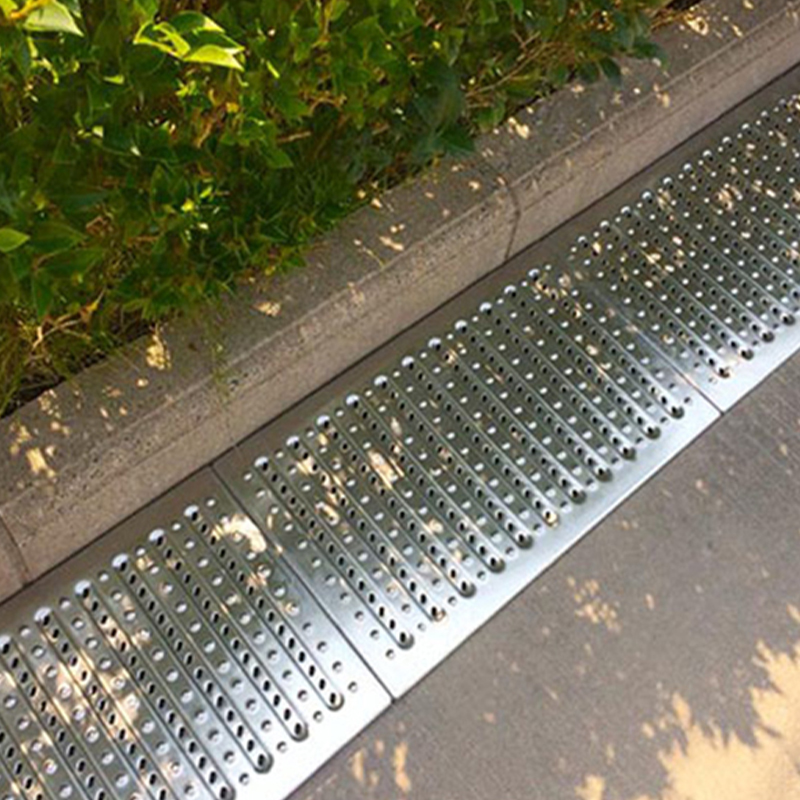
Unlike basic open channels or lightweight drainage systems, this product is built for long service life in complex conditions. Its structural body may be made from stainless steel, reinforced polymer concrete, or related durable materials according to project needs. It can be combined with anti-slip gratings, stamped cover plates, ductile iron covers, stainless steel covers, steel gratings, or other compatible covering solutions. The optimized slot and channel profile help prevent water pooling, reduce localized flooding, and guide runoff toward collection points, drainage pipes, inspection wells, or municipal systems.
Jiangsu Yameng Traffic Road Facilities Co., Ltd. provides drainage ditch products and GRC customization with an emphasis on integrity, quality, focused service, and innovation. Located in Nantong, Jiangsu Province, China, the company benefits from convenient transportation and waterway access, which supports material sourcing, production coordination, and product delivery. Its product range includes linear drainage channels, finished drainage channels, polymer-based drainage channels, slot drainage channels, U-shaped drainage channels, ductile iron cover plates, stainless steel stamped cover plates, steel gratings, resin concrete cover plates, resin composite manhole covers, stainless steel manhole covers, ductile iron manhole covers, drainage pipes, PE pipes, and related products. This broad manufacturing background allows the high load-bearing drainage channel to be supported by complementary cover plates, pipes, and accessory products within a coordinated drainage system.
High load-bearing capacity linear drainage channel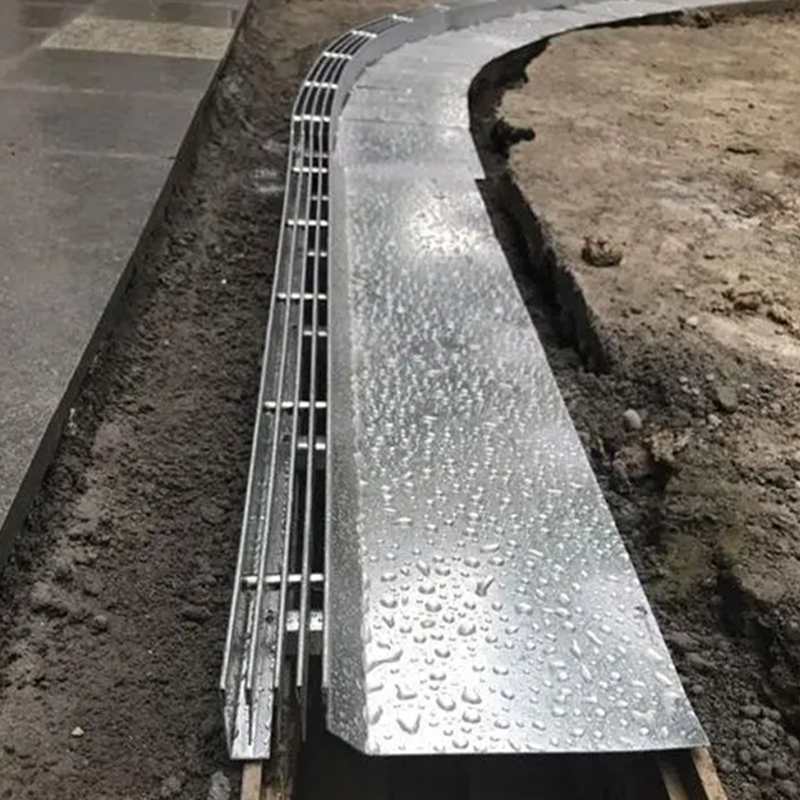
The High Load-Bearing Capacity Linear Drainage Channel is positioned as a reliable drainage solution for heavy-duty infrastructure. It is not intended only for decorative water collection or light residential use. Instead, it is intended for projects where the drainage channel must keep working while exposed to compression, impact, vibration, weather variation, sediment, chemical exposure, and daily wear. This makes it highly suitable for industrial zones, highways, factory yards, commercial complexes, airport service areas, loading docks, parking structures, municipal roads, logistics warehouses, public transit hubs, and high-traffic pedestrian zones.
Its main value is the integration of two essential functions: water management and traffic-bearing capacity. In many projects, the drainage line crosses a roadway, runs along a warehouse loading zone, cuts through a public square, or sits at the edge of a traffic lane. In these locations, a channel cannot be treated as a weak point. If the channel body cracks, the grating bends, or the joint opens, the surrounding pavement may fail and the site may require frequent repairs. A high load-bearing drainage channel reduces this risk by providing a stable, engineered structure that transfers loads effectively and maintains drainage continuity.
Compared with conventional site-built concrete trenches, a modular linear drainage channel can offer higher dimensional consistency and faster installation. Traditional cast-in-place ditches depend heavily on on-site workmanship, weather, curing conditions, and formwork accuracy. A prefabricated or finished drainage channel is produced under controlled manufacturing conditions, allowing more accurate dimensions, smoother interior surfaces, more stable cover seating, and improved compatibility among components. This reduces uncertainty during installation and helps contractors control project schedules.
Compared with lightweight plastic channels or low-grade drainage products, the heavy-duty channel provides better resistance to deformation and long-term load fatigue. Lightweight systems may be adequate for gardens, residential driveways, or pedestrian-only spaces, but they may not be suitable for locations where heavy trucks, forklifts, containers, or machinery frequently pass over the drainage line. The heavy-duty channel is designed specifically for these demanding conditions, helping owners avoid premature replacement and reducing lifecycle cost.
Another important advantage is system flexibility. Linear drainage channels can be arranged in straight runs, combined with inspection ports, connected to drainage pipes, and matched with different cover types according to traffic level, surface design, and maintenance requirements. In commercial plazas, a narrow slot appearance may be preferred for visual integration. In industrial yards, an exposed anti-slip grating may be selected for high intake capacity and easy cleaning. On municipal roads, ductile iron or steel grating options may be selected to meet stronger load requirements. This adaptability helps the same product family serve a wide range of project scenarios.
The product’s first major feature is high load capacity. Heavy-duty channels must support static and dynamic loads without deformation that would compromise safety or water flow. This means the channel body, cover plate, grating, edge reinforcement, and locking or seating structure must work together. The channel must resist compression from vehicle wheels, impact from turning loads, and repeated vibration from traffic. A strong linear drainage system distributes forces into the surrounding pavement or foundation, preventing localized damage and maintaining a flush, safe surface.
The second feature is durable material construction. Depending on the application, the channel may use stainless steel, reinforced polymer concrete, resin concrete, or other engineered materials. Stainless steel provides corrosion resistance, a clean appearance, and strong performance in environments requiring hygiene, durability, or architectural quality. Reinforced polymer concrete offers high compressive strength, low water absorption, and good resistance to freeze-thaw cycles and many chemicals. These materials can provide better long-term performance than ordinary concrete or low-quality molded plastics in demanding environments.
The third feature is efficient drainage. A drainage channel must do more than exist; it must collect water quickly and guide it away before surface flooding occurs. The optimized slot design and channel interior geometry help improve water intake and flow. Linear drainage is especially effective because it intercepts water across a line rather than relying only on scattered point drains. This reduces the distance water must travel across pavement, which helps control ponding and improves safety during rainstorms.
The fourth feature is easy installation. Modular, interlocking channel sections allow rapid assembly, accurate alignment, and convenient connection to downstream drainage systems. Modular products can shorten installation time compared with fully cast-in-place trenches, especially on projects requiring long drainage runs. Consistent section dimensions also help contractors achieve stable grating alignment and maintain a neat final appearance. When future maintenance or replacement is required, modular systems are often easier to access and repair than irregular site-built channels.
The fifth feature is safety design. Anti-slip grating reduces the risk of pedestrian slips and helps vehicles maintain traction. In public spaces, industrial floors, and vehicle lanes, the cover surface must be safe under wet conditions. A properly designed grating or cover plate also prevents large debris from entering the channel while allowing water to pass. For certain applications, locked or secured covers can reduce movement, noise, theft risk, or accidental displacement.
The High Load-Bearing Capacity Linear Drainage Channel offers several advantages over competing products and conventional drainage methods. The first advantage is stronger load reliability. Many drainage systems are marketed as general-purpose products but are not optimized for heavy-duty traffic. Over time, insufficient load capacity may result in cracked channel walls, rocking gratings, edge failure, uneven surfaces, or damaged pavement. A high load-bearing design addresses these risks from the beginning by using stronger materials, better cover support, and more stable structural geometry.
The second advantage is improved hydraulic collection compared with point drainage. Point drains require pavement slopes to guide water toward individual inlets. On large paved areas, this can be difficult to execute accurately, and water may pond between drains. Linear drainage channels collect water along a continuous line, reducing the required surface slope and improving water interception. This is valuable in plazas, parking lots, industrial floors, warehouse entrances, and road edges where wide surface areas must drain efficiently.
The third advantage is reduced installation uncertainty compared with traditional concrete ditches. Cast-in-place drainage trenches require careful forming, reinforcement placement, curing, and finishing. Mistakes may lead to irregular channel widths, uneven cover seating, rough surfaces, or poor flow. Manufactured channel sections are produced with controlled dimensions and smoother surfaces, helping installers achieve better results with less dependence on variable field conditions. This can reduce rework and improve overall project quality.
The fourth advantage is material performance. Ordinary concrete may absorb water, crack under freeze-thaw stress, or degrade when exposed to salts, oils, chemicals, or repeated impact. Low-grade plastic channels may deform under load or become brittle with age. Reinforced polymer concrete and stainless steel options provide improved resistance to many of these challenges. This advantage becomes especially important in industrial and transportation environments, where drainage products are expected to perform for many years with limited downtime.
The fifth advantage is maintenance efficiency. A well-designed linear channel with removable gratings or covers allows cleaning crews to access the channel interior, remove sediment, and inspect connections. Competing systems with poorly seated covers, weak joints, or irregular trench geometry may be harder to maintain and more likely to trap debris. Efficient maintenance reduces long-term operating costs and helps preserve drainage capacity during heavy rain events.
The sixth advantage is system compatibility. Jiangsu Yameng Traffic Road Facilities Co., Ltd. produces or supplies a wide range of related products, including cover plates, steel gratings, manhole covers, drainage pipes, and PE pipes. This means the drainage channel can be considered as part of a complete system rather than an isolated component. The ability to coordinate channels, covers, pipes, and access products helps improve installation compatibility and project management.
The seventh advantage is customization support. Many drainage projects are not identical. A highway shoulder, a factory yard, a commercial plaza, and a municipal road may all require different channel depths, cover materials, widths, slopes, load ratings, appearance requirements, and connection details. The company’s experience in drainage ditch projects and GRC customization, supported by designers, mold designers, CNC engraving, production personnel, construction technicians, and after-sales service, provides an important foundation for project-specific solutions.
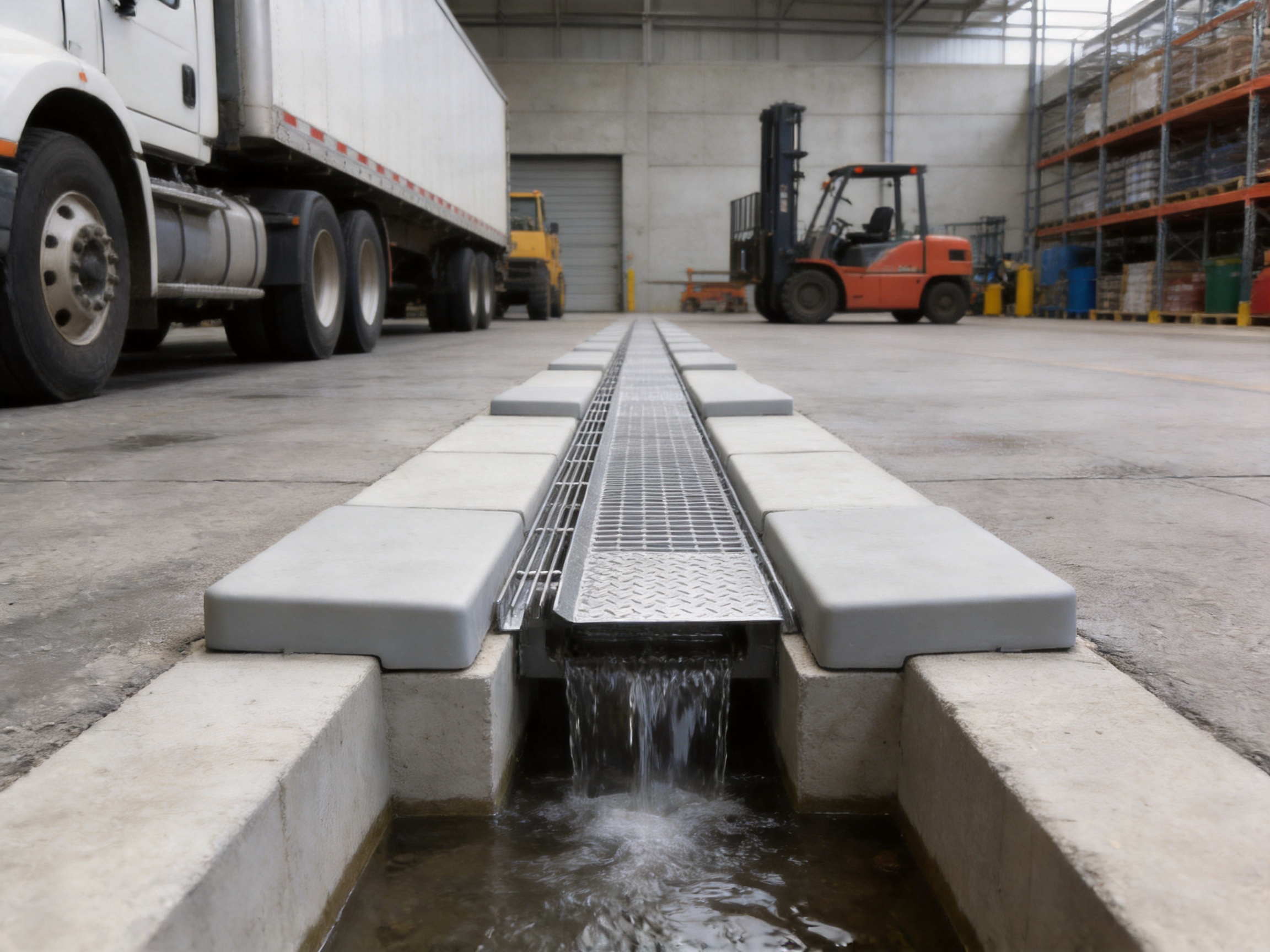
A high load-bearing linear drainage channel must be designed as a structural system. The visible grating or cover plate is only one part of the system. Beneath it, the channel body, sidewalls, base, joint design, support edges, anchoring method, and surrounding bedding all influence performance. When a truck wheel passes over a drainage line, the load transfers through the cover into the channel edge and then into the foundation. If any component is weak, the system may fail locally.
The channel body must resist compression and bending. Reinforced polymer concrete and resin concrete are useful because they can provide high strength with accurate molded shapes. Stainless steel can be used for sections where corrosion resistance, cleanability, or architectural finish is important. In heavy-duty applications, the channel may include reinforced edge rails or compatible heavy-duty covers to prevent edge chipping and improve load transfer. A stable cover seat is essential because a loose or uneven grating can create noise, wear, and safety concerns.
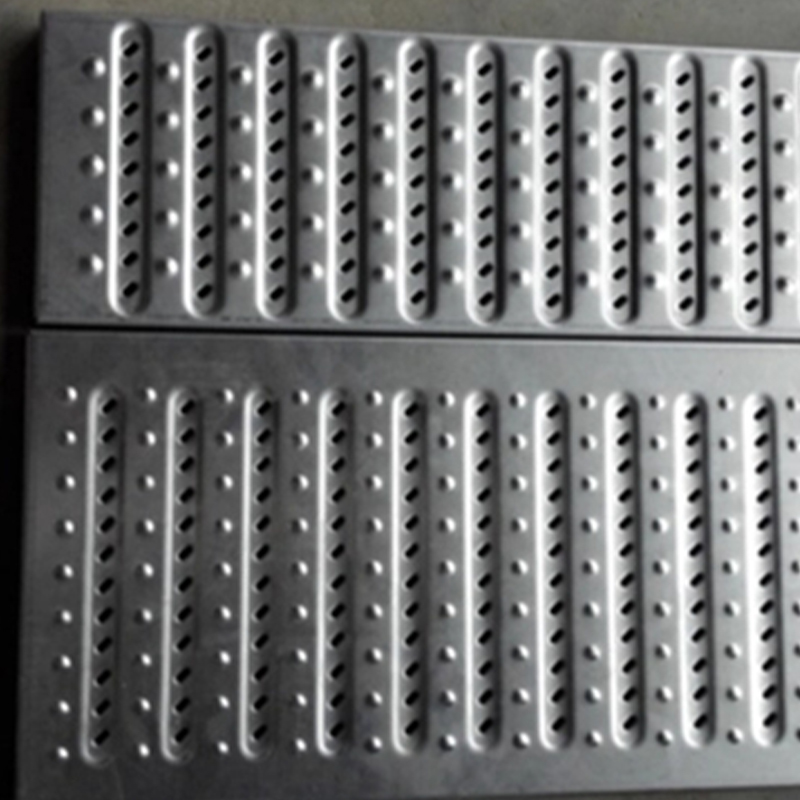
The grating or cover plate must be selected according to the expected traffic. Pedestrian areas may use lighter covers with anti-slip patterns, while roads and industrial yards may require ductile iron covers, thick steel gratings, stainless steel stamped covers, or other high-strength options. The opening pattern must balance water intake, debris control, shoe safety, wheel safety, and load performance. Anti-slip geometry is particularly important in wet conditions, where smooth metal surfaces can become hazardous if not properly designed.
Joint design also matters. Modular channel sections must align accurately so that water flows smoothly and covers sit evenly. Interlocking or well-fitted joints help reduce misalignment during installation. Good joint performance also reduces leakage into unstable bedding, which can cause settlement or pavement damage. In some projects, sealants or gaskets may be used according to site requirements, especially where water control or chemical containment is important.
The surrounding installation is equally important. Even the strongest channel requires proper bedding and concrete encasement or pavement support according to the load class. The foundation must be compacted and stable. The channel must be set at the correct elevation so that water enters it naturally and the cover remains flush with adjacent surfaces. The installer must prevent movement during concrete placement and verify outlet connections. A properly installed high load-bearing channel becomes part of the pavement structure rather than a separate weak component.
Material selection determines long-term durability, cost, weight, corrosion resistance, and maintenance behavior. The High Load-Bearing Capacity Linear Drainage Channel may be manufactured from durable materials such as stainless steel or reinforced polymer concrete, and it can be paired with different cover materials according to the project environment.
Stainless steel offers a combination of corrosion resistance, strength, and clean appearance. It is suitable for commercial complexes, public facilities, food-related industrial areas, architectural spaces, or locations where visual quality matters. Stainless steel stamped cover plates can provide an attractive and functional surface while resisting rust under many conditions. However, stainless steel grade selection should consider exposure to chlorides, chemicals, coastal air, and cleaning agents.
Reinforced polymer concrete is often chosen for heavy-duty drainage channels because of its high compressive strength, accurate manufacturing capability, and relatively low permeability. Unlike ordinary cement concrete, polymer concrete uses resin-based binders and selected aggregates, which can provide strong resistance to water absorption and certain chemical exposures. Its smooth interior surface can support better hydraulic flow and reduce sediment accumulation compared with rough site-cast concrete.
Ductile iron cover plates are suitable for demanding load conditions. Ductile iron combines strength and toughness, making it suitable for roads, truck lanes, and municipal infrastructure. It can resist impact better than brittle materials and is commonly used for manhole covers, drainage gratings, and heavy-duty access covers. Proper surface coating helps improve corrosion resistance and appearance.
Steel gratings provide excellent water intake and strong load distribution when designed correctly. They are suitable for industrial zones, drainage across large paved yards, and places where high flow capacity is needed. Hot-dip galvanizing or other surface treatment can improve corrosion resistance. For areas with pedestrian traffic, grating spacing and anti-slip treatment should be selected carefully.
Resin concrete cover plates and resin composite covers may be useful where corrosion resistance, weight reduction, or non-metallic properties are desired. These products can reduce noise and may be easier to handle than heavy metal covers. However, the load rating and application environment must be evaluated carefully.
| Component or Option | Typical Advantage | Suitable Application | Key Selection Consideration |
|---|---|---|---|
| Reinforced polymer concrete channel body | High strength, low water absorption, accurate shape, smooth flow surface | Industrial zones, roads, logistics yards, commercial drainage lines | Load class, channel depth, outlet layout, installation bedding |
| Stainless steel channel or cover | Corrosion resistance, clean appearance, durable surface | Commercial complexes, public plazas, special industrial areas | Steel grade, chloride exposure, surface finish, anti-slip design |
| Ductile iron cover plate | High toughness and heavy-load capacity | Roads, truck routes, municipal projects | Load rating, coating, locking method, noise control |
| Steel grating | High water intake and strong load distribution | Factory yards, loading docks, parking areas | Bar spacing, galvanizing, anti-slip surface, debris control |
| Slot drainage cover | Discreet appearance and linear water intake | Plazas, pedestrian areas, architectural landscapes | Slot width, cleaning access, flow demand, safety requirements |
Efficient drainage begins with understanding how water moves across a surface. Rainwater, wash-down water, and runoff follow slopes and gather in low areas. If a site relies only on point drains, water must travel across the surface before reaching an inlet. This may require stronger pavement slopes, more complex grading, and a higher risk of standing water. A linear drainage channel shortens the flow path by collecting water continuously along a line.
The High Load-Bearing Capacity Linear Drainage Channel uses optimized slot and channel geometry to prevent water pooling and flooding. The channel opening must allow rapid intake while also supporting safety and load needs. In a heavy-duty system, this balance is critical. A very open grating may collect water quickly but may not be suitable for small wheels, pedestrian heels, or certain traffic conditions. A narrow slot may look elegant but must be sized for the expected rainfall and runoff area. The product can be matched with different covers to meet these conditions.
The interior shape of the channel affects flow velocity and sediment behavior. Smooth surfaces reduce friction, allowing water to move more efficiently toward outlets. Proper slope design helps prevent stagnant water and sediment buildup. In long drainage runs, installers may use sloped channels, stepped sections, or planned outlet intervals depending on site geometry and water volume. Inspection and cleaning points can be included to support long-term hydraulic performance.
Effective drainage also protects pavement. Standing water can enter joints, weaken subgrade materials, accelerate freeze-thaw damage, and contribute to surface deterioration. In industrial and commercial sites, water pooling can interfere with operations, create slippery zones, and increase safety risks. By intercepting water quickly, a linear drainage channel helps maintain a safer and more durable surface.
In highways and municipal roads, drainage performance is directly related to traffic safety. Water accumulation can reduce tire grip, increase splash and spray, and contribute to hydroplaning under certain conditions. While the final drainage design depends on roadway geometry and engineering calculations, high-quality linear drainage channels can support safer runoff collection at road edges, tunnels, ramps, service zones, and other critical areas.
A major strength behind the product is the company’s manufacturing and customization capability. Jiangsu Yameng Traffic Road Facilities Co., Ltd. has experience in drainage ditch projects and GRC customization, supported by professional designers, mold designers, CNC engravers, production personnel, construction technical teams, and after-sales service. This combination of design, mold development, production, installation support, and service creates a complete workflow from concept to finished product.
The process begins with project understanding. Drainage products must match site conditions, expected loads, rainfall intensity, pavement structure, outlet location, appearance requirements, and maintenance access. Designers can review product dimensions, channel type, cover selection, and connection details. For customized projects, drawing development helps define the technical requirements before manufacturing begins. This reduces confusion between the supplier, contractor, and project owner.
Mold design is a critical step for channel quality. Accurate molds produce accurate channel dimensions, consistent cover seating, smooth interior surfaces, and reliable joint alignment. Poor molds can lead to irregular sections, uneven surfaces, and installation difficulties. The availability of mold designers and CNC engraving capability supports the creation of precise molds for drainage channels, GRC components, and customized shapes. CNC machining improves repeatability and allows detailed profiles to be produced with higher accuracy.
Material preparation is another important stage. For polymer concrete or resin concrete products, aggregate selection, binder quality, mixing ratio, and curing conditions affect strength and durability. Consistent mixing helps prevent weak zones and ensures predictable performance. For metal components such as stainless steel stamped covers, ductile iron covers, or steel gratings, material grade, forming process, welding quality, surface treatment, and dimensional checks all influence final performance.
Production control focuses on consistency. Each channel section should maintain the required length, width, depth, joint profile, cover seating height, and outlet position. Surface defects should be controlled, and structural integrity should be verified according to internal standards and project requirements. For heavy-duty products, attention to load-bearing areas is especially important. The edges where covers rest must be strong and accurate because they receive repeated load transfer.
Surface finishing and treatment improve product life. Metal covers may require galvanizing, coating, polishing, passivation, or other treatments depending on material and application. Stainless steel components may need suitable finishing for appearance and corrosion resistance. Ductile iron may require anti-corrosion coating. Polymer concrete products should have smooth, well-formed surfaces to support drainage flow and easy cleaning.
Assembly and compatibility checks help ensure that channels and covers fit properly. A heavy-duty drainage system should not have rocking covers, oversized gaps, unstable seating, or mismatched components. The company’s broad product range makes it possible to coordinate channel bodies with multiple cover options and related drainage accessories. This helps contractors avoid compatibility problems that can occur when different components are sourced from unrelated suppliers.
Quality inspection may include dimensional measurement, visual inspection, material checks, cover fit checks, and evaluation of load-related design requirements. For customized projects, inspection can also compare the finished product with approved drawings. Proper packaging and transportation protection are important because channel edges and cover surfaces must arrive at the site ready for installation. Convenient transportation access in Nantong supports efficient logistics for domestic and international projects.
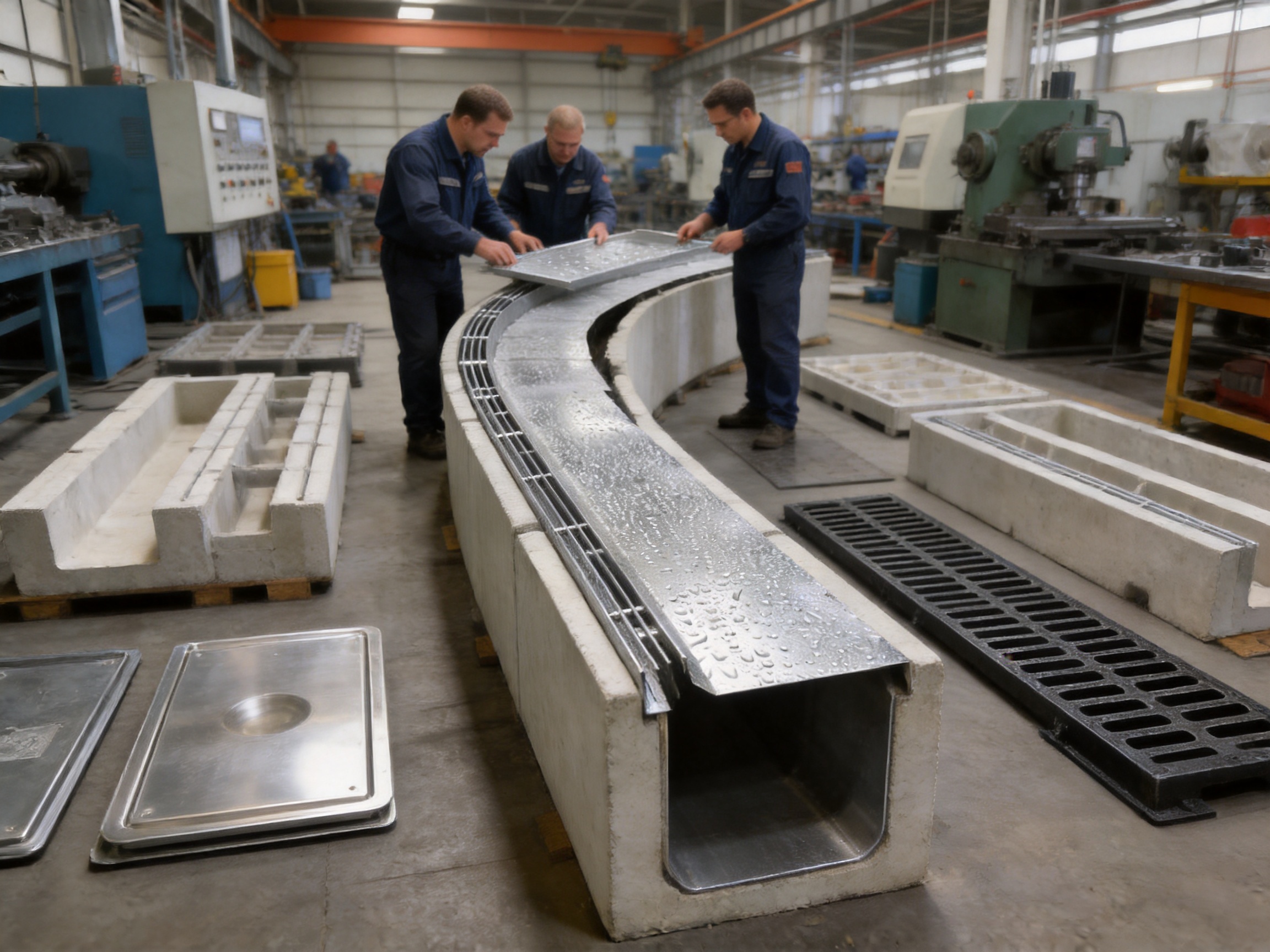
Jiangsu Yameng Traffic Road Facilities Co., Ltd. is located in Group 12, Quanxin Village, Donghai Town, Qidong City, Nantong City, Jiangsu Province, China. The company’s location provides transportation convenience and waterway access, which helps support raw material movement, production scheduling, and customer delivery. In drainage infrastructure, supply reliability is important because delays in drainage components can affect paving, concrete work, landscaping, and final project acceptance.
The company’s business scope is broad but related. Rather than producing only one isolated product, it covers multiple drainage and access products, including linear drainage channels, finished drainage channels, polymer-based drainage channels, slot drainage channels, U-shaped drainage channels, cover plates, gratings, manhole covers, drainage pipes, and PE pipes. This integrated product capability supports project coordination. A contractor may need channels, covers, manholes, and pipes in the same drainage network, and sourcing compatible products from an experienced manufacturer can simplify purchasing and reduce technical mismatch.
Another strength is customization. The company’s GRC series is supported by professional designers, mold designers, CNC engravers, and experienced production and construction technical teams. Although GRC products are a separate product series, the same organizational capability demonstrates a strong understanding of molds, custom forms, drawings, production planning, and installation support. For drainage channels, this translates into the ability to support special dimensions, project-specific cover choices, and design coordination.
The company emphasizes integrity and quality as its foundation. In infrastructure projects, these values are not abstract. Drainage products are often buried or integrated into pavement, making later replacement difficult and expensive. Customers need a supplier that provides reliable product information, consistent production, responsive service, and practical support. A quality-first approach helps ensure that drainage channels perform as expected after installation.
The company is also committed to product research and development, with products sold in domestic and international markets. International demand often requires attention to different project standards, installation habits, environmental conditions, and customer expectations. Experience in broader markets encourages continuous product improvement and a stronger understanding of application diversity.
The company’s stated values of integrity, responsibility, focus, and innovation align well with the requirements of drainage product manufacturing. Integrity supports honest communication and reliable cooperation. Responsibility supports careful production and after-sales service. Focus supports continuous improvement in drainage systems and related facilities. Innovation supports new product development, better molds, improved materials, and more efficient installation solutions.
Installation efficiency is one of the most practical advantages of modular linear drainage channels. On a construction site, time is expensive. Road closures, industrial shutdowns, delayed paving, and repeated rework can significantly increase project cost. A modular, interlocking drainage system helps reduce installation complexity by providing ready-made channel sections that can be aligned and connected in sequence.
Contractors benefit from predictable dimensions. When every channel section is manufactured to a consistent size, it is easier to establish line, level, slope, and cover height. This is especially important for long drainage runs where small errors can accumulate. Modular channels can be set according to project drawings, connected to outlets, and encased or supported according to design requirements. After installation, covers can be placed to create a flush surface with the surrounding pavement.
Project owners benefit from reduced downtime and improved long-term performance. In industrial facilities and commercial complexes, drainage installation may need to occur within tight schedules. A system that installs quickly and performs reliably reduces disruption to business operations. In public infrastructure, faster installation may reduce traffic interference and improve construction management.
The product also supports maintenance planning. Removable covers allow cleaning access, and linear layouts are easier to inspect than hidden or irregular drainage paths. Sediment, leaves, packaging debris, sand, and industrial residue can accumulate in channels over time. A channel that is difficult to open or clean will gradually lose hydraulic capacity. By allowing practical access, the drainage system supports long-term functionality.
For renovation projects, linear drainage channels can provide a clean solution where existing grading is problematic. Instead of reconstructing a large surface to create complicated slopes toward point drains, designers may use linear channels to intercept water at strategic lines. This can reduce surface modification requirements and improve drainage performance in older facilities.
Drainage products directly affect safety. A weak cover, slippery surface, wide opening, or uneven installation can create hazards for pedestrians, cyclists, vehicles, forklifts, and service equipment. The High Load-Bearing Capacity Linear Drainage Channel addresses safety through anti-slip grating, stable load-bearing design, and reliable cover seating.
Anti-slip surfaces are particularly important in wet conditions. Drainage channels are located exactly where water is present, so cover surfaces must be designed with traction in mind. Patterned stainless steel, textured ductile iron, serrated steel grating, or other anti-slip options can help reduce slip risk. In pedestrian zones, the opening size and surface pattern should be selected to reduce the risk of trapped heels, walking discomfort, or mobility device difficulty.
Vehicle safety depends on flush installation and cover stability. If a cover moves, rocks, or sits above the pavement, it can create noise, impact, tire damage, or trip hazards. Heavy vehicles can worsen these problems quickly. A well-designed high load-bearing channel holds the cover securely and transfers loads properly, reducing the risk of movement under repeated traffic.
Drainage performance also supports safety by removing water that could cause slipping, hydroplaning, or reduced visibility. In commercial complexes, dry and clean walking surfaces improve customer experience. In industrial areas, controlling water reduces operational risk for workers, forklifts, and machinery. On roads, effective runoff control contributes to smoother and safer traffic movement.
Industrial zones place severe demands on drainage systems. They often include heavy trucks, forklifts, loading equipment, outdoor storage yards, production wastewater, wash-down areas, and large paved surfaces. Drainage channels in these environments must resist wheel loads, impact, oil, sediment, and frequent cleaning. Ordinary drainage products may fail quickly if they are not designed for industrial use.
The High Load-Bearing Capacity Linear Drainage Channel is suitable for factory yards, loading docks, warehouse entrances, logistics platforms, machinery maintenance areas, and production circulation roads. Its strong load-bearing design supports trucks and equipment, while efficient drainage prevents water accumulation that could interrupt operations. The channel can be paired with steel gratings or ductile iron covers to provide high intake capacity and traffic resistance.
Industrial drainage also requires maintenance access. Sediment, metal particles, packaging waste, and other debris may enter drainage systems. Removable covers allow workers to inspect and clean channels before capacity is reduced. A smooth channel body helps water carry fine particles toward collection points, while planned inspection locations support routine maintenance.
Chemical resistance may be important in certain industrial facilities. Polymer concrete or stainless steel options can provide better performance than ordinary concrete in selected exposure conditions, but final material selection should consider the specific chemicals, concentrations, temperatures, and cleaning procedures present on site. The company’s ability to provide multiple product types and customized support can help customers choose suitable configurations.
Highways and municipal roads require drainage systems that can handle both traffic loads and sudden rainfall. Water on road surfaces can create safety risks and accelerate pavement deterioration. Drainage channels may be used at road edges, toll stations, tunnels, bridge approaches, service areas, parking zones, bus stations, pedestrian crossings, and urban streetscapes.
In these applications, load capacity is essential. Trucks, buses, and maintenance vehicles may pass over drainage covers repeatedly. Ductile iron covers, heavy-duty steel gratings, or reinforced channel structures may be selected according to engineering requirements. Cover stability and noise control are also important in urban areas, where loose covers can create repeated impact sounds under traffic.
Linear drainage can be especially useful where water must be intercepted before it crosses a traffic lane or enters a sensitive area. At road entrances, ramps, and transition zones, a properly placed channel can collect runoff and direct it to drainage pipes. In municipal streets, linear channels can also help manage stormwater along curbs or pedestrian areas.
Durability under environmental exposure is important. Road drainage systems may face rain, freeze-thaw cycles, deicing salts, dust, tire wear particles, and occasional chemical exposure. Material selection and surface treatment should match local conditions. Reinforced polymer concrete, stainless steel, ductile iron, and treated steel options provide a range of solutions for different road environments.
Commercial complexes and public spaces require a balance of function and appearance. Drainage must be effective, but it should not disrupt the visual design of plazas, shopping centers, hotel entrances, pedestrian streets, office parks, or recreational areas. Linear drainage channels can integrate neatly into paving patterns, building entrances, and landscape designs.
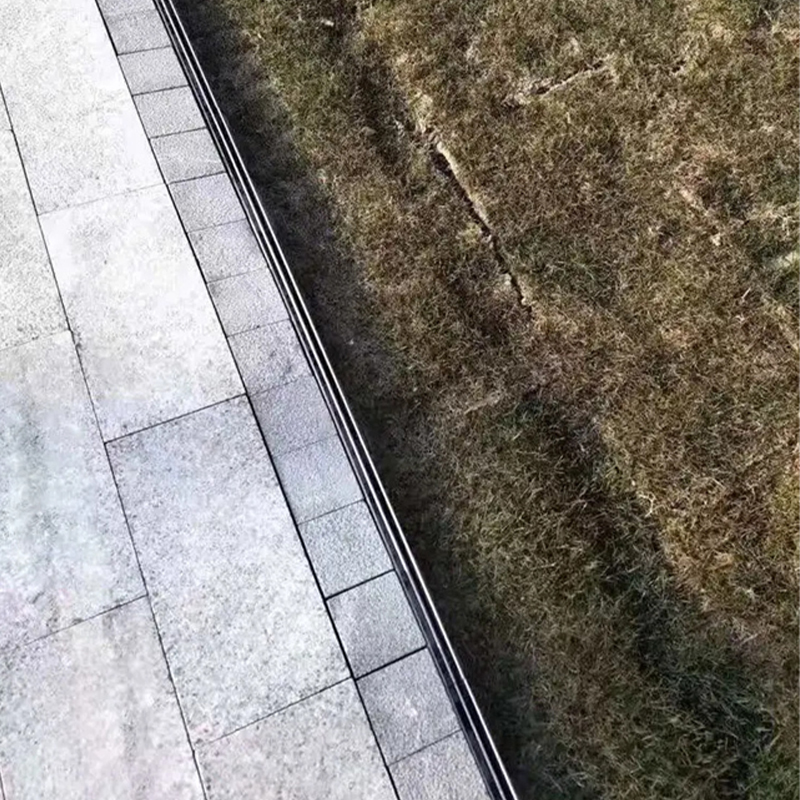
Slot drainage channels are often preferred in architectural environments because they provide a discreet linear opening with minimal visual impact. Stainless steel covers or decorative gratings can complement modern paving materials. At the same time, the system must still provide reliable water intake and safe walking surfaces. Anti-slip surfaces and pedestrian-friendly openings are essential.
Commercial areas also experience mixed traffic. Delivery vehicles, maintenance trucks, pedestrians, carts, and emergency vehicles may all move through the same space. A high load-bearing channel provides extra security by supporting occasional vehicle loads without compromising everyday pedestrian comfort. This is a major advantage over purely decorative or light-duty drainage systems.
For property managers, maintenance convenience is important. Public spaces must remain clean and safe, and drainage channels should be easy to inspect and clear. Removable covers and modular sections support routine cleaning. Durable materials reduce the need for frequent replacement, helping protect the appearance and value of the property.
Initial purchase price is only one part of drainage system cost. A low-cost channel that fails early may become more expensive than a higher-quality product because of repair labor, pavement cutting, traffic control, business interruption, replacement materials, and safety risks. Lifecycle cost includes installation efficiency, durability, maintenance requirements, failure risk, and service life.
The High Load-Bearing Capacity Linear Drainage Channel offers long-term value by reducing deformation, improving drainage efficiency, supporting easy maintenance, and resisting demanding environmental conditions. Its modular design can reduce installation time, while durable materials can extend service life. Strong covers and stable channel bodies reduce the likelihood of failures that require disruptive repairs.
For industrial sites, avoiding downtime is particularly valuable. A failed drainage channel in a loading dock or truck route can interrupt operations and create safety hazards. For commercial properties, drainage failure can affect customer access and property image. For roads, repairs may require closures and traffic management. A stronger drainage system helps avoid these costs.
Maintenance savings also contribute to lifecycle value. Channels that are easier to clean retain hydraulic capacity longer. Smooth interiors reduce sediment adhesion, and removable covers allow direct access. Regular maintenance can be performed more efficiently, reducing labor and preventing major blockages.
Another value factor is adaptability. Because the product can be paired with different covers, materials, and accessories, it can be tailored to project needs rather than forcing a one-size-fits-all solution. A properly matched system avoids overdesign in light areas and underdesign in heavy areas, improving cost effectiveness across the project.
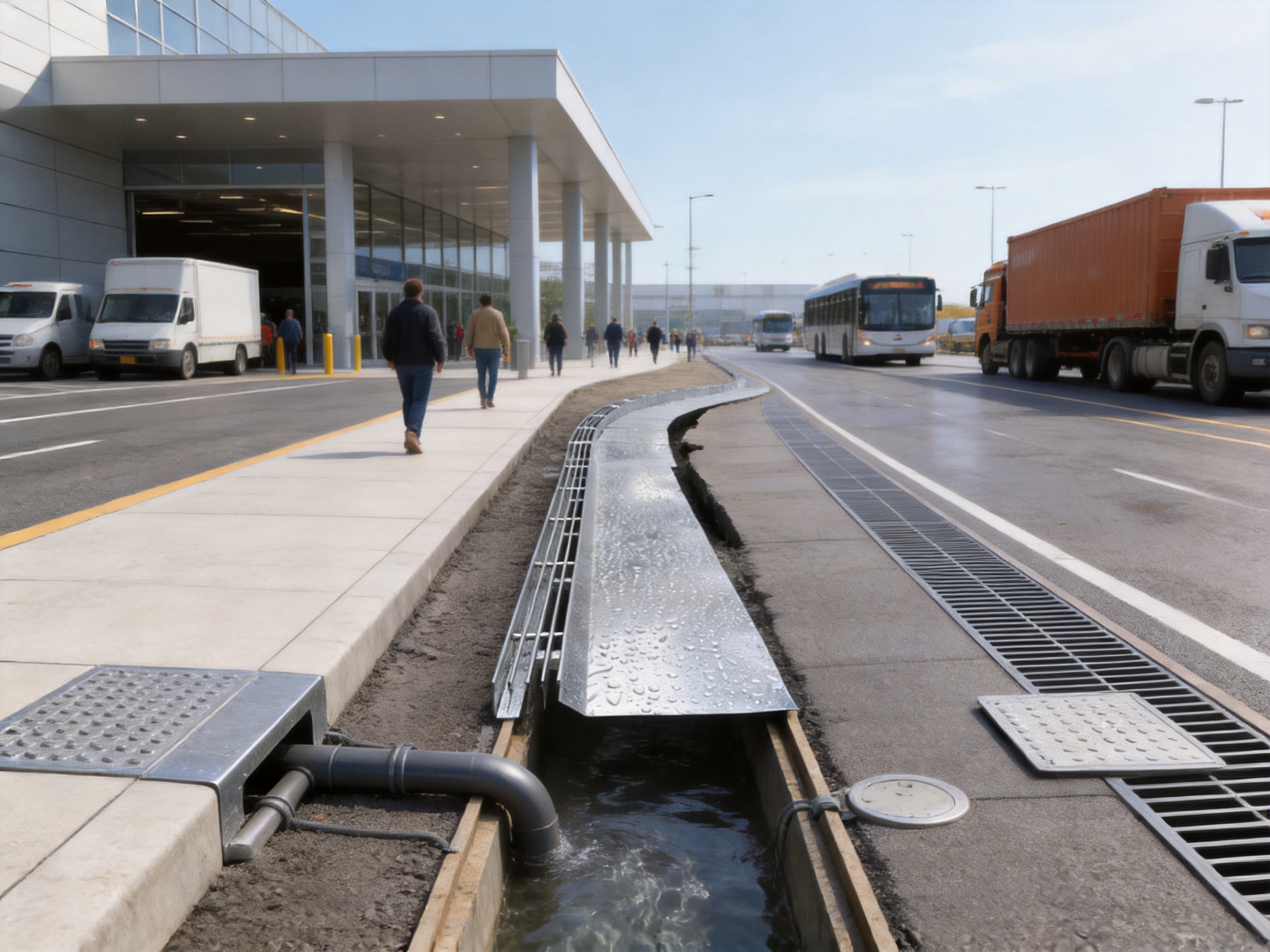
Selecting the right linear drainage channel requires consideration of several factors. The first factor is load requirement. Designers should identify whether the channel will serve pedestrians, passenger vehicles, forklifts, trucks, buses, machinery, or mixed traffic. Cover type and channel structure should be selected accordingly. Heavy-duty areas should not use light-duty covers, even if heavy loads occur only occasionally.
The second factor is hydraulic demand. Rainfall intensity, catchment area, surface slope, runoff coefficient, and outlet capacity all affect required channel size. A channel with insufficient capacity may overflow during heavy rain, while an oversized channel may increase cost unnecessarily. In long runs, outlet spacing and channel slope should be designed carefully.
The third factor is material exposure. Industrial chemicals, deicing salts, coastal air, wastewater, oils, cleaning agents, freeze-thaw cycles, and ultraviolet exposure may influence material selection. Stainless steel, polymer concrete, ductile iron, steel grating, and composite options each have different strengths. The correct choice depends on real site conditions.
The fourth factor is appearance. In architectural spaces, slot drains or stainless steel covers may be preferred. In industrial yards, function and load capacity may be more important than appearance. In municipal roads, cover uniformity, anti-theft measures, and noise control may matter. The product’s compatibility with multiple cover types helps meet these different priorities.
The fifth factor is maintenance access. Channels should be designed so that cleaning crews can remove covers, access sediment traps, and inspect outlets. Long systems should include access points at appropriate intervals. If the site has high debris loads, cover opening style and cleaning frequency should be considered during design.
The sixth factor is installation environment. The channel must be installed in a stable foundation with proper support. Pavement type, concrete encasement, trench dimensions, reinforcement, joint sealing, and outlet connections should follow project requirements. Even a high-quality product can perform poorly if installed incorrectly. Coordination between supplier, designer, and contractor is recommended.
Precision is often overlooked in drainage channels because the product seems simple from the outside. However, small dimensional errors can create major problems. If a channel is too narrow or too wide, covers may not fit properly. If the cover seat is uneven, gratings may rock under traffic. If sections do not align, water flow may be obstructed. If the top elevation varies, the final pavement surface may become uneven.
Advanced mold design and CNC engraving capability help solve these problems. Accurate molds create repeatable shapes, consistent channel profiles, and reliable joint geometry. This is especially important for modular systems, where many sections must connect smoothly over long distances. A small error repeated across dozens of sections can become a large installation issue.
Precision also affects load performance. The cover must bear evenly on the channel edge. If contact is uneven, load may concentrate in small areas, causing wear or breakage. Properly formed support edges improve load distribution and reduce vibration. In heavy-duty areas, this can significantly extend service life.
Hydraulic performance also benefits from precision. Smooth, consistent interiors reduce turbulence and sediment traps. Accurate slopes and transitions help water flow predictably. Proper outlet positions ensure that connections to drainage pipes are clean and efficient. These details improve the overall reliability of the drainage network.
Drainage products often require coordination before, during, and after installation. The company’s service capability includes detailed design, drawings, mold making, production, on-site construction support, and after-sales support for its GRC series, and this comprehensive service mindset also strengthens its drainage business. Customers benefit from technical communication, product selection advice, and practical manufacturing support.
Before production, communication can clarify dimensions, materials, cover types, quantities, delivery schedule, and special requirements. During production, quality control and progress management help ensure that products are ready for construction needs. During installation, technical guidance can help avoid common mistakes such as improper elevation, weak bedding, poor outlet connection, or incorrect cover placement. After installation, after-sales support can assist with maintenance questions, replacement covers, or future expansion.
Project cooperation is especially valuable for customized drainage solutions. Standard products may not always fit existing structures, special pavement patterns, unique outlet positions, or architectural requirements. With design and mold capability, customized sections or covers may be developed according to drawings and project needs. This allows customers to solve site-specific problems without compromising drainage performance.
Effective drainage supports environmental management by controlling runoff paths. When water is collected and directed properly, it can be conveyed to treatment systems, sediment traps, storage tanks, rain gardens, municipal drains, or other stormwater infrastructure. In industrial sites, controlled drainage can help separate clean stormwater from contaminated runoff, depending on the facility design.
Durable drainage products also reduce waste over time. A system that lasts longer requires fewer replacements and less construction waste. Strong materials, proper installation, and routine maintenance all contribute to sustainability by extending service life. In addition, modular components may allow targeted replacement of damaged sections rather than complete reconstruction.
Operationally, reliable drainage improves site usability. Loading docks stay safer, roads remain more passable, commercial entrances look cleaner, and public spaces remain more comfortable after rainfall. Reducing standing water also helps limit mosquito breeding, unpleasant odors, surface staining, and winter ice formation in cold climates.
It is a heavy-duty drainage channel designed to collect and convey surface water while supporting significant traffic loads from trucks, machinery, vehicles, and pedestrians. It combines a strong channel body, compatible cover or grating, efficient water intake, and modular installation features.
It can be used in industrial zones, highways, commercial complexes, logistics centers, factory yards, loading docks, municipal roads, parking areas, public plazas, warehouse entrances, and other locations requiring both drainage efficiency and load resistance.
Compared with ordinary cast-in-place concrete ditches, a manufactured linear drainage channel offers more consistent dimensions, smoother interior surfaces, faster installation, better cover compatibility, and more predictable performance. It can also be made from durable materials such as reinforced polymer concrete or stainless steel.
Load capacity prevents deformation, cracking, cover movement, and pavement damage when vehicles or equipment pass over the channel. In heavy-duty areas, insufficient load capacity can lead to frequent repairs, safety hazards, and operational interruption.
Yes. Depending on the application, it can be paired with anti-slip gratings, ductile iron cover plates, stainless steel stamped cover plates, steel gratings, resin concrete covers, slot covers, or other compatible covering solutions.
Yes. The optimized slot and channel design helps collect runoff efficiently and guide it toward outlets, reducing water pooling and localized flooding. Final performance depends on correct sizing, slope, outlet capacity, and installation quality.
Yes, when the correct cover type is selected. Anti-slip surfaces, pedestrian-friendly openings, flush installation, and stable cover seating help improve safety in public spaces and commercial areas.
The channel may use stainless steel, reinforced polymer concrete, resin concrete, or related durable materials depending on project needs. Cover options may include ductile iron, stainless steel, steel grating, resin concrete, or composite materials.
Modular sections allow faster alignment, easier handling, more consistent installation, and convenient connection to drainage pipes. They reduce the uncertainty associated with fully site-built drainage trenches.
Routine maintenance includes removing covers, clearing sediment and debris, checking outlets, inspecting joints, and confirming that covers remain stable. Maintenance frequency depends on rainfall, debris load, traffic, and site conditions.
Yes. The manufacturer’s design, mold development, CNC engraving, production, and technical service capabilities support customized drainage solutions for special dimensions, cover types, appearance requirements, and project-specific layouts.
A manufacturer with channels, cover plates, gratings, manhole covers, drainage pipes, and related products can provide better system compatibility. This reduces procurement complexity and helps ensure that connected drainage components work together properly.
The High Load-Bearing Capacity Linear Drainage Channel is a practical and durable solution for modern infrastructure that must manage water efficiently while supporting demanding traffic loads. Its advantages include strong load-bearing performance, durable material options, efficient hydraulic design, modular installation, anti-slip safety, convenient maintenance, and compatibility with multiple cover and accessory products. These qualities make it suitable for industrial zones, highways, commercial complexes, municipal roads, public spaces, logistics centers, and other heavy-duty environments.
Compared with ordinary concrete ditches, lightweight drainage systems, or poorly matched components, this product provides stronger long-term value through better structural reliability, faster installation, improved drainage efficiency, and easier maintenance. Its ability to combine reinforced polymer concrete, stainless steel, ductile iron covers, steel gratings, slot drainage designs, and related accessories allows it to meet a wide range of engineering and architectural requirements.
The manufacturing strength behind the product is equally important. Jiangsu Yameng Traffic Road Facilities Co., Ltd. supports drainage and GRC customization with professional design, mold design, CNC engraving, production, construction technical capability, and after-sales service. Its broad product range and commitment to integrity, responsibility, focus, quality, and innovation help customers obtain reliable drainage solutions for both domestic and international projects.
In infrastructure, drainage is often noticed only when it fails. A high load-bearing linear drainage channel is designed to prevent that failure by making water collection, load resistance, and long-term durability part of the same engineered system. For project owners, contractors, designers, and facility managers seeking dependable drainage performance in heavy-duty environments, this product offers a strong balance of safety, efficiency, durability, and lifecycle value.
1. Butler, D., and Davies, J. W. Urban Drainage. CRC Press.
2. Mays, L. W. Stormwater Collection Systems Design Handbook. McGraw-Hill.
3. American Concrete Institute. Guide for the Design and Construction of Concrete Site Paving for Industrial and Trucking Facilities.
4. Construction Industry Research and Information Association. Sustainable Drainage Systems: Hydraulic, Structural and Water Quality Considerations.
5. American Society of Civil Engineers. Manuals and Reports on Engineering Practice: Design and Construction of Urban Stormwater Management Systems.
6. Neville, A. M. Properties of Concrete. Pearson Education.
7. Smith, M. J. Materials for Civil and Construction Engineers. Pearson.
8. National Association of Architectural Metal Manufacturers. Metal Bar Grating Manual.
Related Products
Engineered specifically for harsh environmental conditions, the Weatherproof Outdoor GRC door and wi...
READ MOREEngineered specifically for harsh environmental conditions, the Weatherproof Outdoor GRC door and wi...
READ MOREEngineered specifically for harsh environmental conditions, the Weatherproof Outdoor GRC door and wi...
READ MOREEngineered specifically for harsh environmental conditions, the Weatherproof Outdoor GRC door and wi...
READ MOREEngineered specifically for harsh environmental conditions, the Weatherproof Outdoor GRC door and wi...
READ MOREEngineered specifically for harsh environmental conditions, the Weatherproof Outdoor GRC door and wi...
READ MORE
Contact us
Factory Address
Group 12, Quanxin Village, Donghai Town, Qidong City, Nantong City, Jiangsu Province, China
phone
+86-13914963840
+86-13451754670
products
QR CODE
 Wholesale Drainage Ditch Manufacturers