 English
 Español
 عربى
عربى

Engineered specifically for harsh environmental conditions, the Weatherproof Outdoor GRC door and wi...
READ MOREJul 06, 2026
Content
Decorative Window Frame GRC Molding is a refined architectural component designed to frame windows, enrich exterior walls, and strengthen the visual identity of residential, commercial, municipal, and cultural buildings. Made from Glassfiber Reinforced Concrete, commonly called GRC, this molding combines the mineral durability of cement-based materials with the tensile reinforcement of glass fibers. The result is a lightweight, strong, weather-resistant, and design-flexible product that can deliver elegant façade details without imposing unnecessary load on the building structure.
In contemporary construction, window frames are no longer treated as simple openings in a wall. They are part of the architectural language of a project. A carefully designed window frame can create depth, shadow, rhythm, and proportional balance. It can soften a plain façade, connect modern wall surfaces with classical detailing, or highlight key elevations. Decorative Window Frame GRC Molding is especially valuable because it makes this architectural expression practical, economical, and durable.
Jiangsu Yameng Traffic Road Facilities Co., Ltd. manufactures and customizes GRC products with a complete service system that includes design support, drawing development, mold making, CNC engraving, production, construction guidance, and after-sales assistance. The company is also experienced in drainage channel systems, cover plates, manhole covers, drainage pipes, and related infrastructure products, which gives it a strong understanding of concrete-based materials, load performance, water resistance, outdoor durability, and project-oriented delivery. This background supports the production of GRC decorative moldings that meet both aesthetic and functional requirements.
Decorative Window Frame GRC Molding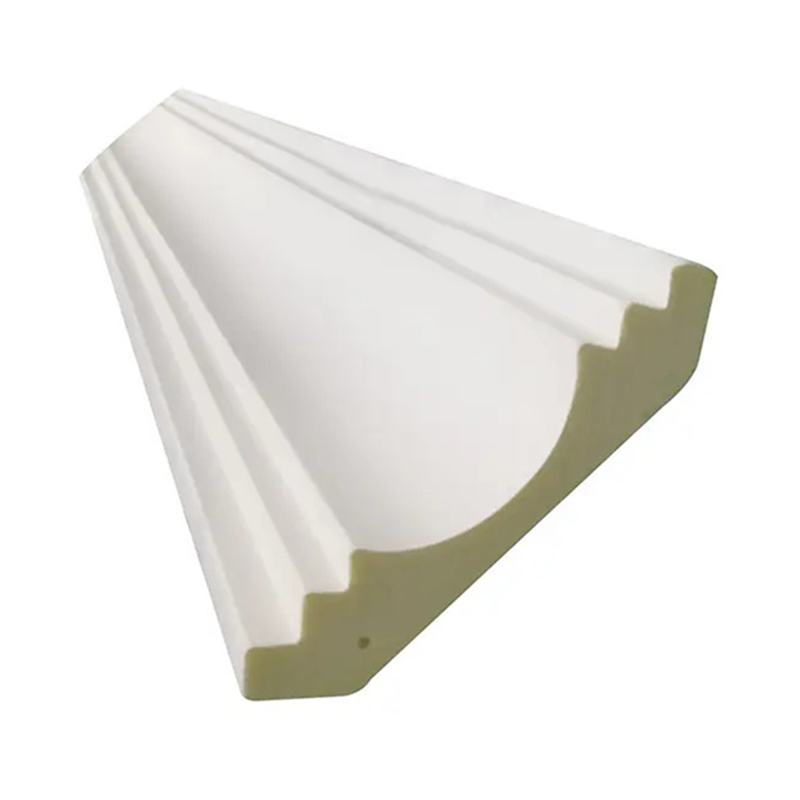
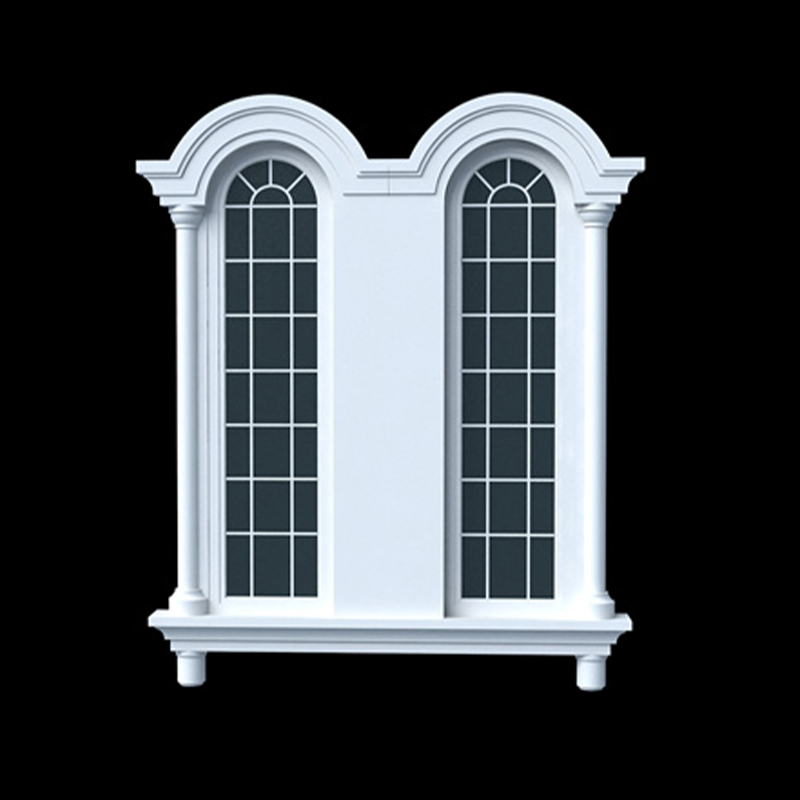
Decorative Window Frame GRC Molding is a shaped architectural surround installed around window openings. It may include straight profiles, curved profiles, cornice-like top sections, sill elements, side trims, keystones, brackets, relief patterns, or fully customized ornamental details. Depending on the design, it can be subtle and modern or richly classical. Its purpose is to define the window, enhance the façade composition, protect wall edges, and provide a durable decorative finish.
GRC is a composite material made from cement, fine aggregates, additives, water, and alkali-resistant glass fibers. The cementitious matrix provides compressive strength, fire resistance, dimensional stability, and a natural mineral appearance. The glass fibers improve flexural strength, impact resistance, crack control, and toughness. Compared with traditional precast concrete, GRC can be produced in thinner sections while maintaining reliable structural performance. Compared with fragile ornamental materials, it provides better outdoor endurance and easier project installation.
This product is suitable for villas, apartment buildings, hotels, office buildings, shopping centers, schools, museums, municipal buildings, garden structures, and renovation projects. It is particularly useful when architects want a stone-like or concrete-like appearance without the heavy weight and high installation cost of natural stone or thick precast concrete. It also works well when consistent quality, repeatable profiles, and customized dimensions are required across many windows on a large project.
For exterior applications, the product must resist wind, rain, temperature changes, sunlight, humidity, and long-term environmental exposure. GRC is well suited to these conditions because its cement-based body is stable and non-combustible, while its glass fiber reinforcement helps limit cracking. With proper formulation, curing, sealing, and installation, Decorative Window Frame GRC Molding can maintain its appearance and performance over years of service.
The key advantage of GRC lies in the balance between strength and weight. Traditional concrete is strong but heavy. Natural stone is elegant but expensive and difficult to process into complex repeated forms. Wood is easy to shape but requires frequent maintenance and may decay outdoors. Metal can be durable but often lacks the classical depth and mineral texture desired for architectural façades. EPS foam-based decorative trim is lightweight but may be less resistant to impact, fire, and long-term wear. GRC provides a practical middle ground: it is lighter than conventional concrete, stronger and more durable than many foam decorations, and more flexible in shape than many stone products.
Window frame moldings need accurate edges and stable dimensions because they are installed around openings where alignment is highly visible. GRC can be cast from precision molds, allowing consistent profiles and sharp details. This is important for projects with many repeated windows, where even small profile differences can disrupt façade rhythm. When molds are properly engineered and production is controlled, each piece can match the design intent with reliable accuracy.
Another important benefit is design flexibility. GRC can reproduce smooth modern lines, classical curves, geometric patterns, floral motifs, imitation stone textures, and custom relief elements. Architects can design a profile that matches the overall style of the building instead of being limited to standard market shapes. For renovation projects, GRC can also be used to recreate damaged historical details or upgrade plain openings with decorative elements.
GRC also performs well in terms of safety. It is a mineral-based material and does not burn like many organic decorative materials. For façade projects, fire performance is a major concern, especially in high-rise buildings, public buildings, and densely populated areas. While final fire performance depends on the full wall assembly and coating system, GRC itself provides an inherently non-combustible foundation for exterior decoration.
Decorative Window Frame GRC Molding competes with several materials commonly used in exterior decoration, including EPS trim, polyurethane products, natural stone, precast concrete, metal profiles, wood, fiber cement boards, and glass fiber reinforced plastic. Each material has its own strengths, but GRC offers a particularly strong combination of appearance, durability, customization, fire resistance, and project economy.
Compared with EPS decorative trim, GRC provides superior impact resistance, a more solid surface, better mineral texture, and stronger fire-related characteristics. EPS products are lightweight and inexpensive, but they may dent, crack, or degrade if the protective coating is damaged. In public buildings or lower façade areas where accidental impact is possible, GRC provides a more robust solution. It also feels more substantial and architectural, which improves perceived project quality.
Compared with natural stone, GRC is easier to customize, lighter, and often more economical. Stone is admired for its beauty, but it is heavy and can be costly to quarry, cut, transport, and install. Complex ornamental stone pieces may require skilled carving and long production cycles. GRC can imitate stone-like depth and texture while allowing efficient mold-based reproduction. This reduces weight on the façade and simplifies installation, especially for high-rise projects or buildings with many repeated decorative elements.
Compared with traditional precast concrete, GRC can be produced in thinner and lighter sections. Conventional precast pieces may require heavy lifting equipment, larger anchors, and stronger supporting structures. GRC moldings can often be handled more easily, reducing installation difficulty and improving site efficiency. This is particularly useful for window surrounds, where many pieces may need to be lifted, aligned, adjusted, and fixed in sequence.
Compared with wood, GRC offers better resistance to rot, insects, moisture, and fire. Wood can be attractive for interior or sheltered decorative use, but exterior window surrounds made from wood often require painting, sealing, and frequent maintenance. In humid, rainy, or high-sun environments, wood can warp or decay. GRC avoids these common problems and maintains a more stable profile under outdoor exposure.
Compared with metal trim, GRC provides more sculptural depth, less risk of corrosion, and a warmer architectural appearance. Metal can be excellent for sharp modern details, but classical or stone-like window surrounds are often more naturally achieved with GRC. GRC also avoids some issues related to thermal expansion, oil-canning, and visible fastening that can occur with thin metal panels.
| Material | Main Strength | Common Limitation | Advantage of Decorative Window Frame GRC Molding |
|---|---|---|---|
| EPS decorative trim | Very lightweight and low cost | Lower impact resistance and weaker surface durability | More solid, fire-resistant, durable, and premium in appearance |
| Natural stone | High-end natural texture | Heavy, expensive, and difficult to customize | Lighter, easier to reproduce, more economical for repeated profiles |
| Traditional precast concrete | Strong and durable | Heavy sections and difficult installation | Thinner, lighter, and more suitable for decorative façade work |
| Wood molding | Easy shaping and warm appearance | Rot, insects, warping, and frequent maintenance | Stable outdoors with lower maintenance demand |
| Metal trim | Sharp lines and industrial character | Possible corrosion, thermal movement, and limited sculptural depth | Mineral texture, rich profiles, and strong architectural depth |
| GFRP ornament | Lightweight and moldable | Resin aging and fire performance concerns depending on formulation | Cement-based, non-combustible character with durable exterior performance |
Window frame decoration has a powerful influence on façade perception. A flat wall with plain window openings can appear unfinished, while a framed window creates hierarchy and depth. The molding casts shadows during the day, highlights the geometry of openings, and contributes to the building’s rhythm. Even a simple rectangular GRC frame can make a façade look more complete and carefully designed.
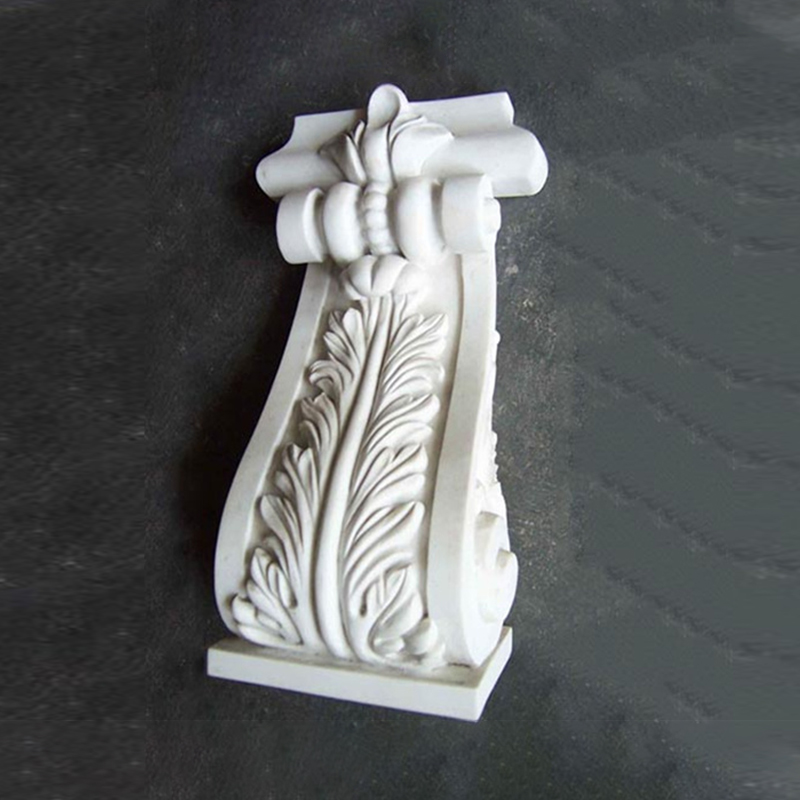
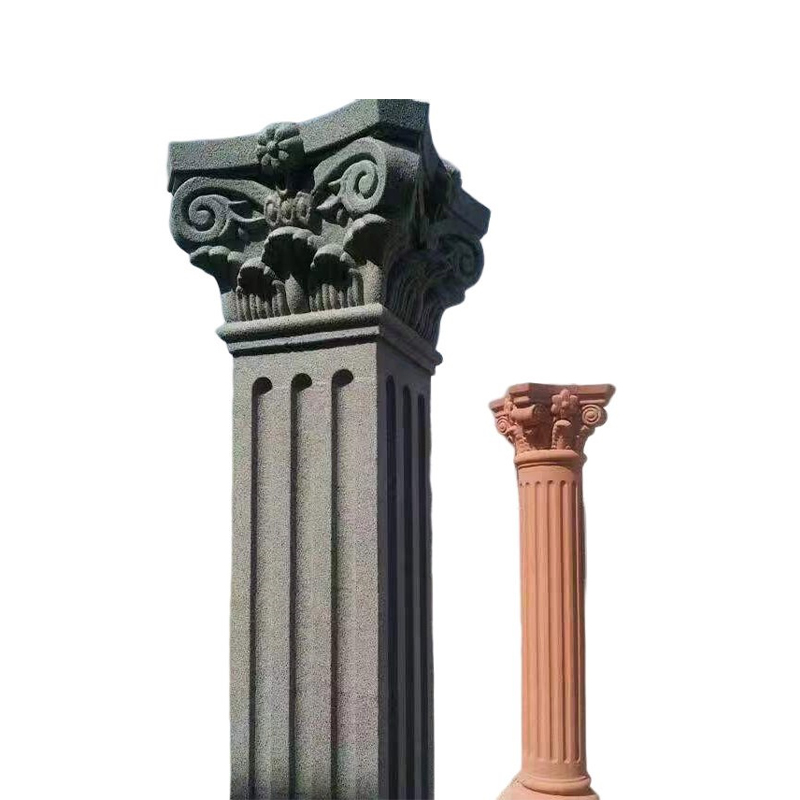
For classical architecture, Decorative Window Frame GRC Molding can include layered profiles, projecting crowns, sill bands, columns, pilaster-like side pieces, and ornamental reliefs. These details create a sense of proportion and craftsmanship traditionally associated with stone architecture. Because GRC can be cast into complex molds, classical details can be repeated consistently across many openings without the cost and time of hand carving.
For modern architecture, the molding can be simplified into clean lines, deep reveals, smooth rectangular surrounds, thin projecting frames, or geometric compositions. In this context, GRC is not only an ornamental material but also a façade shaping tool. It helps create depth around windows, define wall modules, and improve the overall composition without excessive decoration.
For renovation projects, GRC window moldings can transform old or plain façades. Many older buildings have structurally sound walls but outdated exterior appearances. Adding GRC window surrounds can refresh the building style, increase perceived property value, and improve street presence. Because GRC is lighter than many traditional materials, it can often be considered for renovation where structural load must be controlled.
Color and finish options further expand the design potential. GRC can receive coatings, mineral paints, stone-like textures, smooth finishes, sandblasted effects, or other surface treatments depending on project needs. The final finish can harmonize with wall paint, stone cladding, brickwork, curtain wall systems, or landscape elements.
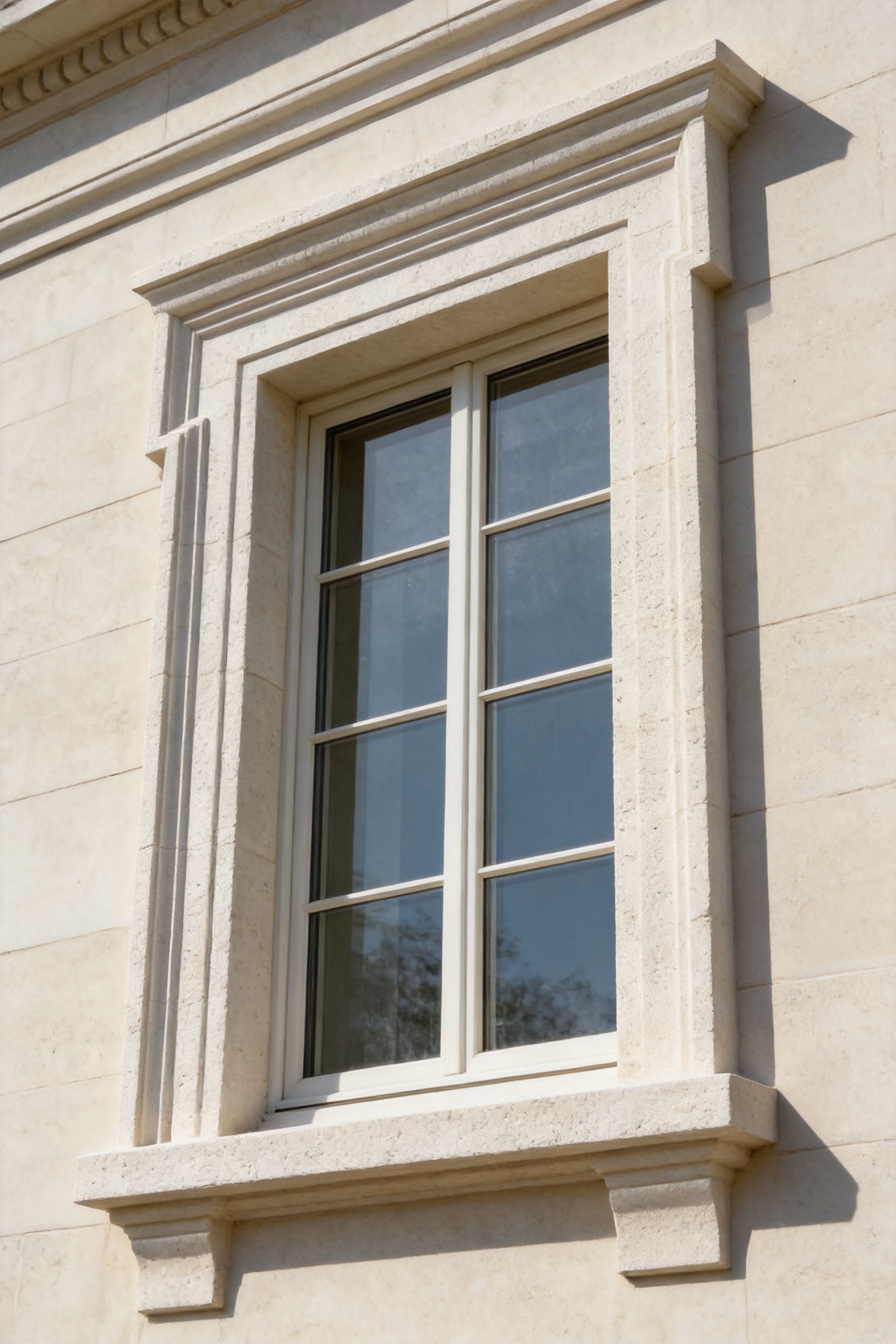
The performance of Decorative Window Frame GRC Molding depends not only on the material concept but also on disciplined manufacturing. Jiangsu Yameng Traffic Road Facilities Co., Ltd. supports its GRC series with professional designers, mold designers, CNC engraving capabilities, experienced production personnel, and construction technical teams. This integrated capability allows the company to control the entire process from idea to finished installation.
The process begins with design communication. The project team reviews the building style, window dimensions, façade drawings, installation conditions, expected finish, and performance requirements. This stage is essential because decorative moldings must be both beautiful and buildable. Profiles need appropriate thickness, edges need reasonable reinforcement, and joints must be planned to allow installation and long-term movement control.
After the initial design is confirmed, detailed drawings are prepared. These drawings define the profile, length, width, thickness, joint arrangement, embedded parts, anchoring positions, surface finish, and tolerance requirements. Detailed drawings reduce misunderstanding during production and installation. They also help contractors understand how pieces will connect around the window opening.
Mold design is one of the most important stages. A high-quality GRC molding requires a high-quality mold. The mold must reproduce the desired profile accurately, release the product without damage, and withstand repeated casting. For complex decorative profiles, CNC engraving improves precision and consistency. CNC technology helps translate digital designs into physical mold patterns with accurate curves, crisp lines, and repeatable geometry.
Material preparation follows strict formulation control. Cement, aggregates, glass fibers, admixtures, pigments if required, and water must be measured and mixed properly. The dispersion of glass fibers is especially important because fiber reinforcement helps improve crack resistance and flexural strength. Poor mixing can lead to weak zones, inconsistent surfaces, or reduced durability. Experienced production teams understand how to maintain workable mixtures while preserving mechanical performance.
Depending on the product shape and specification, GRC may be produced by spray-up, premix casting, vibration casting, or other suitable methods. The objective is to fully fill the mold, achieve a dense surface, distribute fibers effectively, and minimize voids. Thin decorative sections require particular care because edge quality and uniform thickness are critical. Skilled workers monitor the placement process to ensure that the finished molding reflects the design and meets practical handling requirements.
Curing is another key factor. Cement-based materials gain strength through hydration, and proper curing helps control shrinkage, improve durability, and reduce early cracking. GRC products should be protected from excessive drying, extreme temperature changes, or mechanical disturbance during early strength development. A controlled curing process contributes to dimensional stability and long-term surface quality.
After demolding, each piece is inspected. Quality control may include checking dimensions, profile accuracy, surface finish, edge integrity, embedded accessories, thickness, color consistency, and visible defects. Any necessary finishing work is carried out before packaging. For project orders, pieces may be labeled according to window position or installation sequence, which helps reduce confusion at the construction site.
A professional GRC molding supplier must do more than produce separate decorative pieces. It must understand the full project chain. The company’s experience in drainage projects and GRC customization supports a systematic approach to order execution. Infrastructure products such as drainage ditches, cover plates, manhole covers, and pipes require dimensional accuracy, load awareness, material durability, and project coordination. These same principles are valuable in architectural GRC production.
The first step is requirement analysis. The team studies whether the project is new construction or renovation, whether the façade is concrete, masonry, insulation system, steel structure, or another substrate, and whether the molding is decorative only or must also protect edges and cover joints. Environmental factors such as rainfall, freeze-thaw exposure, wind load, coastal humidity, and pollution may also influence design choices.
The second step is technical optimization. The profile may be adjusted to improve drainage, avoid water trapping, reduce sharp fragile edges, or simplify installation. For window surrounds, small slopes and drip details can be incorporated into sill or projecting parts to help guide water away from the wall. Good design reduces maintenance problems and improves long-term performance.
The third step is mold manufacturing. With professional mold designers and CNC engraving equipment, custom shapes can be produced efficiently. This is especially valuable for projects requiring repeated decorative profiles with high consistency. A precise mold reduces finishing labor, improves profile sharpness, and supports stable production output.
The fourth step is controlled GRC production. Production teams follow defined procedures for mixing, casting, fiber reinforcement, compaction, curing, and demolding. Consistency is crucial for large projects because moldings installed on the same façade must match in dimension and finish. Stable production also helps reduce waste and shorten delivery schedules.
The fifth step is surface treatment. Depending on the design, the GRC molding may be left with a natural cementitious surface, coated with primer and exterior paint, finished with a stone-like coating, or prepared for later site painting. Surface treatment improves appearance and may enhance resistance to water absorption, staining, and weathering.
The sixth step is packaging and transportation. Although GRC is durable, decorative edges and profiles must be protected during logistics. Proper packaging prevents chipping and abrasion. Labeling and organized delivery are important for projects with many different window sizes and decorative components.
The seventh step is installation support. The company’s production and construction technical team can provide guidance on installation methods, joint treatment, fixing systems, sealants, and protection after installation. Proper installation ensures that the product’s manufacturing quality is fully realized on the building façade.
Quality control for Decorative Window Frame GRC Molding must cover appearance, dimensions, mechanical integrity, and long-term performance. A visually beautiful piece is not enough if it has weak edges, poor curing, or inaccurate dimensions. Similarly, a strong piece is not acceptable if the surface is uneven or the profile does not match the design. A balanced quality system is required.
Dimensional control ensures that each molding aligns with the window opening and adjacent pieces. Tolerances must be suitable for the installation system. If the pieces are too long, too short, or warped, site workers may need to cut or adjust them, which can increase labor and reduce appearance quality. Precision mold making and careful curing help maintain dimensional stability.
Surface inspection is important because decorative moldings are highly visible. The surface should be smooth or textured according to the design, with no unacceptable holes, cracks, stains, deformation, or broken corners. Edges should be clean and consistent. Relief patterns should be complete and sharp.
Mechanical performance is influenced by mix design, fiber content, compaction, curing, and product geometry. Window moldings are often handled several times before installation, so they must resist handling stress. After installation, they must withstand wind, vibration, temperature change, and minor impact. Reinforcement details and proper thickness selection help achieve safe performance.
Weather resistance is essential for exterior use. Cement-based GRC is naturally suited for outdoor conditions, but water management is still important. Good façade detailing should prevent standing water on horizontal surfaces, protect joints, and use appropriate sealants. Surface coatings should be compatible with GRC and outdoor exposure.
Consistency across batches matters for large projects. When hundreds of window frames are required, color, finish, profile, and dimensions should remain uniform. The use of standardized production records, controlled material ratios, and mold maintenance helps maintain batch consistency.
Even high-quality GRC molding requires correct installation. The wall substrate should be checked for strength, flatness, cleanliness, and moisture condition. Installation drawings should be reviewed before work begins. Pieces should be compared with labels and window locations to avoid mismatch.
Fixing methods depend on molding size, weight, wall structure, and project requirements. Small decorative pieces may be bonded and mechanically assisted, while larger or projecting components may require anchors, brackets, embedded parts, or other fastening systems. The fixing design should account for dead load, wind load, thermal movement, and safety factors.
Joint planning is critical. GRC pieces should not be forced into overly tight spaces. Controlled joints allow for construction tolerance and movement. Joints should be sealed with suitable exterior-grade materials to prevent water penetration. The sealant should bond well to the substrate and the GRC surface, and joint dimensions should follow manufacturer and project guidance.
Water shedding should be considered around window sills and upper frame sections. Horizontal surfaces should have slight slopes where possible. Drip grooves or projection details may be used to prevent water from running directly back onto the wall. These small design features can significantly improve long-term appearance.
After installation, surface protection is recommended until other façade work is complete. Paint, mortar, welding sparks, dust, or construction impact can damage decorative details. Proper site protection helps ensure the final façade looks clean and professional at handover.
Maintenance is generally simple. The surface can be inspected periodically for dirt, coating wear, joint aging, or accidental damage. Cleaning should use suitable methods that do not harm the finish. If coatings are used, repainting intervals depend on local climate, coating type, and exposure level. Compared with materials such as wood or foam trim, GRC offers a low-maintenance exterior solution.
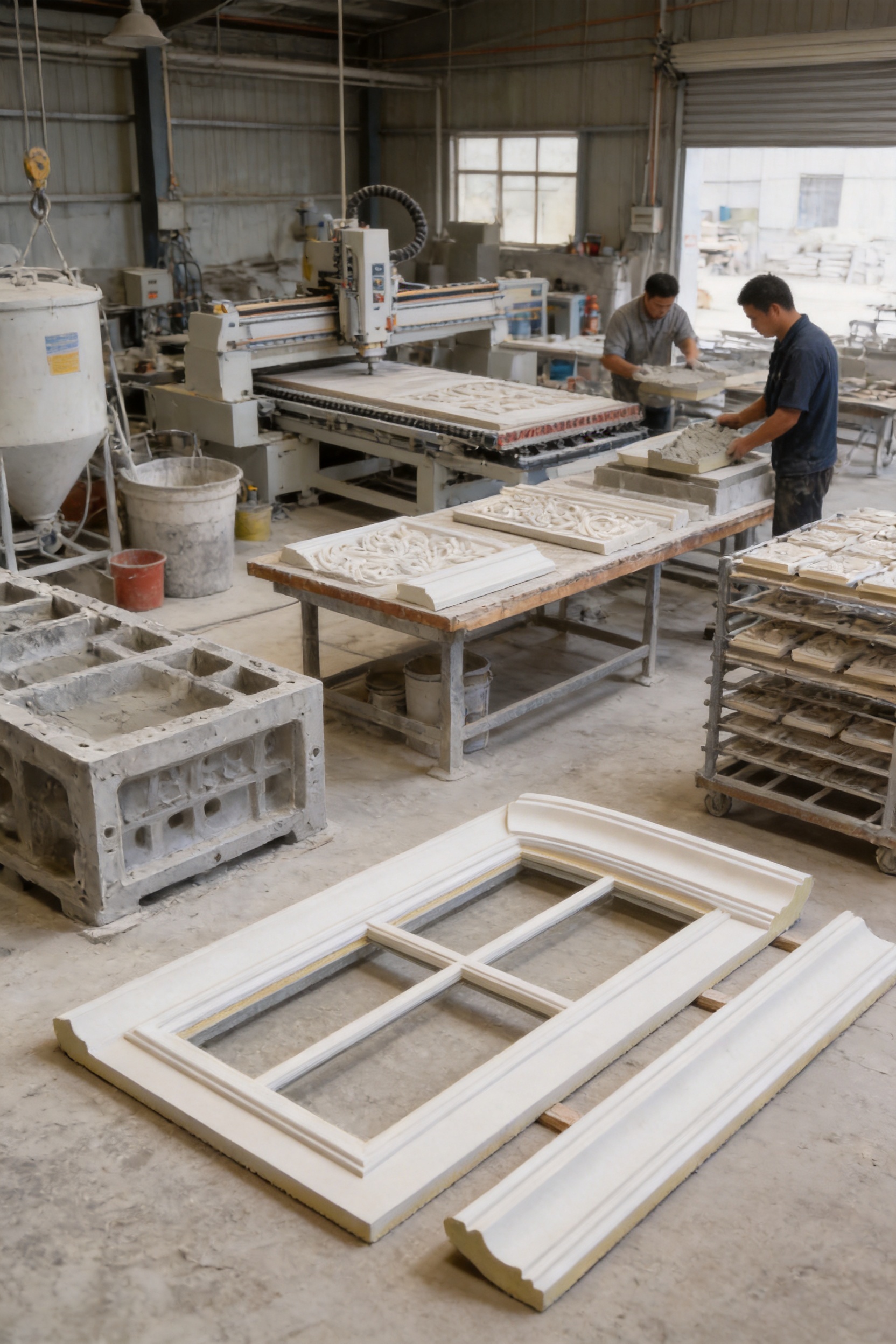
One of the major strengths of Decorative Window Frame GRC Molding is customization. Buildings differ in style, scale, window proportion, wall thickness, and façade material. A standard trim may not fit every project. Custom GRC molding allows architects and owners to achieve a specific visual goal while adapting to real construction conditions.
Custom profiles can be created from architectural drawings, sketches, photographs, or sample pieces. For new buildings, the profile may be designed to match the overall façade rhythm. For renovation, it may be designed to complement existing cornices, columns, door surrounds, balcony elements, or roofline details. For classical villas, ornate moldings can create an elegant and prestigious appearance. For commercial buildings, clean and bold frames can strengthen brand-like architectural presence without placing company names in the decorative design itself.
Dimension customization is equally important. Window sizes often vary within a building. Some windows may be tall and narrow, others wide and horizontal. Corner windows, arched windows, bay windows, and special openings require tailored solutions. GRC pieces can be designed in modules that are easier to transport and install while still creating a seamless visual effect after joint treatment.
Surface finish customization includes smooth cement finish, white base finish, colored finish, sand texture, stone texture, carved relief, and coatings prepared for final painting. Designers can select a finish that harmonizes with exterior walls, metal windows, stone bases, roof tiles, landscape walls, or surrounding urban context.
Custom mold development also supports repeatability. Once a mold is completed, multiple identical pieces can be produced with consistent quality. This is a major advantage over hand-carved materials for large projects. It also helps future maintenance because replacement pieces can be produced according to the same profile when mold data and drawings are retained.
Jiangsu Yameng Traffic Road Facilities Co., Ltd. is not limited to decorative architectural components. Its product range includes linear drainage ditches, finished drainage ditches, polymer-based drainage ditches, slot drainage ditches, U-shaped drainage ditches, ductile iron cover plates, stainless steel stamped cover plates, steel gratings, resin concrete cover plates, resin composite manhole covers, stainless steel manhole covers, ductile iron manhole covers, drainage pipes, PE pipes, and related products. This broad infrastructure background gives the company practical knowledge of outdoor durability, water flow, load resistance, corrosion-related concerns, and construction coordination.
This experience is valuable for GRC window frame molding because exterior decorations face many of the same environmental challenges as drainage and road facility products. They must handle water, weather, temperature changes, handling stress, installation tolerance, and long-term exposure. A manufacturer accustomed to outdoor infrastructure products tends to understand the importance of material consistency, dimensional control, strong packaging, and dependable project delivery.
The company’s commitment to integrity, responsibility, focus, and innovation also supports customer confidence. Architectural projects often involve multiple parties: owners, architects, contractors, façade installers, and suppliers. A responsible supplier must communicate clearly, honor specifications, and support the project from early design to after-sales service. This is especially important for customized GRC products because each project may have unique profiles, dimensions, and installation conditions.
The company’s location in Nantong, Jiangsu Province, China, with convenient transportation and waterway access, supports efficient material procurement and product delivery. For domestic and international customers, logistics efficiency can affect project schedule and cost. A manufacturer with project shipment experience can better organize packaging, labeling, loading, and delivery documentation.
To achieve the best result with Decorative Window Frame GRC Molding, design should begin early. Architects should not treat molding as an afterthought. The profile depth, projection, joint location, and relationship with window frames should be coordinated during façade design. Early coordination avoids conflicts with insulation layers, waterproofing membranes, curtain wall edges, air-conditioning openings, or drainage paths.
Proportion is one of the most important visual considerations. A small window may be overwhelmed by a very large molding, while a large window may look weak with a narrow frame. The molding width and projection should match the scale of the wall and the overall architectural style. Classical façades often use layered and thicker profiles, while modern façades may use simpler and cleaner frames.
Shadow effect should also be considered. One reason decorative molding improves a façade is that it creates light and shadow. A completely flat frame may have limited visual impact, while a modest projection can create depth. However, excessive projection may require stronger anchoring and may collect water if not detailed properly. The ideal profile balances visual effect with practical performance.
Joint locations should be planned to reduce visibility. Long moldings may be divided into sections for production and transportation. Joints can be aligned with corners, profile breaks, or natural shadow lines. This makes them less noticeable after sealing and finishing. For arched or complex shapes, segment planning is especially important.
Color selection should match environmental exposure. Light colors may reduce heat absorption and help maintain a clean, classical appearance. Dark colors can create dramatic contrast but may show dust, fading, or thermal movement more clearly depending on coating type and climate. The coating system should be selected for exterior durability.
Compatibility with window systems is essential. The molding should not block drainage holes, interfere with window opening operation, or trap water against the frame. Sealant interfaces between the GRC molding, wall, and window should be accessible and properly detailed. Good coordination improves both appearance and waterproofing reliability.
Lifecycle value is increasingly important in construction. A product should not be judged only by initial purchase price. It should be evaluated by durability, maintenance demand, installation cost, replacement frequency, and long-term appearance. Decorative Window Frame GRC Molding offers strong lifecycle value because it is durable, stable, and relatively low maintenance.
Its lightweight nature can reduce transportation and installation burden compared with heavy stone or thick precast concrete. Lower weight may also reduce the need for heavy lifting equipment and massive supporting structures. On large projects, these practical advantages can translate into meaningful schedule and labor benefits.
The ability to reproduce complex details from molds can reduce waste compared with cutting decorative shapes from blocks of stone. Mold-based production also improves material efficiency because pieces are cast close to their final shape. When design data is managed well, replacement components can be produced in the future without redesigning the entire profile.
Durability contributes to sustainability. Products that last longer and require fewer replacements reduce material consumption over time. GRC’s resistance to rot, insects, fire, and weathering helps extend service life in exterior applications. With proper installation and coating maintenance, it can remain attractive for many years.
In addition, a high-quality façade may help protect building value. Attractive window frames increase visual quality, which can improve market perception for villas, hotels, apartments, and commercial properties. A durable decorative system reduces the risk of premature façade deterioration and costly repairs.
Decorative Window Frame GRC Molding can be used in many building types. In villa projects, it creates a refined and elegant façade. Classical villas may use ornate profiles, while modern villas may use clean frames with deep shadow lines. Because villas often emphasize individuality, customization is especially valuable.
In apartment buildings, GRC window frames help create rhythm and order across repeated elevations. They can break the monotony of large wall surfaces and add value without overly complicated construction. Repeated molds make production efficient for multi-window projects.
In hotels and resorts, window frames contribute to style and atmosphere. A resort may use Mediterranean, European, neoclassical, or modern decorative themes. GRC can support these varied styles and deliver durable exterior performance in locations exposed to sun, rain, and humidity.
In commercial buildings, GRC moldings can frame display windows, upper-floor windows, and entrance-adjacent openings. Clean rectangular frames can make the building look more organized and premium. For shopping streets and mixed-use developments, façade detail can strongly influence customer perception.
In cultural, educational, and municipal buildings, GRC decorative moldings can provide a dignified architectural expression. Such buildings often require durable public-facing materials and carefully controlled appearance. GRC offers the strength and customization needed for these applications.
In façade renovation, GRC window frames can upgrade old buildings without complete reconstruction. They can cover damaged edges, introduce new style, and coordinate with repainting or wall improvement work. Because they are lighter than stone or thick concrete, they are practical for many renovation conditions.
When selecting Decorative Window Frame GRC Molding, buyers should consider more than unit price. The supplier’s design capability, mold precision, material quality, production capacity, quality control, packaging, delivery reliability, and installation support are all important. A low-cost product may become expensive if it has poor accuracy, frequent breakage, weak surface quality, or inadequate technical guidance.
Buyers should provide accurate drawings and project information when requesting a quotation. Useful information includes window dimensions, quantity, profile drawings, wall substrate type, finish requirements, installation height, local climate conditions, and delivery schedule. The more complete the information, the more accurate the technical proposal and cost estimate will be.
Samples can be useful for confirming surface finish, profile quality, color, and material feel. For large projects, mock-up installation is recommended. A mock-up allows the project team to review appearance, joint design, fixing method, and coordination with windows before full-scale installation.
Production lead time should include design confirmation, mold making, sample approval, batch production, curing, finishing, packaging, and transportation. Custom GRC is a project-based product, so early ordering helps prevent schedule pressure. Rushed production may compromise curing time or quality control.
After delivery, site storage should protect the pieces from impact, contamination, and improper stacking. Pieces should be stored on stable supports and handled according to their shape and weight. Installation teams should avoid dropping, dragging, or striking decorative edges.
Clear communication among the supplier, contractor, and installer helps prevent errors. Labeled components, installation drawings, and technical instructions reduce site confusion. For complex projects, supplier support during early installation can improve efficiency and final quality.
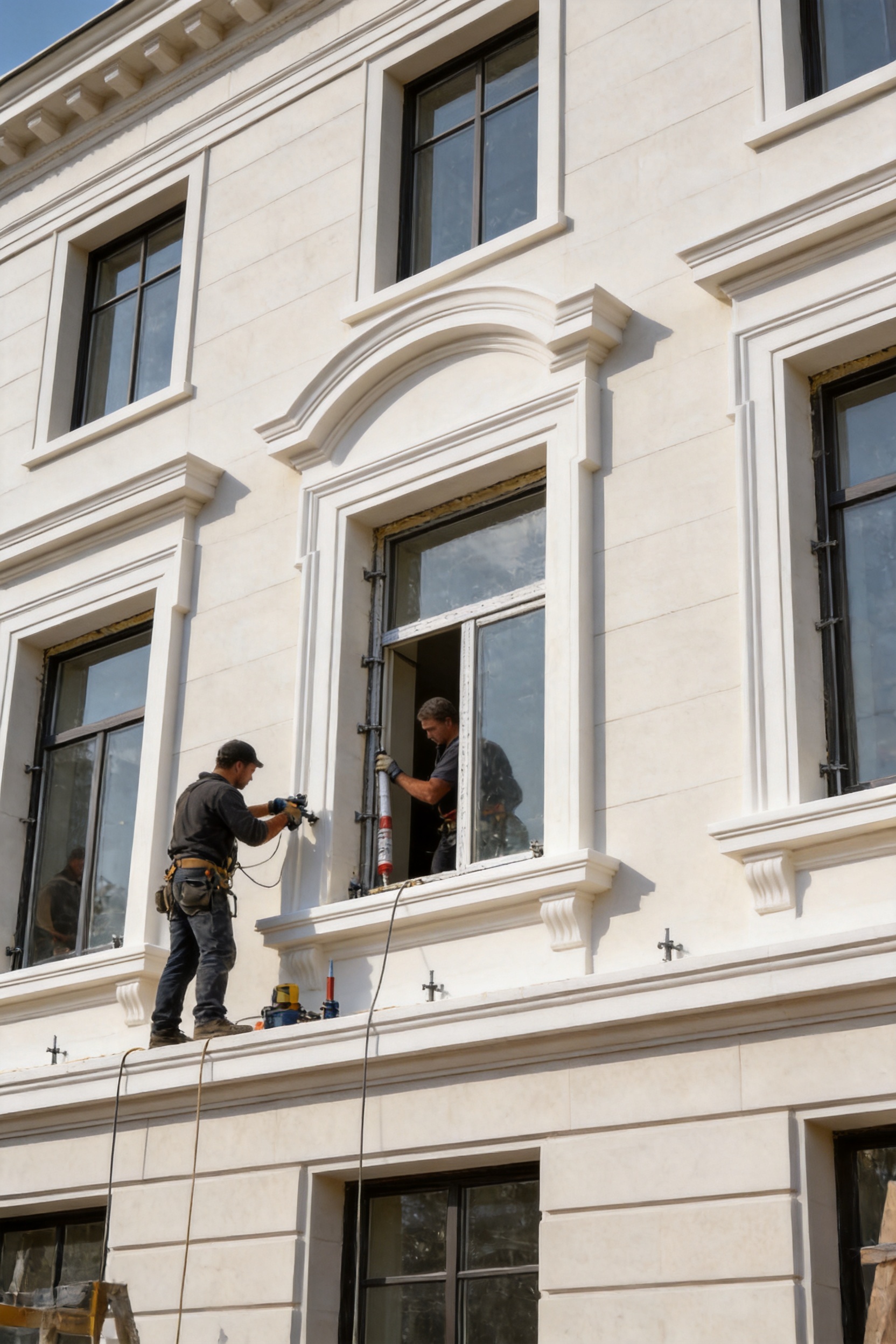
Decorative Window Frame GRC Molding is a cement-based architectural trim reinforced with alkali-resistant glass fibers. It is installed around windows to improve façade appearance, create depth, protect edges, and provide durable exterior decoration.
GRC is stronger, more impact-resistant, more fire-resistant in character, and more solid in appearance than EPS foam trim. EPS may be suitable for lightweight low-cost applications, but GRC provides a more durable and premium solution for long-term exterior use.
GRC is lighter than traditional precast concrete and many natural stone products because it can be manufactured in thinner sections. It still has a solid mineral body, but its reduced weight makes handling and installation easier than many heavy alternatives.
Yes. Profiles, dimensions, relief patterns, curves, surface textures, and finishes can be customized according to architectural drawings or project requirements. Professional mold design and CNC engraving support accurate reproduction of custom shapes.
Yes. GRC is commonly used for exterior architectural elements because it has good durability, dimensional stability, and resistance to weathering. Proper curing, surface treatment, installation, and joint sealing further improve long-term performance.
Yes. For modern buildings, GRC can be produced as clean, simple, geometric frames. For classical buildings, it can reproduce layered profiles, curved details, keystones, sill elements, and ornamental reliefs.
Quality control includes checking raw materials, mix consistency, mold accuracy, fiber distribution, casting quality, curing conditions, dimensions, surface finish, edge integrity, and packaging. For project orders, labeling and batch consistency are also important.
Installation methods depend on molding size, wall substrate, project height, and design requirements. Bonding, mechanical anchors, brackets, embedded parts, and sealant joints may be used. A proper fixing design is essential for safety and durability.
Maintenance is generally low. Periodic inspection and cleaning are recommended. If an exterior coating is used, repainting or coating renewal may be needed after years of exposure depending on the coating system and local climate.
A professional manufacturer provides accurate drawings, precise molds, controlled production, stable quality, reliable packaging, and technical support. These factors are especially important for customized façade components where appearance and fit must be consistent across the project.
Decorative Window Frame GRC Molding is a high-value architectural product that combines beauty, strength, customization, and long-term practicality. It enhances building façades by adding depth, proportion, and refined detail around window openings. At the same time, it provides the durability needed for outdoor exposure, including resistance to weathering, impact, moisture-related deterioration, and fire-related concerns associated with many organic decorative materials.
Its advantages over competing materials are clear. It is stronger and more solid than EPS trim, lighter and more economical than many natural stone solutions, easier to install than heavy precast concrete, more weather-stable than wood, and more sculptural than many metal profiles. For projects requiring both architectural elegance and reliable performance, GRC is an excellent choice.
The manufacturing strengths of Jiangsu Yameng Traffic Road Facilities Co., Ltd. further increase product value. With professional design support, mold design, CNC engraving, experienced production teams, construction technical capabilities, and a broad background in drainage and infrastructure products, the company offers more than a decorative component. It offers an integrated project solution from concept to installation support. This combination of material performance, customization capability, and process control makes Decorative Window Frame GRC Molding a dependable option for modern façades, classical buildings, renovation projects, and large-scale architectural developments.
1. ACI Committee 544. Report on Fiber Reinforced Concrete. American Concrete Institute.
2. PCI Committee on Glass Fiber Reinforced Concrete Panels. Recommended Practice for Glass Fiber Reinforced Concrete Panels. Precast/Prestressed Concrete Institute.
3. GRCA. Practical Design Guide for Glassfibre Reinforced Concrete. International Glassfibre Reinforced Concrete Association.
4. Neville, A. M. Properties of Concrete. Pearson Education.
5. Mehta, P. K., and Monteiro, P. J. M. Concrete: Microstructure, Properties, and Materials. McGraw-Hill Education.
6. Allen, E., and Iano, J. Fundamentals of Building Construction: Materials and Methods. Wiley.
Related Products
Engineered specifically for harsh environmental conditions, the Weatherproof Outdoor GRC door and wi...
READ MOREEngineered specifically for harsh environmental conditions, the Weatherproof Outdoor GRC door and wi...
READ MOREEngineered specifically for harsh environmental conditions, the Weatherproof Outdoor GRC door and wi...
READ MOREEngineered specifically for harsh environmental conditions, the Weatherproof Outdoor GRC door and wi...
READ MOREEngineered specifically for harsh environmental conditions, the Weatherproof Outdoor GRC door and wi...
READ MOREEngineered specifically for harsh environmental conditions, the Weatherproof Outdoor GRC door and wi...
READ MORE
Contact us
Factory Address
Group 12, Quanxin Village, Donghai Town, Qidong City, Nantong City, Jiangsu Province, China
phone
+86-13914963840
+86-13451754670
products
QR CODE
 Wholesale Drainage Ditch Manufacturers