 English
 Español
 عربى
عربى

The Minimalist Linear GRC door and window frames are specifically designed for architectural project...
READ MOREJul 02, 2026
Content
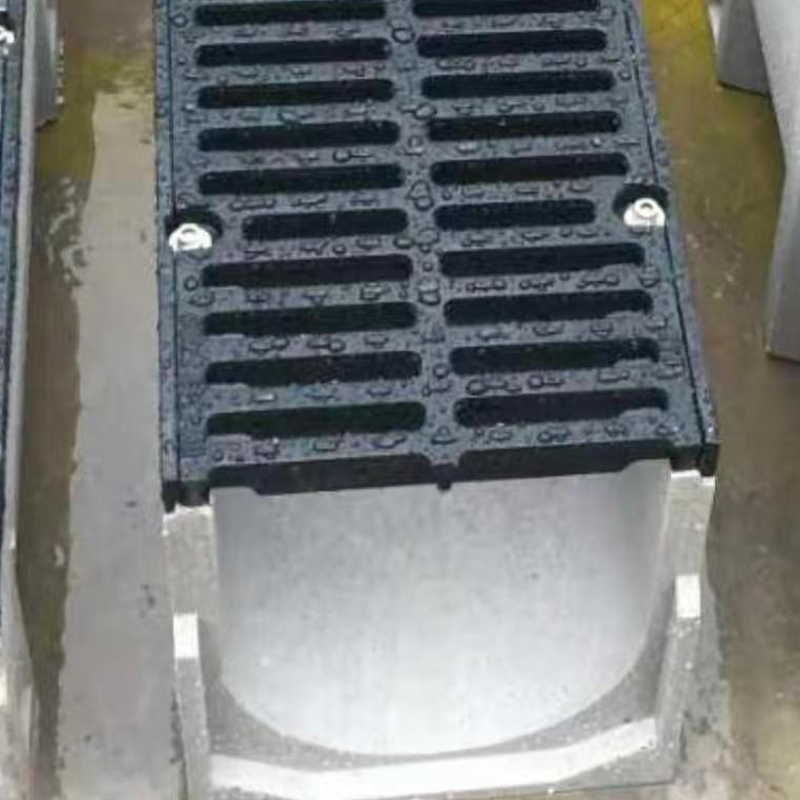
Industrial drainage is not only a matter of moving water away from working areas; it is also a matter of safety, durability, traffic performance, and long-term operating cost. Non-slip industrial cast iron ditch covers are designed for demanding environments where drainage channels must remain accessible, stable, and safe under frequent pedestrian movement, forklift operation, vehicle loading, and outdoor weather exposure. For factories, warehouses, roads, parking lots, logistics yards, public walkways, municipal facilities, and commercial zones, a dependable ditch cover can reduce hazards while protecting the drainage system beneath it.
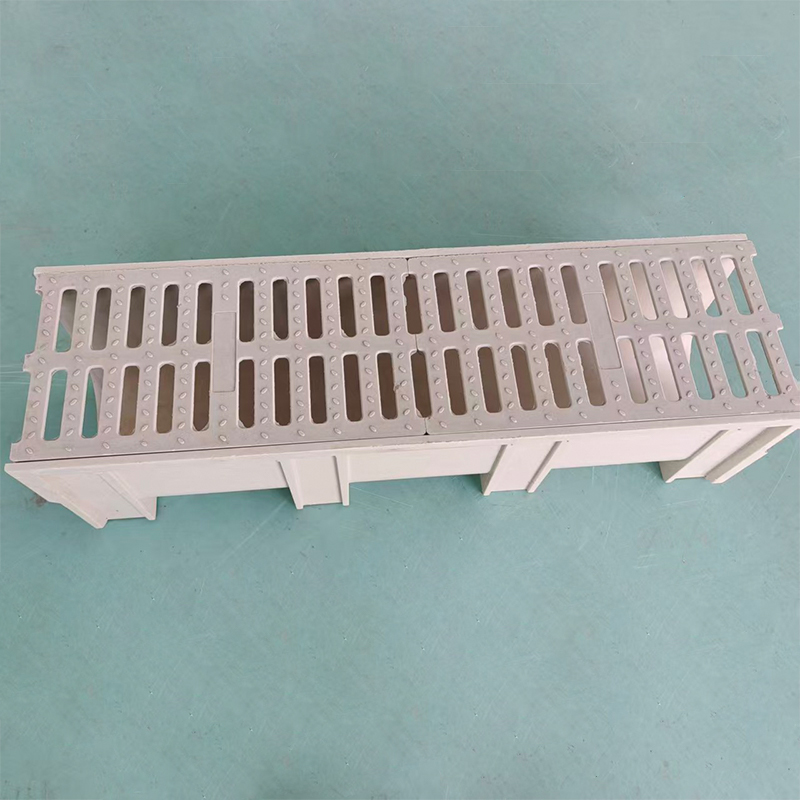
The product discussed in this article is a heavy-duty cast iron drainage ditch cover with a non-slip surface, modular installation characteristics, strong load-bearing capacity, and resistance to wear and corrosion. It is made for locations where drainage infrastructure must withstand repeated pressure while maintaining pedestrian and vehicle safety. Compared with lighter-duty covers and ordinary grating products, this type of cover provides a stronger combination of structural stability, surface traction, service life, and maintenance convenience.
Jiangsu Yameng Traffic Road Facilities Co., Ltd. focuses on drainage ditch systems, cover plates, GRC customization, drainage pipes, manhole covers, and related infrastructure products. With experience in drainage channel projects and customized construction support, the company provides products intended for practical engineering use, including linear drainage ditches, finished drainage ditches, polymer-based drainage ditches, slot drainage ditches, U-shaped drainage ditches, ductile iron cover plates, stainless steel stamped cover plates, steel gratings, resin concrete cover plates, and composite or metal manhole covers. Its non-slip industrial cast iron ditch covers reflect the company’s broader attention to product reliability, project compatibility, and manufacturing quality.
Non-slip Industrial Cast Iron Ditch Covers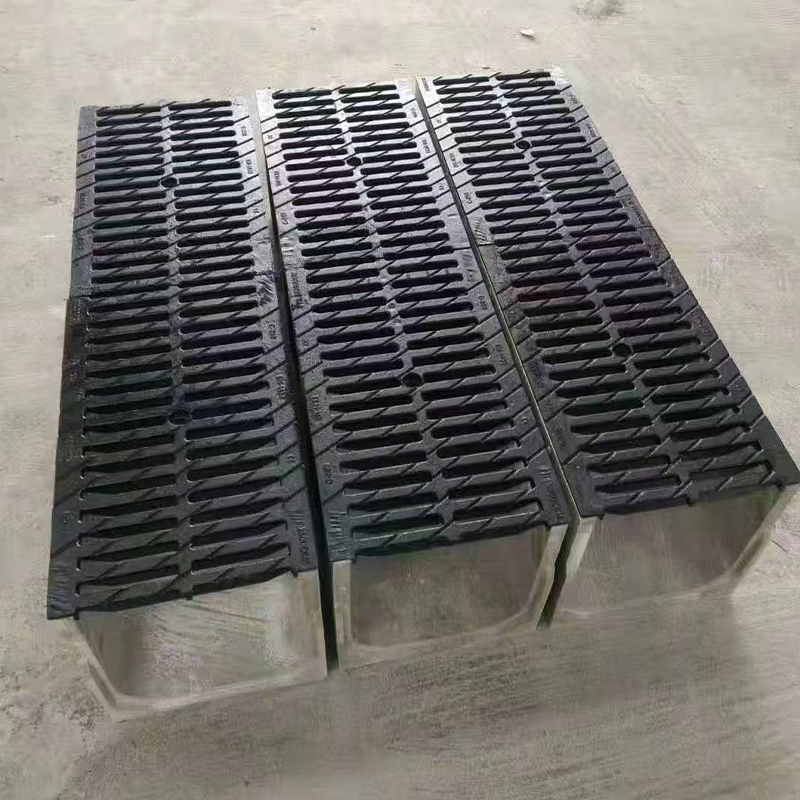
Non-slip industrial cast iron ditch covers are engineered cover plates used over drainage channels to provide safe passage and protect the water collection system below. Their main function is to allow water to enter the drainage channel while maintaining a secure surface for people and vehicles. In industrial and public settings, covers may be exposed to impact, vibration, wet conditions, oil contamination, dust, temperature changes, and repeated loading. A well-designed cast iron cover addresses these issues through material strength, surface pattern design, dimensional control, and practical installation structure.
Cast iron has long been valued in infrastructure applications because it offers high compressive strength, good wear resistance, and stable performance under heavy traffic. When properly manufactured and finished, cast iron ditch covers can serve for years in harsh environments. They can be used in indoor workshops, outdoor plants, loading areas, machinery zones, municipal roads, sidewalks, parking areas, and logistics facilities. The non-slip surface further improves safety by increasing friction between the cover and shoes, tires, or equipment wheels.
This product is especially suitable where conventional smooth plates may become slippery after rain, cleaning, oil exposure, or condensation. In environments such as factories and warehouses, floor surfaces are often cleaned with water, and drainage is required to remove wastewater quickly. However, wet metal surfaces can introduce fall risks. A cast iron ditch cover with raised anti-slip patterns or textured surface treatment helps reduce this danger while preserving the load-bearing function of the cover.
The cover’s modular design also simplifies installation and replacement. Standard sizes can be matched with drainage ditch systems, reducing on-site adjustment time. When maintenance teams need to inspect or clean the channel, individual cover sections can be lifted and reinstalled without dismantling a large area. This feature supports long-term maintenance efficiency and helps keep drainage systems functional.
Drainage ditch covers are often treated as simple accessories, but their influence on project performance is significant. A drainage channel may be well designed, but if the cover cannot support expected loads or if its surface becomes dangerous in wet conditions, the entire system becomes a safety risk. In commercial and industrial projects, failures can lead to accidents, damaged vehicles, drainage blockages, work interruptions, and increased maintenance expenses.
There are several common problems with low-quality ditch covers. Some covers deform under pressure, causing uneven surfaces and noise during vehicle passage. Some covers corrode rapidly in outdoor or chemical environments, weakening their structure. Others lack sufficient anti-slip texture, creating hazards after rainfall or cleaning. Poor dimensional accuracy can lead to unstable fitting, rocking movement, and premature wear around the channel frame. In busy facilities, these problems can become costly and inconvenient.
Heavy-duty cast iron covers provide a more robust answer. They are not merely used to close a trench; they are structural elements of the drainage system. They must transfer loads to the channel body and surrounding pavement. They must remain seated under dynamic traffic. They must resist abrasion and environmental exposure. They must also preserve drainage performance by allowing water inflow and preventing large debris from entering the channel. When these requirements are met, the drainage system becomes safer and more reliable.
The non-slip industrial cast iron ditch cover is therefore a practical investment in operational safety. It helps reduce trip and slip risks, protects the drainage ditch, and extends infrastructure service life. For procurement teams, engineers, contractors, and facility managers, choosing a stronger cover at the beginning can prevent recurring replacement costs and site disruption later.
The main advantages of this non-slip industrial cast iron ditch cover are heavy-duty strength, anti-slip performance, wear resistance, corrosion resistance, ease of installation, and suitability for diverse applications. Each advantage contributes to the product’s value in demanding drainage environments.
The first advantage is strength. Industrial and commercial drainage areas often face repeated loading from trucks, forklifts, carts, maintenance vehicles, and dense pedestrian traffic. Cast iron’s mechanical properties allow the cover to withstand frequent pressure without easy deformation. This makes the product suitable for facilities where load performance cannot be compromised.
The second advantage is anti-slip safety. A non-slip surface is essential where water, mud, oil, or cleaning liquid may remain on the floor. Raised textures, patterned surfaces, or special surface geometry increase contact friction. This improves safety for pedestrians and vehicle tires, especially in rainy or wet industrial spaces. Compared with flat metal plates, a non-slip cast iron cover provides much better surface grip.
The third advantage is wear resistance. In places with repeated wheel contact, ordinary plates can wear down, become polished, or lose surface function. Cast iron provides excellent resistance to abrasion, helping the cover maintain its structure and traction for longer periods. This is especially useful for factories, warehouses, loading bays, and road drainage projects.
The fourth advantage is corrosion resistance and environmental durability. Drainage systems frequently contact water, sediment, road dirt, industrial wastewater, and outdoor weather. With suitable material selection and surface treatment, cast iron covers can resist deterioration and remain reliable. Their robust nature supports use in both interior and exterior conditions.
The fifth advantage is installation convenience. Standardized and modular cover sections allow faster project progress. Workers can place the covers in prepared channel systems without complex processing. If one section is damaged or needs inspection access, it can be handled independently. This reduces maintenance difficulty and supports efficient facility management.
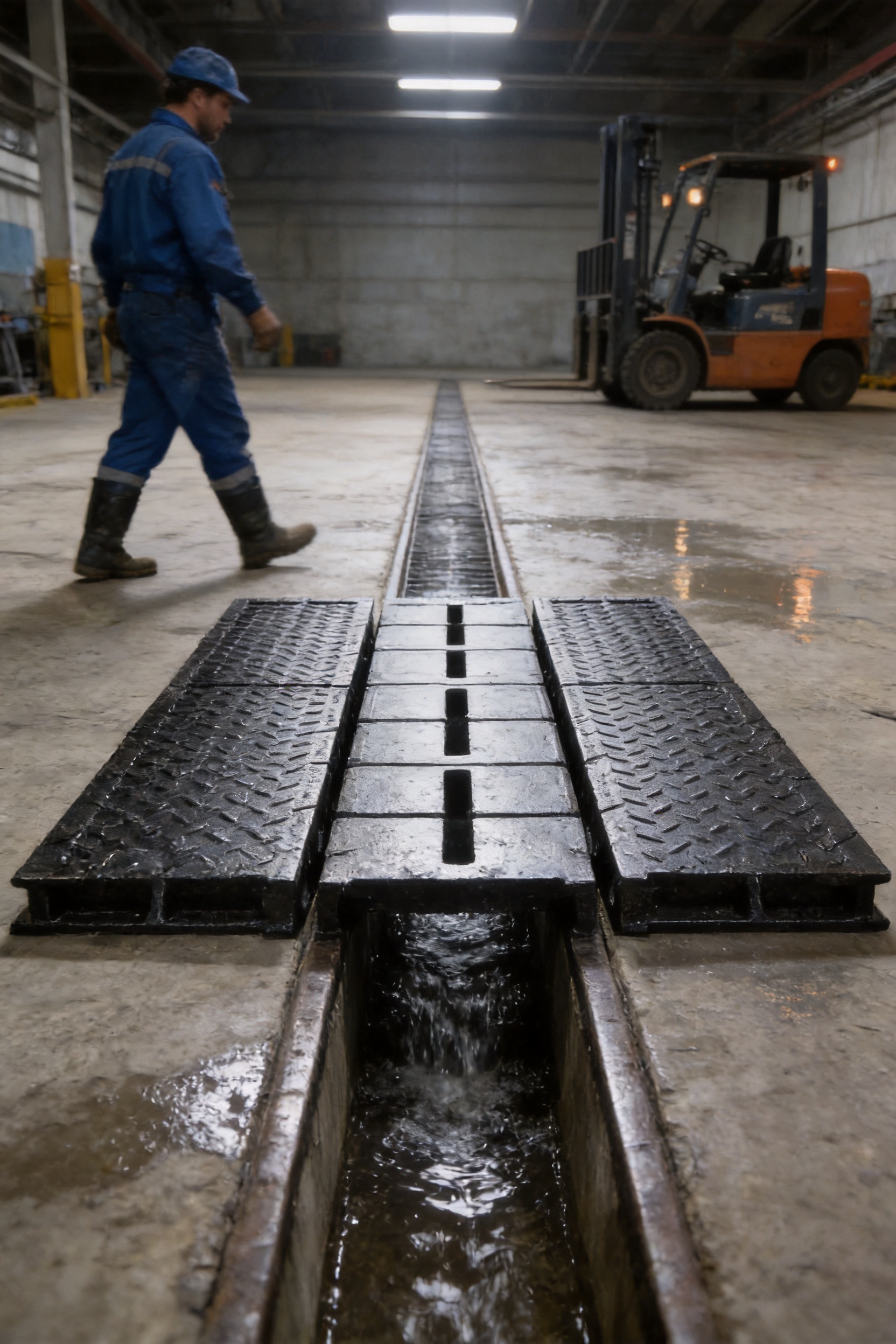
Cast iron is chosen for drainage ditch covers because of its proven performance in infrastructure components. It offers strong compressive strength and stable dimensional behavior. In drainage cover applications, the cover must resist both static and dynamic loads. Static loads include parked vehicles, stored materials, or equipment resting on the surface. Dynamic loads include moving vehicles, forklifts, carts, and pedestrians. Dynamic loading is often more demanding because impact and vibration can gradually damage weak covers.
A quality cast iron ditch cover distributes loads across the channel frame and surrounding structure. The casting must have sufficient thickness, suitable rib design, and controlled geometry. If the cover is too thin or poorly reinforced, it may crack or deflect under heavy traffic. If it is too heavy without intelligent design, installation and maintenance become difficult. A good product balances strength, weight, and usability.
The manufacturing process is also important. Casting quality affects strength, surface appearance, internal soundness, and long-term durability. Defects such as pores, cracks, shrinkage cavities, or uneven thickness can reduce performance. Therefore, quality control during melting, molding, pouring, cooling, finishing, and inspection is essential. Advanced manufacturing management ensures that each cover meets the expected performance level.
Jiangsu Yameng Traffic Road Facilities Co., Ltd. supports drainage infrastructure production with attention to engineering practicality. The company’s broader product range, including ductile iron cover plates, steel gratings, stainless steel covers, resin concrete products, and manhole covers, gives it practical understanding of different materials and project requirements. This experience helps in designing ditch covers that are suitable for real installation conditions rather than only theoretical specifications.
Safety is one of the most important reasons to choose a non-slip ditch cover. Drainage covers are frequently placed exactly where water collects, meaning they are often wet. A smooth cover in such a location can become hazardous. Industrial floors may also contain oil, dust, or chemical residues that reduce friction. Outdoor road and parking areas may have rain, snow, mud, or sand. The non-slip surface helps maintain safer contact under these conditions.
A non-slip pattern works by increasing surface texture and improving mechanical engagement with footwear or tires. Instead of allowing a flat, wet surface to act like a sliding plane, the texture creates points of contact and drainage paths. This improves traction and helps water disperse more easily. In pedestrian areas, this can reduce the chance of falls. In vehicle areas, it can improve tire grip and reduce wheel slip during turning, braking, or acceleration.
The anti-slip design is not only about roughness. It must also remain comfortable and functional. If the pattern is too aggressive, it may create trip points, collect debris, or interfere with small wheels. If it is too shallow, it may wear away quickly. A practical industrial cast iron cover uses a surface profile that balances traction, durability, cleaning convenience, and drainage efficiency.
Compared with ordinary flat covers, the non-slip industrial cast iron ditch cover has a clear safety advantage. Compared with some lightweight grates, it may also provide a more stable walking surface, especially where high point loading is expected. For factories, warehouses, public walkways, and commercial sites, this safety benefit can contribute to better workplace risk management and user confidence.
Industrial environments place serious demands on drainage covers. Forklifts may pass over the same line many times each day. Trucks may deliver heavy goods. Pallet jacks, carts, maintenance equipment, and machinery may create concentrated wheel loads. In outdoor areas, covers may also face thermal expansion, ground settlement, and impact from construction or maintenance activities.
A heavy-duty cast iron cover is suitable for these conditions because it is designed to carry significant loads while maintaining shape and stability. Its rigidity helps prevent bending, rocking, and displacement. This is important because a moving or unstable cover can cause noise, damage the channel edge, and create dangerous surface irregularities. Stable seating also helps prevent debris from entering gaps and damaging the channel structure.
Load capacity must be considered together with drainage channel design. The cover, frame, channel body, bedding, and surrounding pavement all work as a system. A strong cover performs best when installed on a properly prepared channel with suitable support. Standardized dimensions and modular designs help ensure correct fitting and load transfer. This reduces the chance of localized stress concentration.
Compared with thin steel plates, plastic covers, or low-grade cast components, industrial cast iron ditch covers usually provide greater resistance to deformation and long-term fatigue. Their heavier structure gives them stable placement in high-traffic areas. While lighter covers may be suitable for small residential or decorative applications, heavy-duty industrial drainage requires a stronger and more reliable solution.
Wear resistance is a major factor in drainage cover service life. Covers are continuously exposed to wheel movement, pedestrian traffic, abrasive dust, sand, grit, and cleaning activities. Over time, weak surfaces can become polished, scratched, thinned, or distorted. When this happens, anti-slip performance decreases, appearance worsens, and replacement becomes necessary.
Cast iron has good natural resistance to wear. Its hard surface and structural density allow it to tolerate repeated contact. For industrial use, this means the cover can maintain its function even after long periods of operation. The non-slip surface pattern is designed to remain effective under ordinary wear conditions, extending the period before replacement is needed.
Long service life offers both financial and operational benefits. Frequent cover replacement requires purchasing new components, scheduling labor, interrupting facility operations, and sometimes closing traffic areas. A durable cast iron cover reduces these disruptions. It also supports sustainability by lowering material replacement frequency and reducing waste.
For facilities that operate continuously, such as warehouses, production plants, and logistics centers, durable drainage products are essential. A cover failure can interrupt movement routes or create safety hazards. By selecting a wear-resistant cast iron solution, facility managers can improve infrastructure reliability and reduce unexpected maintenance events.
Drainage ditch covers are exposed to water by design. They may also contact road salt, cleaning chemicals, oil residues, industrial wastewater, soil, organic matter, and humidity. Corrosion can weaken the cover, reduce surface quality, and shorten service life. Therefore, corrosion resistance is an important product requirement.
Cast iron can perform well in drainage environments when produced and finished correctly. Surface treatment, material quality, and installation conditions all influence corrosion behavior. Properly designed covers allow water to flow into the channel rather than remain pooled on top. Good drainage geometry helps reduce long-term standing water exposure. In addition, stable seating prevents abrasive movement that can damage protective surfaces.
Compared with some untreated steel products, cast iron ditch covers can offer better long-term stability in many drainage conditions. Stainless steel covers may provide excellent corrosion resistance but can be more expensive and may not always provide the same heavy-duty load characteristics without specialized design. Plastic or composite covers may resist corrosion but may not be suitable for high-temperature, heavy-load, or impact-prone industrial areas. Therefore, cast iron provides a balanced solution for strength, durability, and cost effectiveness.
In outdoor roads, parking lots, and public walkways, weather resistance is particularly important. Rain, temperature variation, sunlight, dust, and traffic abrasion all affect the cover. A robust cast iron design is well suited to these conditions, especially when used in combination with proper installation and periodic inspection.
Installation efficiency directly affects project cost and schedule. Drainage projects often involve excavation, channel placement, pavement work, and finishing. If covers require extensive cutting, adjustment, or special tools, the project becomes slower and more expensive. Modular cast iron ditch covers help simplify this process by using standard sizes and practical structural designs.
During installation, the cover should fit securely with the channel or frame. Correct fit reduces noise, movement, and uneven surface problems. Standardized cover dimensions make it easier for contractors to plan channel lengths and cover quantities. Modular sections also allow installation teams to work progressively along the drainage line.
Maintenance is equally important. Drainage channels must be cleaned periodically to remove sediment, leaves, debris, and industrial residue. If covers are difficult to remove, maintenance may be delayed, leading to blockage and flooding. A modular cover system allows individual sections to be lifted for inspection and cleaning. This supports regular maintenance without major dismantling.
Replacement is also easier. If a specific cover section is damaged by abnormal impact or needs upgrading, only that section may need replacement. This is more efficient than replacing a continuous welded or fixed cover system. For large industrial sites, the ability to maintain drainage quickly can reduce downtime and improve operational continuity.
Non-slip industrial cast iron ditch covers are suitable for many applications because they combine load-bearing strength with safety. In factories, they can be used near production lines, cleaning zones, equipment foundations, and wastewater collection areas. Their resistance to wear and load helps them withstand machinery movement and frequent foot traffic.
In warehouses and logistics centers, drainage covers may be crossed constantly by forklifts, pallet trucks, and delivery vehicles. A stable heavy-duty cover prevents deformation and reduces vibration. The non-slip surface improves safety for workers moving goods in wet or dusty conditions.
In roads and parking lots, cast iron ditch covers protect drainage channels while supporting vehicle loads. They can be used near entrances, driveways, service roads, underground parking areas, and municipal drainage lines. Their robust nature is valuable where traffic is frequent and environmental exposure is high.
In public walkways, pedestrian safety is especially important. Non-slip surfaces help reduce risks during rain or cleaning. The covers also provide a solid walking surface over drainage channels, making them suitable for commercial plazas, campuses, parks, transportation facilities, and public buildings.
In industrial parks and commercial complexes, drainage systems often need to combine aesthetics, performance, and maintainability. Cast iron covers can provide a professional and durable solution. Their modular design allows coordination with linear drainage systems, U-shaped ditches, or other finished drainage products.
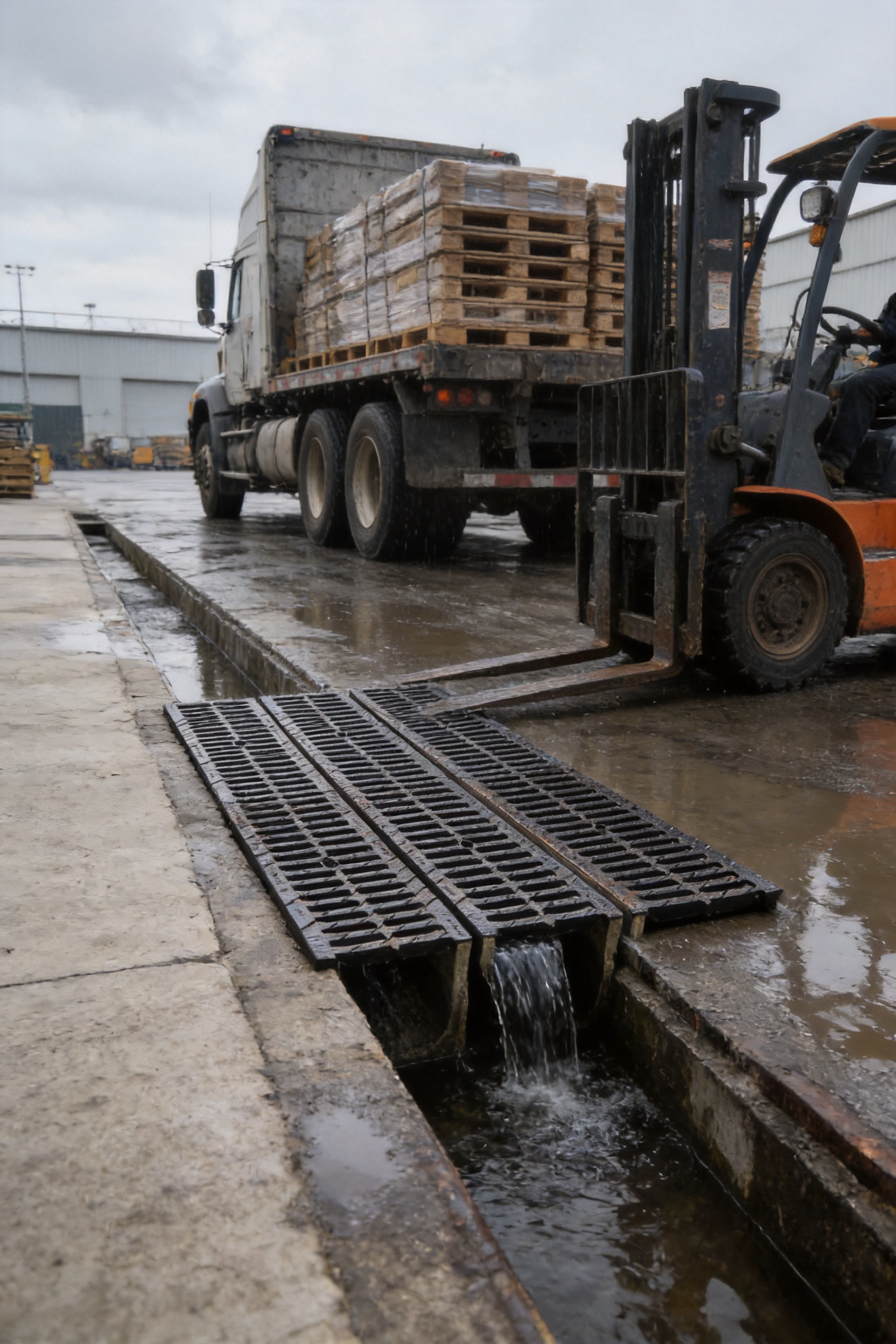
Different drainage covers are available on the market, including steel gratings, stainless steel plates, resin concrete covers, composite covers, plastic covers, and ordinary cast iron products. Each has its own strengths, but non-slip industrial cast iron ditch covers offer a strong balance for heavy-duty drainage environments.
| Cover Type | Main Strength | Common Limitation | Industrial Suitability |
|---|---|---|---|
| Non-slip cast iron ditch cover | High load capacity, wear resistance, strong traction, long service life | Heavier than lightweight alternatives | Excellent for factories, roads, warehouses, parking lots, and public areas |
| Ordinary smooth metal plate | Simple structure and easy fabrication | Can become slippery and may deform if too thin | Limited in wet or heavy-load environments |
| Steel grating | Good drainage opening and moderate strength | May create small-wheel discomfort and corrosion concerns if untreated | Useful in selected industrial areas but not always ideal for pedestrian comfort |
| Stainless steel cover | Strong corrosion resistance and clean appearance | Higher cost and may require special design for heavy loads | Good for hygiene or decorative areas, depending on load requirements |
| Plastic or lightweight composite cover | Lightweight and corrosion resistant | Lower heavy-load and impact resistance in many applications | Better for light-duty or non-traffic drainage |
| Resin concrete cover | Good corrosion resistance and integrated appearance | May be less suitable for repeated heavy impact depending on design | Suitable for many drainage systems when load class is appropriate |
The table shows why cast iron remains a preferred material in demanding applications. While other materials have value, industrial sites often require a cover that can tolerate frequent heavy loading and rough use. The non-slip cast iron cover offers a practical combination of strength, safety, and durability.
Compared with competitors that provide only standard smooth covers, this product’s anti-slip design gives it a safety advantage. Compared with lightweight alternatives, its cast iron construction gives it superior resistance to deformation and impact. Compared with products that focus only on low cost, it provides better long-term value through reduced maintenance and replacement frequency.
Product performance depends not only on design but also on manufacturing control. A drainage cover must be produced consistently, with accurate dimensions, reliable material properties, and stable surface quality. Advanced manufacturing processes help ensure that each piece performs as expected in real installations.
Jiangsu Yameng Traffic Road Facilities Co., Ltd. has a broad foundation in drainage ditch production and related infrastructure components. Its product scope includes linear drainage systems, polymer-based drainage ditches, slot drainage ditches, U-shaped drainage ditches, ductile iron covers, stainless steel stamped covers, steel gratings, resin concrete covers, composite manhole covers, stainless steel manhole covers, ductile iron manhole covers, drainage pipes, and PE pipes. This broad manufacturing background allows the company to understand how covers interact with channel bodies, frames, road surfaces, and construction conditions.
For cast iron ditch covers, key manufacturing stages generally include material selection, mold preparation, melting, casting, cooling, trimming, surface processing, inspection, and packaging. Each step influences final quality. Material selection affects mechanical strength and wear resistance. Mold accuracy affects product dimensions and surface pattern clarity. Controlled melting and pouring reduce casting defects. Proper cooling helps preserve structural integrity. Finishing removes unwanted edges and improves fit. Inspection verifies that the cover meets project requirements.
The company’s emphasis on integrity, quality, responsibility, focus, and innovation supports consistent production management. In infrastructure products, reliability is more important than superficial appearance alone. A cover must work every day under real traffic, weather, and maintenance conditions. Manufacturing strength therefore becomes a direct advantage for customers who need safe and durable drainage systems.
Drainage products are rarely used in isolation. A ditch cover must match the drainage channel, channel frame, pavement material, site slope, water volume, and expected load. Engineering compatibility is essential. A product that appears strong may fail if it does not fit the channel correctly or if it is used in the wrong environment. This is why supplier experience matters.
Jiangsu Yameng Traffic Road Facilities Co., Ltd. mainly engages in drainage ditch projects and GRC customization. Its experience in project-oriented supply allows it to consider practical needs such as layout, installation sequence, customization, mold development, and after-sales support. For GRC series projects, the company works with professional designers, mold designers, CNC engraving resources, and experienced production and construction technical teams. This design-to-construction service mindset supports the company’s ability to respond to varied customer requirements.
Although cast iron ditch covers are standardized in many applications, project conditions can vary. Some customers may need specific dimensions, special channel matching, enhanced loading, or surface treatment considerations. A supplier with manufacturing and customization capacity is better positioned to provide suitable recommendations. This reduces procurement risk and improves installation efficiency.
Project compatibility is also important for wholesale buyers and contractors. A reliable supplier should support stable supply, consistent specifications, and practical communication. For drainage projects involving many cover sections, consistency across batches is essential. Accurate dimensions and repeatable quality make installation smoother and reduce site disputes.
The non-slip industrial cast iron ditch cover offers several competitive advantages in the drainage cover market. First, it provides a safety-oriented surface rather than relying only on basic covering function. Many low-cost covers focus on closing a channel but do not sufficiently address slip risk. In wet industrial and public environments, anti-slip performance is a meaningful differentiator.
Second, it is designed for heavy-duty use. Some alternative products may be acceptable in light pedestrian areas but are not suitable for forklifts, trucks, or frequent vehicle traffic. The cast iron structure provides better confidence in demanding load conditions. This makes it a practical choice for customers who need reliability rather than temporary cost savings.
Third, it offers durability that supports long-term value. Competitor products that wear quickly, corrode rapidly, or deform under load may appear cheaper at purchase but cost more over time. Replacement, labor, downtime, and safety risk all affect total cost. A durable cast iron cover helps reduce these hidden expenses.
Fourth, it benefits from a manufacturer with broad drainage system experience. Jiangsu Yameng Traffic Road Facilities Co., Ltd. is not limited to a single cover product. Its range of drainage ditches, cover plates, manhole covers, pipes, and customized GRC services gives it comprehensive understanding of drainage infrastructure. This helps customers receive products that are more compatible with real projects.
Fifth, modularity and installation convenience improve project efficiency. Contractors prefer components that fit properly, install quickly, and can be maintained easily. A cover that reduces installation difficulty can help control project schedules and labor costs. This advantage is especially valuable in large drainage projects and commercial construction.
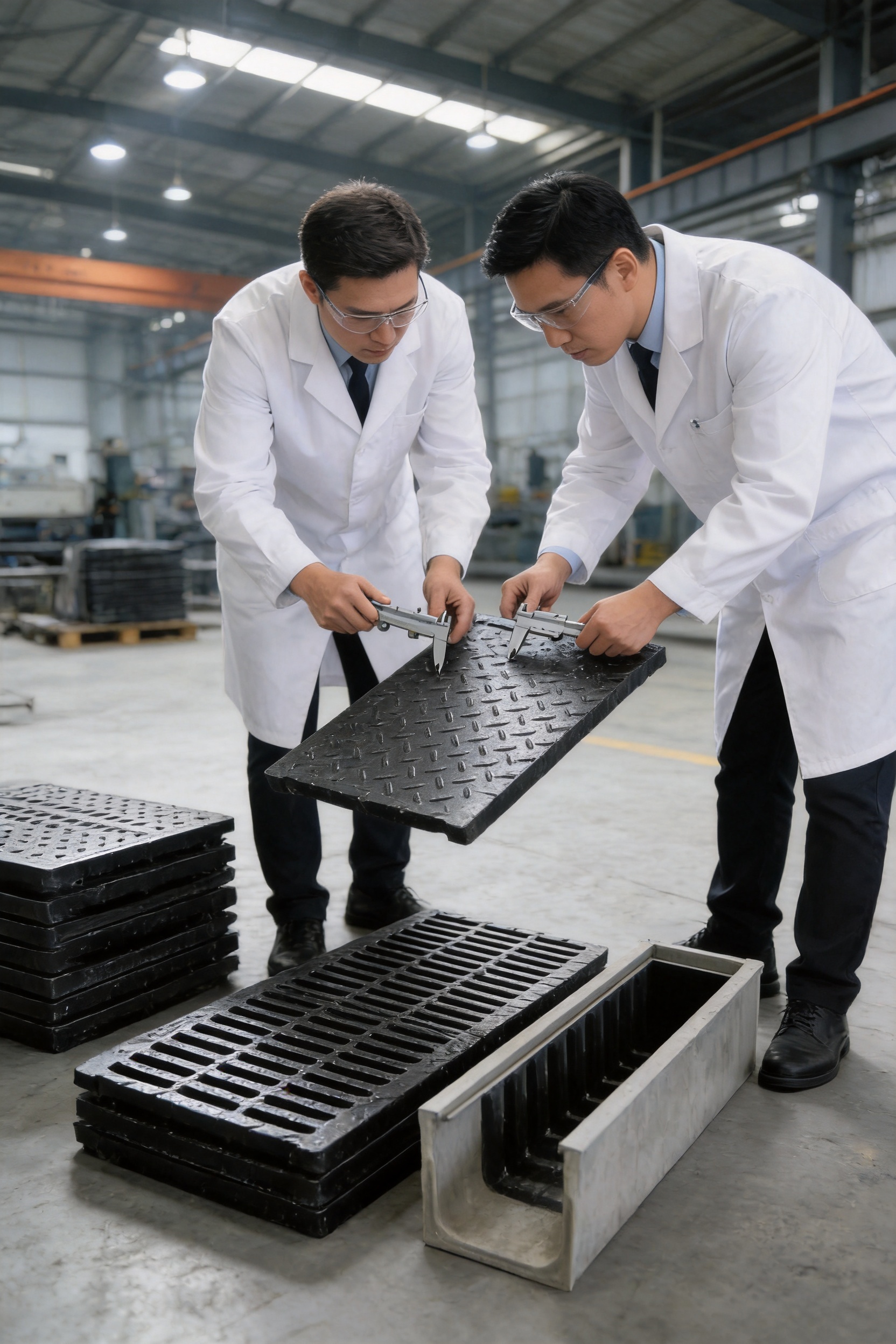
Quality control for cast iron ditch covers should include material inspection, dimensional checks, surface inspection, load-related verification, and packaging review. Material inspection ensures that the casting composition and structure are suitable for the required strength. Dimensional checks confirm that the cover will fit the drainage channel and frame. Surface inspection identifies cracks, sharp edges, defects, or incomplete anti-slip patterns. Load-related verification helps ensure that the product can perform under expected traffic conditions.
In addition, consistent thickness and reinforcement are important. A cover with uneven thickness may have weak points. Poor casting can lead to internal defects that are not immediately visible but may cause failure later. Manufacturers must control production parameters and maintain inspection standards to reduce these risks.
Packaging and transport also matter. Cast iron products are strong but can still be damaged by improper handling, impact, or disorganized stacking. Proper packaging protects edges, surface patterns, and dimensional accuracy during delivery. For wholesale and project supply, organized packaging also helps contractors manage inventory and installation sequence on site.
A quality-focused manufacturer understands that drainage covers are safety-related products. Users walk and drive across them daily. Therefore, product reliability is not optional. The company’s commitment to quality as a foundation aligns with this requirement and supports customer trust.
A ditch cover must work together with the drainage channel beneath it. The cover’s openings or surface drainage paths should allow water to enter efficiently while preventing large debris from blocking the channel. The cover should sit securely on the channel edge or frame. It should also be easy to remove for cleaning without compromising stability during use.
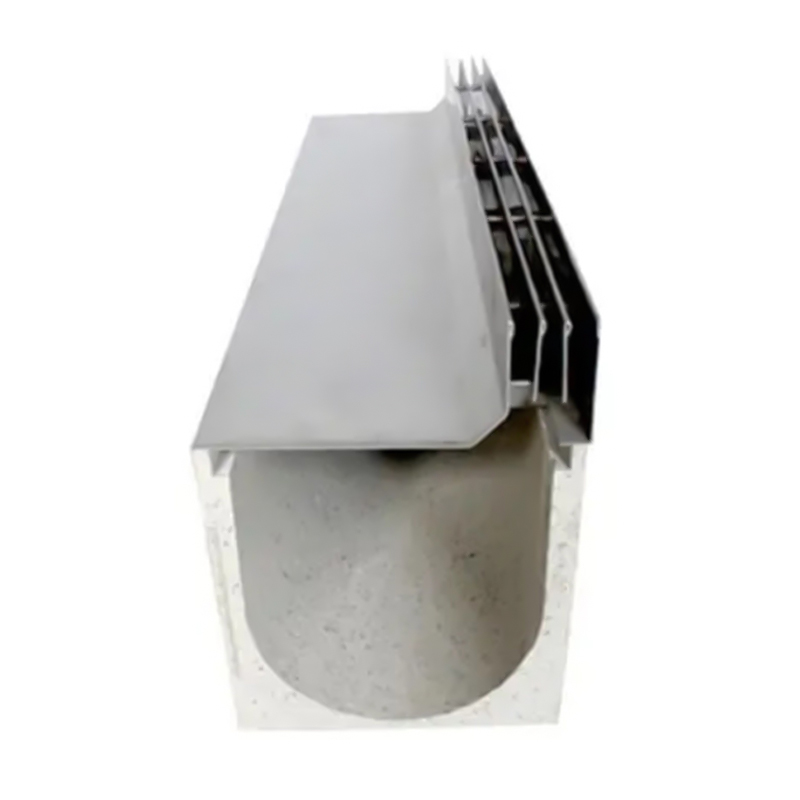
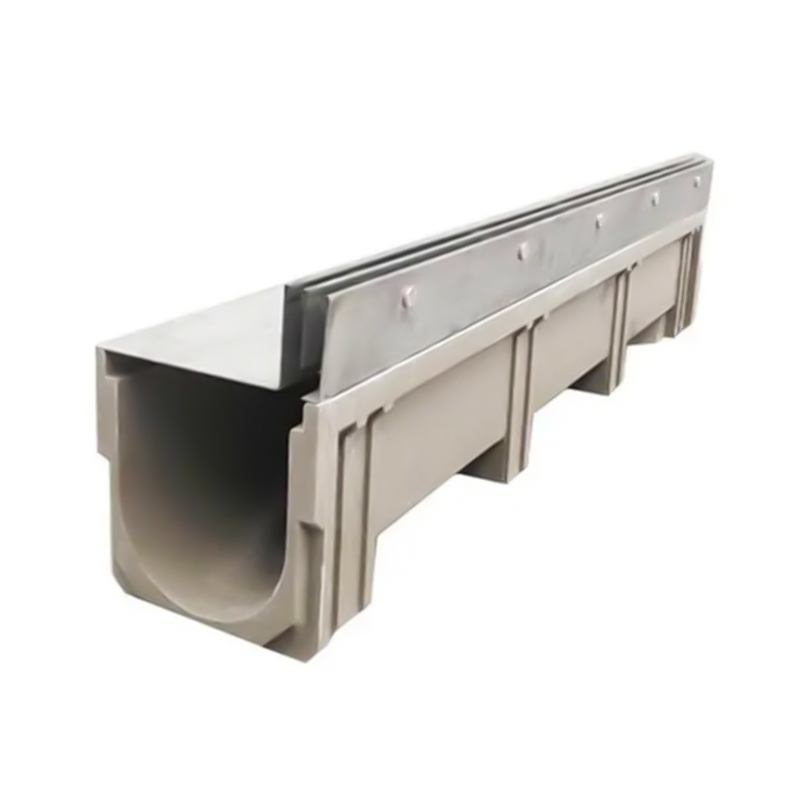
Linear drainage systems often require continuous cover alignment. In these systems, visual straightness, surface level, and consistent cover spacing are important. A modular cast iron cover can be installed section by section, allowing long drainage lines to be completed efficiently. For U-shaped drainage ditches or finished drainage channels, cover selection must match channel dimensions and load requirements.
In parking lots and roads, drainage channels must capture runoff quickly during rain. If the cover restricts water entry too much, water may pond on the surface. If the openings are too large, they may create safety concerns for pedestrians, bicycle tires, or small wheels. A balanced cover design supports both hydraulic function and user safety.
In industrial workshops, drainage channels may collect process water, cleaning water, or accidental spills. Covers must resist wear and allow maintenance access. A strong cast iron cover with non-slip surface is practical in these settings because it can handle equipment movement while supporting safe walking conditions.
Initial purchase price is only one part of drainage cover cost. A complete cost evaluation should include installation labor, maintenance frequency, replacement cycle, safety risk, downtime, and compatibility with the drainage system. A low-cost cover that fails early may become more expensive than a stronger cover with a longer service life.
Non-slip industrial cast iron ditch covers offer life cycle value through durability and reduced maintenance pressure. Their strength reduces the chance of deformation under traffic. Their wear resistance helps preserve surface performance. Their modular design supports efficient inspection and replacement. Their anti-slip surface can also help reduce accident risk, which is important for workplaces and public environments.
For businesses, accidents and infrastructure failures have costs beyond replacement parts. They can lead to worker injury, customer complaints, vehicle damage, production delays, and liability concerns. A safer drainage cover is therefore part of responsible facility management. Choosing a reliable product can protect both people and assets.
For municipal or public projects, long-term durability reduces maintenance burden on public budgets. Covers installed in roads, walkways, and parking zones should perform over time with minimal disruption. Heavy-duty cast iron is a practical choice because it combines proven material performance with manageable maintenance requirements.
Correct installation is essential for product performance. Before installation, the drainage channel should be checked for dimensional accuracy, level support, and structural stability. The cover should rest evenly on the supporting frame or channel edge. Uneven support can create rocking, noise, and stress concentration. The surrounding concrete, asphalt, or pavement should be properly compacted and finished to the correct height.
During placement, workers should ensure that cover sections align properly and do not interfere with water flow. If the system includes frames, locking features, or positioning structures, they should be installed according to project requirements. Heavy covers should be handled with proper tools and safety procedures to avoid injury.
After installation, the drainage line should be inspected for surface level, cover stability, and drainage function. Water testing may be performed in some projects to confirm that runoff enters the channel properly. Any unstable or misaligned section should be corrected before the area is opened to traffic.
Maintenance teams should establish a cleaning schedule based on site conditions. Areas with leaves, sediment, industrial residue, or heavy dust may require more frequent cleaning. Regular inspection helps identify early signs of wear, corrosion, or displacement. With proper installation and maintenance, cast iron ditch covers can provide long and dependable service.
Durable drainage covers contribute to environmental responsibility by reducing replacement frequency and material waste. A product that lasts longer requires fewer manufacturing cycles, fewer shipments, and less disposal. Cast iron products can also often be recycled at the end of service life, supporting resource efficiency.
Operationally, effective drainage reduces standing water, which can damage pavement, create slip hazards, attract dirt, and interfere with vehicle movement. A reliable ditch cover helps keep the drainage system accessible and protected. This supports cleaner, safer, and more efficient facility operation.
In industrial areas, water management is connected to production safety. Poor drainage can cause puddles, corrosion of nearby equipment, contamination spread, or floor damage. Strong covers keep channels protected while allowing water collection. Their non-slip surfaces support safe movement even when drainage areas are wet.
In commercial and public spaces, drainage covers also influence user experience. A stable, non-slip cover feels safer underfoot and looks more professional than a warped or rusted plate. Long-term appearance and performance contribute to the overall quality of the built environment.
A dependable product requires a dependable supplier. Jiangsu Yameng Traffic Road Facilities Co., Ltd. is located in Nantong, Jiangsu Province, China, with convenient transportation and waterway access. This location supports product distribution and project supply. The company’s focus on drainage ditch projects and GRC customization reflects its role as a practical infrastructure product supplier.
The company provides a wide range of drainage and cover products, allowing customers to source compatible components from one supplier. This can simplify procurement for contractors, distributors, and engineering companies. When customers need drainage ditches, cover plates, manhole covers, or related pipes, a broad product portfolio reduces coordination complexity.
For customized needs, the company’s design and mold capabilities are valuable. Professional designers, mold designers, CNC engravers, and experienced production and construction teams support services from detailed design and drawings to mold making, production, on-site construction, and after-sales support. This integrated service capability is especially useful for projects with unique shapes, architectural requirements, or site-specific conditions.
The company’s values of integrity, responsibility, focus, and innovation are important in infrastructure supply. Customers need accurate communication, consistent quality, and responsible after-sales assistance. Drainage products must fit project schedules and performance expectations. Supplier reliability therefore directly affects project success.
Choosing the right ditch cover begins with understanding the application environment. The buyer should consider expected traffic type, load intensity, drainage volume, pedestrian safety requirements, corrosion exposure, channel dimensions, maintenance frequency, and installation method. Industrial forklift areas require stronger covers than light pedestrian walkways. Outdoor roads require weather resistance and vehicle load performance. Public walkways require strong anti-slip characteristics and comfortable walking surfaces.
Load requirements should be clearly communicated. If trucks, forklifts, or heavy equipment will cross the drainage line, the cover must be selected accordingly. Underspecified covers can fail prematurely. Overspecified covers may increase cost unnecessarily. A professional supplier can help match cover type to actual project conditions.
Surface design should also be reviewed. Anti-slip performance is essential in wet zones, sloped areas, or places with oil exposure. The pattern should provide traction without causing cleaning difficulties or wheel obstruction. In pedestrian-heavy areas, comfort and safety should be balanced.
Dimensional compatibility is another major factor. Covers must match the channel width, seating depth, frame structure, and installation tolerance. Standard modular covers simplify procurement, but custom dimensions may be required for special projects. Accurate drawings and communication reduce mistakes.
Finally, buyers should consider long-term service. A cover with strong material quality, controlled manufacturing, and easy maintenance will usually deliver better value than a product selected only by lowest price. Drainage infrastructure is expected to work continuously, so reliability should be prioritized.
It is used to cover drainage channels while allowing water to enter the ditch. It provides a safe walking and driving surface over the channel and is designed for heavy-duty industrial, commercial, road, parking, and public walkway applications.
Cast iron provides high strength, good wear resistance, stable performance under repeated loading, and long service life. These qualities make it suitable for areas with forklifts, vehicles, pedestrians, and harsh environmental exposure.
The textured or raised surface increases friction between the cover and shoes or tires. This helps reduce slipping risks in wet, oily, dusty, or outdoor conditions. It is especially useful in factories, warehouses, parking lots, and public walkways.
Yes, the product is designed for heavy-duty strength and frequent traffic. However, the correct specification should be selected based on the actual load requirements, channel structure, and installation conditions.
Yes, standard sizes and modular design support efficient installation. Individual sections can be placed along the drainage channel, and maintenance teams can remove selected sections for cleaning or inspection.
Steel grating can provide good drainage openings, but it may not always offer the same stable walking comfort, heavy-duty impact resistance, or anti-slip surface performance depending on design and treatment. Non-slip cast iron covers provide a strong balance of safety, durability, and load capacity.
Maintenance usually includes periodic inspection, cleaning of debris from the drainage channel, checking cover stability, and confirming that the anti-slip surface remains effective. Maintenance frequency depends on site conditions such as dust, leaves, sediment, and industrial residue.
They can be used in factories, warehouses, logistics centers, roads, parking lots, service yards, commercial areas, public walkways, municipal drainage projects, and other places requiring safe and durable drainage channel protection.
A manufacturer familiar with drainage ditches, cover plates, manhole covers, pipes, and customized infrastructure products can better understand project compatibility. This helps ensure that the cover matches channel dimensions, load needs, installation conditions, and maintenance requirements.
Non-slip industrial cast iron ditch covers are essential components in safe and durable drainage systems. They combine heavy-duty load-bearing strength, reliable anti-slip performance, wear resistance, corrosion resistance, and modular installation convenience. In factories, warehouses, roads, parking lots, and public walkways, they help protect drainage channels while providing a safer surface for pedestrians and vehicles.
Compared with low-cost smooth plates, lightweight covers, or products with limited load capacity, these cast iron covers deliver stronger long-term value. Their durability reduces replacement frequency, their surface design improves safety, and their modular structure simplifies maintenance. For demanding industrial and commercial environments, these advantages make them a practical and dependable choice.
Jiangsu Yameng Traffic Road Facilities Co., Ltd. supports this product with manufacturing experience, drainage project knowledge, broad product capability, and a commitment to quality. Its expertise in drainage channels, cover plates, manhole covers, pipes, and customized GRC services provides customers with more than a single product; it provides a foundation for integrated infrastructure solutions. For buyers seeking wholesale drainage ditch covers or heavy-duty cover plates, the non-slip industrial cast iron ditch cover offers a strong combination of performance, safety, and project value.
American Society of Civil Engineers. Urban Drainage Design Manual and Infrastructure Drainage Principles.
British Standards Institution. Drainage Channel and Access Cover Performance Guidelines.
International Organization for Standardization. Quality Management Systems and Industrial Product Manufacturing Practices.
Foundry Technology Handbook. Cast Iron Materials, Casting Processes, and Quality Control Methods.
Occupational Safety and Health Guidance. Walking-Working Surfaces, Slip Resistance, and Industrial Floor Safety.
Construction Materials Reference Manual. Metal Covers, Gratings, Drainage Components, and Long-Term Durability Considerations.
Related Products
The Minimalist Linear GRC door and window frames are specifically designed for architectural project...
READ MOREThe Minimalist Linear GRC door and window frames are specifically designed for architectural project...
READ MOREThe Minimalist Linear GRC door and window frames are specifically designed for architectural project...
READ MOREThe Minimalist Linear GRC door and window frames are specifically designed for architectural project...
READ MOREThe Minimalist Linear GRC door and window frames are specifically designed for architectural project...
READ MOREThe Minimalist Linear GRC door and window frames are specifically designed for architectural project...
READ MORE
Contact us
Factory Address
Group 12, Quanxin Village, Donghai Town, Qidong City, Nantong City, Jiangsu Province, China
phone
+86-13914963840
+86-13451754670
products
QR CODE
 Wholesale Drainage Ditch Manufacturers