 English
 Español
 عربى
عربى

Our Modular GRC System merges installation speed with long-term durability, providing a high-perform...
READ MOREJun 14, 2026
Content
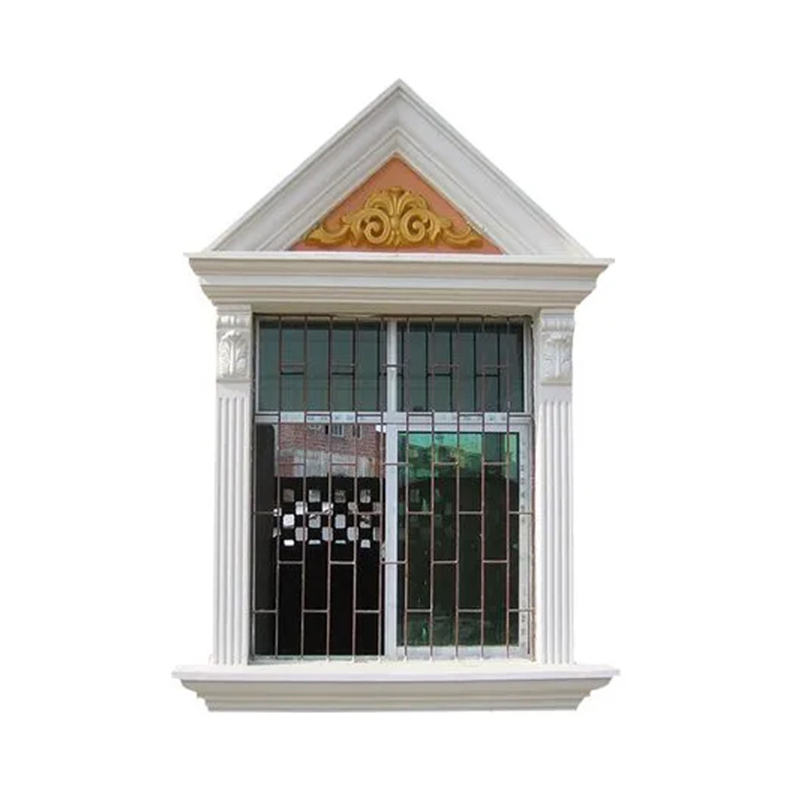
Decorative window frame GRC molding is an architectural component designed to improve the appearance, performance, and long-term value of building exteriors. Made from Glassfiber Reinforced Concrete, commonly known as GRC, this product combines the visual richness of traditional concrete ornamentation with the practical advantages of lighter weight, high strength, design flexibility, and dependable weather resistance. For projects that require refined window surrounds, façade accents, exterior wall decoration, or customized architectural details, GRC molding offers a balanced solution between aesthetics and engineering performance.
In modern construction, façade products must do more than look attractive. They must resist rain, sunlight, temperature variation, freeze-thaw conditions, wind exposure, pollution, and daily environmental wear. They must also support efficient installation, stable quality, and compatibility with different architectural styles. Decorative window frame GRC molding answers these demands by using a cement-based composite reinforced with alkali-resistant glass fibers. This structure gives the molding strength and toughness while keeping it much lighter than conventional cast stone or solid precast concrete.
Jiangsu Yameng Traffic Road Facilities Co., Ltd. supplies customized GRC products supported by professional designers, mold designers, CNC engraving equipment, experienced production workers, and a construction technical team. The company’s service covers design detailing, drawing development, mold making, production, site installation guidance, and after-sales support. This integrated capability is important for GRC molding because decorative façade components often require accurate dimensions, consistent surface quality, reliable fixing methods, and coordination with the building envelope.
Decorative window frame GRC molding is suitable for residential buildings, commercial façades, villas, hotels, public buildings, renovation projects, and landscape-related architectural decoration. It can be produced in classical profiles, modern linear forms, carved patterns, smooth edges, curved shapes, and customized dimensions. Compared with many competing materials, it provides a more adaptable and efficient path to achieving a premium exterior finish without placing excessive load on the building structure.
Decorative Window Frame GRC Molding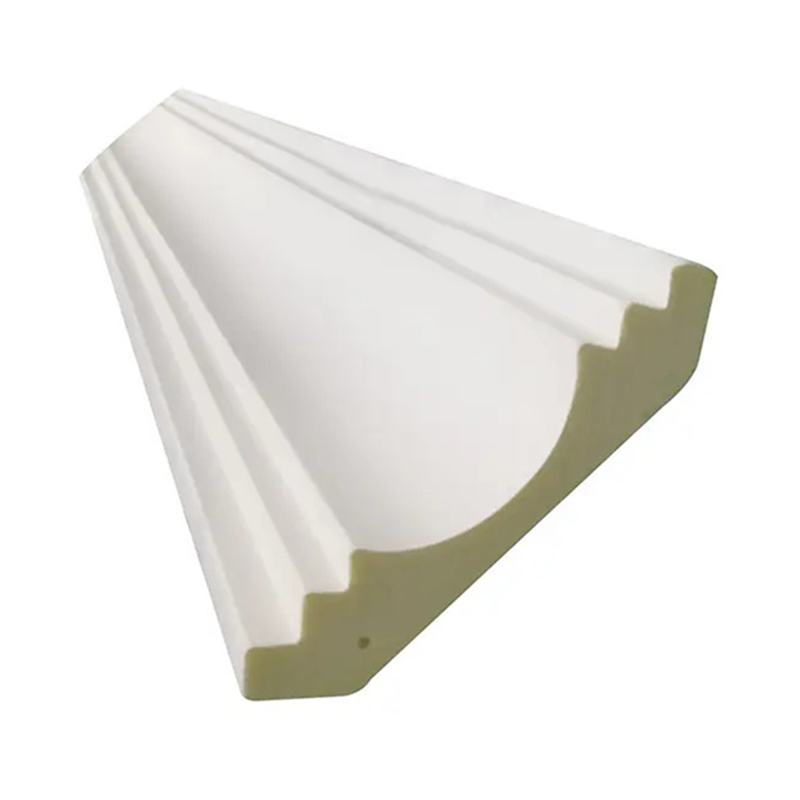
GRC is a composite material made from cement, fine aggregates, water, additives, pigments when required, and alkali-resistant glass fibers. The glass fibers act as reinforcement throughout the matrix, helping the component resist cracking, bending stress, handling impact, and environmental fatigue. This makes GRC particularly useful for architectural products that require thin sections, detailed profiles, and lighter structural loads.
Decorative window frame GRC molding is typically installed around window openings to create an attractive border, enhance shadow lines, protect edges, and visually strengthen the façade composition. In classical architecture, window moldings may include layered profiles, crowns, sills, keystones, pilaster-like side pieces, and ornamental reliefs. In modern architecture, the same material can be formed into clean frames, geometric bands, recessed outlines, or minimalist façade elements. Because GRC can be molded accurately, it supports both traditional and contemporary design languages.
The product’s lightweight property is one of its most important advantages. Traditional concrete or stone elements may require heavy lifting equipment, stronger anchoring systems, and additional structural consideration. GRC molding, by contrast, can often be produced in thinner sections while still maintaining excellent performance. This simplifies transportation, reduces installation difficulty, and can lower overall project labor requirements.
Another key feature is durability. Exterior window frames experience repeated wetting and drying, strong sunlight, dust accumulation, and seasonal temperature changes. Low-quality decorative products may deform, crack, fade, or separate from the wall over time. Properly manufactured GRC molding resists these problems through stable cementitious composition, fiber reinforcement, controlled curing, and precise surface finishing. It provides a long service life when installed correctly and maintained with basic cleaning.
The material also supports extensive customization. Architects and contractors can choose section profiles, lengths, thicknesses, surface textures, colors, decorative motifs, joint positions, and fixing details according to project requirements. This is particularly valuable for developments where standard decorative pieces cannot match the façade module or design intent. With professional mold design and CNC engraving capability, complex shapes can be translated into accurate production molds, improving consistency across repeated units.
Decorative façade elements are produced from many materials, including solid precast concrete, natural stone, EPS foam with coating, gypsum-based products, fiberglass components, metal trims, and polymer composites. Each material has its own role, but GRC molding delivers a strong combination of structural reliability, design freedom, weather resistance, and cost efficiency. This balanced performance is why GRC is widely used in demanding architectural applications.
Compared with traditional concrete or stone, GRC molding can achieve high strength at a lower weight. The glass fiber reinforcement distributes stress throughout the component, allowing thinner wall sections and reducing dead load. This is especially useful for window frames installed on exterior walls, where excessive weight can increase anchoring complexity and construction risk. Lightweight components are easier to lift, position, adjust, and secure, improving construction efficiency without sacrificing durability.
Natural stone is beautiful but difficult and expensive to shape into complex repeated profiles. Metal can be formed efficiently but may not provide the same masonry-like texture or classical architectural appearance. EPS foam products are light and economical, but they can lack impact resistance and long-term surface robustness. GRC molding bridges these gaps. It can reproduce fine decorative details, smooth modern surfaces, deep relief patterns, and custom profiles while preserving the solid appearance of mineral-based materials.
Exterior window surrounds must endure moisture, ultraviolet exposure, temperature changes, and atmospheric contaminants. GRC is based on cementitious chemistry and reinforced with alkali-resistant fibers, giving it strong resistance to outdoor conditions. With suitable surface treatment, it resists deterioration better than many lightweight decorative alternatives. It does not rot like timber, does not rust like untreated metal, and does not soften under heat like some polymer-based materials.
Projects with multiple windows require consistent dimensions and visual alignment. Inaccurate moldings can create uneven joints, poor shadow lines, and installation delays. Advanced mold design and controlled manufacturing help GRC molding maintain repeatable geometry. CNC engraving and professional mold preparation are especially helpful when producing detailed patterns, curved segments, or custom decorative profiles. This provides a competitive advantage over hand-shaped or poorly controlled alternatives.
Because GRC moldings are lighter than solid concrete or stone elements, they are generally easier to transport and install. Installation teams can handle the components more safely, adjust positions more accurately, and reduce reliance on heavy machinery. Proper fixing methods, joint treatment, and sealant application contribute to a secure final façade. For large projects, easier installation can significantly improve schedule control.
Decorative exterior products should maintain their visual quality with minimal maintenance. GRC molding can be cleaned periodically with water and suitable mild cleaning methods. Its mineral surface can be finished in various ways, including smooth, textured, painted, or stone-like effects. When manufactured and installed correctly, it maintains a stable architectural appearance for many years.
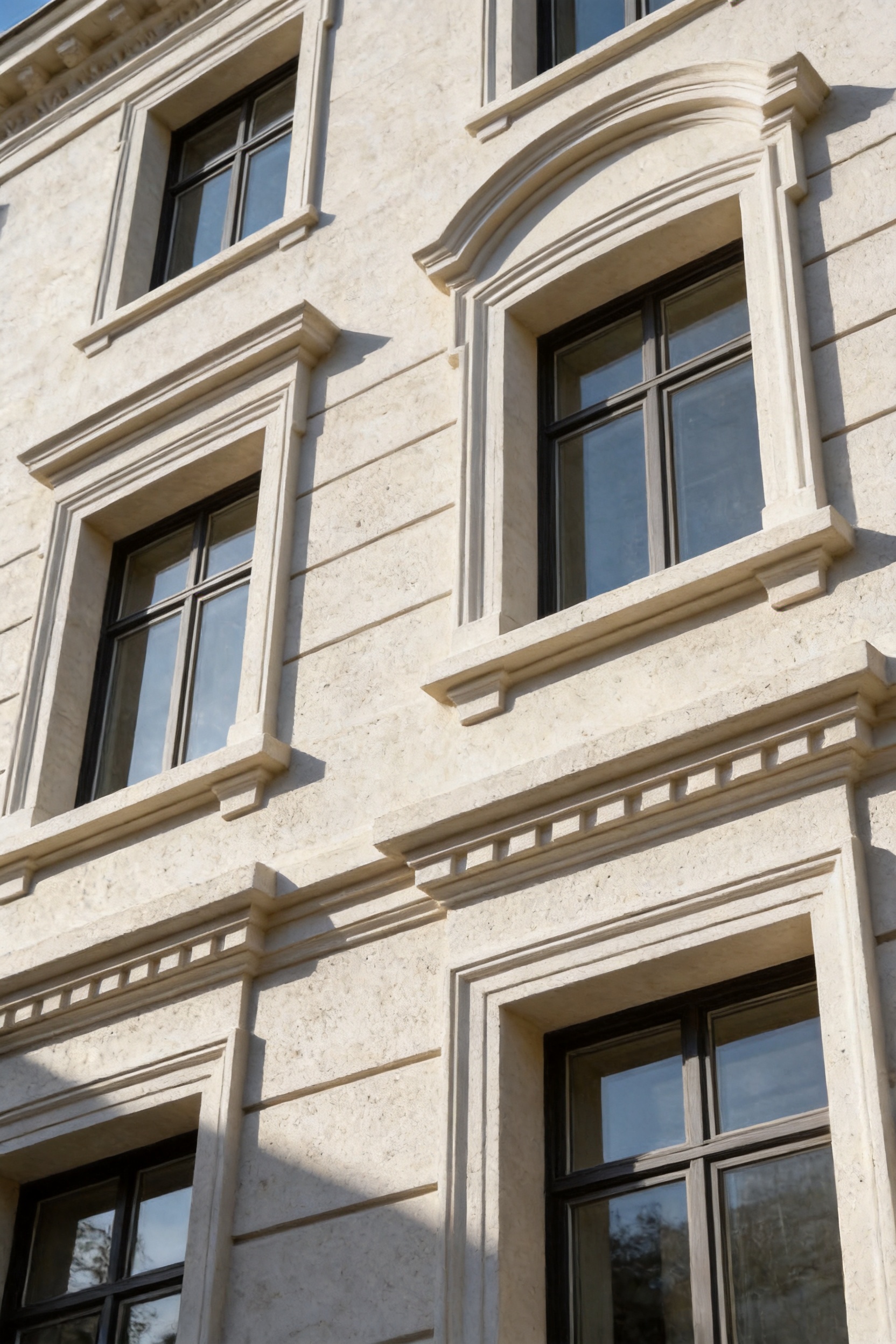
The quality of decorative window frame GRC molding depends heavily on manufacturing discipline. A visually attractive product is not enough; the material composition, fiber distribution, mold precision, curing control, surface finishing, and packaging must all be handled carefully. Jiangsu Yameng Traffic Road Facilities Co., Ltd. has built its GRC service around professional design, mold development, CNC engraving, production expertise, construction support, and after-sales service. This complete workflow helps reduce project risk and improve final façade quality.
The process usually begins with understanding the architectural requirement. Window dimensions, façade style, wall system, installation location, corner treatment, joint layout, surface finish, and project schedule all influence the final molding design. Professional designers convert architectural concepts into workable component drawings. This step is important because decorative profiles must not only look good but also be practical to manufacture, transport, install, and maintain.
Technical coordination can include determining the best division of long moldings into manageable sections, designing corner pieces, identifying fixing points, allowing for thermal movement, and coordinating with waterproofing details around window openings. Good detailing helps avoid common façade problems such as water infiltration, cracking at joints, misalignment, and installation conflict with window frames or insulation layers.
High-quality GRC molding requires accurate molds. A mold determines the shape, surface detail, edge line, decorative relief, and dimensional consistency of every produced piece. The company’s mold design capability and CNC engraving support precise reproduction of complex profiles. CNC engraving is valuable for creating consistent patterns, clean curves, symmetrical decorative forms, and accurate repeating units.
Compared with rough manual mold making, CNC-assisted mold production improves accuracy and repeatability. This reduces the chance of visible variation between components installed around different windows. For projects with many identical units, such consistency is essential. For customized façade work, it allows a designer’s intent to be converted into a reliable production form.
The performance of GRC depends on the correct combination of raw materials. Cement, fine aggregate, water, additives, and alkali-resistant glass fibers must be proportioned carefully. Too much water can reduce strength and increase shrinkage. Inadequate fiber content can reduce toughness. Poor mixing can create weak zones or inconsistent surfaces. A disciplined production process helps ensure that each molding achieves the expected balance of strength, workability, and finish quality.
Alkali-resistant glass fibers are important because ordinary glass fibers may degrade in the alkaline environment of cement. Proper fibers help reinforce the cement matrix over time. They improve resistance to cracking and handling damage, which is particularly important for slender or decorative profiles around window openings.
During production, the GRC mixture is placed into molds according to the required process. Depending on the product design and production method, techniques may include spraying, casting, hand lay-up, vibration, compaction, and careful finishing. The goal is to achieve dense material, good fiber distribution, accurate shape, clean edges, and a surface that meets the project specification.
Surface quality is critical for decorative moldings because the components are visible architectural features. Smooth finishes require careful mold preparation and controlled release methods. Textured or stone-like finishes require consistent surface treatment. Decorative patterns must be free from trapped air pockets, broken edges, and irregular lines. Quality inspection during and after forming helps identify issues before products leave the factory.
Curing is one of the most important stages in cement-based product manufacturing. Proper curing allows the cement matrix to develop strength and dimensional stability. Inadequate curing can lead to weak surfaces, excessive shrinkage, cracking, or inconsistent performance. Controlled curing supports long-term durability and helps maintain the quality expected from exterior architectural components.
For window frame molding, curing stability is especially important because the pieces must fit accurately around openings. Warped or unstable components can create installation difficulties and uneven joints. A professional production team understands how curing conditions influence the final product and manages the process accordingly.
Before shipment, GRC moldings should be inspected for dimensions, surface quality, edge condition, color consistency, structural soundness, and quantity. Packaging must protect the components from impact, abrasion, moisture contamination, and movement during transport. Because decorative profiles may include thin edges or detailed ornamentation, careful packaging is essential.
The company’s experience in both production and construction support gives it practical awareness of what happens after products leave the factory. Components must arrive on site in good condition, be identifiable, and match the installation sequence. This reduces on-site confusion, waste, and delays.
| Material | Main Strengths | Limitations | Why GRC Molding Is Competitive |
|---|---|---|---|
| Solid precast concrete | Strong, durable, familiar construction material | Heavy, harder to install, limited thin-section detail | GRC provides similar mineral durability with lower weight and better detail flexibility |
| Natural stone | Premium appearance, long life | Expensive, heavy, difficult to customize, longer processing time | GRC can reproduce elegant profiles at lower weight and with easier customization |
| EPS foam with coating | Very light, economical, easy to cut | Lower impact resistance, coating damage risk, may age faster outdoors | GRC offers stronger surface durability and a more solid architectural character |
| Metal trim | Clean lines, factory precision, slim profiles | May corrode if not protected, different visual character, thermal movement concerns | GRC delivers masonry-like aesthetics with high weather resistance and design depth |
| Gypsum-based decoration | Good indoor detail, economical for interiors | Generally unsuitable for wet exterior exposure | GRC is designed for exterior durability and façade applications |
Decorative window frame GRC molding can be used across many building types. Its ability to fit different architectural languages makes it suitable for new construction and renovation. In residential developments, it can add depth and identity to otherwise plain façades. Around windows, it creates a framed visual effect that makes openings appear more refined and intentional. It can also be coordinated with door surrounds, cornices, wall bands, columns, and other decorative elements.
In villas and private residences, GRC window moldings often help create a classical, Mediterranean, European, or modern luxury appearance. Profiles may include projecting sills, curved heads, decorative keystones, side pilasters, or layered bands. The material allows designers to achieve an upscale façade without relying on expensive stone carving or heavy precast elements.
In commercial projects such as hotels, shopping streets, office buildings, and mixed-use façades, GRC molding can reinforce brand image and architectural character. Repeated window surrounds improve rhythm and order across the elevation. Custom patterns can make the building more recognizable. Because the product can be produced in repeated modules, it supports both design individuality and project efficiency.
For renovation projects, GRC molding can transform aging or plain building exteriors. Many older buildings have flat façades that lack depth. Installing decorative window frames, wall bands, and cornice elements can significantly upgrade appearance. Since GRC is lighter than stone or solid concrete, it is often more practical for renovation where existing structural capacity must be respected.
Public buildings can also benefit from GRC’s durability and design flexibility. Schools, cultural centers, municipal facilities, hospitals, and transport-related buildings often require long-lasting exterior materials with stable maintenance requirements. GRC molding can provide a dignified architectural expression while supporting long service life.
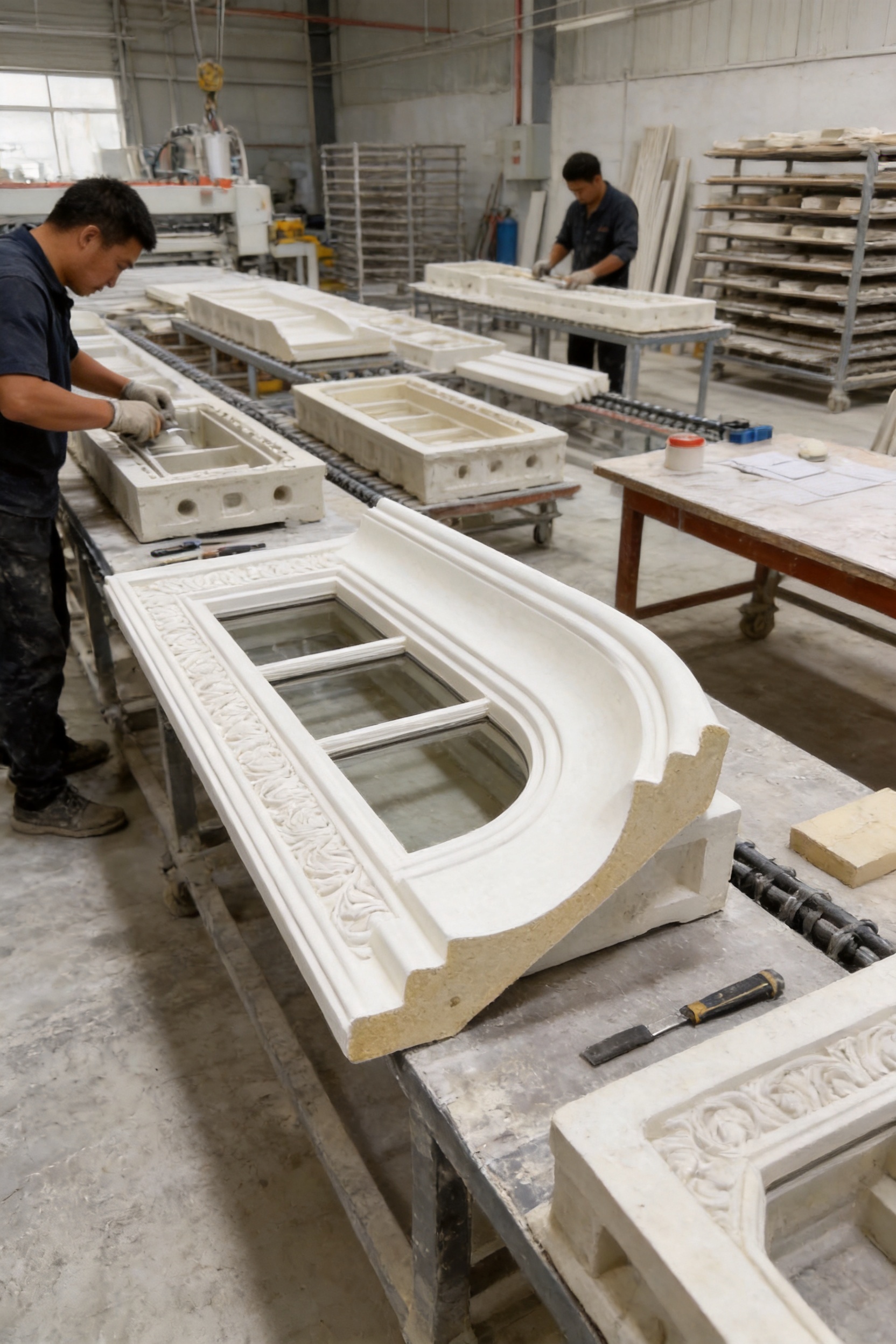
To obtain the best results from decorative window frame GRC molding, project teams should consider both appearance and technical performance from the beginning. The molding profile should suit the building style and window proportion. Oversized profiles may look heavy on small openings, while very thin profiles may fail to create the desired visual depth on large façades. The goal is to create balanced proportions that enhance the façade rather than overwhelm it.
Joint planning is another important factor. Long window frame components are often divided into sections for production, transport, and installation. These joints should be located where they are visually acceptable and technically manageable. Corners, sill ends, and profile transitions require careful detailing. Poorly planned joints can become visible defects or weak points for water penetration.
Water management must never be ignored. Window areas are vulnerable points in a building envelope. Moldings should be coordinated with flashing, sealants, waterproof membranes, drainage paths, and window frame installation. Horizontal surfaces should avoid trapping water. Sills may require slope or drip details to move water away from the wall. Proper detailing improves the long-term performance of both the molding and the surrounding façade.
Color and finish selection should match the architectural intent and local environment. Smooth white or light-colored GRC molding can create a clean classical appearance. Stone-like textures can add depth and natural character. Painted finishes can coordinate with broader façade color schemes. For polluted or dusty environments, finishes should be selected with cleaning and maintenance in mind.
Fixing design must be appropriate for the component size, weight, wall substrate, wind load, and building height. Mechanical anchors, embedded parts, adhesive systems, or combined fixing methods may be used depending on the project. Installation should follow technical recommendations to ensure safety and durability. The advantage of working with a supplier that understands both production and construction is that fixing details can be considered early rather than improvised on site.
Decorative window frame GRC molding offers practical benefits during construction. Its reduced weight compared with solid stone or precast concrete makes handling easier. Workers can position components more accurately, and the need for large lifting equipment may be reduced in many applications. This can be beneficial on sites with limited access, tight schedules, or multiple façade elevations.
Before installation, the wall substrate should be checked for flatness, strength, cleanliness, and compatibility with the fixing method. Components should be inspected against drawings and arranged according to the installation sequence. Accurate layout lines are essential because window frame moldings must align with both the window opening and adjacent façade elements. Even a strong product can look poor if installed without careful positioning.
During installation, joints should be controlled to allow for movement and sealing. Exterior sealants should be selected according to weather exposure and compatibility with GRC and adjacent materials. Any required anchoring should be secure and corrosion-resistant. The installer should avoid damaging corners or decorative surfaces during handling.
After installation, surface cleaning and minor finishing may be performed. Maintenance is generally straightforward. Periodic inspection should focus on joint sealants, surface cleanliness, impact damage, and water drainage. If the surface is painted, repainting intervals depend on coating type and exposure conditions. Compared with materials that require frequent repair or replacement, well-made GRC molding provides a stable, low-maintenance façade solution.
Quality control is a major reason to choose a professional GRC manufacturer rather than relying on low-cost, inconsistent suppliers. Exterior decorative components are exposed to public view and environmental stress. Defects can be expensive to repair after installation. A reliable production system helps prevent problems before they reach the site.
Key quality checks include mold accuracy, raw material consistency, fiber quality, mixture proportion, component thickness, surface finish, curing condition, dimensional tolerance, edge integrity, and packaging protection. For customized projects, mock-up samples may be used to confirm profile, texture, color, and installation details. This reduces misunderstanding between the designer, contractor, and manufacturer.
Long-term performance also depends on matching the product to the project environment. Coastal areas, high-humidity regions, industrial zones, and freeze-thaw climates each create different challenges. GRC’s cementitious and fiber-reinforced structure provides strong general durability, but correct specification and installation remain important. The company’s experience with construction technical support helps ensure that the product is used appropriately.
For buyers, the most visible advantage of quality control is consistency. Window frames across a façade should align, match, and age uniformly. Inconsistent color, uneven profiles, or weak edges can reduce the perceived value of the entire building. Controlled manufacturing helps preserve the intended architectural effect.
Jiangsu Yameng Traffic Road Facilities Co., Ltd. is located in Nantong, Jiangsu Province, China, an area with convenient transportation and waterway access. This location supports product delivery and coordination for domestic and international markets. The company is engaged in drainage ditch projects and GRC customization, giving it experience in both infrastructure-related manufacturing and architectural component production.
The company’s GRC series is supported by professional designers, mold designers, CNC engravers, and an experienced production and construction technical team. This matters because decorative GRC products are not simple commodities. Each project may require custom drawings, special profiles, accurate molds, tailored installation recommendations, and responsive after-sales communication. A manufacturer with complete service capability can help customers reduce coordination complexity.
The company emphasizes integrity, responsibility, focus, and innovation. In practical terms, these values are reflected in careful communication, attention to product development, quality-oriented production, and support for customer requirements. For contractors and distributors, stable cooperation is often as important as product quality. Projects run more smoothly when the supplier understands deadlines, documentation, packaging needs, and technical questions.
Another strength is the company’s broad product background. In addition to GRC customization, its product range includes drainage channels, polymer-based drainage ditches, slot drainage ditches, U-shaped drainage ditches, ductile iron cover plates, stainless steel stamped cover plates, steel gratings, resin concrete cover plates, resin composite manhole covers, stainless steel manhole covers, ductile iron manhole covers, drainage pipes, PE pipes, and related products. This manufacturing diversity demonstrates experience with durable outdoor products, material performance, and practical construction requirements.
For buyers of decorative window frame GRC molding, this background is useful because façade products must also perform outdoors. The company’s knowledge of drainage, cover plates, and exterior infrastructure products reinforces its understanding of durability, weather exposure, structural reliability, and project delivery. Its GRC customization capability then adds the architectural design layer needed for decorative building applications.
GRC molding can contribute to more efficient construction by reducing material weight while maintaining strength. Lighter components may reduce transportation load and handling energy compared with heavier stone or solid concrete alternatives. Because GRC can be formed into thin sections, it can use material efficiently while achieving the desired architectural appearance.
Durability is also a sustainability factor. Products that last longer and require less frequent replacement reduce waste and maintenance effort. When properly manufactured and installed, GRC window frame molding can provide long service life in exterior applications. Its low-maintenance nature supports building owners who want attractive façades without excessive ongoing repair.
Customization can reduce site waste as well. Components produced to accurate drawings and required dimensions minimize cutting, modification, and rejected pieces on site. Accurate mold production and controlled manufacturing improve installation efficiency and reduce unnecessary material consumption.
Decorative window frame GRC molding is a strong choice for buyers who want a façade product that combines elegance, durability, and installation efficiency. Its mineral character gives buildings a solid and refined appearance. Its glass fiber reinforcement provides strength and crack resistance. Its reduced weight improves handling and can simplify installation. Its moldability allows both standard and highly customized designs.
Compared with competitors using less durable lightweight materials, GRC provides better impact resistance and a more permanent architectural feel. Compared with heavy natural stone or precast concrete, it offers easier installation and greater flexibility. Compared with metal or gypsum alternatives, it delivers a distinctive exterior-grade cementitious finish suitable for a wide range of architectural styles.
The manufacturing process behind the product is equally important. Professional design support, mold development, CNC engraving, controlled production, curing management, inspection, packaging, and construction technical service all contribute to final success. A product installed on a façade is judged for years, not only on delivery day. Therefore, choosing a supplier with complete capabilities helps protect the buyer’s investment.
For wholesalers, contractors, developers, and architectural project managers, the product offers a reliable balance of appearance and performance. It can be used to upgrade façade value, create visual identity, support customized design, and deliver long-term exterior durability. In competitive construction markets, these advantages help projects stand out while maintaining practical cost and installation control.
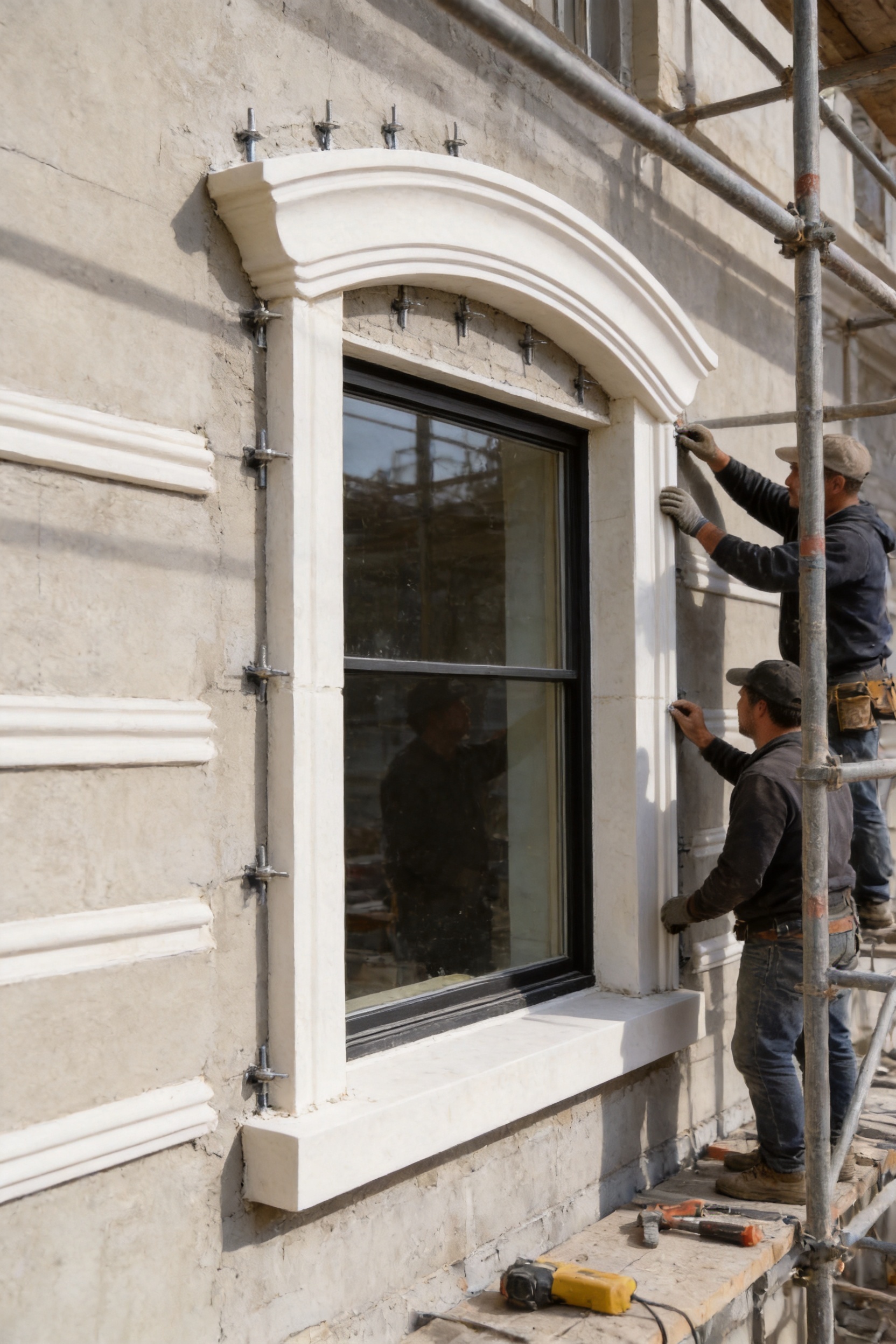
Decorative window frame GRC molding is an exterior architectural component made from Glassfiber Reinforced Concrete. It is installed around window openings to add visual depth, decorative detail, and a refined façade appearance while providing durability suitable for outdoor use.
GRC is reinforced with alkali-resistant glass fibers, allowing it to achieve strength and toughness in thinner, lighter sections. Ordinary solid concrete is heavier and less suitable for intricate thin decorative profiles. GRC provides easier handling, better design flexibility, and strong exterior performance.
Yes. GRC molding can be customized in profile, size, pattern, texture, color, and joint arrangement. It can suit classical, modern, European, villa, commercial, and public building designs. CNC engraving and professional mold design support accurate reproduction of customized details.
Yes. Properly manufactured GRC is suitable for exterior applications. Its cementitious base and alkali-resistant glass fiber reinforcement help it resist weathering, moisture exposure, temperature changes, and general environmental stress. Correct installation and joint sealing further improve long-term performance.
EPS foam moldings are very light and economical, but their coated surfaces may be more vulnerable to impact and aging. GRC is stronger, more solid, and more durable for exterior architectural use. It provides a premium mineral appearance and better resistance to damage.
Natural stone is attractive and durable, but it is heavy, expensive, and difficult to customize into complex repeated profiles. GRC can achieve elegant stone-like or smooth architectural effects with lower weight, easier installation, and better design flexibility.
Important steps include technical design, mold making, CNC engraving, raw material proportioning, fiber reinforcement, forming, compaction, curing, surface finishing, inspection, and packaging. Each step influences dimensional accuracy, strength, surface quality, and installation reliability.
Installers should check the wall substrate, confirm layout lines, use suitable fixing methods, protect component edges, control joints, apply compatible sealants, and coordinate waterproofing around the window. Good installation is essential for appearance and durability.
No. Maintenance is generally simple. Periodic cleaning and inspection of joints, sealants, and surfaces are usually sufficient. If a painted finish is used, repainting may be required over time depending on coating quality and exposure conditions.
Decorative GRC molding requires accurate drawings, reliable molds, proper fixing details, and coordination with the façade system. A manufacturer with design, mold, production, construction, and after-sales support can reduce project risk and help ensure the final appearance matches the design intent.
Decorative window frame GRC molding is a high-value architectural product for projects that require beauty, durability, and efficient construction. It enhances building façades by framing window openings with refined profiles, smooth finishes, and customized details. At the same time, it provides the practical benefits of lightweight strength, weather resistance, stable quality, and low maintenance.
Its advantages over competing materials are clear. It is lighter and more flexible than solid concrete or stone, stronger and more permanent than many foam-based products, and more suitable for masonry-style exterior decoration than many metal or gypsum alternatives. When produced through advanced design, precise mold making, CNC engraving, controlled material proportioning, careful curing, and strict inspection, GRC molding becomes a dependable façade solution for modern construction demands.
Supported by the manufacturing and service capabilities of Jiangsu Yameng Traffic Road Facilities Co., Ltd., decorative window frame GRC molding can meet customized project needs from drawing development to production and installation support. For builders, developers, wholesalers, and architects seeking a durable and elegant exterior decorative product, GRC molding offers a balanced combination of aesthetics, performance, and long-term value.
1. PCI Committee on Glass Fiber Reinforced Concrete Panels. Recommended Practice for Glass Fiber Reinforced Concrete Panels.
2. GRCA International. Practical Design Guide for Glassfibre Reinforced Concrete.
3. ACI Committee 544. Guide for Specifying, Proportioning, Mixing, Placing, and Finishing Fiber-Reinforced Concrete.
4. Neville, A. M. Properties of Concrete. Pearson Education.
5. Bentur, A., and Mindess, S. Fibre Reinforced Cementitious Composites. Taylor & Francis.
6. Architectural Precast Association. Architectural Precast Concrete Design and Construction Guidance.
Related Products
Our Modular GRC System merges installation speed with long-term durability, providing a high-perform...
READ MOREOur Modular GRC System merges installation speed with long-term durability, providing a high-perform...
READ MOREOur Modular GRC System merges installation speed with long-term durability, providing a high-perform...
READ MOREOur Modular GRC System merges installation speed with long-term durability, providing a high-perform...
READ MOREOur Modular GRC System merges installation speed with long-term durability, providing a high-perform...
READ MOREOur Modular GRC System merges installation speed with long-term durability, providing a high-perform...
READ MORE
Contact us
Factory Address
Group 12, Quanxin Village, Donghai Town, Qidong City, Nantong City, Jiangsu Province, China
phone
+86-13914963840
+86-13451754670
products
QR CODE
 Wholesale Drainage Ditch Manufacturers