 English
 Español
 عربى
عربى

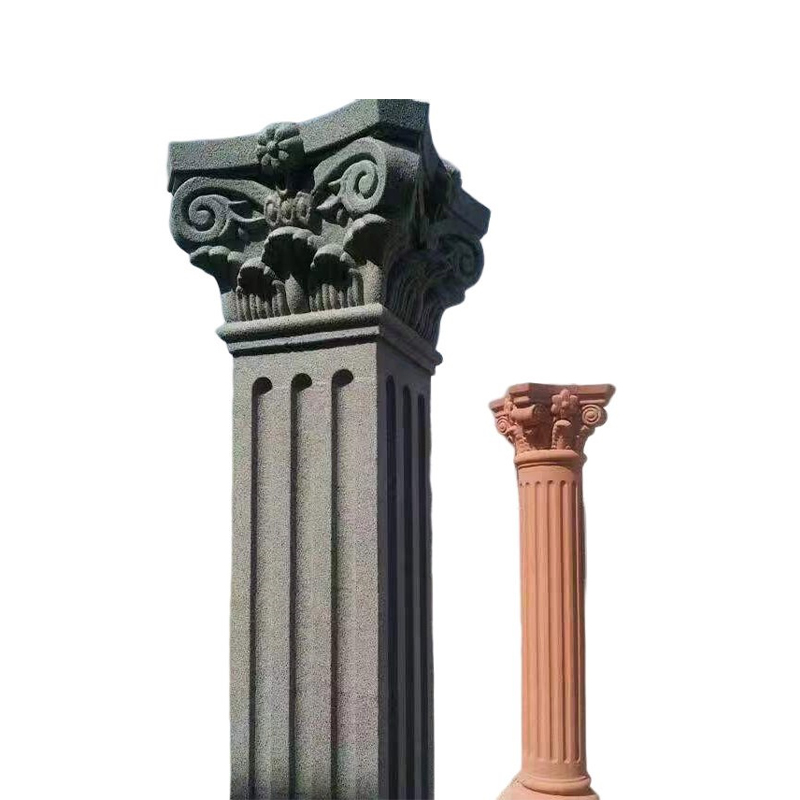
Fiber-Reinforced Durable GRC Roman Columns Material & Structure: Made of high-quality Glassfiber...
READ MOREJun 12, 2026
Content
Seamless Smooth-Finish GRC Roman Columns bring together the dignity of classical Roman architecture and the practical advantages of modern composite concrete technology. Designed for high-end residential villas, commercial facades, cultural buildings, hotels, landscape entrances, clubhouses, and public architectural projects, these columns offer a refined visual language without the burden of heavy stone construction or the limitations of conventional precast concrete components.
In contemporary construction, designers and property owners increasingly seek materials that can deliver beauty, consistency, durability, and efficient installation at the same time. A Roman column is not merely a structural-looking element; it is a visual symbol of order, symmetry, strength, and prestige. When made with Glass Fiber Reinforced Concrete, commonly known as GRC, the column gains the elegant appearance of stone while benefiting from enhanced tensile performance, impact resistance, shape adaptability, and long-term weather tolerance.
The Seamless Smooth-Finish GRC Roman Column is developed for projects that require a clean, continuous, premium surface. Unlike many traditional columns that reveal joints, patching marks, rough textures, or inconsistent geometry, this product is engineered to provide a smooth and uninterrupted appearance. Its surface is prepared to support premium paints, decorative coatings, stone-like finishes, metallic effects, and other architectural treatments, giving architects and contractors the flexibility to match different design styles.
Jiangsu Yameng Traffic Road Facilities Co., Ltd. applies its experience in drainage channel engineering, GRC customization, mold development, CNC engraving, and construction support to produce architectural GRC components with disciplined manufacturing control. The company’s technical foundation in infrastructure products contributes to a practical understanding of strength, dimensional accuracy, weather exposure, installation safety, and service reliability. This background is especially valuable for decorative architectural products that must look beautiful while enduring real outdoor conditions.
Seamless Smooth-Finish GRC Roman Columns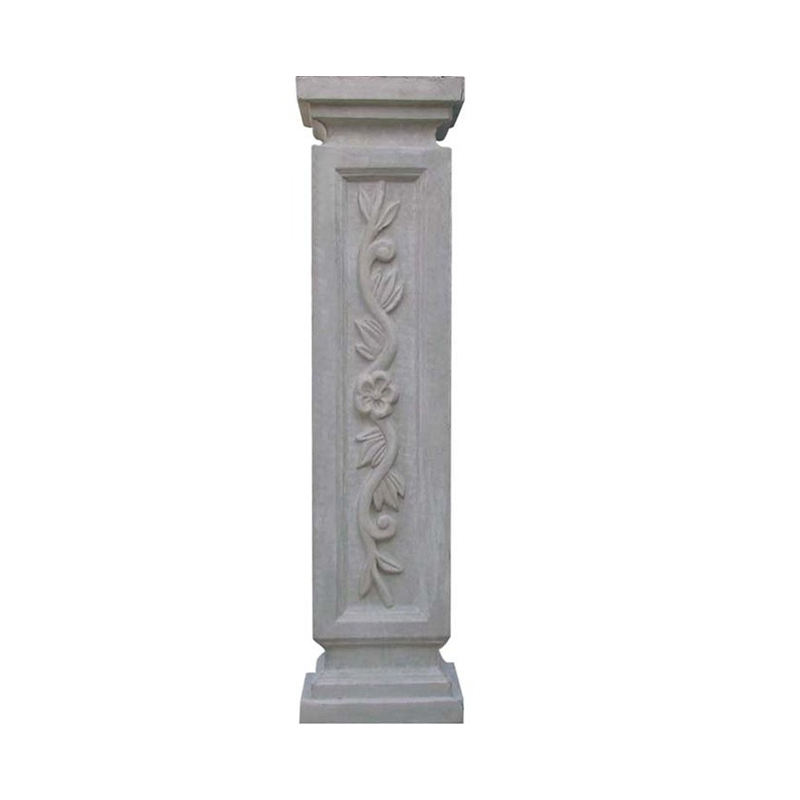
The Seamless Smooth-Finish GRC Roman Column is a decorative architectural column manufactured from Glass Fiber Reinforced Concrete. It is designed to reproduce the grand character of classical Roman architecture while meeting the performance expectations of modern building envelopes. Its smooth finish, precise vertical geometry, and joint-minimized or seamless visual effect make it suitable for projects where aesthetic refinement is essential.
GRC is a cement-based composite material reinforced with glass fibers. Compared with ordinary concrete, it can achieve thinner sections, more detailed shapes, and a better strength-to-weight ratio. Compared with natural stone, it offers easier customization, reduced installation complexity, and greater consistency across repeated units. For Roman columns, these advantages are significant because the column often includes shafts, bases, capitals, flutes, decorative rings, and transition details that require both accuracy and surface refinement.
The product is particularly suitable for facade decoration, entrance framing, colonnades, porch structures, garden pavilions, commercial storefronts, ceremonial halls, and architectural renovation projects. It can be designed as a standalone decorative column, a column cover surrounding a structural core, or a facade-integrated element. This flexibility allows the product to serve both new construction and renovation projects where existing structures need to be visually upgraded.
Its most important visual feature is the seamless smooth finish. Many competing column products show obvious seams between segments or require extensive on-site repair after installation. Visible joints can interrupt the classical vertical rhythm of a Roman column and weaken the premium impression of the facade. By using advanced molding and careful production control, the Seamless Smooth-Finish GRC Roman Column is created to reduce such visual defects and provide a continuous, elegant appearance.
Roman columns have been used for centuries to express strength, balance, and architectural authority. Their visual language remains popular because it can transform a flat building elevation into a dignified composition. A well-proportioned column creates shadows, vertical rhythm, and a sense of permanence. However, traditional materials such as quarried stone or massive cast concrete can be expensive, heavy, difficult to transport, and slow to install.
The Seamless Smooth-Finish GRC Roman Column solves these problems by preserving the classical appearance while reducing practical construction challenges. GRC allows complex profiles to be produced in a controlled factory environment. The column can be lighter than solid stone or conventional concrete, making handling and installation more efficient. In many projects, reduced weight also helps lower supporting structure demands, especially when the column is used as a decorative cover or facade element rather than a load-bearing structural member.
Modern architectural projects also demand coordination among designers, contractors, property owners, and material suppliers. A column system must not only look correct in drawings; it must also arrive with reliable dimensions, consistent finishing quality, and installation feasibility. The product’s precision geometry supports vertical alignment and symmetrical presentation, which is essential in classical architectural design. Even a small deviation in column straightness, diameter, base alignment, or capital position can become visible once multiple columns are installed in a row.
With GRC customization and controlled mold production, the column can be adapted to different heights, diameters, decorative orders, and facade conditions. This is a key advantage over standard catalog products that may not match the exact proportions of a project. The ability to adjust details while maintaining manufacturing consistency allows architects to achieve a custom appearance without losing production efficiency.
Glass Fiber Reinforced Concrete is valued because it combines cementitious durability with fiber reinforcement. The glass fibers dispersed within the matrix improve tensile behavior and resistance to cracking compared with unreinforced cement products. This makes GRC especially suitable for thin decorative panels, columns, cornices, brackets, domes, and other architectural elements that require detail and durability.
For Roman columns, tensile strength and impact resistance are important because the component may experience transportation vibration, installation handling, wind exposure, thermal movement, and occasional accidental impacts. A brittle material may chip easily at edges or crack during handling. GRC provides a more resilient solution when manufactured correctly, with proper fiber distribution, curing, and quality inspection.
The cement-based nature of GRC also gives it strong compatibility with exterior coatings and architectural finishes. The ultra-smooth surface of this product requires minimal sanding and creates a strong base for finishing systems. Whether the project calls for pure white classical columns, warm stone tones, textured coatings, or custom colors, the smooth GRC surface allows a more uniform result.
Another advantage is weather resistance. Exterior columns are exposed to ultraviolet radiation, rain, humidity, wind, temperature variation, and pollutants. The product is designed to withstand corrosion, UV exposure, and extreme weather conditions better than many ordinary decorative materials. While all exterior materials require proper design, coating, and maintenance, a well-manufactured GRC column provides a robust foundation for long-term architectural performance.
GRC also supports resource-efficient construction because it can deliver the appearance of solid stone with less material mass. This can reduce transportation difficulty and installation labor. In projects where repeated column units are required, mold-based production improves consistency while helping control cost and schedule.
The defining feature of this Roman column is its seamless smooth finish. In the architectural decoration market, many products compete on basic appearance, but premium projects require more than an acceptable shape. They require surfaces that remain beautiful after close inspection, under sunlight, and across repeated units. A rough or inconsistent surface can increase finishing labor, create coating defects, and reduce the perceived value of the building.
The smooth-finish design reduces the amount of sanding and correction required before painting. This can save time on-site and lower the risk of uneven coating absorption. In high-end facade work, surface preparation is often one of the most time-consuming stages. A column that arrives with a refined surface gives contractors a better starting point and helps the final finish look cleaner.
The seamless visual effect is equally important. Traditional segmented columns often require assembly from several parts, and the joints can become visible after installation, especially when exposed to changing light. Even after filling and painting, seams may reappear due to thermal movement, shrinkage, or workmanship variation. A product engineered for a smooth continuous aesthetic reduces this risk and produces a more elegant vertical line.
For luxury residences, hotels, and commercial entrances, this visual continuity can make a major difference. A Roman column is often located at eye level near entrance doors, stairs, terraces, and walkways. Visitors naturally notice the column surface. A flawless column communicates care, stability, and value; a poorly finished column communicates compromise. This product is created for projects where that difference matters.
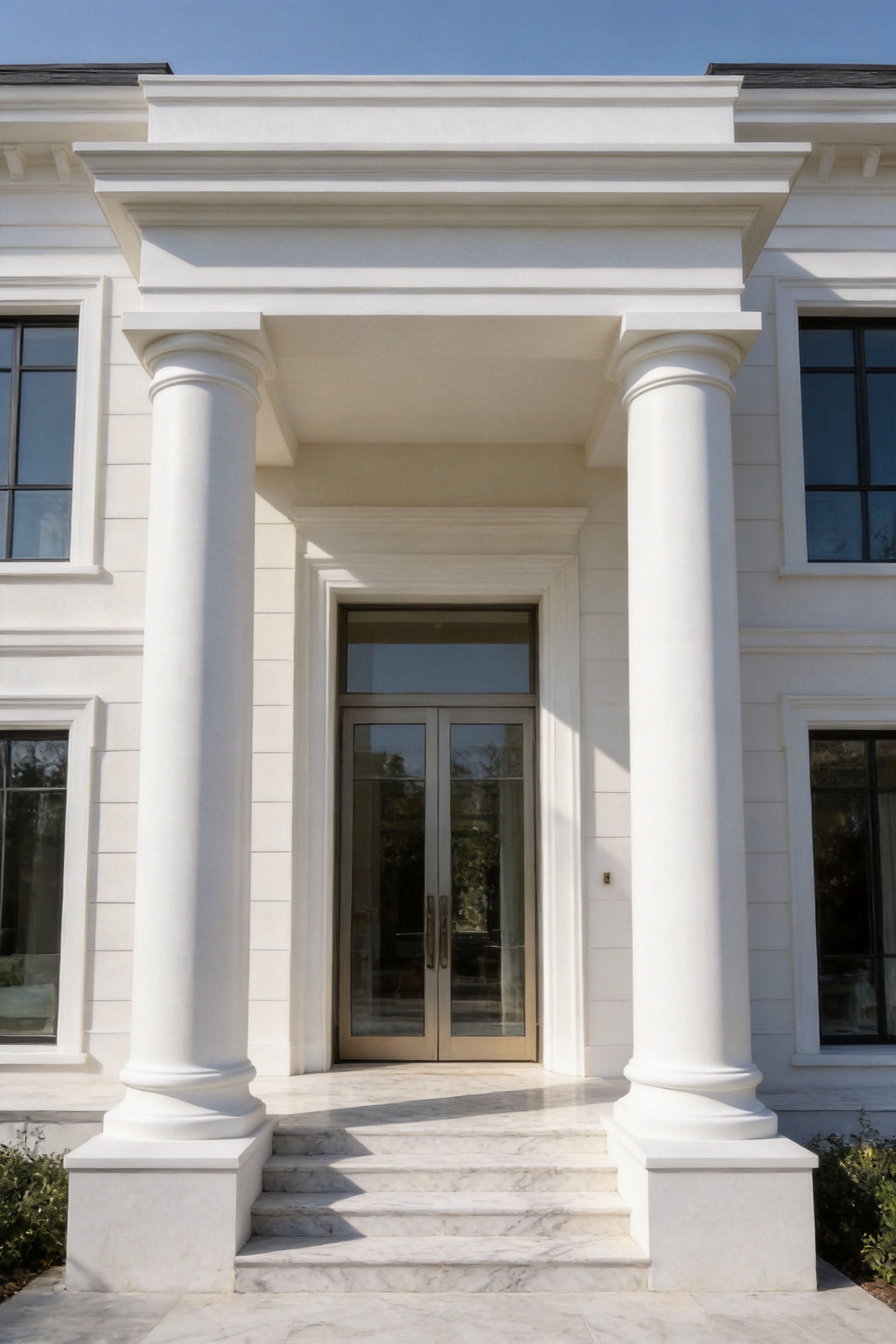
When selecting Roman columns, project teams often compare GRC with natural stone, ordinary precast concrete, fiberglass-reinforced plastic, gypsum-based products, and low-grade cement decorative elements. Each material has its place, but the Seamless Smooth-Finish GRC Roman Column offers a strong balance of aesthetics, durability, customization, and installation efficiency.
| Selection Factor | Seamless Smooth-Finish GRC Roman Columns | Natural Stone Columns | Ordinary Precast Concrete Columns | Low-Grade Decorative Columns |
|---|---|---|---|---|
| Surface Appearance | Ultra-smooth, refined, suitable for premium coatings, reduced visible joints | Beautiful but dependent on stone quality and carving consistency | May show pores, roughness, and mold marks | Often inconsistent, may require heavy repair |
| Weight and Handling | Lighter than solid stone and many massive concrete units | Very heavy, difficult to transport and install | Heavy, may require stronger lifting equipment | Varies, but lightweight versions may lack durability |
| Customization | Highly adaptable through mold design and CNC engraving support | Possible but costly and time-consuming | Moderate, usually limited by mold cost and detail capability | Limited precision and repeatability |
| Durability | Strong tensile performance, impact resistance, weather resistance | Durable but can crack, stain, or erode depending on stone type | Strong in compression but vulnerable to cracking and heavy section issues | May degrade faster outdoors |
| Installation Efficiency | Designed for practical project installation and facade integration | Slow due to weight and handling requirements | Requires heavy lifting and careful anchoring | Easy at first but may cause maintenance problems later |
| Long-Term Visual Quality | Consistent geometry and smooth finish support stable premium appearance | Excellent when well maintained, but color and grain vary naturally | May require more surface correction | Higher risk of fading, cracking, or deformation |
This comparison shows why GRC has become a preferred architectural material for decorative columns. It does not merely imitate another material; it provides its own engineered advantages. The Seamless Smooth-Finish GRC Roman Column is especially competitive because it addresses two common weaknesses in the market: surface roughness and visible joints.
Roman columns depend on proportion. The relationship between shaft height, diameter, base profile, capital detail, and spacing determines whether the final building looks elegant or awkward. A column that is slightly distorted, out of round, leaning, or inconsistent from one unit to another can undermine the entire design. Precision geometry is therefore not a luxury; it is a requirement.
The product is calibrated for verticality and symmetry. This means each unit is produced with careful attention to dimensional control, mold accuracy, and post-production inspection. In a colonnade, multiple columns must align perfectly. In a facade entrance, paired columns must match each other in height, diameter, and decorative profile. In a large commercial project, repeated components must maintain consistency across long elevations.
Advanced molding technology helps achieve this consistency. A high-quality mold captures the intended shape and transfers it reliably into each finished component. Mold quality affects surface smoothness, edge sharpness, decorative clarity, and dimensional stability. Poor molds create defects that cannot be fully corrected later. For this reason, mold design and mold maintenance are central to premium GRC production.
CNC engraving support further improves accuracy. When decorative capitals, fluted shafts, or complex base details are required, digital processing can help create precise patterns and repeated geometry. This reduces the dependence on inconsistent manual shaping and supports more reliable project outcomes.
The quality of a GRC Roman column depends on the entire manufacturing chain, from design review to mold creation, material preparation, forming, curing, finishing, inspection, packaging, and installation guidance. Jiangsu Yameng Traffic Road Facilities Co., Ltd. supports GRC customization with professional designers, mold designers, CNC engravers, and an experienced production and construction technical team. This integrated capability allows the company to provide complete services from detailed design and drawings to mold making, production, on-site construction, and after-sales support.
The process begins with project understanding. The team reviews the architectural intent, dimensions, installation location, finish requirements, and structural interface. For Roman columns, this includes confirming whether the column is decorative, semi-structural in appearance, used as a cover around steel or concrete, or integrated with facade panels. Clarifying these conditions early helps avoid installation conflicts later.
Next comes drawing development. Detailed drawings define height, diameter, wall thickness, base and capital profiles, joint strategy, anchoring methods, and surface finishing requirements. Good drawings help align expectations among architects, contractors, and manufacturers. They also provide the foundation for accurate mold making.
Mold design is then carried out with attention to both appearance and manufacturability. A beautiful column profile must also be demolded safely, cured properly, and transported without damage. The mold must support a smooth surface and accurate geometry. For seamless smooth-finish columns, mold precision is particularly important because the final product is expected to require minimal correction.
Material preparation follows controlled procedures. The cement matrix, aggregates, admixtures, and glass fibers must be selected and combined properly to achieve the required performance. Fiber distribution must be consistent so the component gains the intended reinforcement benefits. Workability must be balanced so the material can capture fine mold details while maintaining strength.
Forming and compaction are carried out to reduce voids, capture surface detail, and maintain dimensional accuracy. After forming, proper curing is essential. Cement-based materials develop strength through hydration, and curing conditions affect durability, shrinkage behavior, and surface quality. A disciplined curing process helps reduce cracking risk and supports stable long-term performance.
Finishing includes inspection, minor correction if necessary, surface preparation, and quality confirmation. Because the product is designed with an ultra-smooth surface, finishing work focuses on preserving the clean appearance rather than hiding major defects. This is a key difference from lower-grade products that require extensive patching before they can be installed.
Jiangsu Yameng Traffic Road Facilities Co., Ltd. is located in Nantong, Jiangsu Province, China, with convenient transportation and waterway access. The company’s business includes drainage ditch projects and GRC customization. This combination is valuable because drainage products require engineering discipline, dimensional accuracy, weather resistance, load awareness, and installation practicality, while GRC architectural products require artistic expression, surface quality, and design adaptability.
The company’s drainage product range includes linear drainage ditches, finished drainage ditches, polymer-based drainage ditches, slot drainage ditches, U-shaped drainage ditches, ductile iron cover plates, stainless steel stamped cover plates, steel gratings, resin concrete cover plates, resin composite manhole covers, stainless steel manhole covers, ductile iron manhole covers, drainage pipes, PE pipes, and related products. This broad manufacturing background reflects an understanding of infrastructure performance and construction requirements.
In the GRC series, the company is supported by professional designers, mold designers, CNC engravers, and an experienced production and construction technical team. This is important because architectural GRC is not a one-step product. It requires coordination among design aesthetics, mold accuracy, material performance, site installation, and after-sales service. A supplier that can support the full process reduces project risk and improves communication efficiency.
The company adheres to integrity and quality as its foundation and serves customers with care. In practical terms, this means that product selection, technical communication, production planning, and after-sales support are treated as part of the same service chain. For project owners, this is a meaningful advantage. A Roman column may look simple from a distance, but successful delivery depends on many details that must be managed before and after production.
The company is committed to product research and development, with products sold in domestic and international markets. Its stated values of integrity, responsibility, focus, and innovation align with the needs of architectural projects where reliability and continuous improvement are essential. For buyers seeking a GRC Roman column supplier, these strengths support confidence in customization, production consistency, and service responsiveness.
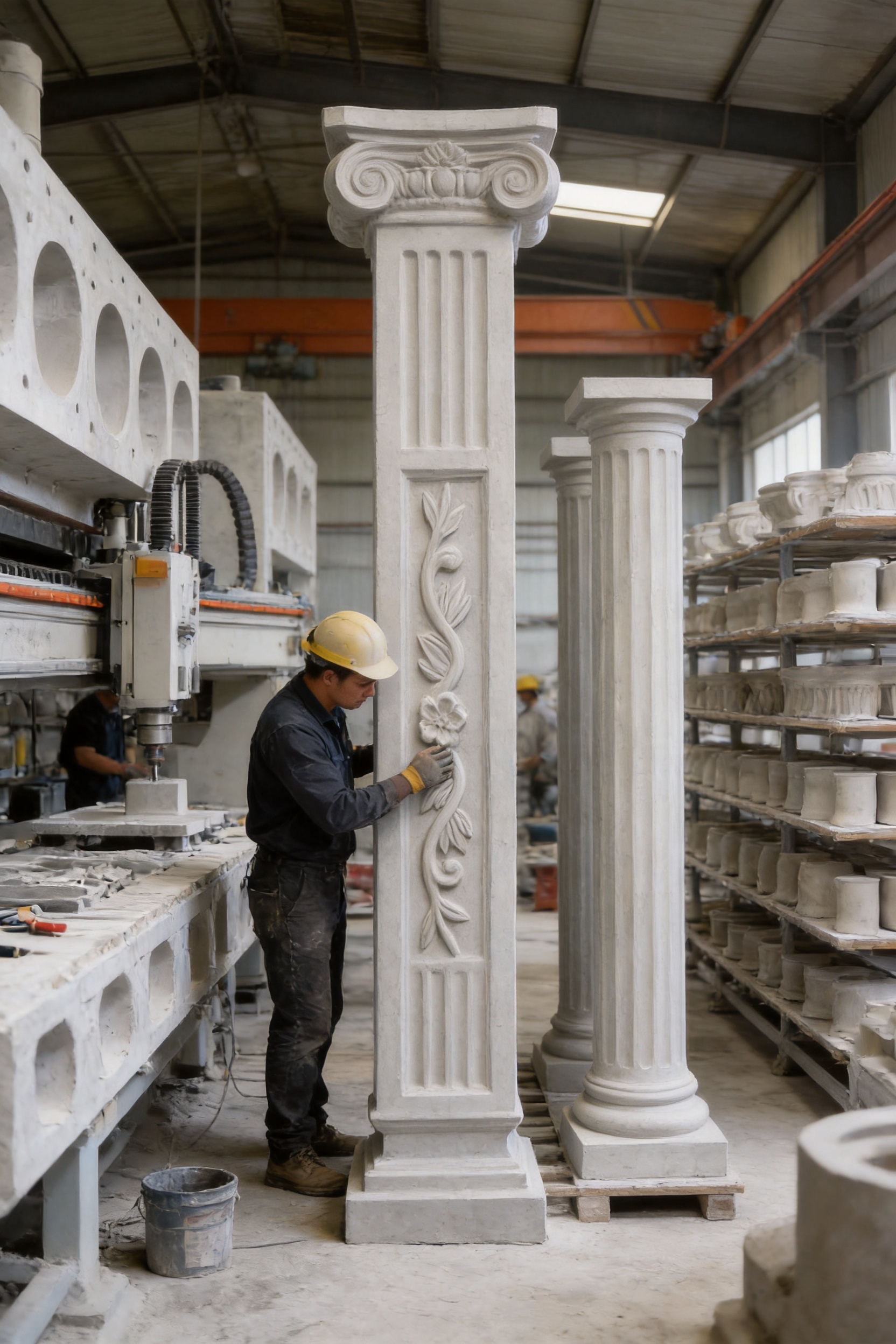
The Seamless Smooth-Finish GRC Roman Column can be used across many architectural scenarios. In luxury residential projects, it can frame entrances, support porch aesthetics, decorate balconies, or form courtyard colonnades. Its classical form creates a prestigious impression while the smooth finish supports refined paint colors and decorative coatings.
In commercial buildings, the product can enhance hotel entrances, shopping centers, office building facades, restaurants, clubs, exhibition halls, and cultural venues. Commercial projects often require materials that can be repeated consistently across multiple areas. GRC mold production is well suited to this requirement because it can produce matching column units with consistent details.
For renovation projects, GRC columns can upgrade older buildings without the need for massive stone installation. Existing facades can be redesigned with classical elements, and column covers can be used to transform plain structural supports into decorative features. Because GRC can be lighter than solid stone, it may be more practical for retrofit conditions where structural capacity, access, and installation time are concerns.
Landscape architecture is another natural application. Garden pavilions, scenic entrances, public squares, memorial spaces, and resort environments often use columns to create spatial rhythm and ceremonial atmosphere. Weather resistance and impact performance are important in these outdoor settings, and the GRC column offers a durable decorative solution.
The product is also suitable for projects that combine classical and modern design. A smooth Roman column can be finished in minimalist white, warm beige, stone gray, or custom colors to harmonize with glass, metal, stone veneer, or modern facade panels. This adaptability allows the product to serve both traditional European-style buildings and contemporary projects that use classical references in a restrained way.
The ultra-smooth surface of the Seamless Smooth-Finish GRC Roman Column provides an excellent base for many finishing systems. A smooth substrate helps reduce coating defects, improves visual uniformity, and allows the final color to appear more refined. This is especially important for columns because curved surfaces catch light from different angles and reveal imperfections easily.
Premium exterior paints can be used to create clean classical white columns or custom colors that match the building facade. Stone-like coatings can produce a natural limestone, sandstone, or marble-inspired appearance without the weight and cost of carved stone. Specialized coatings can provide additional weather resistance, anti-staining performance, or decorative texture.
The product can also support artistic finishing effects. For example, a villa project may require a warm aged-stone appearance, while a hotel entrance may prefer a smooth ivory surface with subtle shadow lines. A cultural building may require a more restrained matte finish to integrate with surrounding materials. Because the GRC surface is smooth and consistent, finish designers have a reliable base for achieving these effects.
Proper coating selection should consider outdoor exposure, local climate, maintenance expectations, and design intent. For coastal or humid environments, coatings with strong water resistance and color stability are recommended. For high-traffic entrance areas, finishes with good abrasion and stain resistance may be preferred. The column itself provides the engineered form, while the finish completes the architectural expression.
Exterior architectural components must endure more than visual inspection. They face weather cycles, temperature changes, moisture, ultraviolet exposure, wind pressure, and occasional impact. The Seamless Smooth-Finish GRC Roman Column is designed to withstand corrosion, UV exposure, and extreme weather, making it suitable for demanding facade conditions when installed and maintained properly.
Unlike metal components that may corrode if coatings fail, GRC is a cement-based composite and is naturally suited to exterior architectural use. Unlike some plastic decorative columns, it does not rely on a lightweight shell that may deform or age poorly under sun exposure. Unlike gypsum-based products, it is more appropriate for outdoor conditions when manufactured for exterior application.
Crack resistance is supported by glass fiber reinforcement. While no cement-based product is completely immune to cracking under improper design or severe movement, GRC performs better than unreinforced decorative cement elements because fibers help control tensile stress and distribute loads. Proper wall thickness, reinforcement design, curing, and installation all contribute to durability.
Impact resistance is also important during transportation and installation. Column edges, bases, and capitals can be vulnerable if handled carelessly. GRC’s reinforced matrix helps reduce damage risk compared with brittle alternatives. Good packaging and lifting procedures further protect the components before installation.
Long-term performance also depends on correct detailing. Drainage, sealing, anchoring, joint treatment, and coating maintenance should be considered during design. Even a high-quality column benefits from good construction practice. The company’s ability to provide on-site construction support and after-sales service helps project teams manage these practical requirements.
Roman columns may be installed in different ways depending on project design. Some are decorative covers placed around structural steel or concrete. Some are facade elements fixed to a wall or entrance frame. Others are part of a larger GRC decorative system that includes cornices, window surrounds, balustrades, and relief panels. Installation planning should begin during the design stage.
The first consideration is support. The column must be connected to a stable substrate or structural core. Anchoring methods should account for component weight, wind load, thermal movement, and site conditions. Stainless steel or corrosion-resistant connectors may be used depending on the environment and design requirements.
The second consideration is alignment. Because the product is designed with precision geometry, installation should preserve that accuracy. Plumb lines, laser levels, and careful measurement help ensure that the column remains vertical and symmetrical. When multiple columns are installed together, spacing and height alignment should be checked repeatedly.
The third consideration is joint treatment. Although the product is designed for a seamless smooth visual effect, construction interfaces may still exist depending on size, transport limitations, or installation method. These interfaces should be treated carefully with compatible materials and skilled workmanship to maintain the continuous appearance.
The fourth consideration is surface protection. During construction, columns should be protected from impact, staining, mortar splashes, paint contamination, and scaffolding damage. A smooth premium surface deserves careful handling until final project completion.
Finally, the finishing system should be applied under suitable weather conditions and according to manufacturer recommendations. Proper primer, coating thickness, drying time, and maintenance planning all help preserve the final appearance.
Quality control is essential for architectural GRC because defects can be highly visible after installation. The Seamless Smooth-Finish GRC Roman Column is intended for high-end applications, so quality checks should cover dimensions, surface finish, edge detail, strength development, curing condition, packaging, and delivery readiness.
Dimensional inspection confirms that the column height, diameter, wall thickness, base profile, and capital profile meet project requirements. For repeated units, consistency is especially important. A single column may pass inspection individually, but a row of columns reveals whether production control is truly stable.
Surface inspection examines smoothness, pores, cracks, scratches, discoloration, and mold marks. Since the product’s key advantage is its refined finish, this stage is critical. Minor surface correction may be performed, but the goal is to manufacture a product that requires minimal sanding and repair.
Material and process control ensure that the GRC matrix and reinforcement achieve the desired performance. Proper batching, fiber incorporation, forming, and curing all influence final strength and durability. A disciplined factory environment reduces variation and supports predictable results.
Packaging inspection helps prevent damage during transport. Columns may have curved surfaces and decorative projections that need protection. Corners, bases, capitals, and edges should be secured carefully. Good packaging is part of quality assurance because a well-made product can still be damaged if logistics are neglected.
Delivery coordination also matters. Project schedules often require components to arrive in sequence. Clear labeling, documentation, and communication help contractors identify each unit and install it correctly. This practical attention to detail is one of the strengths of a supplier experienced in both production and construction support.
Architects benefit from the product because it allows classical forms to be integrated into modern projects with greater control. The smooth finish supports refined visual concepts, while GRC customization enables adaptation to project-specific proportions. Instead of being restricted to standard sizes or heavy stone limitations, architects can design columns that fit the exact rhythm of the facade.
The product also supports design consistency. When multiple columns are used, mold-based production can maintain repeated profiles and dimensions. This is valuable for symmetrical facades, hotel entrances, ceremonial stairways, and long colonnades. Consistency allows the architectural concept to remain strong from drawing to completion.
Another benefit is finish flexibility. Architects can specify paint, stone-like coating, or specialized surface effects according to the overall material palette. The column does not force a single aesthetic; it supports multiple design directions. Whether the project is neoclassical, Mediterranean, European-inspired, or modern classical, the smooth GRC column can be adapted.
Architects also gain practical confidence from working with a supplier capable of detailed design, mold making, production, construction support, and after-sales service. Complex projects often require technical communication and adjustments. A complete service chain reduces uncertainty and supports better coordination.
Contractors value materials that install efficiently, arrive consistently, and require less corrective work. The Seamless Smooth-Finish GRC Roman Column is designed to reduce on-site sanding and surface repair compared with rougher alternatives. This can improve schedule control and reduce labor uncertainty.
The lighter nature of GRC compared with solid stone or massive concrete can make handling easier. Although lifting and installation must still be planned carefully, reduced weight often simplifies logistics and may reduce equipment demands. This is especially useful in projects with limited site access or tight installation schedules.
Precision geometry helps contractors achieve proper alignment. When components are manufactured accurately, installation teams can focus on positioning and fixing rather than correcting product defects. Accurate units reduce the risk of disputes and rework.
Contractors also benefit from technical support. If installation drawings, connection details, or on-site guidance are available, the risk of improper installation decreases. The company’s experienced production and construction technical team can support practical project needs from manufacturing through after-sales service.
Developers and owners judge architectural materials by final appearance, cost control, durability, and maintenance. The Seamless Smooth-Finish GRC Roman Column supports all these priorities. It creates a premium classical impression that can enhance property value and visitor perception. At the same time, it avoids some of the cost, weight, and schedule challenges associated with natural stone.
Long-term durability matters because facade repair can be expensive and disruptive. A weather-resistant GRC column with a good coating system can provide stable performance in exterior conditions. The product’s resistance to corrosion, UV exposure, and extreme weather helps protect the investment.
Maintenance is also supported by the smooth surface. Smooth finishes are generally easier to clean and repaint than rough, porous, or heavily textured surfaces. If the owner later updates the building color scheme, the GRC column can serve as a reliable substrate for repainting when properly prepared.
For commercial owners, the column contributes to brand atmosphere even though the column itself is not a brand element. A hotel entrance with elegant classical columns communicates quality and hospitality. A retail building with refined facade columns can create a more memorable street presence. A villa community with consistent Roman column details can create a sense of prestige and order.
The market for decorative columns includes many options, but not all of them meet the expectations of premium architectural projects. Some products are inexpensive but lack durability. Some look attractive in photos but reveal rough surfaces on site. Some are heavy and difficult to install. Some require extensive filling, grinding, and repainting before they appear acceptable. The Seamless Smooth-Finish GRC Roman Column is developed to address these common problems.
Its first standout advantage is the smooth surface. This directly affects appearance, finishing quality, and labor efficiency. A better surface at the factory stage creates value throughout the project.
Its second advantage is the seamless visual effect. Classical columns rely on continuous vertical lines. Reducing visible joints protects the dignity and elegance of the design.
Its third advantage is engineered GRC performance. Glass fiber reinforcement supports tensile strength and impact resistance, while the cement-based matrix provides exterior suitability. This gives the product a practical durability profile beyond purely decorative low-grade materials.
Its fourth advantage is precision geometry. Verticality, symmetry, and repeatability are critical for Roman column applications. The product is manufactured with these expectations in mind.
Its fifth advantage is the company’s integrated support capability. Professional designers, mold designers, CNC engravers, production staff, construction technicians, and after-sales service create a complete project pathway. This is especially important for customized GRC components where communication and technical accuracy determine final success.
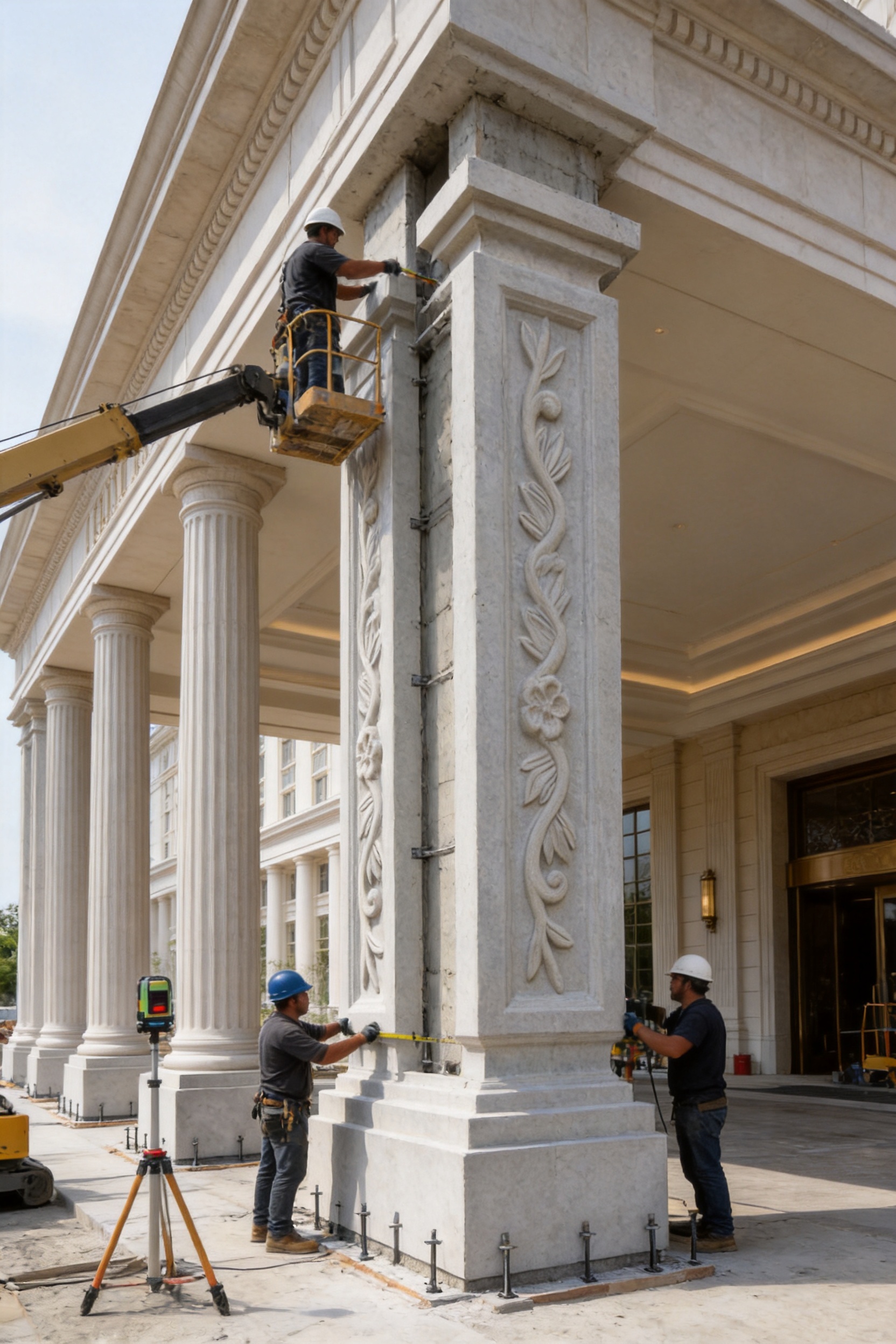
When choosing GRC Roman columns for a project, buyers should evaluate more than unit price. A low initial price can become expensive if the product requires heavy repair, causes installation delays, or fails prematurely. The following criteria are recommended for responsible selection.
First, inspect surface quality. A premium GRC column should have a smooth, consistent surface with minimal pores, cracks, and patching marks. The surface should be suitable for the intended finishing system.
Second, confirm dimensional accuracy. Ask whether the supplier can provide drawings, tolerances, and repeated-unit consistency. This is essential for colonnades and symmetrical facades.
Third, evaluate mold capability. High-quality columns require high-quality molds. Suppliers with mold designers and CNC engraving support can usually provide better custom detail and consistency.
Fourth, consider material performance. The column should be made from high-performance GRC with appropriate glass fiber reinforcement and curing control. It should be suitable for exterior weather exposure.
Fifth, review installation support. A supplier that understands on-site construction can help avoid anchoring, alignment, and finishing problems.
Sixth, consider after-sales service. Architectural components may require technical clarification during installation or maintenance. Responsive support helps protect project outcomes.
GRC Roman columns are designed for durability, but proper maintenance helps preserve their appearance. Regular inspection should be carried out to check coating condition, sealant performance, surface contamination, and physical damage. Early maintenance is usually easier and less expensive than delayed repair.
Cleaning should be performed with suitable methods that do not damage the coating. Mild cleaning agents and soft washing are generally preferable to aggressive mechanical abrasion. Harsh chemicals should be avoided unless approved for the specific coating system.
Coatings should be renewed according to exposure conditions and manufacturer recommendations. Areas exposed to intense sunlight, heavy rain, coastal air, or pollution may require more frequent maintenance. A good coating system protects the surface and enhances long-term color stability.
If minor damage occurs, repairs should use compatible materials and proper surface preparation. Because the product has a smooth finish, repair workmanship should be refined to avoid visible patches. Professional repair is recommended for high-end facade areas.
Drainage around the column should also be considered. Water should not be allowed to accumulate at bases or behind facade interfaces. Good architectural detailing reduces staining, biological growth, freeze-thaw stress, and coating failure.
They are decorative architectural Roman columns made from Glass Fiber Reinforced Concrete. They are designed to provide a smooth, refined, continuous appearance for facades, entrances, colonnades, and other classical or modern-classical building applications.
A smooth finish reduces the need for sanding and repair before painting or coating. It also improves the final appearance because curved column surfaces easily reveal pores, roughness, and uneven patching. A refined factory surface helps achieve a premium architectural result.
Visible joints can interrupt the vertical elegance of a Roman column. A seamless or joint-minimized appearance creates a more continuous and high-end look, especially for entrance columns, hotel facades, villas, and commercial buildings where close visual inspection is common.
GRC can provide a stone-like architectural appearance while being lighter, easier to customize, and more practical for repeated production. Natural stone has its own beauty, but it is heavy, often costly, and may involve longer carving and installation times.
Yes, properly manufactured GRC is widely used for exterior architectural components. The Seamless Smooth-Finish GRC Roman Column is designed to withstand corrosion, UV exposure, and extreme weather when installed, coated, and maintained correctly.
Yes. The company’s GRC series is supported by designers, mold designers, CNC engravers, production personnel, and construction technicians. This allows customization of dimensions, profiles, decorative details, and project-specific requirements.
The smooth GRC surface can support premium exterior paints, stone-like coatings, textured coatings, and specialized decorative finishes. The final selection should match the project’s climate, maintenance expectations, and design style.
They are generally used as decorative architectural elements or column covers unless specifically designed and engineered for structural purposes. The structural role should always be confirmed during project design with qualified professionals.
Suitable projects include villas, hotels, commercial entrances, cultural buildings, public squares, garden pavilions, clubhouses, renovation facades, porch areas, colonnades, and modern-classical architectural developments.
Support can include detailed design, drawings, mold making, production, on-site construction assistance, and after-sales service. This full-process capability helps reduce project risk and improve final installation quality.
The Seamless Smooth-Finish GRC Roman Column is a strong solution for projects that require classical elegance, refined surface quality, durable outdoor performance, and efficient modern construction. It captures the stately character of Roman architecture while using advanced Glass Fiber Reinforced Concrete technology to improve practicality and consistency.
Its major advantages include an ultra-smooth surface, reduced visible joints, engineered durability, impact resistance, precision geometry, weather resistance, and strong compatibility with premium coatings. Compared with natural stone, ordinary concrete, and low-grade decorative alternatives, it offers a balanced combination of beauty, customization, handling efficiency, and long-term value.
Jiangsu Yameng Traffic Road Facilities Co., Ltd. strengthens the product through its manufacturing experience, professional GRC customization team, mold design capability, CNC engraving support, production expertise, construction service, and after-sales responsibility. The company’s broader background in drainage channel products and infrastructure-related manufacturing reinforces its commitment to dimensional accuracy, durability, and practical project delivery.
For architects, the product offers design freedom and classical proportion. For contractors, it reduces surface preparation challenges and supports installation efficiency. For developers and owners, it creates a premium facade impression with durable performance and maintenance potential. In a competitive architectural materials market, the Seamless Smooth-Finish GRC Roman Column stands out because it is not only decorative; it is engineered for real buildings, real weather, and real project expectations.
1. PCI Committee on Glass Fiber Reinforced Concrete Panels. Manual for Quality Control for Plants and Production of Glass Fiber Reinforced Concrete Products.
2. GRCA International. Specification for the Manufacture, Curing and Testing of Glassfibre Reinforced Concrete Products.
3. Allen, Edward, and Joseph Iano. Fundamentals of Building Construction: Materials and Methods.
4. Ching, Francis D. K. Building Construction Illustrated.
5. Ashby, Michael F., and Kara Johnson. Materials and Design: The Art and Science of Material Selection in Product Design.
6. Neville, A. M. Properties of Concrete.
Related Products
Fiber-Reinforced Durable GRC Roman Columns Material & Structure: Made of high-quality Glassfiber...
READ MOREFiber-Reinforced Durable GRC Roman Columns Material & Structure: Made of high-quality Glassfiber...
READ MOREFiber-Reinforced Durable GRC Roman Columns Material & Structure: Made of high-quality Glassfiber...
READ MOREFiber-Reinforced Durable GRC Roman Columns Material & Structure: Made of high-quality Glassfiber...
READ MOREFiber-Reinforced Durable GRC Roman Columns Material & Structure: Made of high-quality Glassfiber...
READ MOREFiber-Reinforced Durable GRC Roman Columns Material & Structure: Made of high-quality Glassfiber...
READ MORE
Contact us
Factory Address
Group 12, Quanxin Village, Donghai Town, Qidong City, Nantong City, Jiangsu Province, China
phone
+86-13914963840
+86-13451754670
products
QR CODE
 Wholesale Drainage Ditch Manufacturers