 English
 Español
 عربى
عربى

Engineered specifically for harsh environmental conditions, the Weatherproof Outdoor GRC door and wi...
READ MOREMay 15, 2026
Content
Easy-Install Sectional GRC Molding is designed for architectural projects that require strong visual impact, durable exterior performance, and efficient construction. As modern buildings become more complex in shape and more demanding in schedule control, exterior decorative components must do more than look attractive. They must be lightweight enough for practical handling, strong enough to endure outdoor exposure, stable enough to maintain dimensional accuracy, and adaptable enough to suit different architectural styles. This sectional Glass Fiber Reinforced Concrete molding answers these needs by combining modular engineering, high-performance material properties, and a refined surface finish.
The product is especially suitable for exterior wall decoration, façade lines, cornices, window surrounds, parapet details, columns, eaves, entrance features, and customized architectural profiles. It can be used in European classical buildings, commercial complexes, hotels, villas, public facilities, residential communities, and modern minimalist projects where clean lines and long-term reliability are required. Compared with many traditional decorative materials, sectional GRC molding provides a balanced solution: it offers the texture and solidity associated with mineral-based materials while remaining far easier to install than heavy precast components.
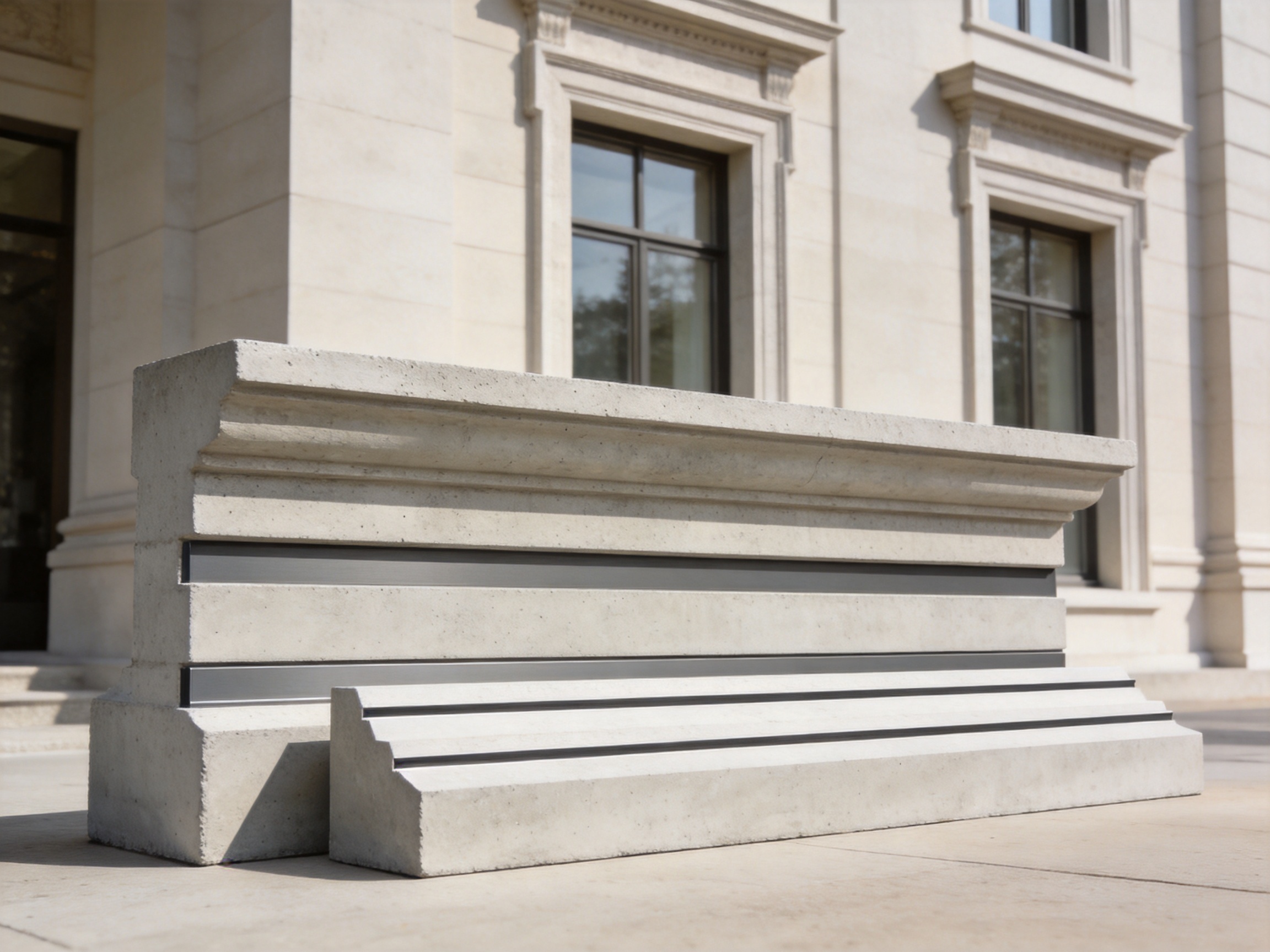
Easy-Install Sectional GRC Molding is a modular exterior decorative component made from Glass Fiber Reinforced Concrete. GRC is a composite material that uses cementitious matrix materials reinforced with glass fibers, giving it improved tensile behavior, crack resistance, and shape-forming capability compared with ordinary concrete. Because the material can be cast into precise molds, it supports complex profiles, smooth curves, crisp edges, and customized architectural forms.
The defining feature of this product is its sectional design. Instead of producing one heavy, oversized decorative element, the molding is manufactured in carefully planned sections. Each section is dimensioned to allow easier manual handling, accurate alignment, and efficient splicing on site. This design greatly reduces the need for heavy lifting equipment and simplifies installation in areas where machinery access is limited.
For contractors, this means faster work progress and lower site pressure. For architects, it means greater freedom to design expressive façade lines without worrying that decorative elements will become too heavy or too difficult to install. For developers and owners, it means a more economical construction process while still achieving a refined and durable exterior appearance.
The advantages of Easy-Install Sectional GRC Molding come from the combination of material science, modular product engineering, and controlled manufacturing. Many competing decorative components may perform well in one aspect but fall short in others. Heavy stone products may look substantial but are costly and difficult to install. Ordinary cement components may be inexpensive but may crack or weather poorly. Resin-based products may be light but may not match the fire resistance, texture, or long-term stability of GRC. This product is developed to provide a more balanced and project-friendly solution.
Traditional exterior decorative moldings can be heavy, especially when made from solid concrete or natural stone. High weight increases transport difficulty, installation risk, labor intensity, and structural load. Easy-Install Sectional GRC Molding is engineered to reduce unnecessary weight while maintaining the strength required for exterior use. The glass fiber reinforcement improves toughness and helps distribute stress within the cementitious matrix.
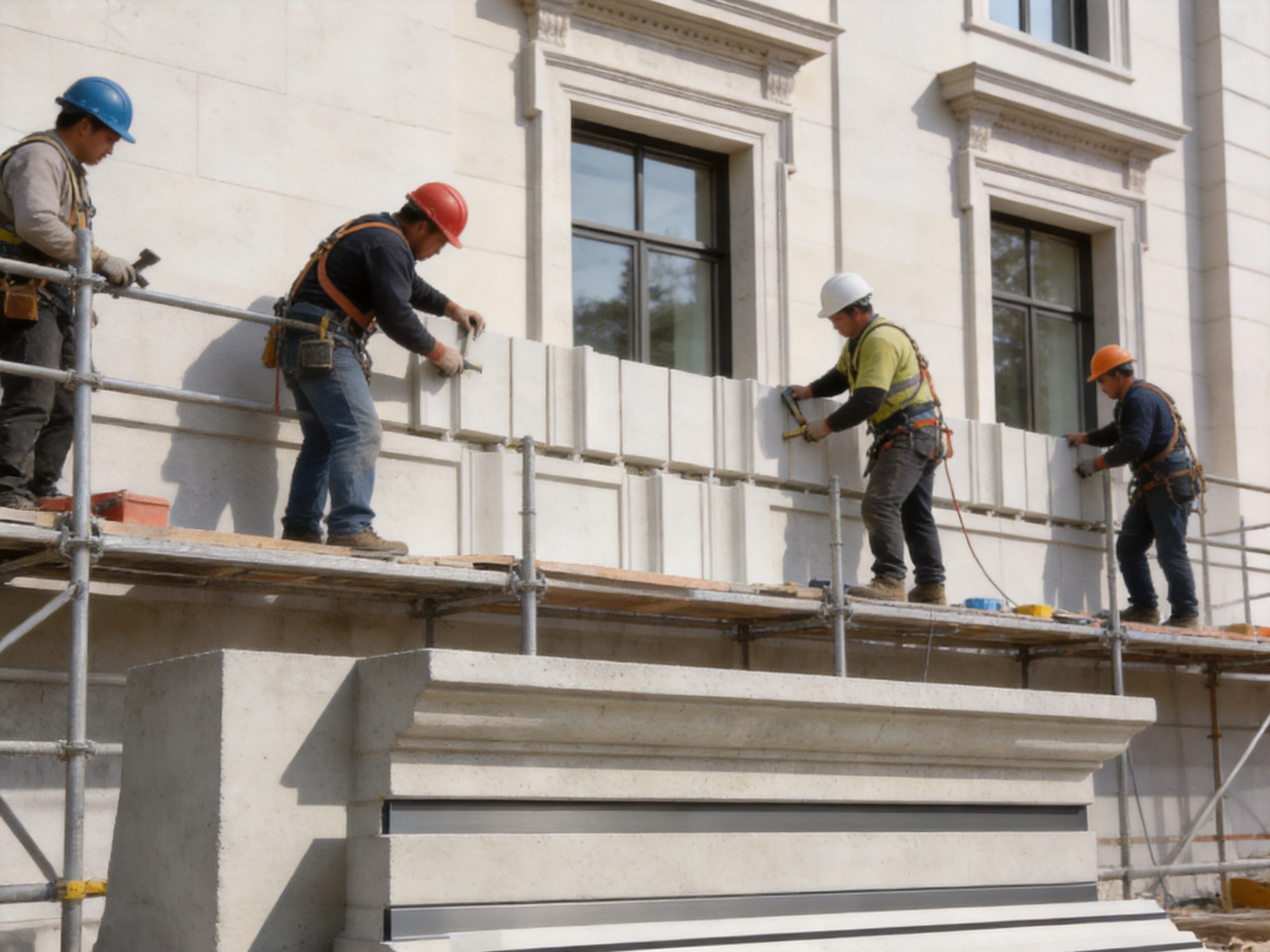
The lightweight nature of the product is particularly valuable on high-rise façades, renovation projects, narrow construction sites, and projects where crane use is expensive or inconvenient. Workers can handle smaller sections more safely, and installation teams can maintain a steady workflow. This reduces downtime caused by equipment scheduling and allows different façade areas to be installed in a more flexible sequence.
The sectional structure is one of the most important competitive advantages of the product. Each piece is produced as part of a modular system, enabling accurate splicing and convenient alignment. Instead of struggling with long and heavy units, installers work with manageable components that can be positioned, adjusted, and fixed more easily.
This approach shortens the project timeline in several ways. First, manual handling becomes simpler and safer. Second, the number of workers required for positioning can be reduced. Third, transportation and storage on site are easier to organize. Fourth, damaged or adjusted sections can be replaced more conveniently than oversized one-piece components. As a result, the product helps reduce labor costs while improving construction efficiency.
Exterior materials must meet increasing safety expectations. GRC is based on inorganic cementitious materials and has strong fire-resistant properties. Unlike some polymer-based decorative materials, it does not easily ignite or contribute significantly to flame spread. For public buildings, hotels, commercial façades, residential communities, and infrastructure-related facilities, this fireproof characteristic is an important advantage.
Fire resistance is not only a regulatory consideration but also a long-term safety factor. A decorative molding may appear to be a secondary component, but on large façades, surface materials can influence fire behavior. Choosing GRC molding helps improve the overall safety profile of the building exterior.
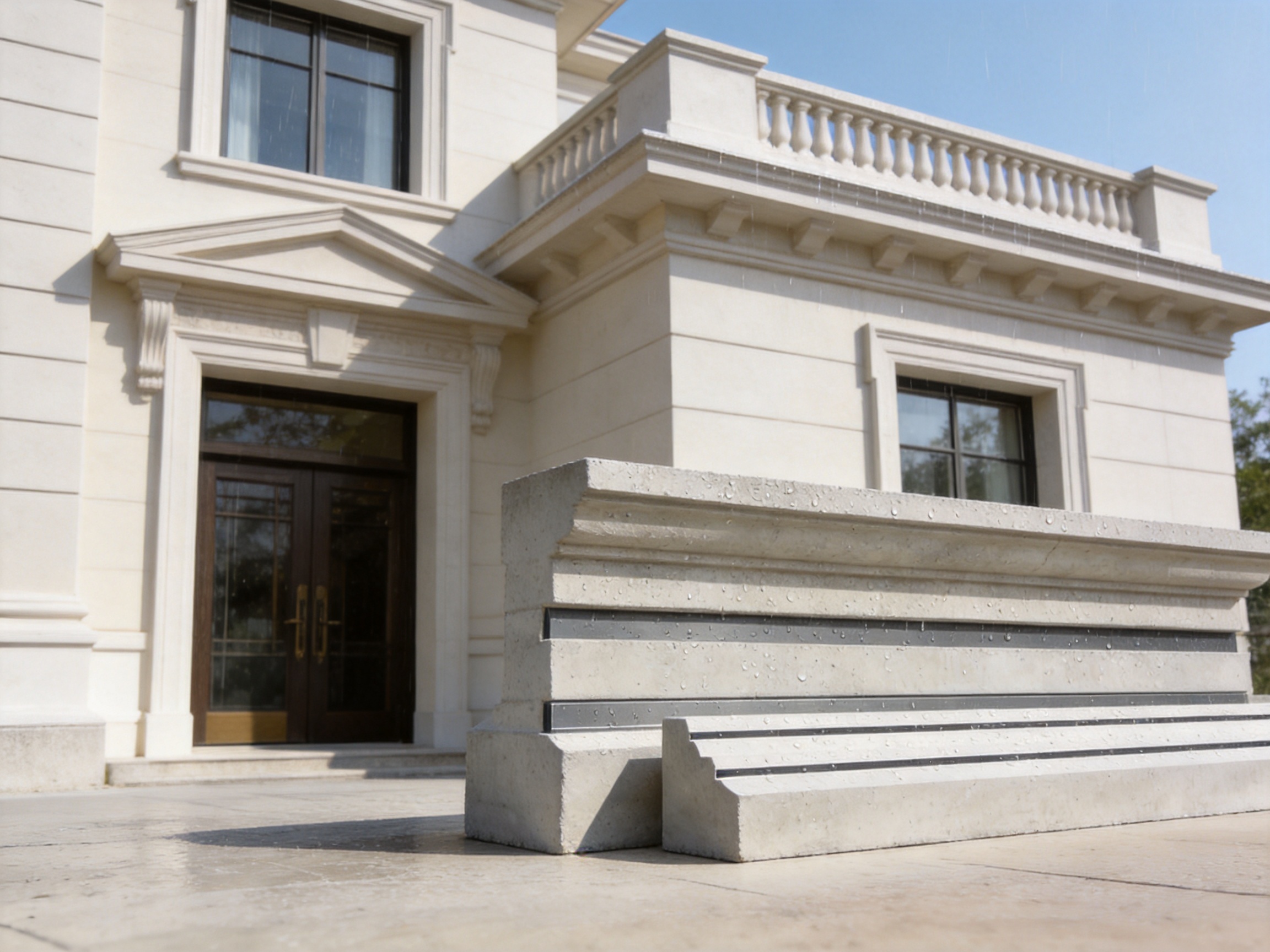
Exterior decorative components face rain, humidity, freeze-thaw cycles, ultraviolet exposure, temperature change, wind, and pollution. A product that looks good at installation but deteriorates quickly will increase maintenance costs and damage the building’s appearance. Easy-Install Sectional GRC Molding is manufactured to maintain dimensional stability and surface integrity under outdoor conditions.
The material is designed to resist water penetration, deformation, cracking, and surface deterioration. Properly manufactured GRC performs well in harsh environments because its reinforced composite structure helps reduce brittle failure. When combined with appropriate installation details, sealing, and coating systems, the molding can provide durable service on exterior façades.
The product supports a wide range of design expressions. For classical buildings, it can be formed into cornices, arches, column capitals, belt lines, and ornamental profiles. For modern buildings, it can be designed as clean linear strips, minimalist frames, or smooth façade transitions. Its surface can be finished to match the required texture, color, or coating system.
Because GRC is cast in molds, the product can achieve high profile repeatability. This is essential for long façade lines where inconsistent dimensions would be visible. Crisp edges, smooth surfaces, and accurate curvature help the finished building appear more coordinated and professional.
Architectural exterior decoration often involves choosing between different materials. Each material has its own strengths, but the best choice depends on weight, durability, installation requirements, cost, fire performance, design flexibility, and long-term maintenance. Easy-Install Sectional GRC Molding offers a strong overall balance compared with many common alternatives.
| Material Type | Main Strengths | Common Limitations | Advantages of Sectional GRC Molding |
|---|---|---|---|
| Natural Stone | Premium texture, high compressive strength, traditional appearance | Heavy weight, high cost, difficult installation, limited complex shaping | Lighter, easier to shape, more efficient to install, suitable for customized profiles |
| Ordinary Concrete Molding | Low material familiarity, strong mineral appearance | Heavy, more prone to cracking, difficult to produce thin decorative shapes | Reinforced with glass fibers, lighter, better toughness, more precise decorative forming |
| EPS Cement Coated Lines | Very light, easy to cut, low initial cost | Lower impact resistance, less solid texture, performance depends heavily on coating quality | More durable, stronger surface feeling, better fire and weather performance |
| FRP Decorative Components | Lightweight, moldable, corrosion resistant | May have fire concerns, different texture from mineral materials, thermal expansion issues | Inorganic cement-based composition, better fire resistance, more stone-like architectural finish |
| Metal Decorative Profiles | Modern appearance, high strength, factory precision | Thermal expansion, corrosion risk if not protected, limited classical texture | Better suited to stone-like façade expression, stable appearance, customizable classical or modern profiles |
This comparison shows that sectional GRC molding is not merely a decorative substitute. It is a practical architectural solution for projects that require both design flexibility and reliable performance. Its key advantage is balance: it does not force the project team to choose between appearance and installation efficiency, or between durability and manageable weight.
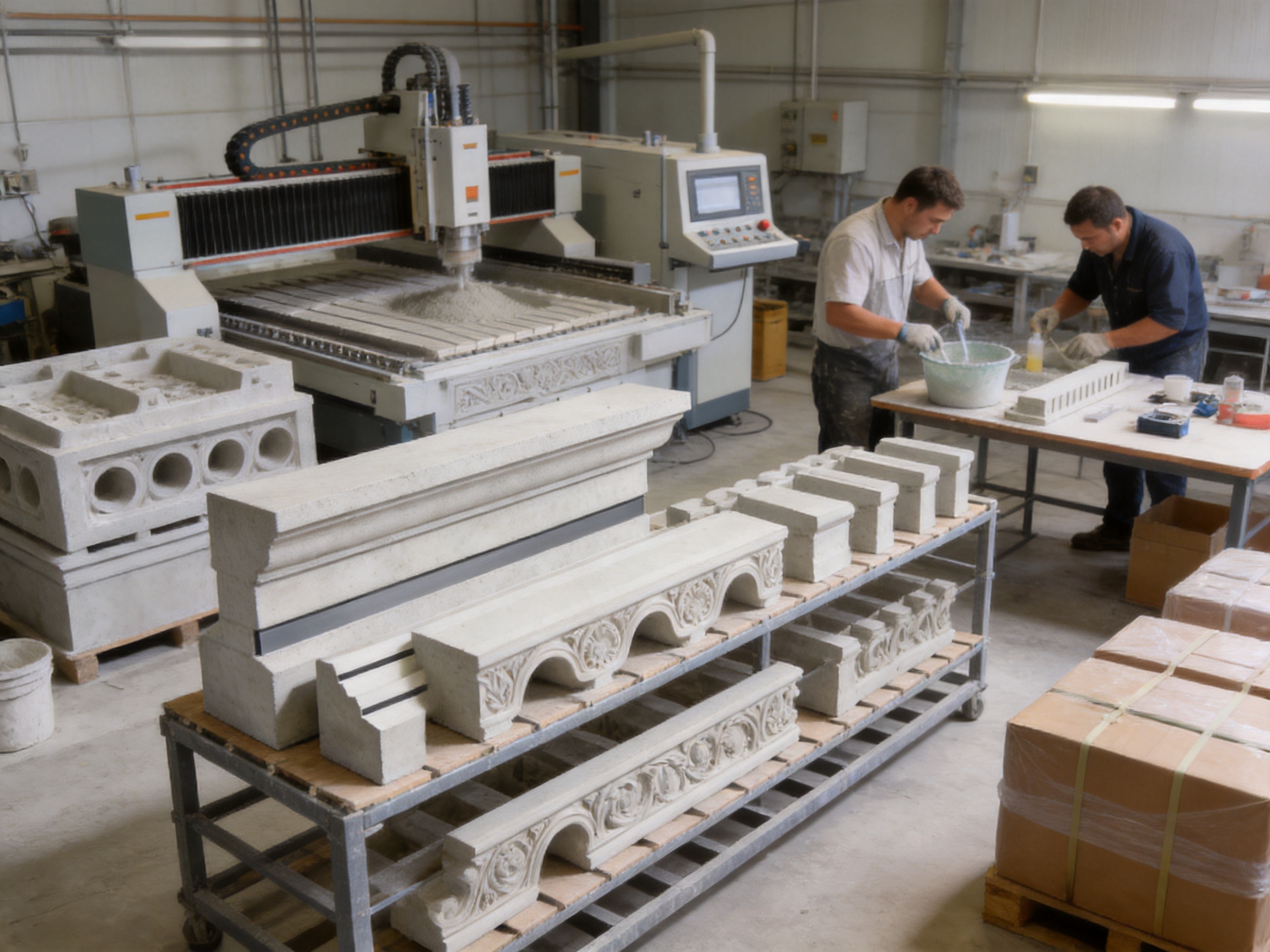
A high-quality GRC product depends not only on raw materials but also on the manufacturing process. Precision in design, mold preparation, fiber distribution, casting, curing, inspection, and packaging determines whether the final product can perform reliably on the building. Jiangsu Yameng Traffic Road Facilities Co., Ltd. supports its GRC series with professional designers, mold designers, CNC engravers, experienced production workers, and construction technical teams. This integrated capability allows the company to provide complete service from design development to after-sales support.
The process begins with understanding the project requirements. Architects and contractors may provide drawings, façade elevations, profile dimensions, installation locations, and performance expectations. The technical team reviews these requirements and develops detailed drawings for production. This stage is essential because exterior moldings must match the building structure, façade layout, joint positions, and installation method.
Good detailing reduces site problems. It helps determine where sectional joints should be placed, how pieces should be fixed, how water drainage should be considered, and how the final visual line should appear. By planning these details before production, the company helps reduce rework and improve site efficiency.
The mold controls the shape, accuracy, and surface quality of GRC molding. Professional mold design is particularly important for complex decorative lines, repeated façade components, curved profiles, and customized features. CNC engraving improves precision and repeatability, allowing detailed profiles to be produced consistently.
Compared with rough manual mold making, CNC-supported mold production offers better dimensional accuracy, cleaner lines, and higher consistency across batches. This is especially valuable for large projects where many sections must align perfectly across long distances. A small dimensional error repeated across multiple sections can become a visible façade defect, so precision mold making is a major manufacturing strength.
GRC material performance depends on the quality of cementitious materials, aggregates, additives, water ratio, and glass fiber reinforcement. Controlled batching helps ensure the mixture has proper workability, strength, and durability. The glass fibers must be correctly incorporated so that they reinforce the matrix without forming weak zones or uneven distribution.
Proper mix control improves crack resistance, surface finish, and long-term stability. It also supports consistent color and texture when products are produced in batches. For exterior architectural moldings, consistency is important because differences between sections can be noticeable after installation.
During casting, the prepared GRC mixture is placed into the mold according to the required method and thickness. Skilled workers control layer formation, compaction, surface quality, and embedded fixing details when needed. Because the product is sectional, each piece must meet both visual and dimensional requirements. Edges, joint faces, corners, curves, and surface transitions must be carefully formed.
The forming stage is where design becomes a physical product. The advantage of experienced production workers is clear here. They understand how GRC behaves during placement, how to avoid voids, how to protect fine decorative details, and how to maintain uniform thickness. This practical knowledge helps ensure that each molding section can be installed smoothly on site.
After forming, GRC components require proper curing. Curing conditions influence strength development, shrinkage control, and long-term durability. If curing is rushed or poorly controlled, products may develop defects that appear later during installation or service. Controlled curing helps the cementitious matrix gain strength and reduces the risk of early cracking.
For exterior components, stable curing is particularly important because the products will be exposed to environmental stress. A well-cured GRC molding is more likely to maintain shape, resist cracking, and retain surface quality over time.
Quality inspection includes dimensional checks, surface checks, edge inspection, joint fit evaluation, thickness confirmation, and visual assessment. For customized projects, products may also be checked against project drawings and sample approvals. The goal is to ensure that each section meets installation and appearance requirements before shipment.
Quality control is a key advantage over competitors that rely on less systematic production. In decorative façade work, small defects can become costly after installation. By identifying issues in the factory, the company helps protect construction schedules and reduce site disputes.
Even a well-manufactured product can be damaged if packaging and transportation are not handled correctly. Sectional GRC molding is packaged to protect edges, surfaces, and corners. Since the components are lighter and smaller than large one-piece moldings, transport organization becomes more flexible. On site, workers can unload, store, and move sections more easily.
The sectional approach also helps with project logistics. Components can be grouped by façade area, installation sequence, or drawing number. This reduces confusion and improves installation speed, especially on large projects with many repeated elements.
Jiangsu Yameng Traffic Road Facilities Co., Ltd. is located in Nantong, Jiangsu Province, China, an area with convenient transportation and waterway access. The company is engaged in drainage ditch projects and GRC customization, combining infrastructure product experience with architectural component production. This background gives the company a practical understanding of durability, site installation, material performance, and project delivery.
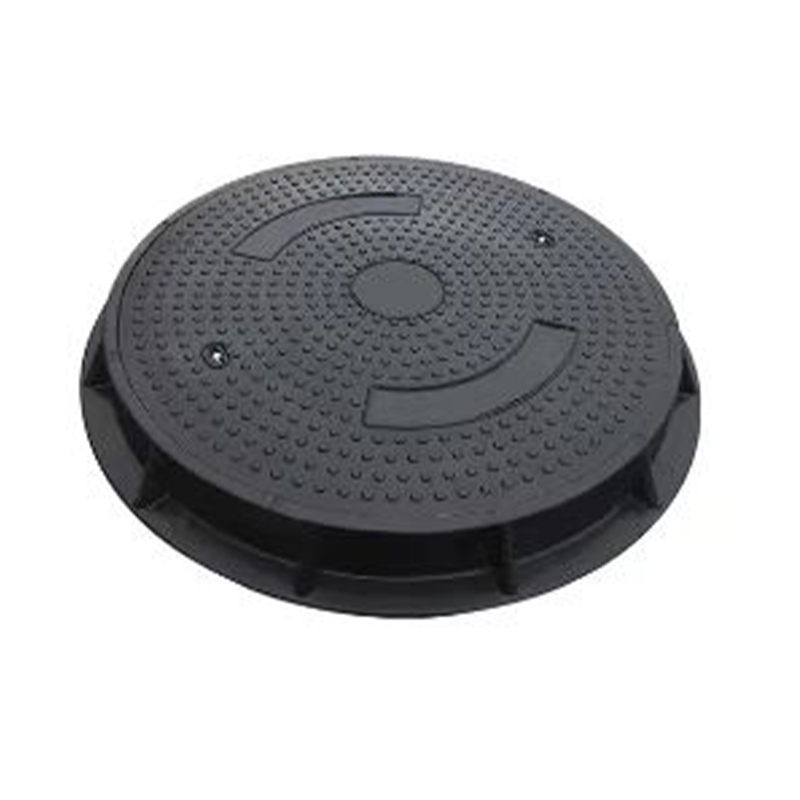
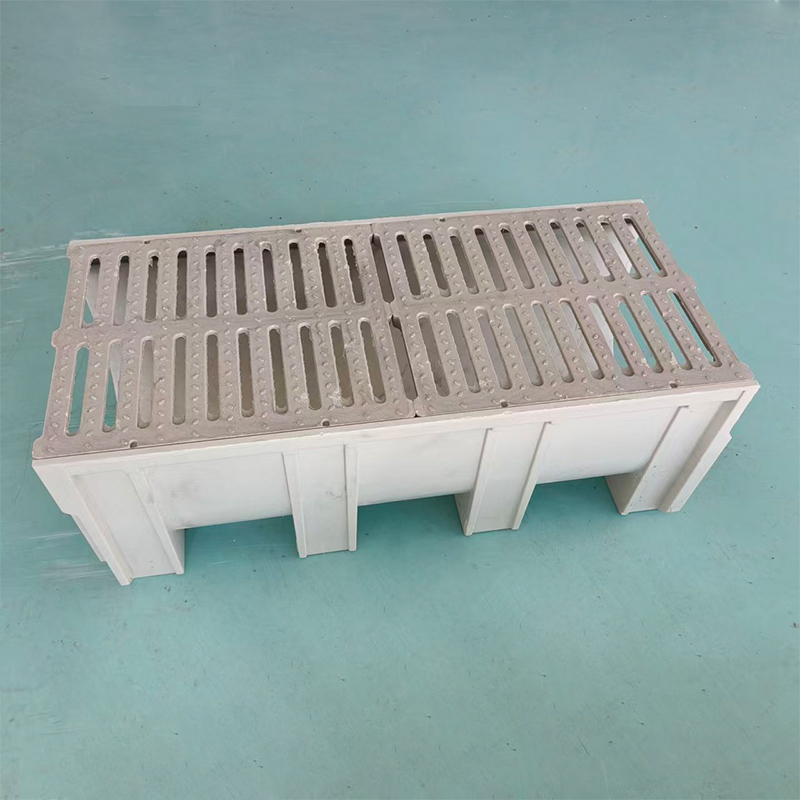
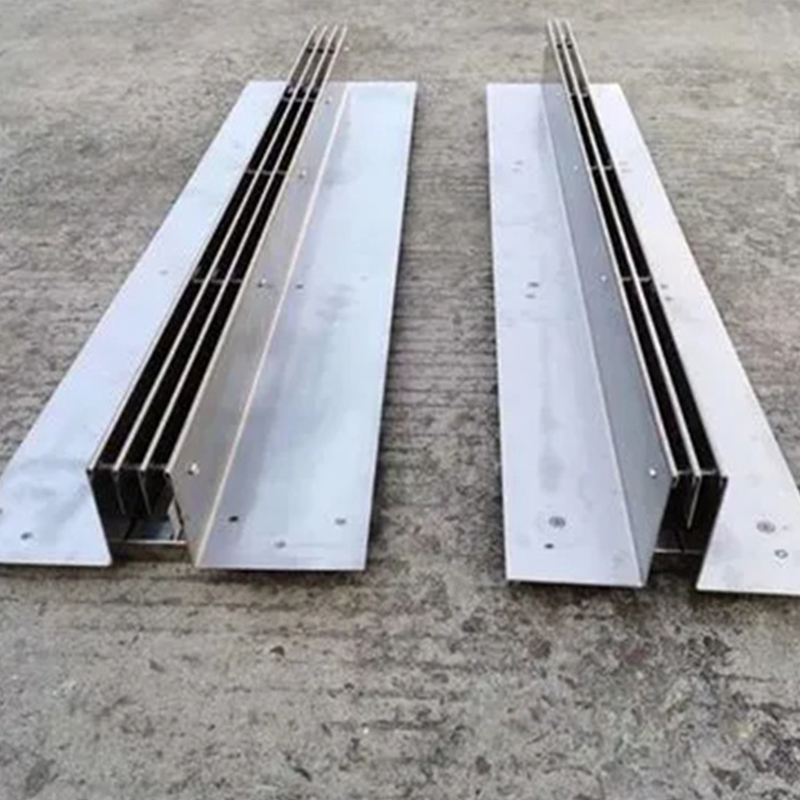
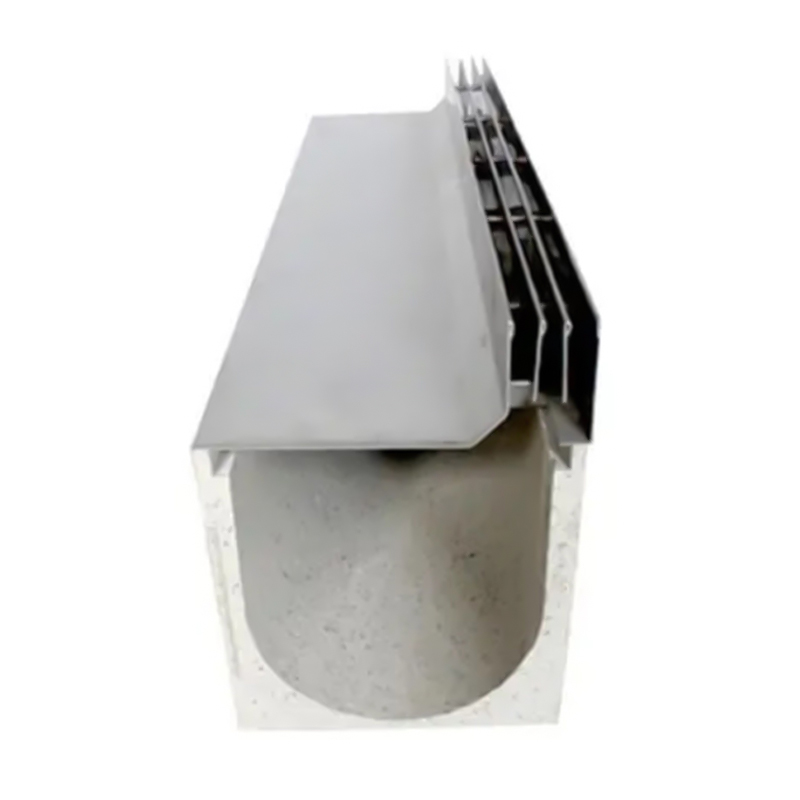
The company’s product range includes linear drainage ditches, finished drainage ditches, polymer-based drainage ditches, slot drainage ditches, U-shaped drainage ditches, ductile iron cover plates, stainless steel stamped cover plates, steel gratings, resin concrete cover plates, resin composite manhole covers, stainless steel manhole covers, ductile iron manhole covers, drainage pipes, PE pipes, and related products. This broad portfolio demonstrates manufacturing versatility and familiarity with construction-sector requirements.
For the GRC series, the company is supported by professional designers, mold designers, CNC engravers, and experienced production and construction technical teams. The service chain includes detailed design, drawing development, mold making, production, on-site construction, and after-sales support. This integrated service model is important because GRC molding is often project-specific. A supplier that understands design, manufacturing, and installation can help clients avoid communication gaps.
The company emphasizes integrity, responsibility, focus, and innovation. These values are reflected in its commitment to product research and development, customized service, and quality-based production. By serving both domestic and international markets, the company is positioned to respond to diverse project requirements and performance expectations.
One of the reasons GRC molding has become popular in architectural decoration is its design flexibility. Easy-Install Sectional GRC Molding can be adapted to different façade languages. In classical architecture, it can create depth, shadow, rhythm, and ornament. In modern architecture, it can form clean horizontal or vertical lines, emphasize building proportions, and create refined transitions between surfaces.
For hotels and commercial buildings, decorative molding can help establish a high-end visual identity. For residential communities, it can improve façade richness and market appeal. For villas and cultural buildings, it can reproduce classical details without the burden of heavy stone carving. For renovation projects, lightweight sectional GRC can upgrade existing exteriors without imposing excessive additional load.
Customization is especially valuable when projects require unique profiles. The company’s design and mold capabilities allow components to be developed according to drawings or project concepts. This means the product is not limited to standard catalog shapes. It can be used for project-specific cornices, wall bands, frames, curved features, and decorative panels.
Construction efficiency is one of the strongest selling points of this product. Many exterior decorative systems fail not because the material is poor, but because the installation process is too complicated, labor-intensive, or sensitive to site conditions. Easy-Install Sectional GRC Molding is engineered to reduce these problems.
Because the product is sectional and lightweight, installers can move components without relying heavily on cranes or other lifting equipment. This is particularly beneficial on urban sites, narrow roads, renovation projects, and areas where equipment access is restricted. Reduced equipment dependence can lower rental costs, reduce scheduling conflicts, and improve safety.
The sectional design supports accurate splicing. Properly produced sections can be aligned to create continuous visual lines. Joint positions can be planned to match architectural rhythm or hidden in less visible areas. With correct installation and finishing, the final façade can appear unified and refined.
Faster handling, easier positioning, and planned modular installation all contribute to a shorter construction period. For commercial projects, faster façade completion can support earlier building handover. For developers, time savings can translate into financial advantages. For contractors, simplified installation reduces labor pressure and improves productivity.
Oversized decorative elements often require highly specialized lifting and installation methods. Sectional GRC molding lowers the technical barrier by making each component easier to position and fix. This does not eliminate the need for skilled installation, but it makes the process more manageable and repeatable. The result is a more reliable project outcome.
Exterior building components must perform over many years. They are exposed to rainwater, moisture, wind pressure, heat, cold, sunlight, dust, and pollutants. In some regions, freeze-thaw cycles place additional stress on materials. A decorative product must therefore be more than attractive at delivery. It must remain stable after installation.
GRC’s reinforced structure helps resist cracking and deformation. The glass fibers improve tensile resistance, while the cementitious matrix provides mineral durability and fire resistance. When products are correctly designed, manufactured, cured, installed, and maintained, GRC moldings can provide long service life with stable appearance.
Waterproof performance is also essential. Exterior moldings must be detailed to prevent water accumulation and infiltration. The product itself offers good water and weather resistance, and proper joint treatment further improves façade performance. This combination supports a durable exterior system.
Initial purchase price is only one part of construction cost. A building material also affects transport, lifting, labor, installation time, maintenance, repair, and replacement risk. Easy-Install Sectional GRC Molding provides value across the project life cycle by reducing several hidden costs.
Transport can be easier because sectional pieces are more manageable. Site handling requires less heavy equipment. Labor productivity improves because workers can position components more efficiently. The risk of installation damage is reduced because smaller sections are easier to control. Maintenance needs are lowered because the material is durable, weather-resistant, and dimensionally stable. Over time, these advantages can make sectional GRC molding more economical than alternatives with lower initial prices but higher installation or maintenance costs.
For developers, the product also adds visual value. A well-designed façade can improve building recognition, customer perception, and property appeal. When aesthetic value is combined with efficient installation and long-term durability, the product becomes a strong investment for exterior decoration.
Easy-Install Sectional GRC Molding can be used in a wide range of building and construction contexts. Its combination of light weight, strength, and customization makes it suitable for both new construction and renovation.
Shopping centers, office buildings, hotels, and mixed-use developments often require distinctive façades. GRC molding can create entrance features, façade bands, cornice lines, window frames, and decorative transitions. The sectional design helps contractors complete large surfaces efficiently.
Residential façades benefit from decorative details that improve visual warmth and architectural order. GRC molding can be used around windows, rooflines, balconies, and wall divisions. Its durability helps maintain the community’s appearance over time.
For villas and classical-style projects, GRC molding can reproduce elegant profiles without the high cost and weight of carved stone. Columns, capitals, arch surrounds, cornices, and wall panels can be customized according to the design style.
Schools, cultural centers, municipal buildings, and transportation-related facilities require reliable exterior materials. GRC’s fire resistance, weather resistance, and solid appearance make it a practical choice for public architecture.
Renovation projects often face load limitations, limited site access, and tight schedules. Lightweight sectional GRC molding can upgrade building appearance while reducing structural and installation challenges.
Although this article focuses on GRC molding, the manufacturer’s broader experience in drainage channels and road-related facilities is also relevant. Drainage products require accurate forming, load considerations, water management understanding, and material durability. These competencies support disciplined production thinking that can also benefit GRC architectural components.
The company’s experience with drainage ditches, cover plates, manhole covers, and related construction products demonstrates familiarity with real site conditions. This practical background helps the team understand that building products must be easy to install, reliable under environmental exposure, and consistent in quality. For clients seeking both drainage channel products and GRC decorative elements, the company can provide a broader construction product solution.
A product’s performance is tied to the philosophy of the manufacturer. Integrity means providing products that match promised specifications and serving customers honestly. Responsibility means paying attention to project requirements and after-sales needs. Focus means concentrating on product quality, manufacturing details, and construction practicality. Innovation means improving designs, processes, and product systems to meet changing market needs.
These values are important in customized GRC production. Every project may require different dimensions, profiles, installation conditions, and finish expectations. A responsible supplier must communicate clearly, produce accurately, and support the customer throughout the project. By combining technical service with manufacturing capacity, the company strengthens the reliability of the Easy-Install Sectional GRC Molding solution.
When selecting sectional GRC molding for a project, decision-makers should consider several key factors. First, the architectural style should be clearly defined so that the profile, scale, and surface finish match the building concept. Second, installation conditions should be reviewed, including wall structure, working height, equipment access, and fixing method. Third, joint positions should be planned to balance construction convenience and visual continuity. Fourth, surface coating or finishing requirements should be coordinated with the overall façade system. Fifth, the supplier’s design and manufacturing capability should be evaluated, because customized GRC quality depends heavily on technical execution.
Easy-Install Sectional GRC Molding performs best when these considerations are addressed early. The manufacturer’s ability to provide design, drawing, mold, production, construction, and after-sales support helps clients make informed decisions and reduce project risk.
GRC molding is designed for durability, but proper care helps maintain its appearance. Regular visual inspection can identify joint sealant aging, coating damage, or localized impact marks. Cleaning should be performed with suitable methods according to the surface finish. Harsh chemicals or aggressive mechanical cleaning should be avoided unless approved for the coating system. If small surface defects appear, timely repair can prevent further deterioration.
Because the product is sectional, maintenance or replacement of localized areas can be more convenient than with oversized components. This modular benefit supports long-term façade management and helps preserve the building’s exterior quality.
Easy-Install Sectional GRC Molding stands out because it addresses the practical problems of exterior decoration. It is not only attractive, and it is not only strong. It is designed around the full construction process: design, production, delivery, installation, and long-term use.
Its sectional design improves handling and installation efficiency. Its GRC material provides fire resistance, waterproof performance, weather resistance, and dimensional stability. Its refined finish supports both classical and modern architecture. Its customization capability allows project-specific profiles. Its manufacturing process is supported by professional design, mold making, CNC engraving, production control, construction experience, and after-sales service.
Compared with competitors using heavy stone, ordinary concrete, lightweight foam-based systems, or less fire-resistant decorative materials, this product offers a more balanced solution. It helps reduce labor costs, shorten schedules, improve façade quality, and maintain long-term performance.
It is a modular exterior decorative molding made from Glass Fiber Reinforced Concrete. It is designed in sections for easier handling, faster installation, and accurate splicing while providing a durable and refined architectural appearance.
The sectional design reduces component weight and makes manual handling easier. It helps eliminate or reduce dependence on heavy lifting equipment, improves site efficiency, supports accurate alignment, and shortens the construction period.
Yes. High-quality GRC has strong weather resistance, waterproof performance, fire resistance, and dimensional stability. When properly installed and maintained, it is suitable for exterior façade decoration in various environments.
Natural stone has a premium appearance but is heavy, expensive, and difficult to install. Sectional GRC molding provides a stone-like mineral character with lower weight, better shape flexibility, easier installation, and more efficient customization.
Yes. The product can be customized according to architectural drawings, façade requirements, and project-specific profiles. The manufacturing process includes detailed design, mold design, CNC engraving, mold making, production, and technical support.
It can support European classical, neoclassical, modern minimalist, commercial, residential, villa, public building, and renovation styles. It can be formed into decorative lines, cornices, frames, columns, panels, and other façade features.
Yes. Because the sections are easier to move, position, and splice, installation can be completed more efficiently. Reduced lifting equipment demand and faster workflow can help lower total labor and construction costs.
The product is supported by professional designers, mold designers, CNC engraving capability, experienced production teams, construction technical teams, and a complete service process from design to after-sales support.
GRC is based on inorganic cementitious materials and has strong fire-resistant characteristics. This gives it an advantage over many decorative materials that contain higher amounts of combustible polymers.
Clients should confirm the required profile, dimensions, architectural style, installation conditions, joint layout, surface finish, project schedule, and technical drawings. Early communication helps ensure accurate production and smooth installation.
Easy-Install Sectional GRC Molding is a high-value solution for architectural exterior decoration. It combines the durability and fire resistance of cement-based composite materials with the efficiency of modular sectional design. Its lightweight construction reduces handling difficulty, while its precise splicing supports smooth façade continuity. Its resistance to cracking, deformation, water, weather, and fire makes it reliable for demanding exterior applications.
The product’s advantages are strengthened by the manufacturer’s integrated capabilities in design, mold development, CNC engraving, production, construction support, and after-sales service. With experience in drainage channel products and GRC customization, Jiangsu Yameng Traffic Road Facilities Co., Ltd. offers practical manufacturing knowledge and project-oriented service. For contractors, architects, developers, and building owners seeking a decorative exterior component that is beautiful, durable, efficient, and customizable, Easy-Install Sectional GRC Molding provides a competitive and dependable choice.
1. Bentur, A., and Mindess, S. Fibre Reinforced Cementitious Composites. Modern Concrete Technology Series.
2. PCI Committee on Glass Fiber Reinforced Concrete Panels. Recommended Practice for Glass Fiber Reinforced Concrete Panels.
3. GRCA. Specification for the Manufacture, Curing and Testing of Glassfibre Reinforced Concrete Products.
4. Neville, A. M. Properties of Concrete. Pearson Education.
5. ACI Committee 544. Guide for Fiber-Reinforced Concrete.
6. Allen, E., and Iano, J. Fundamentals of Building Construction: Materials and Methods.
Related Products
Engineered specifically for harsh environmental conditions, the Weatherproof Outdoor GRC door and wi...
READ MOREEngineered specifically for harsh environmental conditions, the Weatherproof Outdoor GRC door and wi...
READ MOREEngineered specifically for harsh environmental conditions, the Weatherproof Outdoor GRC door and wi...
READ MOREEngineered specifically for harsh environmental conditions, the Weatherproof Outdoor GRC door and wi...
READ MOREEngineered specifically for harsh environmental conditions, the Weatherproof Outdoor GRC door and wi...
READ MOREEngineered specifically for harsh environmental conditions, the Weatherproof Outdoor GRC door and wi...
READ MORE
Contact us
Factory Address
Group 12, Quanxin Village, Donghai Town, Qidong City, Nantong City, Jiangsu Province, China
phone
+86-13914963840
+86-13451754670
products
QR CODE
 Wholesale Drainage Ditch Manufacturers