 English
 Español
 عربى
عربى

Outdoor Weather-Resistant GRC Roman Columns are designed to combine classical elegance with modern d...
READ MOREJun 20, 2026
Content
Modern drainage infrastructure must do more than move water from one place to another. It must protect pavements, building foundations, industrial floors, public spaces, parking areas, logistics zones, and municipal roads from water accumulation, chemical attack, freeze-thaw damage, surface deterioration, and long-term maintenance costs. The waterproof resin drainage channel is designed for this demanding environment, combining a sealed channel body, high-density resin construction, modular installation, strong cover compatibility, and reliable hydraulic performance.
This article introduces the product’s structure, performance advantages, application value, specification range, manufacturing process, quality control system, and selection guidance. It also explains why resin drainage channels have become an important alternative to traditional concrete drainage ditch systems, metal channels, and basic plastic trench products. For projects that require strength, waterproof performance, corrosion resistance, clean appearance, and fast installation, this product provides a practical and efficient solution.
Waterproof resin drainage channel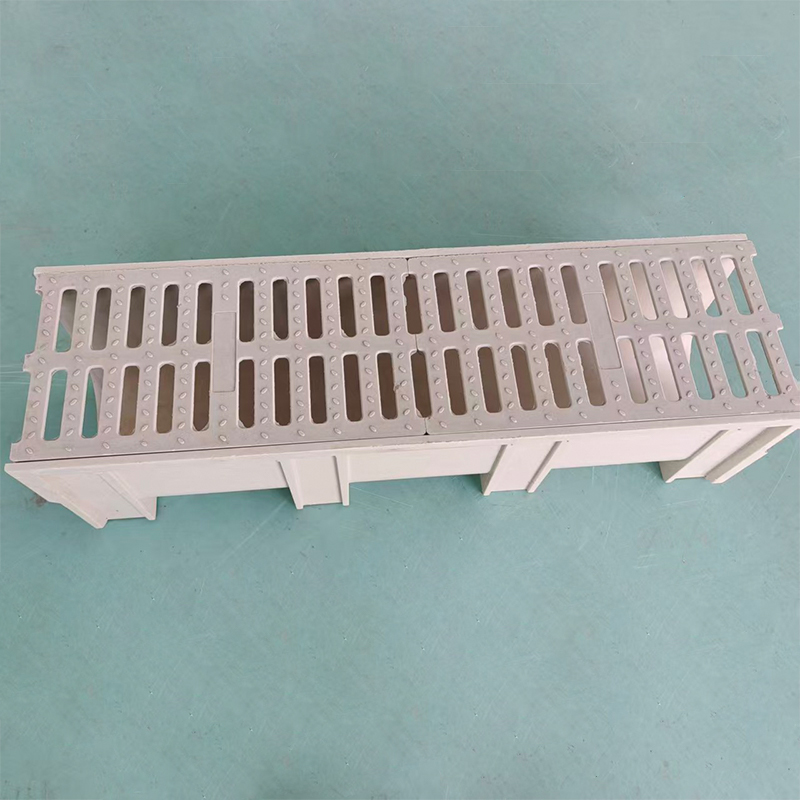
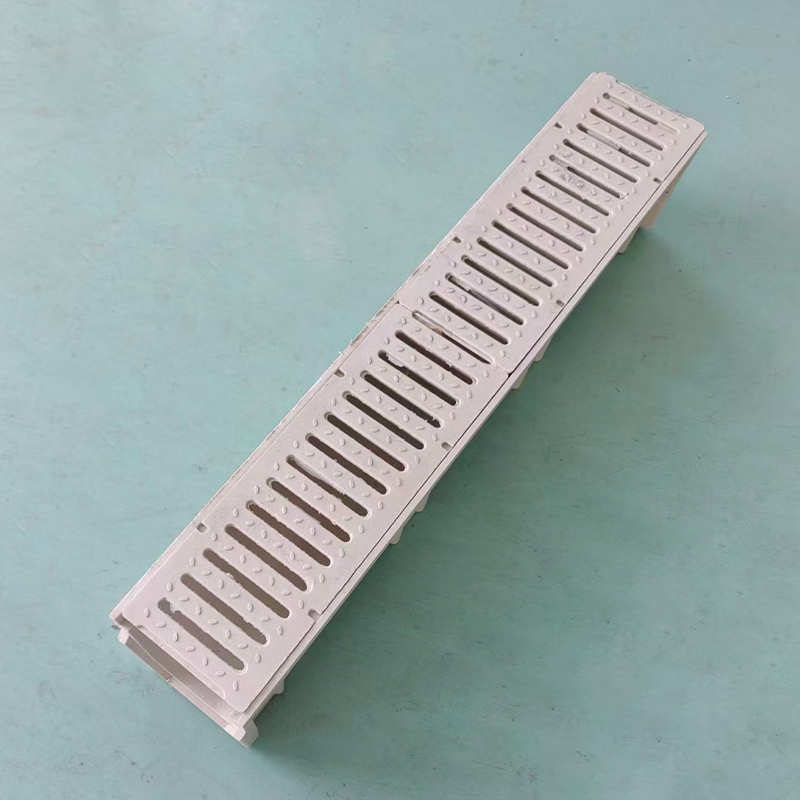
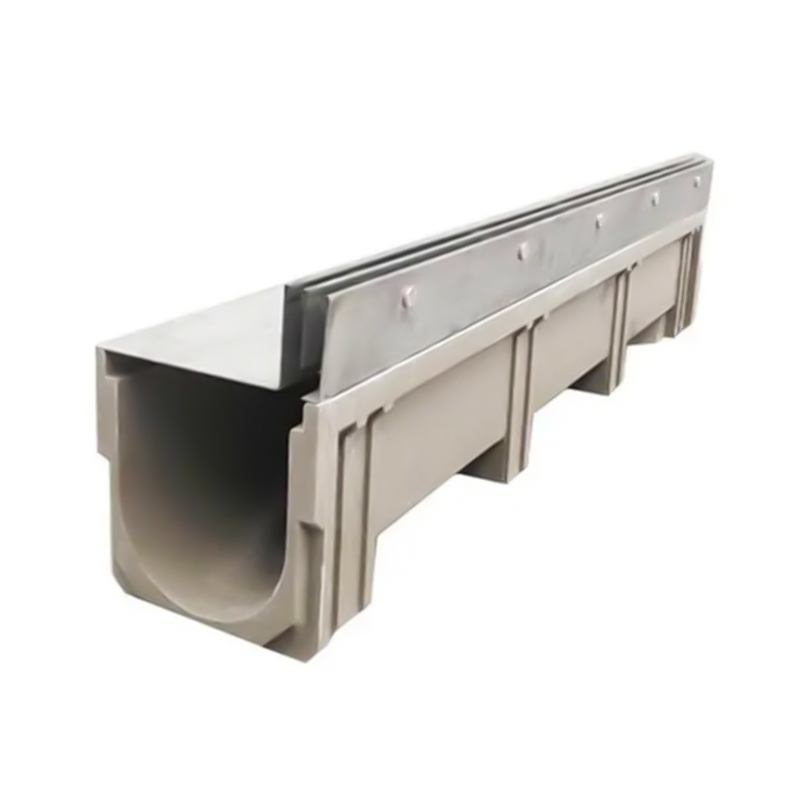
The waterproof resin drainage channel is a prefabricated linear drainage component used to collect and discharge rainwater, wastewater, surface runoff, and process water. It is commonly installed along roads, plazas, factory floors, parking lots, sidewalks, warehouses, stadiums, airports, and other places where fast and controlled drainage is required.
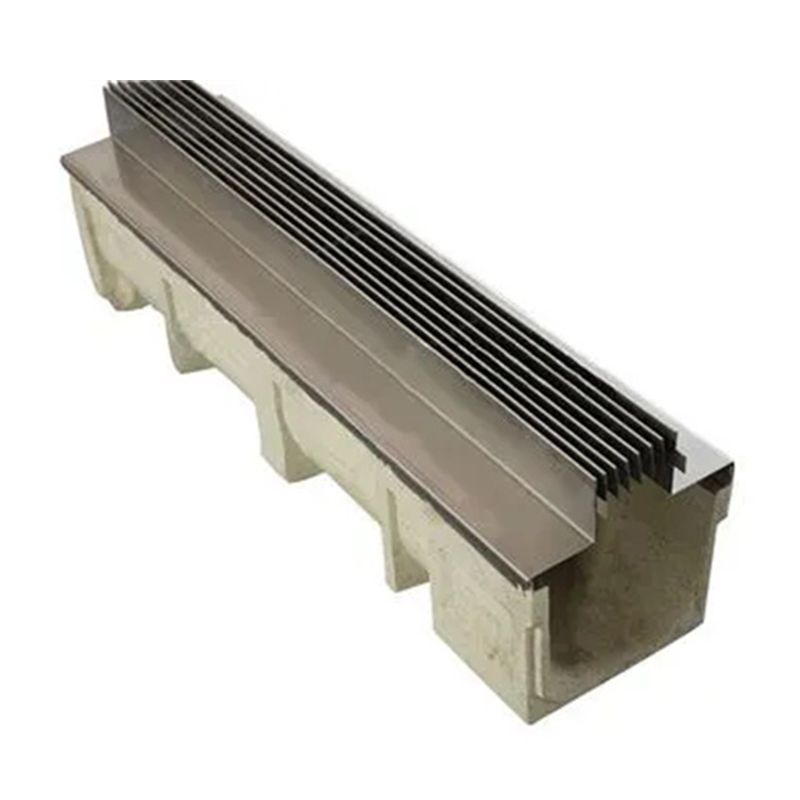
The product belongs to the resin drainage channel category and is part of a broader drainage channel series that may be matched with different cover plates, including resin covers, ductile iron covers, stainless steel covers, steel gratings, and other customized drainage cover solutions. Its core structure is a U-shaped channel body made from high-density resin material. This material provides a dense and low-absorption surface, helping prevent leakage and reducing the risk of water damage to the surrounding base layer.
The drainage channel is designed with a modular length, commonly 1000 mm, allowing contractors to connect multiple channel units in a continuous line. This modular system makes installation easier, supports flexible site layouts, and reduces the need for complicated cast-in-place trench construction. Depending on project requirements, users can select different internal widths, outer widths, heights, and cover sizes to match drainage volume, load requirements, surface finish, and site conditions.
Compared with ordinary cement drainage ditches, the waterproof resin drainage channel offers better impermeability, higher chemical resistance, a smoother water passage, and lower long-term maintenance demand. Compared with light-duty plastic channels, it provides stronger structure, better dimensional stability, and improved resistance to pressure and environmental aging. Compared with fully metal drainage channels, it has stronger resistance to rust and chemical corrosion while maintaining an attractive and functional appearance.
The most important feature of this drainage channel is its waterproof performance. A drainage system is expected to remove water, but if the channel body itself absorbs water, cracks, or leaks into the subgrade, it can create hidden problems below the surface. Water may weaken pavement foundations, cause settlement, damage concrete bases, corrode reinforcement, or create long-term structural instability.
The resin drainage channel uses a sealed design and high-density resin construction to reduce leakage risk. Its compact material structure helps prevent rainwater, wastewater, or industrial liquid from penetrating through the channel body. This is especially important for areas such as underground parking lots, industrial plants, chemical handling zones, municipal plazas, and building entrances where water seepage can cause expensive repair work.
Traditional concrete drainage ditches may be porous if not treated carefully. Even when coated, the coating can wear or crack over time. Resin material offers inherent low water absorption, which means the waterproof property is built into the body rather than relying only on a surface layer. This gives the product a long service life and stable drainage performance.
Drainage channels are exposed to many aggressive substances. In municipal projects, channels may contact road salt, oil, dirt, organic matter, and acidic rainwater. In industrial projects, they may contact weak acids, alkalis, cleaning agents, chemical splashes, or wastewater. Outdoor systems must also resist ultraviolet exposure, temperature changes, humidity, and abrasion caused by sediment and debris.
The waterproof resin drainage channel is resistant to acids, alkalis, salts, and general weathering. It is not easily affected by rust, scaling, or surface erosion. Unlike ordinary steel products, it does not require anti-rust coating maintenance. Unlike conventional concrete products, it has stronger resistance against chemical attack and lower risk of surface powdering. Unlike low-grade plastic drainage products, it has better rigidity and long-term dimensional stability.
Weather resistance also supports stable performance in exposed outdoor environments. The material resists cracking, warping, and aging under normal service conditions. This helps the channel maintain its shape, connection accuracy, and hydraulic capacity over time.
Construction efficiency is a major factor in drainage project cost. Traditional cast-in-place drainage ditches require excavation, formwork, reinforcement, concrete pouring, curing time, surface finishing, and waterproofing. This process is time-consuming and heavily dependent on on-site workmanship. In contrast, prefabricated resin drainage channels are manufactured in controlled factory conditions and delivered to the site as finished components.
The channel body is lighter than many traditional concrete alternatives, making handling, positioning, alignment, and connection easier. Workers can install units quickly in a prepared trench, adjust levels, connect the channel line, and mount the selected cover plate. The modular system allows straight runs, customized combinations, and practical adaptation to site dimensions.
Because each unit is factory-made, dimensional accuracy is more consistent. This improves installation quality and reduces the risk of uneven channel lines, poor cover fit, or drainage obstruction. Reduced labor time and shorter construction cycles are particularly valuable for municipal road renovation, commercial plaza projects, logistics warehouses, and industrial plants where downtime must be minimized.
A drainage ditch is not only a waterway; it is also a structural component embedded in a traffic surface. It may be crossed by pedestrians, bicycles, forklifts, cars, delivery trucks, maintenance vehicles, or heavy industrial equipment. Therefore, a reliable drainage channel must distribute loads effectively and maintain structural integrity under repeated pressure.
The waterproof resin drainage channel is designed to provide strong load-bearing performance when properly installed with a suitable base and cover plate. The channel body geometry helps distribute loads to the surrounding concrete foundation, while compatible cover plates provide surface support for different traffic conditions. The product can be used in roads, parking lots, industrial areas, public facilities, and other areas requiring both drainage and load resistance.
For higher traffic grades, the selection of cover plate is critical. Resin covers may be suitable for certain pedestrian or light-duty applications, while ductile iron covers, steel gratings, or reinforced cover plates may be selected for heavier loads. This flexibility gives designers the ability to adapt one drainage channel system to many project conditions.
Durability is one of the strongest reasons to choose a resin drainage channel. A drainage system installed below a finished pavement is not easy to replace, so long service life is essential. High-density resin material resists corrosion, moisture penetration, and environmental aging, reducing the frequency of maintenance and replacement.
The product is also environmentally practical because a longer service life means fewer repairs, less construction waste, lower replacement frequency, and reduced resource consumption over the project life cycle. The material can be recyclable depending on local processing conditions, and the modular design supports efficient installation with less formwork waste compared with cast-in-place systems.
For project owners, environmental performance is not only about material origin. It also includes durability, maintenance reduction, efficient construction, and protection of surrounding structures. A drainage system that prevents water damage helps preserve pavement layers, foundations, and public infrastructure, indirectly reducing future material use and repair emissions.
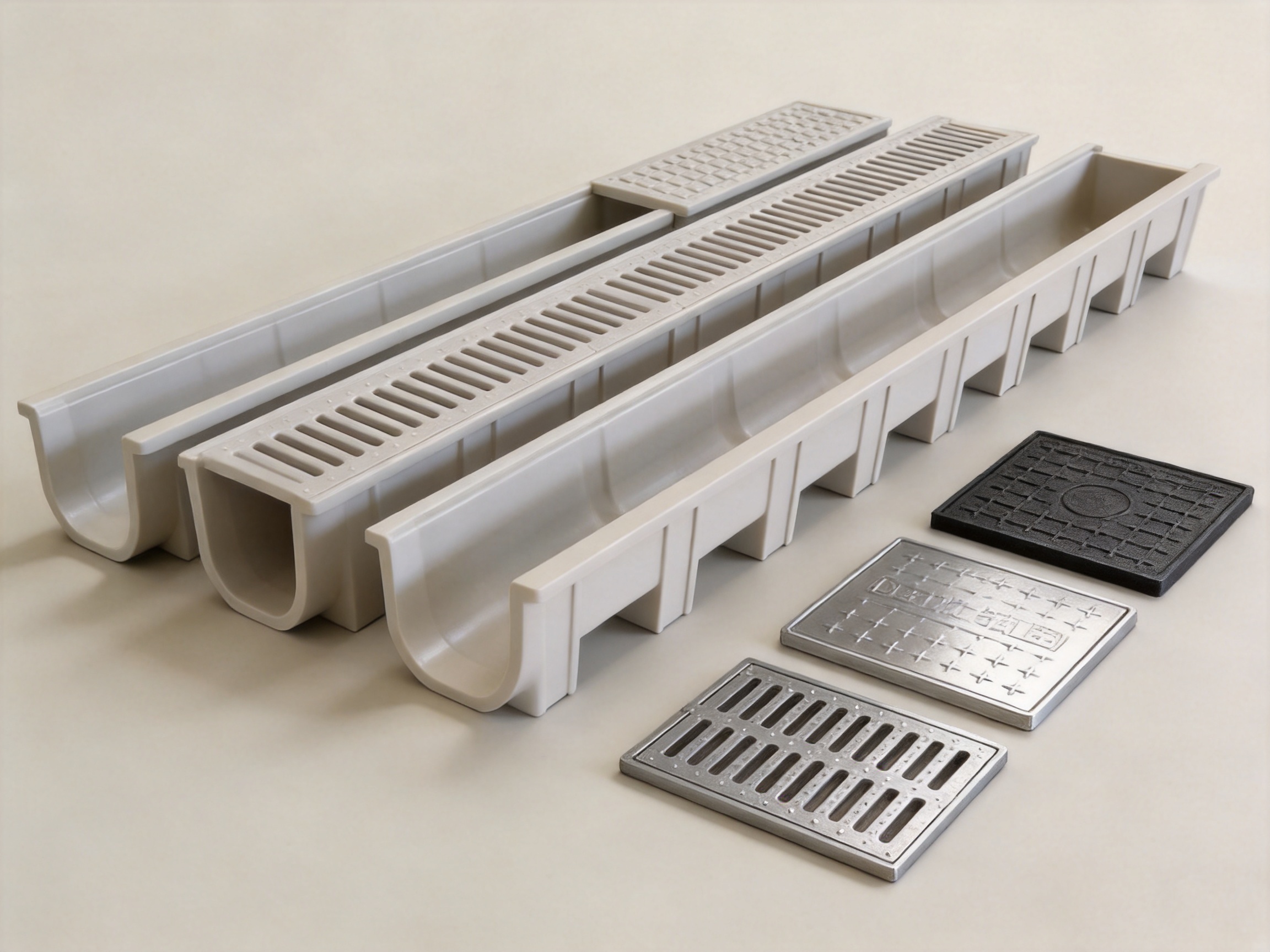
Municipal drainage systems require reliability, safety, and easy maintenance. The waterproof resin drainage channel can be installed along roads, sidewalks, plazas, parks, pedestrian streets, and rainwater collection systems. Its smooth inner surface helps guide water rapidly to collection points, reducing surface ponding and improving pedestrian and vehicle safety.
Urban environments often face heavy rain events, frequent traffic, sediment accumulation, and changing weather conditions. A strong resin drainage channel resists these stresses while offering a neat surface appearance when paired with suitable cover plates. The system can be designed as a visible linear drainage line or integrated into surrounding paving for a clean architectural effect.
Industrial environments often demand higher chemical resistance and load-bearing capacity than ordinary residential or landscape projects. The waterproof resin drainage channel is suitable for factory floors, logistics warehouses, chemical plants, workshops, equipment areas, loading docks, and process drainage lines. It can help collect wastewater, cleaning water, rainwater entering doorways, or surface runoff from production areas.
In industrial sites, ordinary concrete trenches may deteriorate when exposed to chemicals or frequent cleaning. Metal channels may corrode if protective coatings are damaged. Resin drainage channels offer a practical balance of corrosion resistance, strength, and installation efficiency. With the correct cover plate, they can support forklifts, carts, pallet trucks, and other routine industrial traffic.
Public facilities such as parking lots, airport runways, stadiums, bus stations, railway station plazas, school grounds, hospitals, and commercial complexes need drainage systems that are safe, durable, and easy to maintain. Water accumulation in these areas may create slipping hazards, vehicle control risks, surface damage, and user inconvenience.
The waterproof resin drainage channel provides a clean and reliable drainage line for large paved surfaces. Its modular structure allows designers to plan long drainage runs or localized collection points. A wide range of channel depths and widths allows the product to be matched to expected rainfall volume, catchment area, and installation depth.
The product series includes many sizes to meet different hydraulic and structural requirements. Common channel specifications are expressed in the format of inner width, total height, and length. A typical product length is 1000 mm. Internal widths range from compact 80 mm channels to larger 500 mm drainage channels. Heights range from shallow 60 mm units to deep 600 mm units, depending on drainage volume and installation requirements.
The following table summarizes representative specification options and cover dimensions. Actual selection should consider drainage flow rate, slope, cover load grade, installation base, traffic type, and project design standards.
| Drainage Channel Spec | Inner Width | Outer Width | Outer Height | Resin Cover Size Per Piece |
| U80-60-1000 | 80 mm | 110 mm | 60 mm | 600-100-10 mm |
| U100-100-1000 | 100 mm | 150 mm | 100 mm | 500-115-20 mm |
| U130-200-1000 | 120 mm | 170 mm | 200 mm | 500-170-20 mm |
| U150-300-1000 | 150 mm | 190 mm | 300 mm | 500-170-20 mm |
| U200-250-1000 | 200 mm | 240 mm | 250 mm | 500-220-20 mm |
| U250-350-1000 | 250 mm | 290 mm | 350 mm | 500-270-20 mm |
| U300-400-1000 | 300 mm | 340 mm | 400 mm | 500-325-30 mm or 500-320-20 mm |
| U400-500-1000 | 400 mm | 460 mm | 500 mm | 500-441-30 mm or 500-430-30 mm |
| U500-600-1000 | 500 mm | 580 mm | 600 mm | 500-550-30 mm |
For small pedestrian areas, narrow channels such as U80 or U100 series may be appropriate when rainfall intensity and catchment area are moderate. For commercial plazas, parking lots, and light vehicle areas, U150, U200, and U250 series channels can provide greater hydraulic capacity. For industrial floors, road edges, large public spaces, or heavy runoff areas, larger U300, U400, or U500 channels may be selected.
Channel depth affects storage volume and hydraulic discharge. A deeper channel can handle larger water flow and may allow better connection with outlet pipes. However, installation depth, surrounding structural conditions, and excavation limits must also be considered. The ideal size is not always the largest product; it is the product that matches the required drainage capacity while fitting the construction environment and budget.
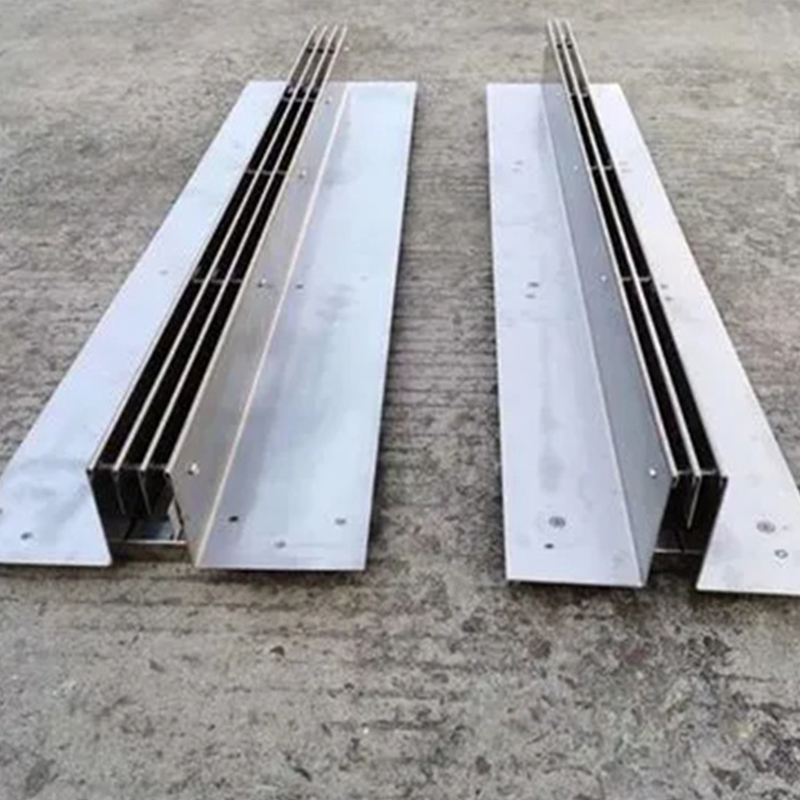
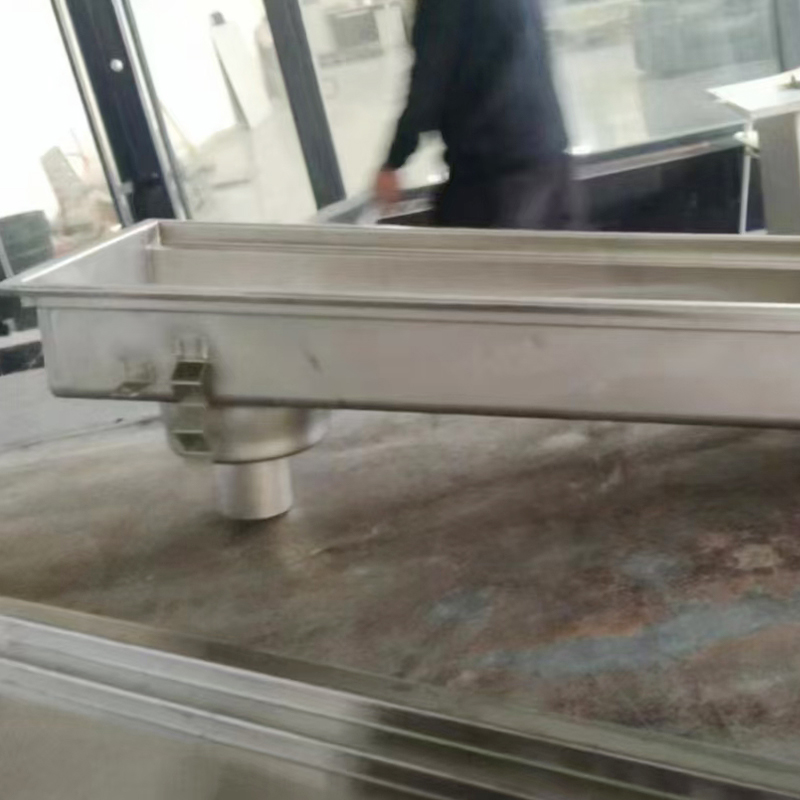
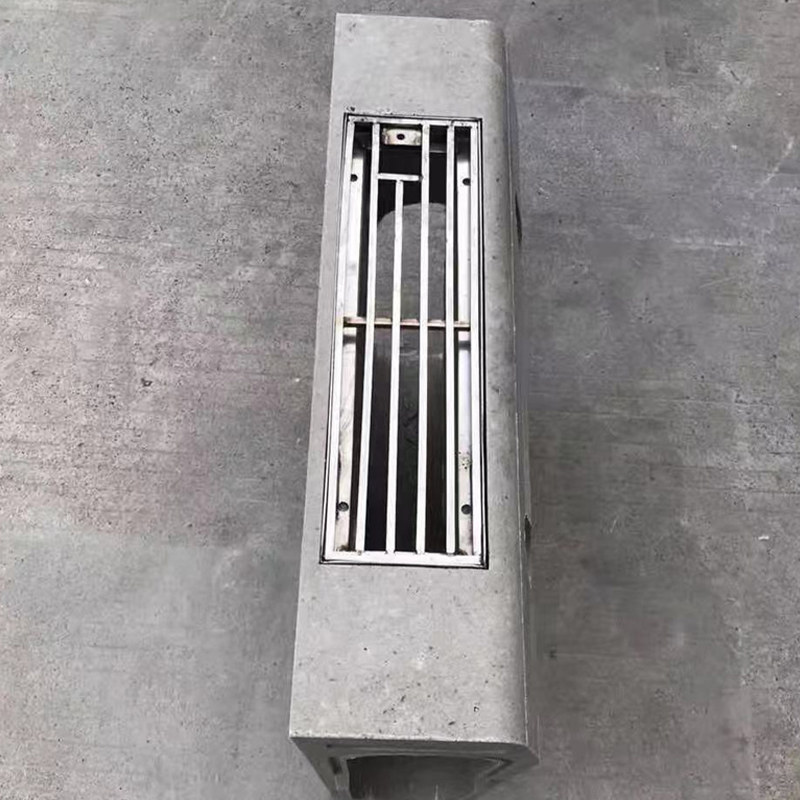
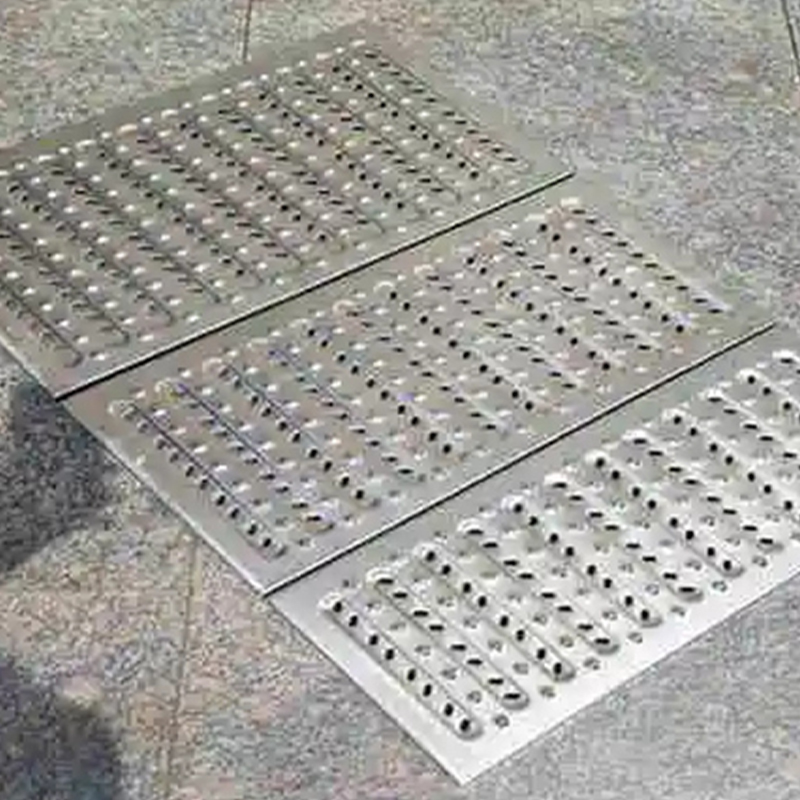
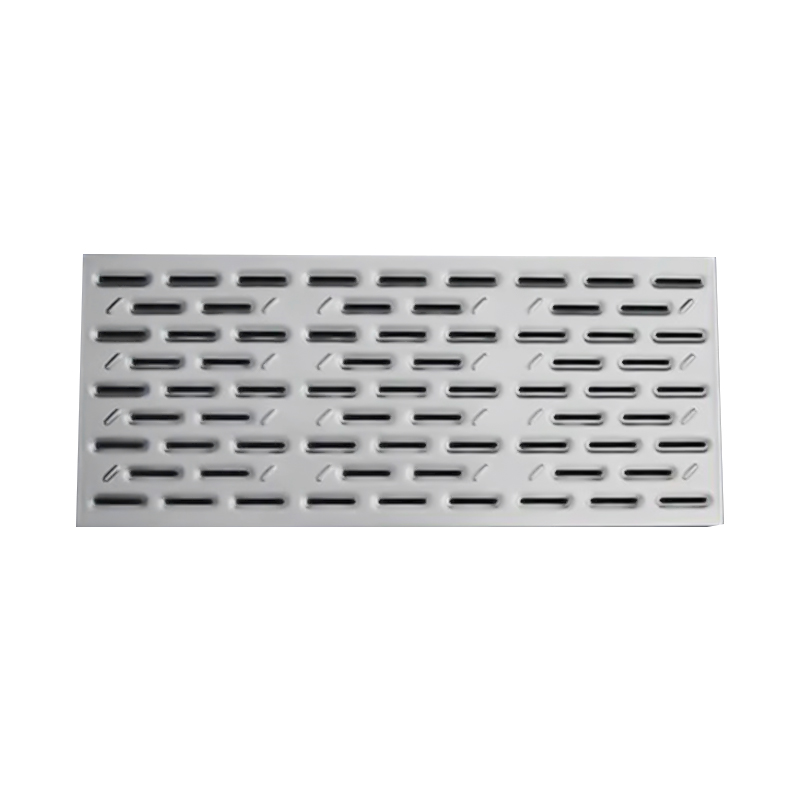
Cover plate selection is equally important. Cover thickness, material, and opening design influence load resistance, water intake rate, safety, appearance, and maintenance convenience. Resin covers offer corrosion resistance and integrated appearance. Ductile iron covers provide excellent strength for vehicle traffic. Stainless steel stamped covers can deliver a clean architectural finish. Steel gratings support high water intake and heavy-duty applications. Resin concrete cover plates provide durable performance in compatible design conditions.
Traditional concrete drainage ditches have been used for decades, but they have limitations in waterproofing, construction speed, chemical resistance, and dimensional consistency. Cast-in-place concrete depends heavily on site labor, weather, curing conditions, concrete mix quality, and workmanship. If the surface is not compacted or cured correctly, cracks, leakage, and rough internal surfaces may occur.
The waterproof resin drainage channel is factory-produced, which means material proportioning, mold accuracy, curing conditions, and product inspection can be controlled before delivery. This improves consistency and reduces construction uncertainty. A smooth inner wall allows better water flow and easier cleaning than many rough concrete trenches. Lower water absorption reduces the risk of seepage into the surrounding base.
Concrete channels may also suffer from chemical corrosion in environments exposed to acid, alkali, salt, or industrial wastewater. The resin material provides stronger resistance to many common corrosive substances. This makes the product particularly suitable for chemical plants, industrial cleaning areas, parking lots where deicing salt is used, and coastal environments with salt exposure.
Another important difference is installation speed. Prefabricated resin channels are lighter and easier to handle than many concrete products. Contractors can install the channel line quickly, reducing road closure time, factory downtime, or disruption to commercial operations. For owners, fast installation can be as valuable as material performance because it reduces indirect costs.
Plastic drainage channels are often lightweight and low-cost, but they may not be suitable for demanding projects. Low-grade plastic can deform under heat, warp under load, become brittle under ultraviolet exposure, or fail when exposed to chemicals. In areas with vehicle traffic or industrial loads, inadequate rigidity can lead to cover movement, channel deformation, and surface failure.
The waterproof resin drainage channel provides a stronger and more stable alternative. It retains the installation convenience of prefabricated systems while offering improved structural integrity and long-term durability. Its dense resin material gives better resistance to environmental aging and mechanical pressure than many basic plastic products.
For projects where drainage failure would cause serious consequences, choosing a stronger resin system can reduce risk. A drainage channel embedded in a finished floor or paved road is not a component that should be selected only by lowest initial cost. Long-term performance, maintenance frequency, safety, and replacement difficulty should all be included in the decision.
Metal drainage channels can be strong, but they also have disadvantages. Steel may corrode when protective coatings are damaged. Stainless steel offers better corrosion resistance but can be expensive and may still require careful grade selection in chloride environments. Metal channels can also transmit noise when covers are crossed by vehicles if installation and locking systems are not optimized.
The resin drainage channel avoids rust and offers excellent chemical resistance in many environments. It can be paired with metal cover plates where high surface strength is needed, allowing the system to combine the corrosion-resistant channel body with the load-bearing benefits of ductile iron or steel covers. This hybrid approach is often more practical than using an all-metal drainage trench.
In architectural and public projects, resin channels can support clean surface integration while maintaining reliable drainage. Their modular form and compatible cover options provide design flexibility for both functional and visual requirements.
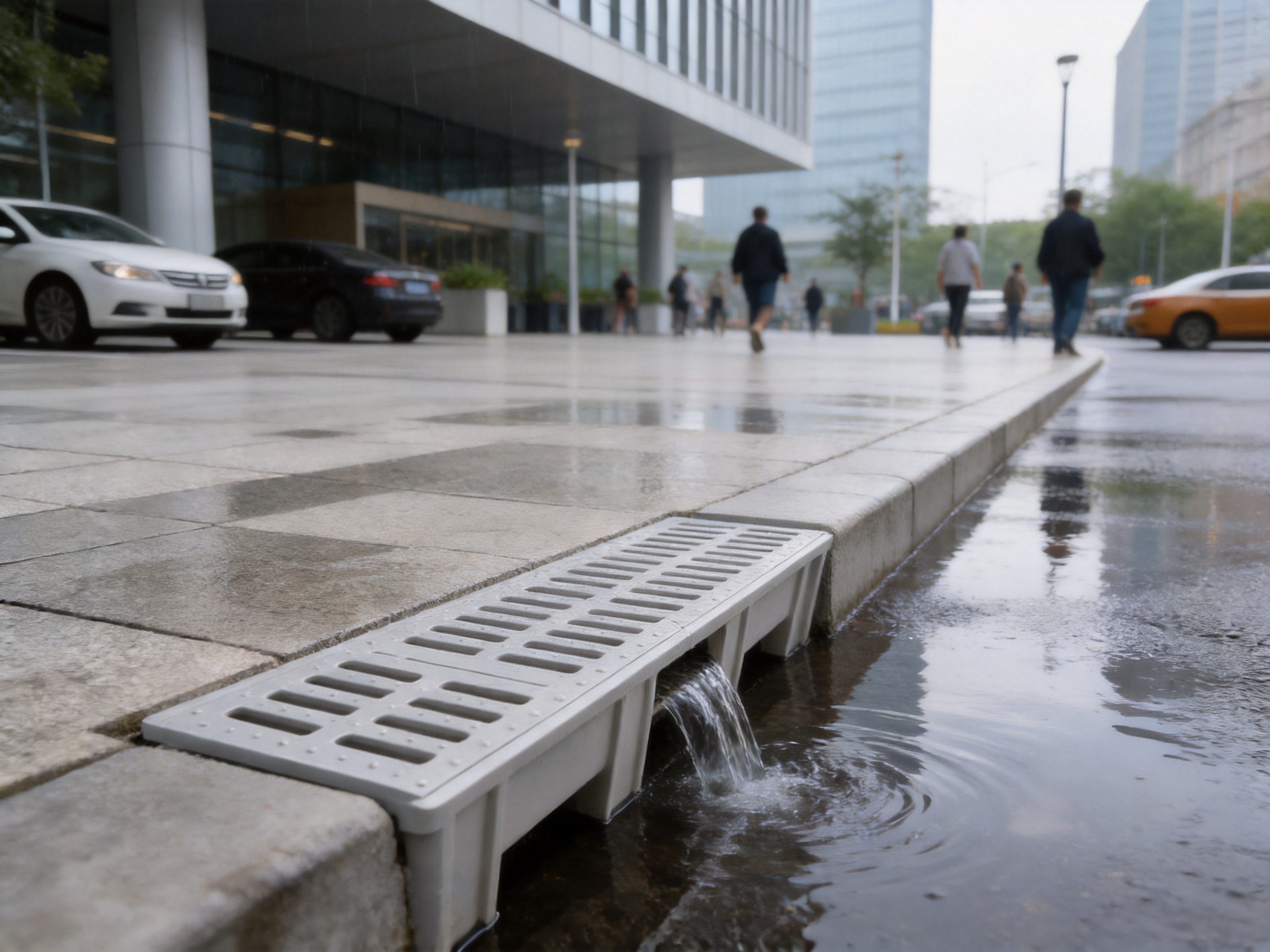
High-quality drainage channels begin with stable raw materials. The resin system must be selected for strength, waterproofing, chemical resistance, curing stability, and long-term durability. Aggregates and fillers, when used, must be graded and proportioned to achieve density, dimensional stability, and mechanical performance. Additives may be introduced to improve processing, curing, surface quality, or weather resistance.
Unlike ordinary site-mixed concrete, factory resin production allows strict control of material ratios. Accurate batching helps ensure each channel has consistent density, strength, and waterproof performance. The material formulation is designed to create a compact structure with low permeability, helping the finished product resist leakage and corrosion.
Mold accuracy is essential for modular drainage systems. If channel dimensions vary, installation becomes difficult, cover plates may not fit correctly, and joint alignment may be poor. The company supporting this product has professional mold designers and CNC engraving capability, allowing molds to be developed with precise geometry and repeatable dimensions.
CNC-assisted mold production improves the accuracy of channel profiles, cover seating areas, connection ends, and surface details. It also supports customization when special shapes, project-specific dimensions, or related GRC decorative components are required. Accurate molds help produce channels with consistent inner width, outer width, height, and cover compatibility.
During production, the mixed resin material is placed into prepared molds. Proper casting practice is necessary to avoid voids, weak areas, or uneven surfaces. Vibration, compaction, or controlled forming methods may be used to improve material density and surface finish. A dense body is important for waterproof performance, compressive strength, and impact resistance.
Good compaction also contributes to smooth internal walls. Smooth hydraulic surfaces reduce friction, improve water discharge, and limit sediment attachment. This means the drainage channel can maintain flow capacity more effectively and can be cleaned more easily during maintenance.
After forming, the channel body must cure under controlled conditions. Curing affects final strength, dimensional stability, surface hardness, and chemical resistance. Factory curing reduces the variability often seen in outdoor construction, where rain, temperature changes, and site contamination can affect concrete quality.
Once cured, products are removed from molds and inspected for appearance, dimensional accuracy, edge quality, and structural integrity. Stable curing ensures that the drainage channel can maintain its designed profile during storage, transportation, installation, and service.
After curing and inspection, channels may undergo finishing work to ensure clean edges, accurate cover seating, and suitable connection surfaces. Cover plates are matched according to channel size and project requirements. The system is then packaged for transportation, with attention to protecting edges and preventing damage during handling.
Professional packaging is important because drainage channels often arrive at large construction sites where multiple materials are handled at the same time. Proper stacking and protection help maintain product quality from factory to installation.
Jiangsu Yameng Traffic Road Facilities Co., Ltd. is located in Nantong, Jiangsu Province, China, with convenient transportation and waterway access. This location supports efficient raw material supply, product distribution, and project logistics. The company focuses on drainage ditch projects and GRC customization, combining product manufacturing with design and construction support.
The company’s product range includes linear drainage ditches, finished drainage ditches, polymer-based drainage ditches, slot drainage ditches, U-shaped drainage ditches, ductile iron cover plates, stainless steel stamped cover plates, steel gratings, resin concrete cover plates, resin composite manhole covers, stainless steel manhole covers, ductile iron manhole covers, drainage pipes, PE pipes, and related products. This broad product system allows customers to obtain channel bodies, cover plates, manhole covers, pipes, and related drainage components from one coordinated supplier.
For the GRC series, the company is supported by professional designers, mold designers, CNC engravers, and an experienced production and construction technical team. This capability is valuable not only for decorative GRC products but also for drainage projects that require detailed design, drawings, mold making, factory production, on-site construction, and after-sales service.
Advanced manufacturing strength is not only reflected in equipment. It is also reflected in the ability to understand project requirements, recommend appropriate products, control production quality, coordinate delivery, and provide practical technical support. Drainage products must fit real construction conditions, so communication between design, manufacturing, and installation teams is essential.
The company is committed to product research and development, with products sold in domestic and international markets. Its values of integrity, responsibility, focus, and innovation support long-term cooperation with contractors, distributors, municipal clients, industrial project owners, and construction companies.
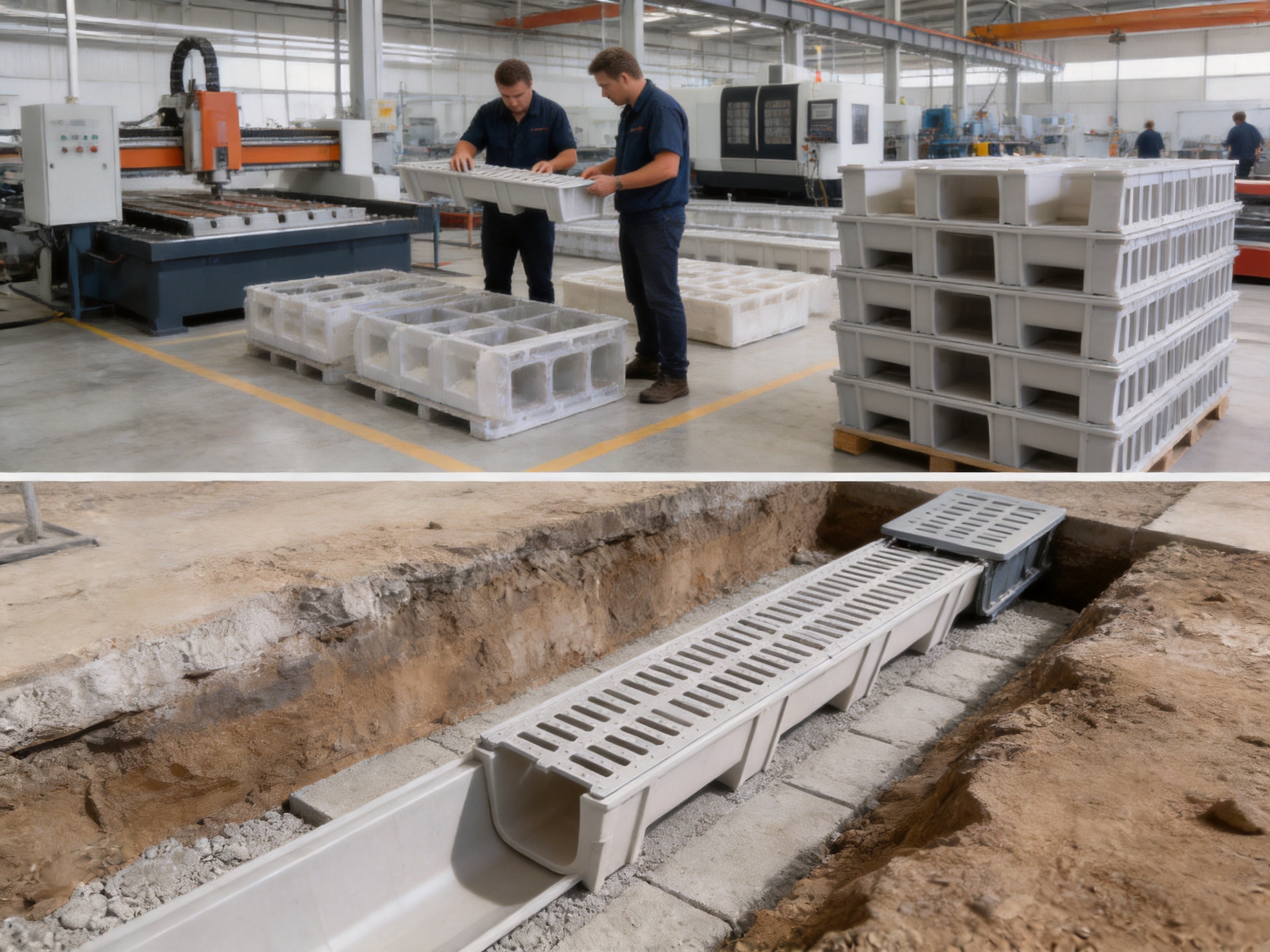
Correct installation is essential for any drainage channel system. Even a high-quality product may fail if installed without proper foundation, slope, alignment, or cover support. Before installation, the project team should review drainage design drawings, confirm channel size, verify outlet location, check pipe connections, and determine load requirements.
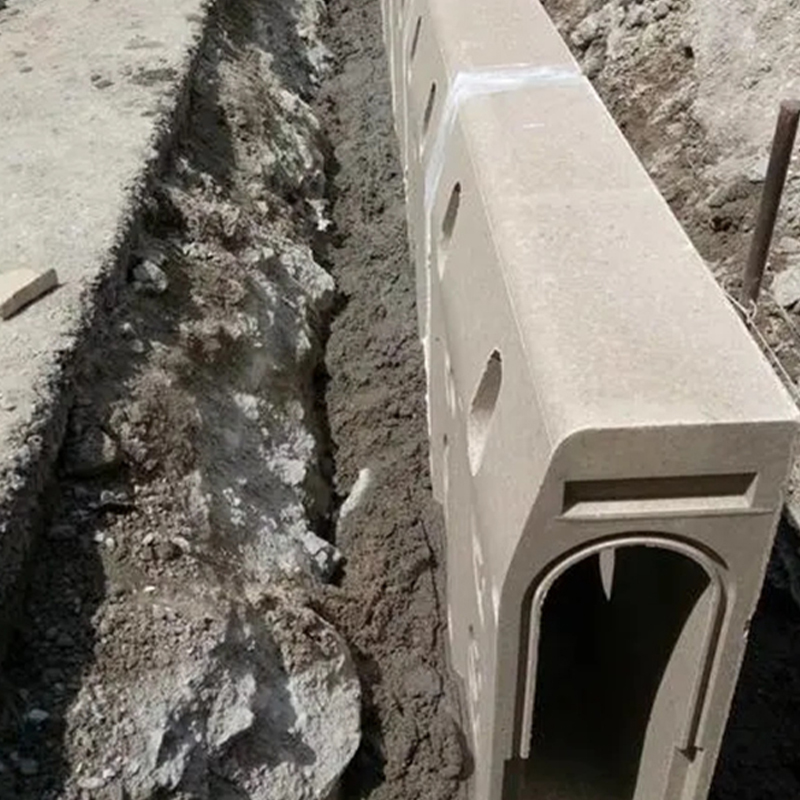
The trench should be excavated according to the designed width and depth, allowing enough space for the channel body and surrounding concrete support. The base should be stable, level, and properly compacted. A concrete bedding layer is typically used to support the channel and distribute loads. The channel units should be placed in sequence, aligned carefully, and set to the correct slope so water flows toward outlets.
Joint treatment should follow project requirements. A sealed or close-fit connection helps maintain waterproof performance and prevents soil migration into the system. Side concrete should be placed and compacted to support the channel body. The selected cover plate should be installed after the channel is positioned and supported. In vehicle areas, the cover should sit correctly and remain stable under traffic.
During paving or surface finishing, the top edge of the drainage channel and cover should be coordinated with the final ground level. If the channel is too high, it can become a tripping or impact hazard. If it is too low, surrounding pavement may retain water. Proper elevation control ensures both drainage efficiency and surface safety.
The waterproof resin drainage channel is designed to reduce maintenance, but all drainage systems require periodic inspection. Leaves, sand, sediment, packaging waste, oil sludge, and other debris may collect in the channel or cover openings. Regular cleaning helps maintain hydraulic capacity and prevents unpleasant odors or blockage.
Maintenance teams should remove covers when necessary, clean the internal channel, flush outlets, and inspect joints. In industrial environments, cleaning frequency should be adjusted according to wastewater type and sediment load. In public areas, seasonal maintenance before rainy periods can greatly improve drainage reliability.
The smooth internal surface of the resin channel makes cleaning easier than rough traditional concrete trenches. The corrosion-resistant body also reduces the risk of surface deterioration caused by cleaning chemicals or wastewater exposure. Because the product resists cracking, warping, and aging, it can provide long-term service when correctly installed and maintained.
Choosing a drainage channel requires more than selecting a product from a size list. Designers should first estimate runoff volume based on rainfall intensity, catchment area, surface slope, and local drainage regulations. The channel inner width and height should then be selected to provide sufficient flow capacity. Larger catchment areas and high rainfall intensity usually require wider or deeper channels.
Load condition is the second major factor. Pedestrian zones, bicycle lanes, parking lots, roads, logistics warehouses, and airport service areas all impose different loads. The channel body, cover plate, foundation, and installation method must work together as a system. Heavy traffic areas should use suitable heavy-duty covers and reinforced installation details.
Chemical exposure should also be considered. For chemical plants, workshops, food processing areas, coastal roads, or deicing salt environments, corrosion resistance is a major advantage of resin drainage channels. The selected cover material should also be compatible with the chemical environment.
Finally, designers should consider appearance and maintenance. Architectural plazas may prefer neat slot covers or stainless steel stamped covers. Industrial sites may prefer steel gratings for high intake capacity. Municipal roads may require ductile iron covers for durability. The resin channel body can be matched with these options to create a complete drainage solution.
It is a prefabricated linear drainage channel made from high-density resin material. It is designed to collect and discharge surface water while reducing leakage into the surrounding ground or structure.
It can be used in municipal roads, plazas, parking lots, industrial floors, logistics warehouses, chemical plants, stadiums, airport areas, public facilities, and other places requiring reliable waterproof drainage.
Resin offers lower water absorption, stronger chemical resistance, smoother inner walls, faster installation, and better dimensional consistency than many traditional concrete drainage ditches.
Yes, when properly installed with a suitable foundation and compatible cover plate, it can withstand pressure from vehicles, machinery, and pedestrian traffic. The final load capacity depends on the selected channel, cover, and installation method.
The series includes many sizes, with internal widths ranging from approximately 80 mm to 500 mm and heights from approximately 60 mm to 600 mm. Most channel units are 1000 mm long, with matching cover plate options.
Yes, the resin material resists many acids, alkalis, salts, and common corrosive substances. For special chemical exposure, project-specific confirmation is recommended.
Modular channel units are easier to transport, position, connect, and install. They reduce on-site forming work and shorten construction time compared with cast-in-place drainage ditches.
Depending on the project, the channel can be matched with resin covers, ductile iron covers, stainless steel stamped covers, steel gratings, resin concrete covers, and other compatible drainage cover plates.
Maintenance includes regular inspection, removal of debris, cleaning of the channel interior, flushing of outlets, and checking cover stability. The smooth resin surface makes cleaning convenient.
The manufacturer provides a broad drainage product system, professional design support, mold design, CNC engraving capability, production experience, construction technical service, and after-sales support. These strengths help customers receive coordinated drainage solutions rather than isolated components.
The waterproof resin drainage channel is a modern solution for projects that require dependable water collection, strong waterproofing, corrosion resistance, load-bearing capability, and efficient installation. Its high-density resin body reduces leakage risk, resists chemical and weather damage, and provides a smooth hydraulic path for effective drainage. The modular structure saves construction time, while the wide specification range supports applications from pedestrian plazas to industrial facilities and municipal roads.
Compared with traditional concrete ditches, it offers better waterproof performance, faster installation, and stronger chemical resistance. Compared with low-grade plastic channels, it provides improved strength and long-term stability. Compared with metal channels, it avoids rust and offers practical corrosion resistance while still allowing the use of metal covers when heavy-duty surface performance is required.
Supported by professional manufacturing, mold design, CNC capability, experienced technical teams, and a broad drainage product range, this drainage channel system is well suited for contractors, distributors, project owners, and engineers seeking reliable drainage ditch and cover plate solutions. For infrastructure that must remain safe, dry, durable, and cost-effective over many years, the waterproof resin drainage channel is a strong and forward-looking choice.
1. Construction Industry Research and Information Association. Sustainable Drainage Systems: Hydraulic, Structural, and Maintenance Principles.
2. American Concrete Institute. Guide to Durable Concrete and Surface Water Management in Infrastructure Projects.
3. European Committee for Standardization. Drainage Channels for Vehicular and Pedestrian Areas: Classification, Design, and Testing Concepts.
4. International Association for Hydro-Environment Engineering and Research. Urban Stormwater Drainage Design and Flow Management Guidelines.
5. Materials Performance Journal. Corrosion Resistance of Polymer-Based Materials in Civil and Industrial Drainage Applications.
6. Civil Engineering Handbook. Linear Drainage Systems, Load Transfer, Installation Practice, and Maintenance Planning.
Related Products
Outdoor Weather-Resistant GRC Roman Columns are designed to combine classical elegance with modern d...
READ MOREOutdoor Weather-Resistant GRC Roman Columns are designed to combine classical elegance with modern d...
READ MOREOutdoor Weather-Resistant GRC Roman Columns are designed to combine classical elegance with modern d...
READ MOREOutdoor Weather-Resistant GRC Roman Columns are designed to combine classical elegance with modern d...
READ MOREOutdoor Weather-Resistant GRC Roman Columns are designed to combine classical elegance with modern d...
READ MOREOutdoor Weather-Resistant GRC Roman Columns are designed to combine classical elegance with modern d...
READ MORE
Contact us
Factory Address
Group 12, Quanxin Village, Donghai Town, Qidong City, Nantong City, Jiangsu Province, China
phone
+86-13914963840
+86-13451754670
products
QR CODE
 Wholesale Drainage Ditch Manufacturers