 English
 Español
 عربى
عربى

Engineered to address the long-term challenges of chemical erosion and structural aging in architect...
READ MOREJun 04, 2026
Content
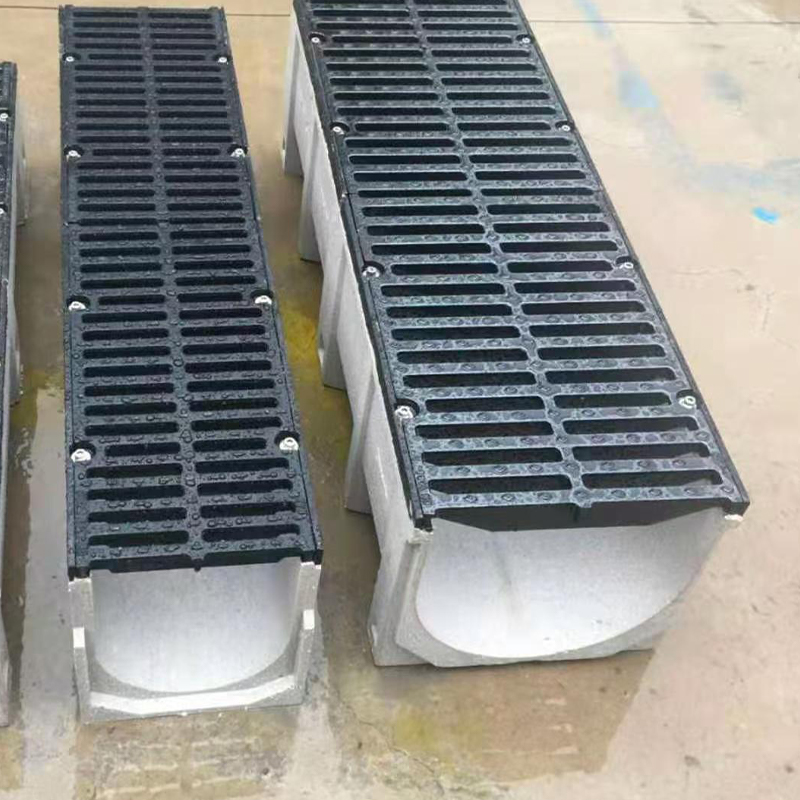
Modern urban construction, commercial development, and industrial infrastructure require drainage systems that do more than simply move water away from the surface. A reliable drainage channel must protect pedestrians from slips, support vehicle loads, resist long-term abrasion, and remain easy to maintain after years of use. The Anti-Slip and Wear-Resistant Linear Drainage Channel is designed for these practical demands. It combines a stable channel body, an anti-slip grating surface, efficient hydraulic performance, modular installation, and long service life, making it suitable for sidewalks, parking lots, driveways, commercial plazas, industrial sites, municipal roads, and other demanding drainage environments.
As part of the drainage channel series, this product reflects the growing trend toward safer, more durable, and more refined surface water management. Traditional open ditches, low-strength concrete trenches, or poorly designed cover plates often create maintenance problems, safety hazards, water accumulation, and premature damage. In contrast, a high-performance linear drainage channel provides a continuous collection path for rainwater and surface runoff, guiding water efficiently into the underground drainage network. With its anti-slip and wear-resistant features, this product is especially valuable in areas exposed to frequent pedestrian movement, vehicle passage, rain, dust, oil stains, and outdoor weathering.
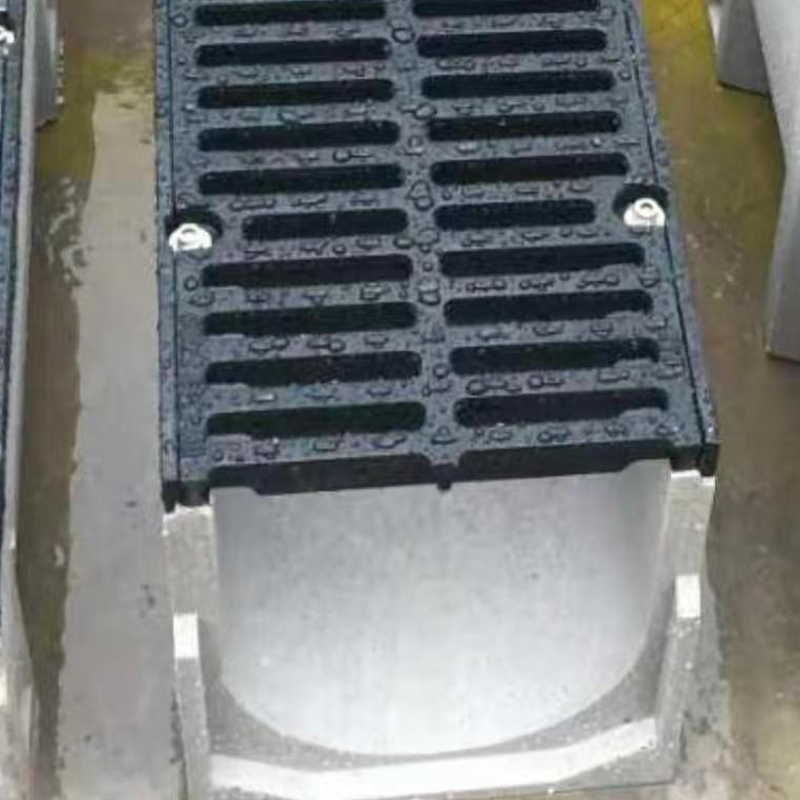
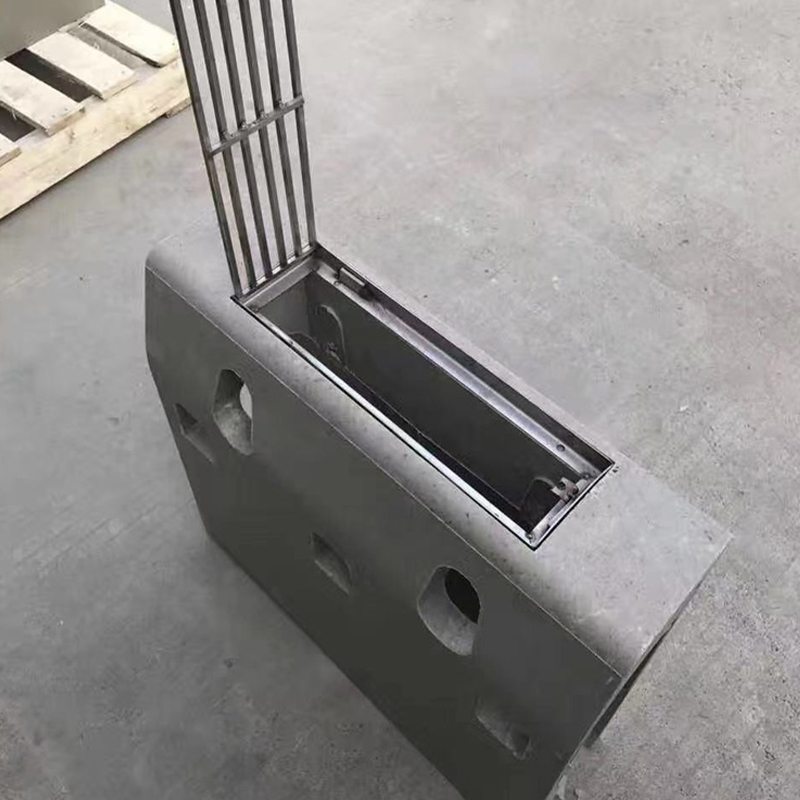
The product is manufactured with reinforced polymer concrete, stainless steel, ductile iron, resin concrete, or other selected materials according to project requirements. Its grating or cover plate is engineered to provide stable footing in wet conditions while resisting abrasion caused by repeated walking, rolling wheels, forklifts, small trucks, and cleaning equipment. The removable grate design allows easy cleaning, inspection, and maintenance, reducing labor costs and helping the entire drainage system maintain stable performance over time.
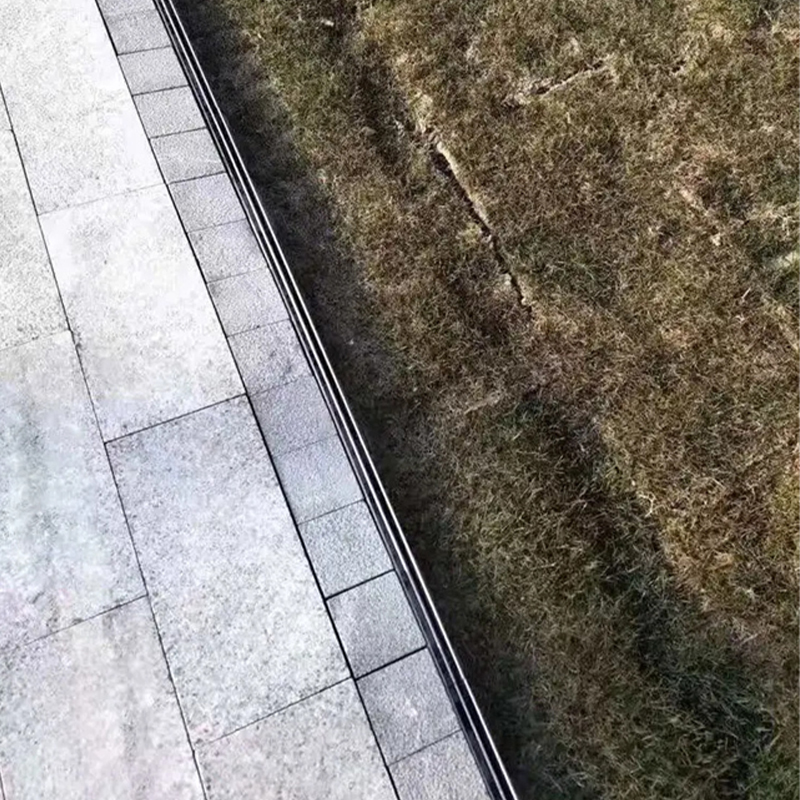
Anti-slip and wear-resistant linear drainage channel
The core purpose of the Anti-Slip and Wear-Resistant Linear Drainage Channel is to solve three problems at once: surface water accumulation, user safety, and long-term durability. In many public and industrial areas, drainage is not only a civil engineering issue but also a safety and operational issue. Standing water on a walkway can cause slipping. Puddles in a parking lot can damage pavement and inconvenience drivers. Water remaining near industrial entrances can carry sediment, oil, or chemical residues into work zones. A drainage channel that collects water quickly and maintains a secure surface helps reduce these risks.
Compared with isolated point drains, a linear drainage system provides a longer collection edge. This allows water to enter the channel across a wide surface instead of flowing toward a single drain point. The result is faster collection, reduced ponding, and improved surface flatness. This is especially useful in large paved areas such as commercial squares, warehouse yards, underground garage entrances, logistics roads, and pedestrian streets. Because the drainage channel is modular, it can be extended, adjusted, or combined with different cover plates to meet different flow rates, load requirements, and architectural styles.
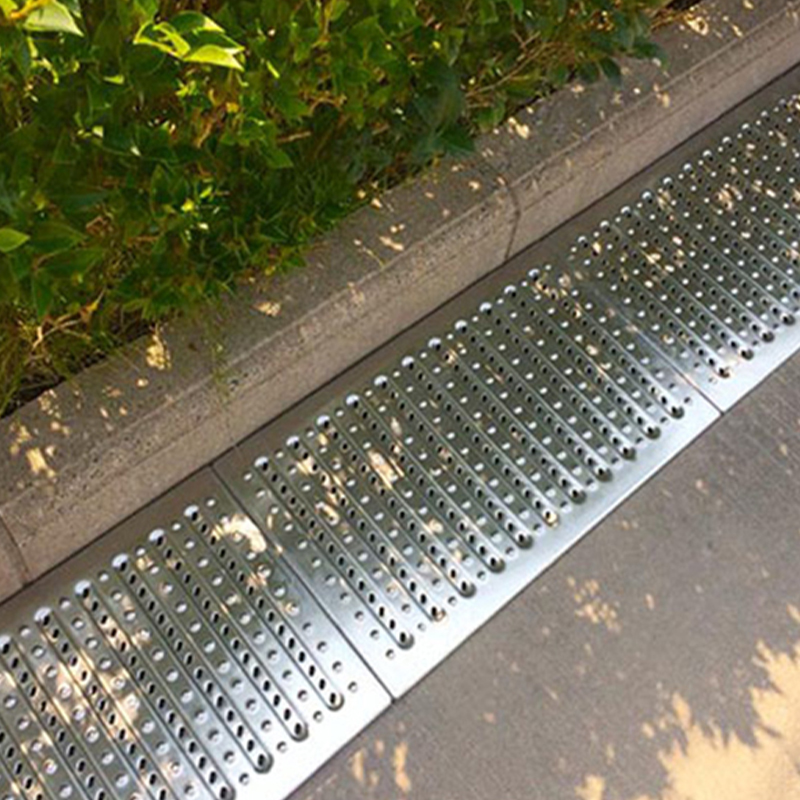
The anti-slip surface is one of the most important advantages of this product. A drainage cover is part of the walking or driving surface, so it must provide traction even when wet. Smooth metal covers or worn concrete edges can become dangerous during rain. The grating pattern, stamped texture, slot design, or raised surface structure of this product helps increase friction and reduce the chance of slipping. This feature is particularly important in schools, shopping centers, hospitals, residential communities, transport stations, and factory yards, where public safety and daily traffic reliability are critical.
Wear resistance is another defining feature. Drainage channels are often installed in places where surface loads and environmental exposure are constant. Wheels, shoes, sand, grit, cleaning tools, and moving equipment can wear down ordinary covers over time. A wear-resistant drainage channel maintains surface shape, load capacity, and appearance for a longer period. This lowers replacement frequency and reduces the total cost of ownership for construction contractors, municipal departments, property managers, and industrial operators.
The Anti-Slip and Wear-Resistant Linear Drainage Channel offers several practical advantages over common drainage alternatives. Conventional cast-in-place drainage ditches may require more labor, longer construction time, and more difficult quality control. Their dimensions depend heavily on site workmanship, and surface finishing may be inconsistent. In comparison, a prefabricated modular drainage channel offers stable dimensions, predictable installation, and improved appearance. Factory-controlled production allows the channel body and cover plate to meet defined tolerances before reaching the construction site.
Another advantage is the balance between hydraulic efficiency and surface safety. Some competitors focus only on water intake capacity but neglect the safety of the top surface. Others use narrow openings that look refined but do not drain quickly during heavy rainfall. This product is engineered to provide effective water flow while maintaining a practical anti-slip walking and driving surface. Its slots, gratings, internal gradients, and channel geometry can be selected according to the flow demand of the project.
Durability also sets this product apart. Low-quality drainage systems may crack, deform, rust, loosen, or produce noise after repeated traffic. A properly manufactured anti-slip and wear-resistant linear drainage channel uses reinforced materials and well-matched cover plates to resist mechanical stress and environmental corrosion. For outdoor applications, resistance to rain, sunlight, temperature changes, deicing salts, and chemical exposure can be critical. For industrial applications, resistance to abrasion, occasional impacts, and contaminated runoff can determine whether the drainage system remains functional for years.
Maintenance convenience is another competitive advantage. The removable grate or cover plate allows workers to remove sediment, leaves, plastic waste, stones, or other debris from the channel. When drainage channels are hard to open, cleaning is often delayed, eventually causing blockage and water accumulation. A removable, modular system encourages regular inspection and reduces the risk of emergency repair. In commercial sites, this means less disruption to visitors. In factories and logistics yards, it helps maintain smooth operation and workplace safety.
The modular structure also simplifies installation and future adjustment. Project designers can select different channel lengths, widths, depths, cover types, and outlet positions according to road slope, flow volume, pavement type, and load class. If a site expands in the future, additional channel sections can often be integrated into the drainage line. This flexibility gives the product an advantage over rigid, site-specific ditch systems that are difficult to modify once installed.
The performance of a drainage channel depends greatly on material selection. The channel body must resist compression, water exposure, freeze-thaw effects where applicable, chemical contact, and mechanical abrasion. The cover plate or grating must bear surface loads, maintain traction, resist deformation, and remain safe for pedestrians and vehicles. For this product, materials such as reinforced polymer concrete, resin concrete, stainless steel, ductile iron, and composite materials may be used based on application requirements.
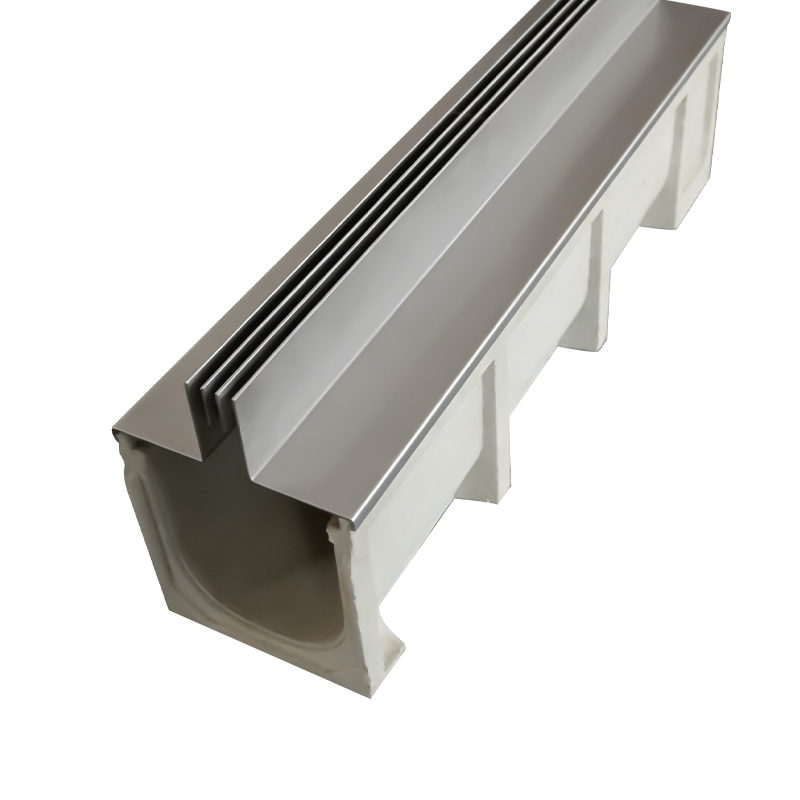
Reinforced polymer concrete and resin concrete are widely valued in modern drainage systems because they provide high strength, low water absorption, smooth internal surfaces, and good chemical resistance. Compared with ordinary cement concrete, polymer-based materials can offer improved density and more consistent quality when produced under controlled factory conditions. Their smooth channel interior helps water flow efficiently and reduces sediment adhesion. This is important for areas with high rainfall, sloped entrances, or frequent runoff containing sand and dust.
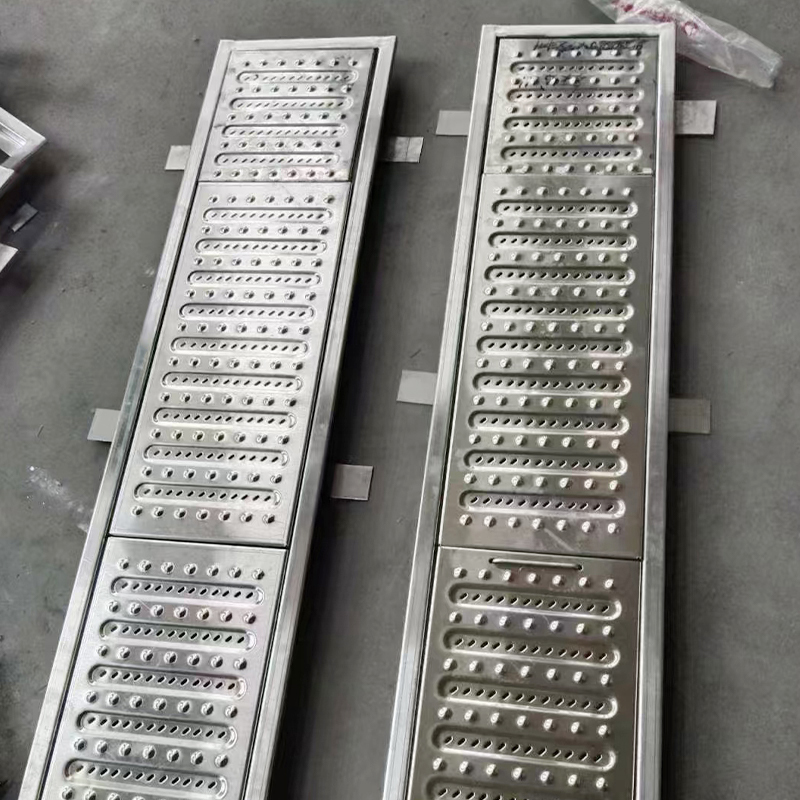
Stainless steel cover plates or stamped gratings are suitable for projects requiring corrosion resistance, refined appearance, and reliable surface texture. Stainless steel is commonly used in commercial complexes, food-related industrial areas, pedestrian zones, and architectural projects where both hygiene and appearance matter. Stamped anti-slip patterns increase traction while maintaining a clean modern look.
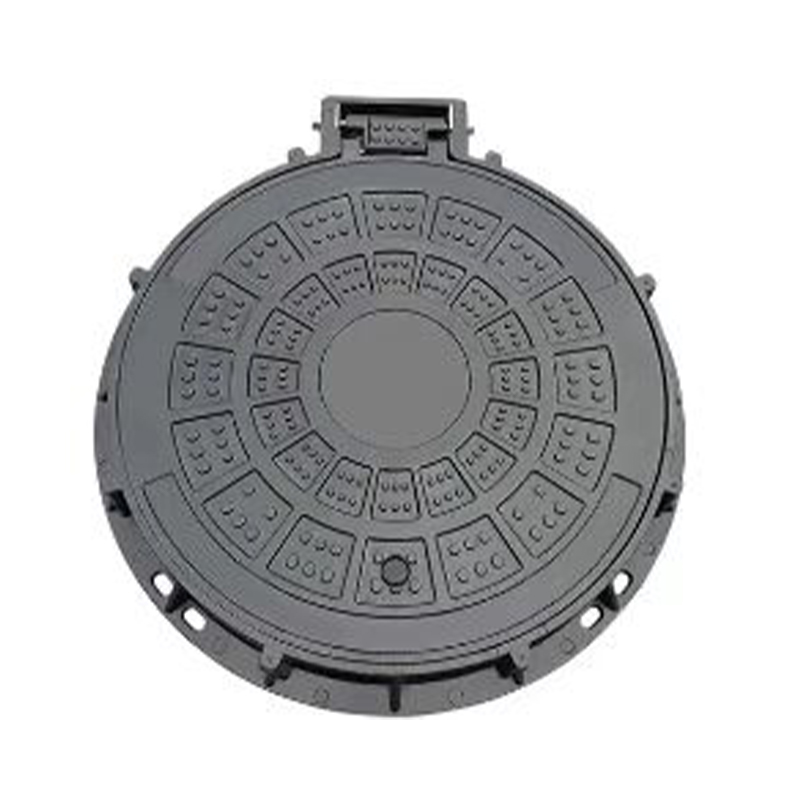
Ductile iron covers provide strong load-bearing performance and are commonly used in vehicle traffic areas. Compared with brittle cast iron, ductile iron has better toughness and impact resistance. Its surface can be designed with raised anti-slip patterns, drainage openings, or locking systems. For parking lots, municipal roads, and industrial yards, ductile iron cover plates can provide a strong and economical option.
Composite and resin-based covers may be selected where corrosion resistance, lower weight, electrical insulation, or reduced theft risk is important. In some environments, heavy metal covers may be difficult to handle during cleaning. A lighter composite cover can improve maintenance efficiency while still meeting load requirements when properly engineered.
Efficient water removal is the foundation of any drainage channel. The Anti-Slip and Wear-Resistant Linear Drainage Channel is designed to collect runoff rapidly and direct it toward outlets, inspection wells, or underground drainage pipes. The continuous linear opening allows water to enter along the entire length of the channel, reducing the distance that surface water must travel before being captured. This helps prevent puddles and reduces erosion or pavement damage caused by uncontrolled water flow.
The interior shape of the channel can influence water velocity and sediment movement. A smooth channel body reduces friction and supports stable flow. Suitable gradients can help water move naturally toward discharge points. In long drainage runs, designers may use deeper channels, stepped channels, or built-in slopes according to project conditions. The modular system allows these choices to be coordinated with site elevation and pavement design.
Surface openings must be carefully balanced. If openings are too large, they may create safety problems for pedestrians, bicycles, wheelchairs, or small wheels. If openings are too small, they may restrict water intake or clog easily. This product offers engineered slot and grating designs that support both water intake and surface safety. For pedestrian areas, narrower slot designs and smoother transitions may be preferred. For industrial or high-flow areas, larger grating openings may be selected to increase intake capacity.
Good drainage design also reduces long-term maintenance pressure. When water is removed quickly, pavement remains drier, freeze-thaw damage may be reduced, and sediment is less likely to spread across the surface. In parking lots and commercial plazas, this improves appearance and comfort. In industrial areas, it helps reduce slippery mud, oil-water mixing, and operational hazards. In municipal roads, it contributes to traffic safety during rainfall.
Anti-slip performance is not a decorative feature; it is a functional requirement. Drainage channels are often installed exactly where water is expected to flow, which means the cover surface is frequently wet. A smooth or worn surface can become hazardous, especially for pedestrians wearing flat shoes, elderly users, delivery workers, or staff moving quickly through a facility. Vehicles also benefit from improved surface traction, particularly at turning points, ramps, and entrance zones.
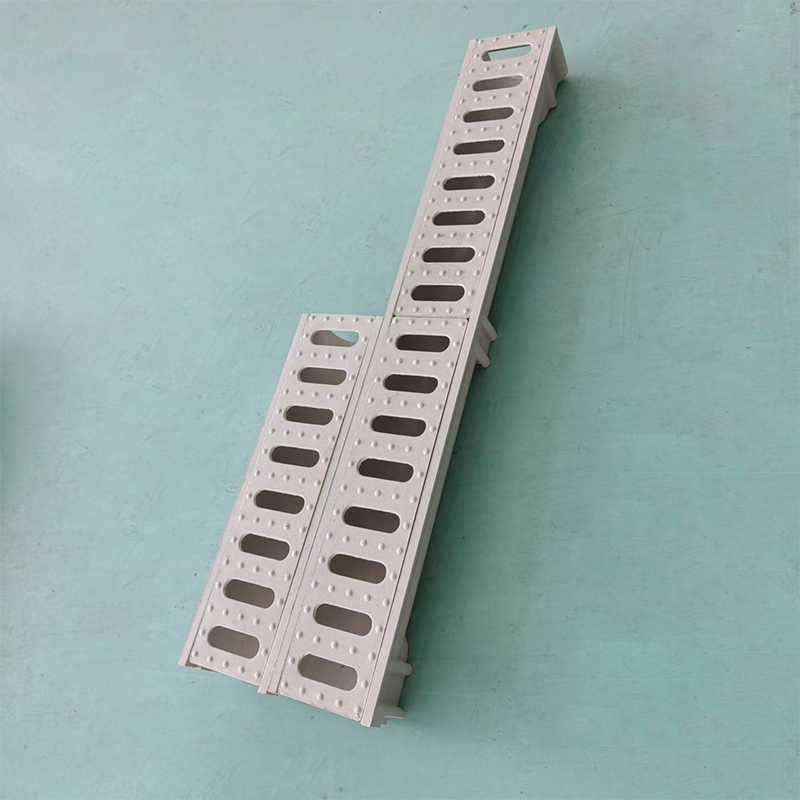
The grating design of the Anti-Slip and Wear-Resistant Linear Drainage Channel can include raised ribs, textured patterns, stamped surfaces, cross bars, slotted openings, or other traction-enhancing structures. These features increase contact friction between the surface and shoes or tires. In commercial areas, the anti-slip pattern can be selected to balance safety and appearance. In industrial areas, a more aggressive surface pattern may be used to handle heavy use, mud, oil, and abrasive particles.
Competitor products sometimes lose traction after extended use because the surface texture wears down. This product emphasizes both anti-slip structure and wear-resistant material. The combination ensures that safety performance does not disappear quickly under real-world traffic. For property owners and project contractors, this provides long-term value because the surface remains functional instead of requiring early replacement.
In public construction, safety-related product details can affect liability and reputation. A drainage cover that becomes slippery, loose, or uneven can create trip and slip risks. The linear drainage channel is designed to sit securely within the pavement structure, and the cover plate can be matched with stable support edges. Proper installation helps maintain flush alignment with surrounding surfaces, reducing trip hazards and improving user comfort.
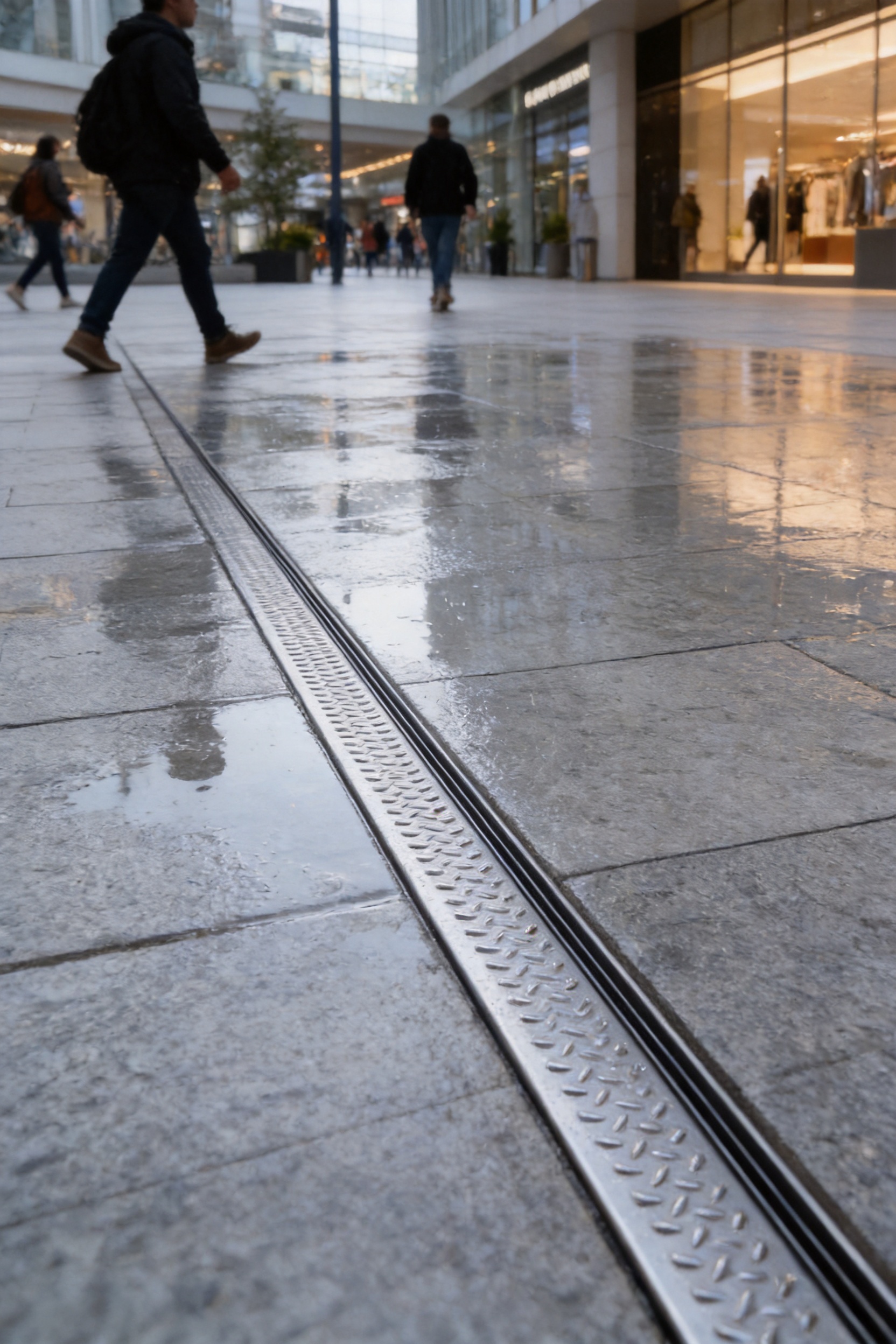
Wear resistance is essential because drainage systems are exposed to repetitive contact. Every passing pedestrian, bicycle, cart, car, delivery truck, forklift, or cleaning machine creates some level of surface wear. Sand and grit act like abrasive particles. Over time, low-quality materials may become polished, thin, cracked, or deformed. The Anti-Slip and Wear-Resistant Linear Drainage Channel is designed to resist this deterioration and maintain stable performance under long-term use.
Load-bearing capacity must be matched to the application. A pedestrian walkway does not require the same load rating as a heavy industrial yard, but both need safety and durability. The modular drainage channel can be paired with cover plates suitable for light pedestrian areas, passenger vehicle zones, commercial parking lots, or heavier traffic locations. This prevents under-design and over-design. Under-design creates failure risk, while over-design increases unnecessary cost.
The product’s structural design considers load transfer from the cover plate to the channel body and surrounding pavement. A strong cover alone is not enough if the channel edge is weak. Proper material strength, edge reinforcement, installation bedding, and pavement integration all contribute to service life. Factory-manufactured components with consistent dimensions help ensure that the cover plate seats correctly and distributes load evenly.
Wear-resistant performance also protects appearance. In high-visibility commercial spaces, damaged drainage covers can make a site look poorly maintained. A durable cover surface preserves a neat, professional appearance. For municipal projects, long service life reduces repeated road opening, public inconvenience, and maintenance budgets. For factories, it reduces downtime and helps maintain a clean operating environment.
Construction efficiency is a major advantage of prefabricated linear drainage systems. Traditional drainage ditch construction often requires formwork, concrete pouring, curing time, on-site finishing, and repeated dimensional checking. Weather conditions and labor skill can affect the final result. Prefabricated modular drainage channels reduce these uncertainties. Components arrive at the site ready for installation, allowing workers to place, align, connect, and secure the system more efficiently.
Modular sections are easier to transport, handle, and adjust than large cast-in-place structures. Contractors can install drainage lines in stages, coordinate them with paving work, and make adjustments to suit site conditions. Outlet positions, inspection points, corners, and connection accessories can be planned according to the drainage layout. This flexibility is useful for complex projects such as commercial plazas, landscape areas, road edges, residential communities, and industrial workshops.
The removable cover plate is also useful during construction. Workers can access the channel interior for alignment checks, cleaning, and connection work. After installation, the covers are placed to form a safe and finished surface. For later maintenance, the same removable design allows convenient inspection without damaging the pavement.
Fast installation can reduce total project cost. Although high-quality prefabricated drainage products may have a higher unit price than basic site-built options, they often save labor, shorten construction schedules, reduce repair risk, and provide longer service life. For contractors, predictable installation improves project management. For owners, earlier completion and lower maintenance create economic value over the full life cycle of the site.
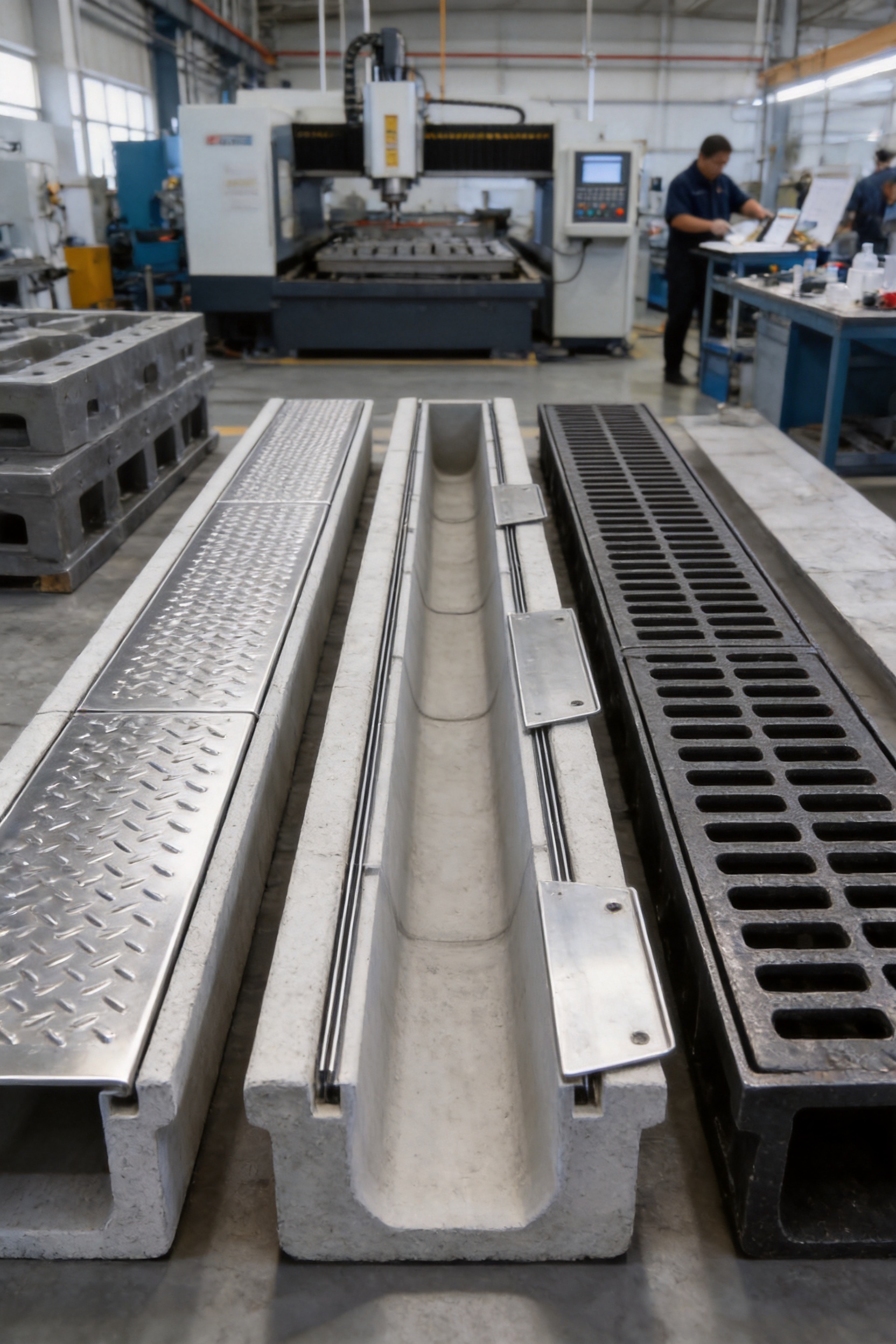
Behind a reliable drainage channel is a complete manufacturing system. Jiangsu Yameng Traffic Road Facilities Co., Ltd. is located in Nantong, Jiangsu Province, China, with convenient transportation and waterway access. The company focuses on drainage ditch projects and GRC customization, combining product development, mold design, production, construction support, and after-sales service. Its production capabilities cover linear drainage ditches, finished drainage ditches, polymer-based drainage ditches, slot drainage ditches, U-shaped drainage ditches, ductile iron cover plates, stainless steel stamped cover plates, steel gratings, resin concrete cover plates, resin composite manhole covers, stainless steel manhole covers, ductile iron manhole covers, drainage pipes, PE pipes, and related products.
The company’s manufacturing strength is reflected in several stages. First, project requirements are analyzed according to site use, traffic load, flow demand, pavement structure, and design appearance. Second, professional designers and mold designers develop suitable channel dimensions and cover plate patterns. Third, CNC engraving and mold processing help improve dimensional accuracy and repeatability. Fourth, production teams manufacture the components under controlled procedures. Fifth, inspection and assembly checks help ensure that channel bodies, covers, joints, and accessories fit properly. Finally, technical support and after-sales service assist with installation and long-term use.
This integrated process gives the company an advantage over suppliers that only provide standard products without engineering support. Drainage projects often require coordination with architectural design, road engineering, landscape planning, and underground pipe networks. A manufacturer with design, mold, production, and construction experience can respond more effectively to customized requirements. This is particularly important for GRC series products and special drainage channel projects where appearance, geometry, and site conditions may vary significantly.
Advanced mold-making contributes directly to product quality. Accurate molds help produce consistent channel dimensions, smooth surfaces, reliable cover seating, and better joint alignment. In drainage systems, small dimensional errors can lead to uneven surfaces, cover noise, installation difficulty, or water leakage at joints. CNC-assisted mold processing improves precision and supports customized shapes when required.
Material preparation and forming are also important. For polymer-based and resin concrete channels, aggregate selection, binder proportion, mixing uniformity, compaction, curing, and finishing influence strength and durability. For stainless steel stamped cover plates, material thickness, stamping accuracy, surface treatment, and edge finishing affect safety and appearance. For ductile iron covers, casting quality, pattern design, load-bearing structure, and anti-corrosion treatment determine long-term performance. By offering multiple product lines, the manufacturer can match the drainage channel with the most suitable cover and accessory system.
Quality assurance is essential because drainage channels are installed into permanent surfaces and are expensive to replace after paving is complete. A reliable manufacturer controls quality from raw materials to finished products. Key inspection points include dimensional tolerance, surface finish, load-bearing capacity, cover fit, anti-slip pattern integrity, material density, water absorption, corrosion resistance, and packaging protection. Consistent quality reduces installation problems and improves long-term performance.
For anti-slip and wear-resistant drainage channels, the surface condition of the grate or cover plate must be carefully checked. Raised patterns should be clear, stable, and free from sharp burrs that could injure pedestrians or damage tires. Slot openings should be uniform and suitable for the intended application. Cover plates should sit securely on the channel body without excessive rocking or noise. If locking systems or fasteners are used, they should be compatible with maintenance requirements.
Load testing or structural verification may be performed according to project requirements and relevant standards. Pedestrian areas, parking areas, roads, and industrial yards may require different load classes. The purpose is to confirm that the channel and cover can safely bear expected loads when properly installed. Quality assurance also includes checking the connection between channel sections, outlet accessories, and integration with drainage pipes.
Wear resistance can be evaluated by material properties and practical use conditions. Abrasion-resistant surfaces are especially valuable in sandy, dusty, or high-traffic environments. Corrosion resistance may be important for coastal areas, chemical plants, food processing zones, and locations where deicing salts are used. By selecting appropriate materials and surface treatments, the product can serve effectively in different environments.
The Anti-Slip and Wear-Resistant Linear Drainage Channel is suitable for a wide range of applications because it combines safety, durability, and drainage efficiency. In sidewalks and pedestrian zones, it helps keep walking surfaces dry and reduces slipping risk. In shopping centers and commercial complexes, it manages rainwater while maintaining a neat and modern appearance. In parking lots and driveways, it collects runoff from large paved areas and withstands repeated vehicle movement.
For industrial sites, the product offers strong value because drainage conditions are often harsh. Forklifts, trucks, machinery, sediments, oils, and cleaning water can challenge ordinary drainage systems. A wear-resistant channel with a strong cover plate provides better service life and reduces maintenance interruptions. In warehouses, logistics centers, loading docks, and factory entrances, rapid water removal helps maintain safe operations.
Municipal roads and public infrastructure can also benefit from linear drainage. Road edges, bus stops, pedestrian crossings, and public squares often experience heavy rainfall and high user traffic. A well-designed drainage channel helps reduce water accumulation and protects pavement structures. In landscape projects, the product can be integrated with paving stones, concrete surfaces, or architectural edges to provide discreet yet effective drainage.
Residential communities and underground garage entrances are additional practical applications. Garage ramps are particularly vulnerable to water inflow during rainstorms. Installing a linear drainage channel across the entrance can intercept runoff before it flows into underground spaces. In residential courtyards and walkways, anti-slip covers improve safety for children, elderly residents, and daily users.
Selecting the correct drainage channel requires careful evaluation of site conditions. The first factor is expected water volume. Designers should consider rainfall intensity, catchment area, pavement slope, and discharge capacity. A larger channel or greater outlet capacity may be required for large paved areas or heavy rainfall regions. The second factor is traffic load. Pedestrian-only spaces can use lighter cover solutions, while vehicle areas need stronger covers and more robust installation.
The third factor is surface safety. Public pedestrian areas should use anti-slip cover patterns with safe slot widths. Bicycle paths, wheelchair routes, and areas used by trolleys need special attention to opening direction and spacing. The fourth factor is environmental exposure. Coastal air, chemicals, oil, cleaning agents, or deicing salts may require stainless steel, polymer concrete, resin concrete, composite materials, or anti-corrosion treatments.
The fifth factor is maintenance access. A channel that is difficult to open may become blocked over time. Removable covers, inspection points, sediment baskets, and accessible outlets improve serviceability. The sixth factor is appearance. In commercial and architectural projects, the drainage cover should coordinate with paving materials and design style. Slot drainage or stainless steel covers may be preferred for refined spaces, while heavy-duty grating may be better for industrial areas.
| Selection Factor | Recommended Consideration | Product Advantage |
|---|---|---|
| Water Flow Demand | Evaluate rainfall, slope, catchment area, and outlet location. | Continuous linear intake supports rapid drainage and reduced ponding. |
| Traffic Load | Match cover plate strength to pedestrians, cars, trucks, or forklifts. | Multiple cover options support different load requirements. |
| Slip Resistance | Choose textured, raised, slotted, or grating surfaces for wet areas. | Anti-slip design improves safety for pedestrians and vehicles. |
| Wear Exposure | Consider sand, wheels, cleaning machines, and industrial movement. | Wear-resistant materials help maintain long service life. |
| Maintenance Needs | Plan removable covers and accessible cleaning points. | Easy inspection and cleaning reduce labor and blockage risk. |
| Project Appearance | Coordinate cover style with paving and architectural design. | Stainless steel, ductile iron, resin, and grating options provide flexibility. |
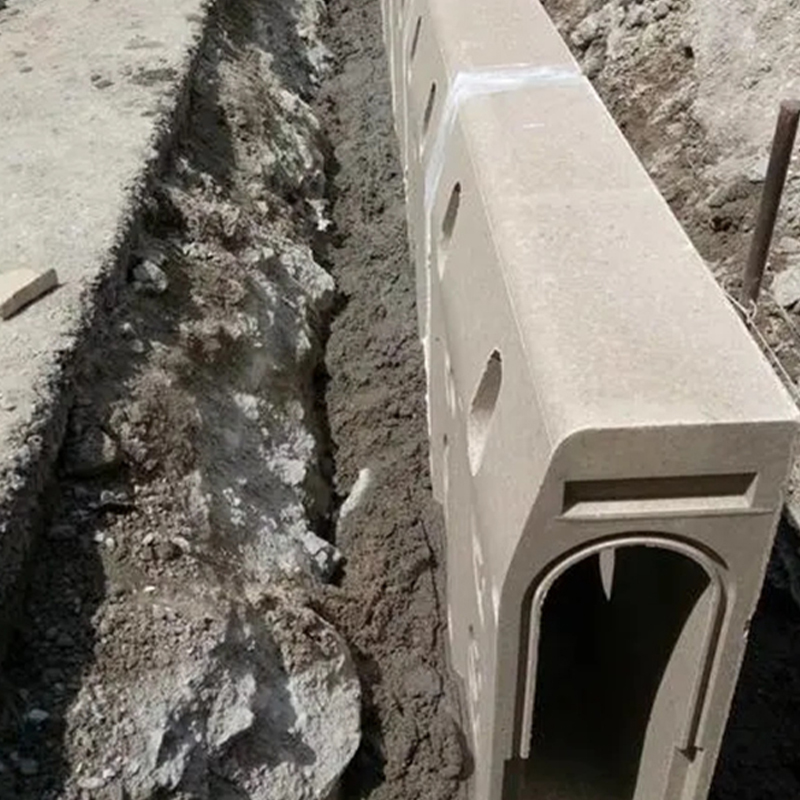
Even a high-quality drainage channel must be installed correctly to achieve full performance. The installation base should be stable, level, and designed to support the expected load. The channel line should follow the planned slope and connect properly to the outlet or drainage pipe. Surrounding concrete or pavement should support the channel sides and prevent movement under traffic. If the channel is installed in a vehicle area, edge support and bedding strength become especially important.
Before installation, contractors should check all components, including channel bodies, cover plates, end caps, outlets, fasteners, and accessories. Trial alignment can help confirm that the system fits the site layout. During installation, channel sections should be connected tightly and aligned with the finished pavement elevation. The top of the cover should be flush with or slightly below the surrounding surface according to project design, avoiding trip hazards and ensuring water enters the channel naturally.
After installation, the channel should be cleaned to remove construction debris, mortar, stones, and packaging materials. Covers should be installed securely. For systems with locking devices, fasteners should be tightened correctly but remain accessible for future maintenance. Before opening the area to traffic, the surrounding pavement or concrete should reach adequate strength.
Maintenance planning should begin at installation. Property managers should know how to remove covers, where outlets are located, and how often cleaning is needed. In areas with leaves, sand, or industrial debris, inspection should be more frequent. Regular cleaning keeps water flowing and prevents unpleasant odors or overflow. Because the product uses removable grates, this maintenance can be performed more efficiently than with sealed or hard-to-access drainage systems.
Many drainage products on the market appear similar at first glance, but their real performance differs after installation. Low-cost concrete ditches may have rough interiors, inconsistent dimensions, and weak edges. Thin metal covers may deform, become noisy, or lose anti-slip performance. Poorly designed grates may clog easily or create unsafe openings. Some systems lack customization, forcing contractors to adjust the site around the product instead of selecting a drainage solution that fits the project.
The Anti-Slip and Wear-Resistant Linear Drainage Channel addresses these weaknesses through material selection, modular design, precision manufacturing, and practical cover options. Its anti-slip surface is designed for wet conditions, not merely for appearance. Its wear-resistant materials support long-term use in high-traffic environments. Its modular sections help simplify construction and allow flexible project planning. Its removable grates reduce maintenance difficulty. Its production process supports stable dimensions and better installation consistency.
Compared with point drains, the linear system captures water more evenly across large surfaces. Compared with open ditches, it offers a safer and more refined surface. Compared with low-quality grating systems, it provides improved surface traction and stronger wear resistance. Compared with purely standard products, it can be supported by design and customization capabilities, including drainage ditch projects and GRC-related custom solutions.
The company’s broad product range also provides an advantage. A project may require drainage channels, cover plates, manhole covers, pipes, and related accessories. A manufacturer with multiple matching products can help improve compatibility and procurement efficiency. This reduces the risk of mismatched components from different suppliers and supports more coordinated project delivery.
In addition to drainage channel products, the company has GRC series capabilities supported by professional designers, mold designers, CNC engravers, and experienced production and construction technicians. GRC, or glass fiber reinforced cement, is widely used in architectural decoration and customized construction components. The presence of GRC customization capability demonstrates the manufacturer’s ability to handle complex forms, detailed design requirements, mold development, and on-site construction coordination.
This experience is relevant to drainage products because many modern projects require both function and appearance. Drainage systems in commercial plazas, landscape corridors, cultural tourism areas, and public buildings must often blend with architectural design. Custom cover plates, special channel layouts, hidden slot drainage, and coordinated edge details may be required. A manufacturer with mold design and CNC processing capabilities can provide solutions beyond basic standard products.
Integrated service from detailed design to after-sales support improves project reliability. Designers can communicate drainage requirements early, develop drawings, produce molds, manufacture components, assist with on-site construction, and provide technical guidance after installation. This full-process capability helps reduce communication gaps and supports better project outcomes. It also reflects a commitment to long-term cooperation rather than one-time product sales.
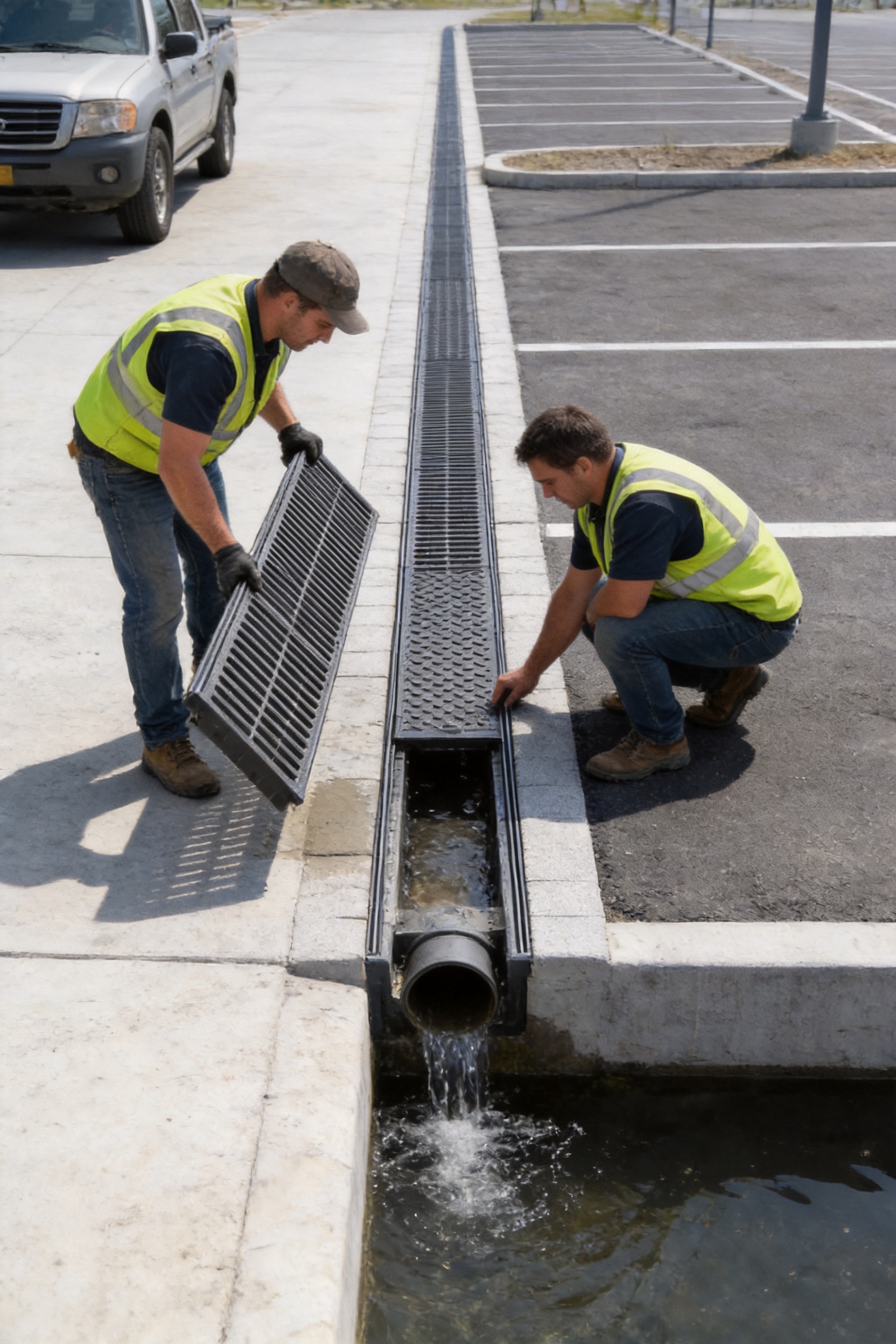
Sustainability in drainage infrastructure is closely connected to durability, maintenance efficiency, and responsible material use. A drainage channel that lasts longer and requires fewer replacements reduces material consumption and construction waste. Efficient drainage also protects pavement, reduces water-related damage, and supports safer public spaces. The Anti-Slip and Wear-Resistant Linear Drainage Channel contributes to sustainability by extending service life and reducing maintenance frequency.
Life-cycle value is often more important than initial purchase price. A cheaper product may require frequent repair, replacement, cleaning, or cause surface failures that disrupt operations. A higher-quality drainage system may cost more at the beginning but save money over time through reduced labor, fewer accidents, lower replacement costs, and improved site performance. For commercial owners, a safe and clean environment improves customer experience. For industrial operators, reliable drainage helps avoid downtime. For municipal departments, durable infrastructure reduces public maintenance pressure.
Efficient water management also supports environmental responsibility. By directing runoff into appropriate drainage systems, the channel helps prevent uncontrolled erosion and surface contamination. In some projects, drainage channels may be integrated with sediment collection, oil separation, rainwater harvesting, or stormwater management systems. The removable cover design makes it easier to clean captured debris before it enters downstream networks.
For wholesalers, distributors, contractors, and engineering buyers, product consistency and supply capability are essential. The Anti-Slip and Wear-Resistant Linear Drainage Channel is suitable for wholesale procurement because it addresses common market demands: safety, durability, easy installation, and broad application. Its modular nature makes it practical for inventory planning, while different cover options allow suppliers to serve multiple customer segments.
The manufacturer’s product range supports combined procurement of drainage ditches, cover plates, manhole covers, drainage pipes, PE pipes, and related products. This is useful for infrastructure distributors and project contractors who prefer sourcing compatible systems from one supplier. The company’s focus on integrity, quality, responsibility, focus, and innovation supports stable business relationships with domestic and international customers.
For project procurement, technical communication is as important as price. Drainage products must match engineering drawings, site conditions, and construction schedules. A manufacturer with design, mold, production, and after-sales capabilities can help buyers choose suitable specifications, reduce mistakes, and respond to special requirements. This practical support gives the product an advantage in competitive bidding and long-term infrastructure projects.
The cover plate or grating can be designed with raised patterns, textured surfaces, stamped structures, slots, or grating ribs. These features increase friction between the surface and shoes or tires, helping reduce slipping risk in wet conditions.
It is suitable for sidewalks, pedestrian streets, parking lots, driveways, commercial complexes, residential communities, industrial yards, warehouse entrances, municipal roads, garage ramps, and other areas requiring safe and efficient surface drainage.
Depending on project requirements, the channel body and cover plate may use reinforced polymer concrete, resin concrete, stainless steel, ductile iron, steel grating, resin composite materials, or related drainage materials. The final selection depends on load, corrosion exposure, appearance, and budget.
Compared with traditional cast-in-place ditches, this modular drainage channel offers more consistent dimensions, faster installation, better appearance, easier maintenance, and improved surface safety. Factory-controlled production helps reduce the variability often found in site-built systems.
Yes, when the correct channel body, cover plate, and installation method are selected. Parking lots, driveways, and industrial vehicle areas require appropriate load-bearing covers and strong edge support. The product can be matched with ductile iron, steel grating, or other heavy-duty cover solutions.
The removable cover or grate allows workers to access the channel interior. Sediment, leaves, stones, and other debris can be removed during regular inspection. This helps prevent blockage and keeps the drainage system operating efficiently.
Yes. The manufacturer has design, mold design, CNC engraving, production, construction, and after-sales capabilities. Custom dimensions, cover styles, outlet positions, and project-specific solutions can be discussed according to engineering requirements.
Drainage covers are exposed to repeated foot traffic, vehicle wheels, sand, cleaning tools, and environmental wear. A wear-resistant surface maintains anti-slip function, load-bearing reliability, and appearance for a longer service life.
Yes. Different cover plate options, including stainless steel stamped covers, slot drainage styles, ductile iron covers, resin concrete covers, and gratings, can be selected to match commercial, municipal, industrial, or landscape design needs.
Before installation, the project team should confirm water flow demand, traffic load, channel size, outlet connection, pavement elevation, base strength, cover type, and maintenance access. Proper installation is essential for long-term performance.
The Anti-Slip and Wear-Resistant Linear Drainage Channel is a practical and high-performance solution for modern surface water management. It combines rapid drainage, anti-slip safety, wear-resistant durability, modular installation, and convenient maintenance. These qualities make it valuable for urban roads, parking areas, commercial zones, industrial sites, residential communities, and public infrastructure projects.
Its advantages over conventional drainage solutions are clear. Compared with basic concrete ditches, it offers better consistency and installation efficiency. Compared with low-quality covers, it provides stronger anti-slip and wear-resistant performance. Compared with point drains, it captures water more continuously and efficiently. Compared with suppliers offering limited standard products, the manufacturer provides broader product lines, design support, mold development, CNC processing, production capability, construction experience, and after-sales service.
For contractors, wholesalers, municipal buyers, and property developers, choosing a drainage channel is not only about moving water. It is about safety, durability, maintenance, appearance, and long-term value. With reinforced materials, engineered surface design, efficient flow structure, and flexible customization, this linear drainage channel provides a dependable answer to the challenges of modern drainage construction.
EN 1433. Drainage Channels for Vehicular and Pedestrian Areas: Classification, Design and Testing Requirements.
ASTM C579. Standard Test Methods for Compressive Strength of Chemical-Resistant Mortars, Grouts, Monolithic Surfacings, and Polymer Concretes.
ASTM C944. Standard Test Method for Abrasion Resistance of Concrete or Mortar Surfaces by the Rotating-Cutter Method.
International Association for Hydro-Environment Engineering and Research. Urban Drainage Design and Surface Runoff Management Principles.
American Concrete Institute. Guide to Durable Concrete and Infrastructure Service-Life Considerations.
China Building Materials Industry Standards. Technical Guidance for Polymer Concrete Drainage Products and Cover Plate Applications.
Related Products
Engineered to address the long-term challenges of chemical erosion and structural aging in architect...
READ MOREEngineered to address the long-term challenges of chemical erosion and structural aging in architect...
READ MOREEngineered to address the long-term challenges of chemical erosion and structural aging in architect...
READ MOREEngineered to address the long-term challenges of chemical erosion and structural aging in architect...
READ MOREEngineered to address the long-term challenges of chemical erosion and structural aging in architect...
READ MOREEngineered to address the long-term challenges of chemical erosion and structural aging in architect...
READ MORE
Contact us
Factory Address
Group 12, Quanxin Village, Donghai Town, Qidong City, Nantong City, Jiangsu Province, China
phone
+86-13914963840
+86-13451754670
products
QR CODE
 Wholesale Drainage Ditch Manufacturers