 English
 Español
 عربى
عربى

Our Modular GRC System merges installation speed with long-term durability, providing a high-perform...
READ MOREMay 29, 2026
Content
In modern architecture, the exterior envelope of a building is expected to do more than define appearance. It must resist climate pressure, protect interior comfort, support long service life, and remain visually consistent through years of exposure. Door and window frames are especially important because they sit at the meeting point between the building structure and the outside environment. They must handle rain, ultraviolet radiation, wind pressure, salt spray, temperature changes, and repeated wet-dry cycles while still maintaining accurate dimensions and attractive architectural lines. Weatherproof outdoor GRC door and window frames are engineered for this demanding role, providing a durable, customizable, and aesthetically refined solution for residential, commercial, public, and coastal construction projects.
Glass fiber reinforced concrete, commonly known as GRC, combines a cement-based mineral matrix with alkali-resistant glass fiber reinforcement. This combination creates a material that is lighter than many traditional precast concrete components while offering excellent strength, shape stability, weather resistance, fire resistance, and design flexibility. When formulated for outdoor use, GRC becomes especially suitable for door and window frames because it can be produced with fine surface details, stable dimensions, and low water absorption. The weatherproof series is designed specifically for harsh environmental conditions, including coastal areas, high-rainfall cities, humid climates, industrial zones affected by acid rain, and regions with large seasonal temperature differences.
Unlike ordinary decorative frames that may fade, crack, deform, absorb water, corrode, or require frequent maintenance, weatherproof outdoor GRC frames are developed as a systemic building protection component. They combine architectural decoration with functional performance. Their specialized formulation resists water penetration, salt spray corrosion, ultraviolet aging, and surface powdering. Their alkali-resistant glass fiber skeleton helps maintain dimensional stability and reduces the risk of cracking and warping. Their non-toxic, naturally flame-retardant mineral composition supports safer and more sustainable building design. Their sealing performance can also contribute to better thermal insulation around openings, helping reduce unwanted heat transfer and overall energy consumption.
Jiangsu Yameng Traffic Road Facilities Co., Ltd. applies its experience in drainage channel projects, cover plate products, GRC customization, mold development, CNC engraving, production management, and construction technical support to the development of high-performance exterior GRC products. The company’s capabilities include detailed design, drawing preparation, mold making, production, on-site construction guidance, and after-sales service. This integrated approach is important because high-quality GRC frames depend not only on raw material selection, but also on design accuracy, mold precision, fiber distribution, curing control, surface finishing, inspection, packaging, and installation coordination. The result is a product line that helps architects, contractors, developers, and distributors obtain durable frame solutions for demanding outdoor environments.
Weatherproof Outdoor GRC door and window frames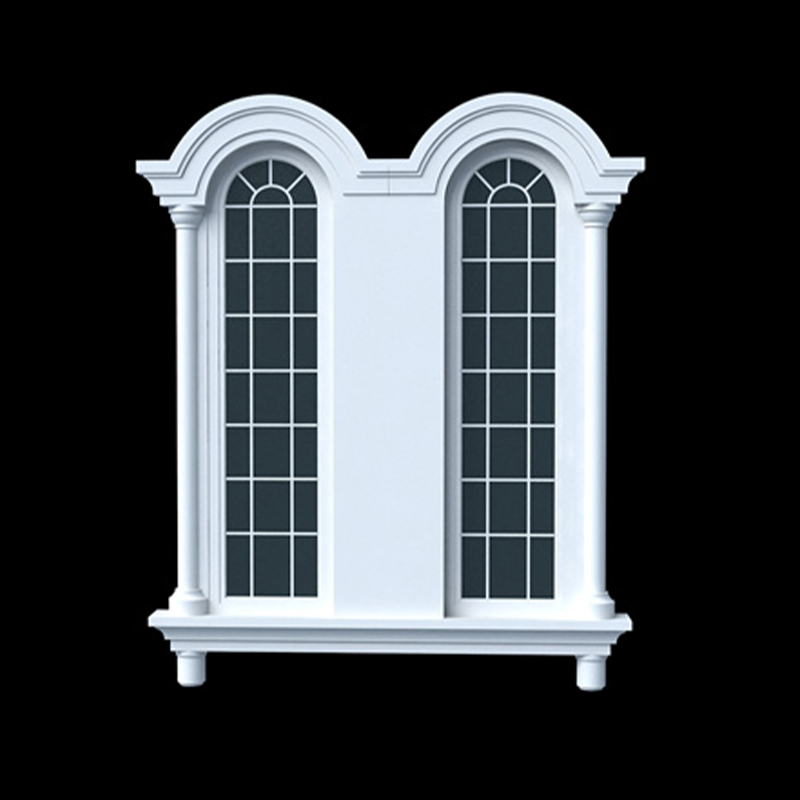
Door and window frames are often judged by their appearance, but their technical role is much broader. They help define the edge of an opening, protect the junction between the wall and the door or window unit, guide water away from vulnerable areas, and create a visual transition between facade materials. In many buildings, frames must match the style of stone, concrete, plaster, masonry, curtain wall systems, or other exterior finishes. They may be simple linear profiles or highly detailed decorative components with grooves, reliefs, curves, bevels, cornices, and custom architectural patterns.
Traditional frame materials include natural stone, cast stone, wood, metal, PVC, fiber cement, plaster-based elements, and ordinary concrete. Each has limitations. Natural stone is beautiful but heavy, costly, difficult to shape, and sometimes inconsistent in color or veining. Wood is easy to process but vulnerable to moisture, insects, fire, and dimensional movement. Metal can be strong but may corrode, conduct heat, and require protective coating. PVC is lightweight but can deform under heat, age under ultraviolet exposure, and may not achieve the desired premium architectural texture. Ordinary concrete is durable but heavy and less suitable for thin, complex shapes. GRC addresses many of these limitations by combining mineral durability, reinforcement, light weight, and design versatility.
For exterior frames, GRC is particularly valuable because it can be molded into precise shapes without requiring excessive thickness. Its fiber reinforcement allows the product to maintain strength even in thinner sections, reducing dead load on the building facade. This is useful for renovation projects, high-rise buildings, public buildings, villas, resorts, hotels, municipal projects, and commercial developments where design detail and installation efficiency are both important. When the GRC formula is optimized for weatherproof performance, the frames can endure long-term outdoor exposure while preserving their structure and appearance.
The most important advantage of the weatherproof outdoor GRC door and window frame series is its all-weather resilience. Outdoor frames must face water, sun, air pollutants, temperature changes, and mechanical stress. A low-quality frame may initially look acceptable but can deteriorate after only a few seasons. Common problems include water staining, surface chalking, hairline cracking, edge damage, biological growth, color fading, salt crystallization, and joint deformation. The weatherproof GRC series is designed to reduce these risks through material engineering and controlled production.
Low water absorption is essential for any exterior building component. When a material absorbs too much water, it becomes vulnerable to freeze-thaw damage, staining, efflorescence, biological growth, internal expansion, and gradual surface degradation. Water can also transport dissolved salts and pollutants into the pore structure of the material, causing discoloration or micro-damage over time. Weatherproof outdoor GRC frames use a specialized cementitious formula and controlled compaction or spraying process to create a dense matrix with reduced capillary absorption.
This low water absorption helps the frame maintain consistent performance in high-rainfall regions. It is also beneficial in humid coastal environments where surfaces may remain wet for extended periods. By limiting water uptake, the frames protect their internal reinforcement, preserve surface quality, and reduce the maintenance burden for building owners. In comparison with ordinary cement-based decorative elements that may be more porous, the weatherproof GRC frame provides a more reliable barrier against moisture-related deterioration.
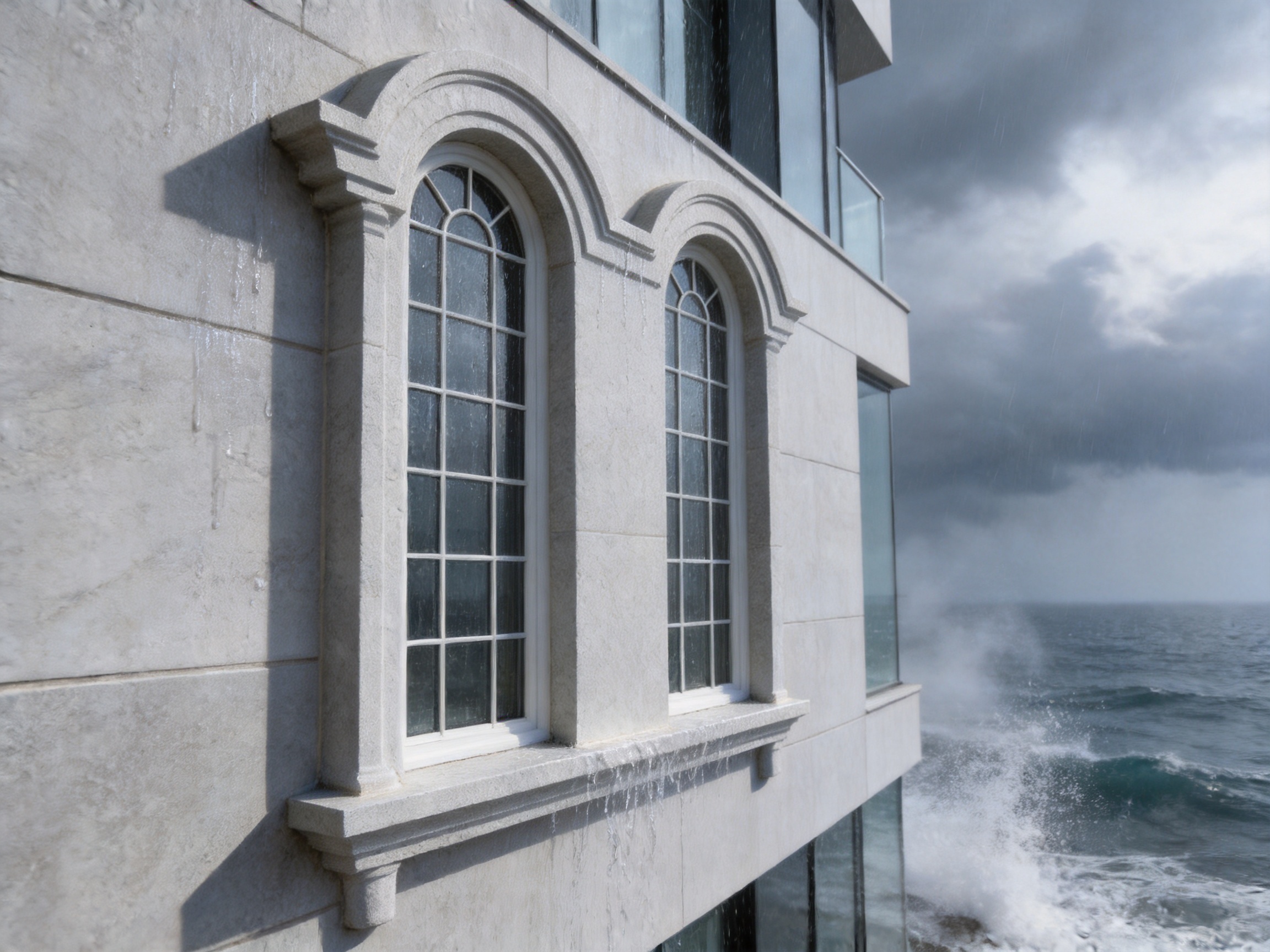
Outdoor building materials are exposed not only to clean rainwater but also to aggressive environmental conditions. In industrial or urban areas, rain may contain acidic pollutants that attack vulnerable surfaces. In coastal areas, airborne salt particles can accumulate on facades and accelerate corrosion or crystallization damage. Strong sunlight can cause organic coatings and polymer-rich materials to fade, embrittle, or chalk. Weatherproof GRC frames are developed to handle these conditions more effectively than many conventional alternatives.
The mineral composition of GRC gives it inherent resistance to ultraviolet radiation because it does not rely on a weak organic surface layer for its primary structural integrity. When manufactured with proper surface treatment and pigment control, the frame can maintain a stable, vibrant appearance over time. Its resistance to salt spray is especially valuable for buildings near the sea, where metal components may corrode quickly and porous materials may suffer salt crystallization. Acid rain resistance further supports use in cities, transport hubs, industrial parks, and commercial districts with polluted air.
The strength and stability of GRC depend heavily on the quality and distribution of its glass fiber reinforcement. Ordinary glass fiber may degrade in the alkaline environment of cement. Therefore, high-quality GRC uses alkali-resistant glass fiber, which is specifically designed to remain stable within the cementitious matrix. In weatherproof outdoor frames, this alkali-resistant glass fiber skeleton improves tensile performance, flexural strength, impact resistance, and crack control.
Door and window frames are often long, narrow, and profile-shaped, which means they can be vulnerable to bending, corner stress, and handling damage if not properly reinforced. The fiber skeleton helps distribute stress and maintain dimensional accuracy. This is especially important during transportation, installation, thermal movement, and long-term exposure to wind and temperature changes. Compared with unreinforced concrete or brittle decorative materials, GRC provides better resilience in practical building conditions.
Buildings expand and contract as temperatures change. Exterior frames experience direct sunlight, shade, rain cooling, nighttime temperature drops, and seasonal cycles. If a frame material expands unevenly, absorbs water, or has internal stress, it may warp, crack, or pull away from adjacent building materials. Weatherproof outdoor GRC frames are designed for superior dimensional stability, helping preserve the accuracy of openings and the appearance of facade joints.
This dimensional stability is an advantage over some plastics and wood-based materials that may deform under heat or moisture. It also supports better sealing around doors and windows. A stable frame helps reduce gaps, water infiltration, air leakage, and maintenance issues. For architects and contractors, stable dimensions mean easier installation, better alignment, and improved long-term facade performance.
Fire safety is an increasingly important concern in building design. Because GRC is based on mineral materials, it is naturally flame-retardant and does not support combustion like many organic materials. It does not melt or release heavy smoke in the same way as some plastics under fire exposure. This makes weatherproof GRC frames suitable for buildings where fire performance and material safety are important considerations.
The non-toxic nature of the material also supports healthier building environments. For exterior applications, non-toxic mineral materials can reduce environmental burden and improve confidence among developers and owners. When properly produced and installed, GRC frames offer a responsible balance of durability, safety, and architectural expression.
Although the primary purpose of a door or window frame is not to act as insulation by itself, the quality and stability of the frame system can influence the thermal performance of the opening. Poorly aligned frames, cracked decorative surrounds, or unstable edges can allow air leakage and water penetration. Weatherproof outdoor GRC frames can be manufactured with precise profiles that support better sealing details. Their stable geometry helps maintain a consistent interface with wall systems, sealants, flashing, and door or window units.
Better sealing helps reduce heat loss in cold seasons and heat gain in warm seasons. In large buildings with many openings, improved frame performance can contribute to reduced energy consumption. This is especially valuable for hotels, office buildings, apartments, schools, hospitals, and public facilities where energy efficiency is a long-term operating cost factor.
In a competitive construction materials market, buyers evaluate products based on durability, cost, installation efficiency, appearance, customization, maintenance needs, and life-cycle performance. Weatherproof outdoor GRC door and window frames are strong competitors because they address multiple requirements at once. They can replicate the visual depth of stone or cast architectural details while offering reduced weight and improved adaptability. They provide a mineral-based alternative to wood and plastic while avoiding many of their moisture and fire limitations. They offer corrosion-free performance compared with metal frames used mainly as decorative exterior surrounds.
| Comparison Factor | Weatherproof Outdoor GRC Frames | Common Competing Materials | Practical Benefit |
|---|---|---|---|
| Weather resistance | Designed for low water absorption, UV resistance, acid rain resistance, and salt spray resistance | Wood, ordinary concrete, low-grade cast materials, and some plastics may degrade faster outdoors | Longer service life in coastal, rainy, and urban environments |
| Structural stability | Reinforced with alkali-resistant glass fiber for crack control and dimensional accuracy | Unreinforced decorative materials may crack; wood and plastics may warp | Better alignment and reduced maintenance risk |
| Weight and installation | Lighter than many solid stone or thick precast concrete elements | Natural stone and heavy concrete increase handling and structural load | Easier transportation, lifting, and facade installation |
| Design flexibility | Can be molded into custom profiles, curves, relief patterns, and project-specific shapes | Stone is difficult to shape; metal and PVC may have limited decorative texture | Supports diverse architectural styles and customization |
| Fire performance | Mineral-based and naturally flame-retardant | Wood and some plastic materials are combustible or heat-sensitive | Improved safety for exterior facade applications |
| Maintenance | Stable surface and durable matrix reduce frequent repairs | Wood may need repainting; metal may need anti-corrosion treatment; porous materials may stain | Lower long-term maintenance burden |
The table shows why weatherproof outdoor GRC frames are not merely decorative accessories. They are performance components that solve problems common to many facade materials. Their value becomes especially clear over the life cycle of a building. A cheaper frame that cracks, absorbs water, or fades quickly may require repair, repainting, replacement, or sealing work, increasing total cost. A durable GRC frame may reduce these interruptions and preserve the intended architectural character for a longer period.
Another advantage is consistency. Natural stone can vary significantly in color and texture, which may be desirable in some projects but difficult to control in large developments. GRC production can achieve more predictable color, profile, and surface finish, supporting batch consistency. For projects with hundreds or thousands of openings, this consistency helps maintain facade harmony. At the same time, custom molds allow unique profiles when architects require special design language.
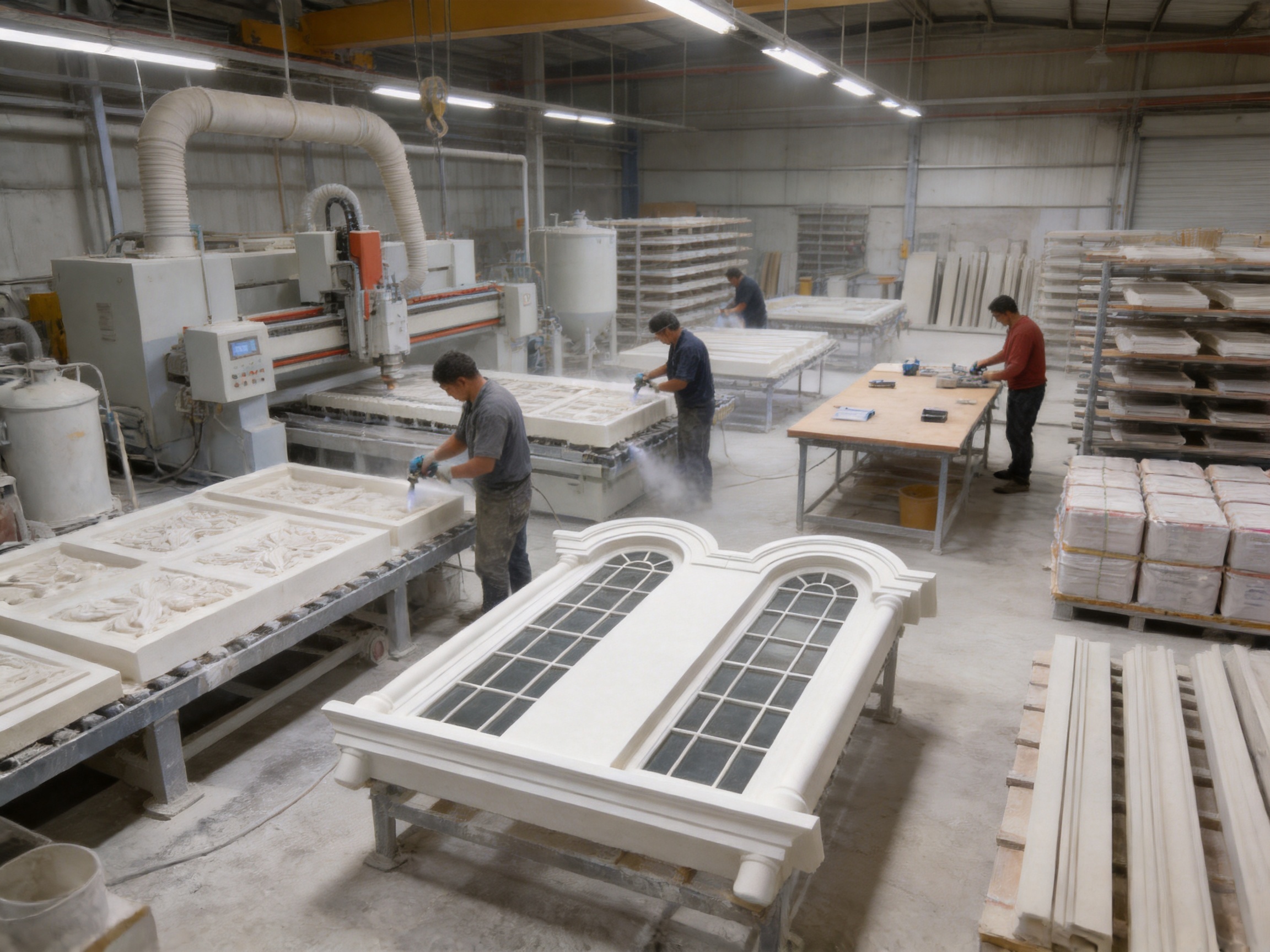
The performance of a GRC frame is not determined by material name alone. Two products may both be called GRC, yet differ greatly in durability, strength, appearance, and installation accuracy. Reliable outdoor performance requires advanced manufacturing processes, careful quality control, and experienced technical teams. Jiangsu Yameng Traffic Road Facilities Co., Ltd. has developed capabilities that support complete GRC customization, from design to after-sales service. This integrated manufacturing approach gives customers a clearer path from concept to finished installation.
Every successful GRC frame begins with accurate design. The design team reviews project drawings, opening dimensions, facade requirements, structural conditions, drainage details, installation methods, and desired appearance. For door and window frames, details such as edge thickness, groove depth, return sections, fixing points, corner treatment, joint width, sealant space, and water-shedding slopes must be considered carefully. A frame that looks attractive in a drawing may fail in practice if it traps water, lacks reinforcement, or cannot be installed efficiently.
Professional design review helps avoid these problems. The team can optimize the profile for strength, manufacturability, transport safety, and installation convenience. For example, a large decorative frame may be divided into manageable sections with hidden joints. A deep profile may be reinforced at stress points. A coastal project may require additional surface protection or special installation recommendations. By considering these issues early, the company helps reduce site complications and improve final quality.
After design confirmation, detailed drawings are prepared for production and installation. These drawings translate architectural intent into measurable manufacturing information. They may include profile sections, elevations, corner details, mold dimensions, reinforcement arrangement, fixing methods, numbering systems, and installation sequence. Accurate documentation is especially important for customized projects because each component must match the correct opening and position.
A clear numbering and drawing system reduces confusion on the construction site. It allows production, packaging, transport, and installation teams to coordinate more effectively. This is one of the areas where an experienced manufacturer provides value beyond the product itself. Good documentation protects schedule, reduces waste, and helps contractors install frames with confidence.
GRC is a molded material, so mold quality directly affects product quality. A precise mold creates accurate dimensions, clean lines, smooth surfaces, and repeatable profiles. Poor molds can cause dimensional variation, surface defects, edge distortion, and assembly problems. Jiangsu Yameng Traffic Road Facilities Co., Ltd. is supported by mold designers and CNC engravers, enabling the company to produce customized molds for different architectural requirements.
CNC engraving improves precision for complex patterns, curves, relief designs, and decorative details. It helps create sharp and consistent geometry that manual methods may struggle to achieve. For door and window frames, where repeated units must align visually across a facade, mold precision is essential. CNC-supported mold production also makes it possible to replicate classical profiles, modern minimalist lines, custom branding-neutral motifs, and project-specific decorative systems.
Weatherproof GRC depends on proper material formulation. The matrix may include cement, graded fine aggregates, water, admixtures, pigments, and performance-enhancing components. The fiber reinforcement must be selected and distributed correctly. Water-cement ratio, admixture dosage, mixing time, fiber content, and workability must be controlled. If the mix is too porous, too wet, poorly compacted, or unevenly reinforced, long-term outdoor performance may be compromised.
A specialized formula for weatherproof outdoor frames focuses on low water absorption, surface durability, fiber bonding, and dimensional stability. The goal is to create a dense and durable cementitious matrix that works together with alkali-resistant glass fiber. This formula helps resist acid rain, salt spray, and ultraviolet aging while preserving appearance. It also supports production of thin, detailed profiles without sacrificing strength.
GRC products can be produced through spray-up, premix casting, or related forming methods depending on product shape, thickness, and performance requirements. In each method, the manufacturer must ensure even material distribution, proper fiber orientation or dispersion, good mold filling, and surface consistency. Door and window frames often require careful attention to corners, grooves, and edges, where air pockets or weak zones can form if production is careless.
Controlled forming helps achieve uniform wall thickness and reliable mechanical performance. Skilled workers monitor the material during placement, remove trapped air where necessary, and ensure reinforcement continuity. For complex profiles, special handling techniques may be used to protect details and prevent defects. The result is a frame that not only looks accurate but also performs reliably after installation.
Curing is one of the most important stages in cement-based product manufacturing. Proper curing allows the cementitious matrix to develop strength, reduce shrinkage risk, and improve durability. If a GRC product dries too quickly, it may develop microcracks or surface weakness. If curing conditions are inconsistent, batches may vary in strength and appearance. Weatherproof outdoor frames require controlled curing to support long-term performance.
Manufacturing teams manage curing time, moisture conditions, temperature, and handling sequence. The frames must remain stable while gaining sufficient strength before demolding, finishing, and packaging. Good curing practice contributes to lower water absorption, better surface integrity, and improved dimensional stability. This is a key reason why professional factory production is superior to improvised or poorly controlled production environments.
Architectural frames must meet visual expectations. Surface finishing may include smoothing, texture control, edge refinement, color adjustment, protective treatment, and inspection of visible faces. GRC can be produced in a range of finishes, from smooth modern surfaces to stone-like textures and custom decorative effects. For exterior applications, surface finish should not only be attractive but also durable and easy to maintain.
Color consistency is important for large projects. The production team must control pigments, raw material batches, curing conditions, and surface treatment methods to reduce visible variation. A stable surface helps the frame maintain its appearance under sunlight, rain, and pollution. Weatherproof outdoor GRC frames are designed to remain vibrant and resist powdering, which is a significant advantage for buildings where facade appearance affects property value and public image.
Before delivery, GRC frames should be inspected for dimensions, surface quality, edge integrity, color consistency, reinforcement quality, and absence of major defects. Components are then packaged to reduce damage during transport. Door and window frames may include long sections, corners, and delicate decorative edges, so packaging must prevent impact, abrasion, and bending stress. Proper labeling also helps the construction team identify each component quickly.
The company’s location in Nantong, Jiangsu Province, with convenient transportation and waterway access, supports efficient logistics for domestic and international markets. Reliable delivery is part of the product value because construction schedules depend on timely arrival and organized installation. A frame that is well manufactured but poorly packaged can still create project delays; therefore, packaging and logistics are treated as essential parts of the quality system.
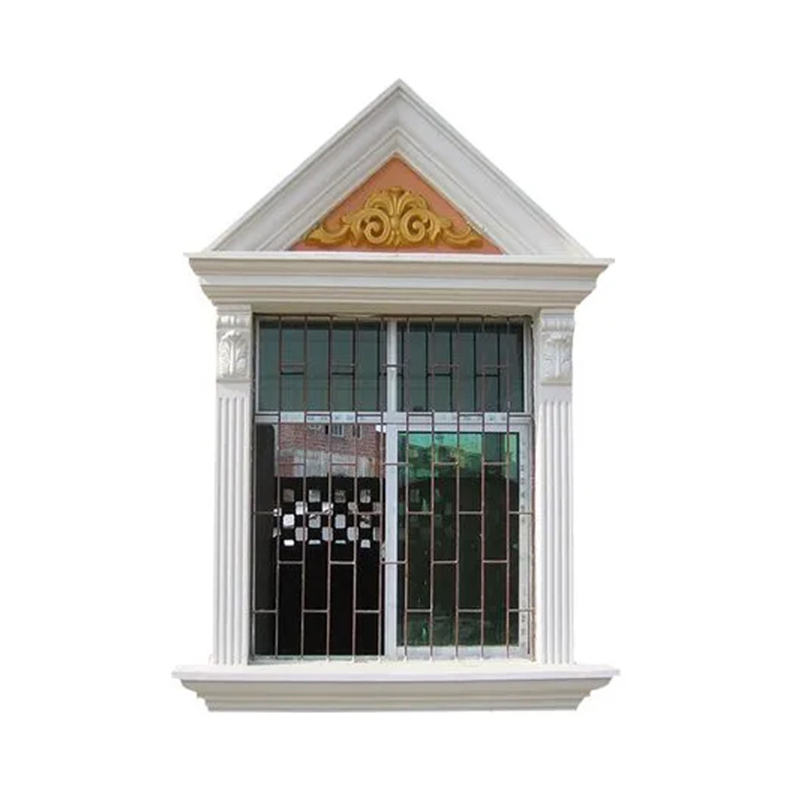
One of the strongest advantages of GRC is customization. Weatherproof outdoor GRC door and window frames can be designed for modern, classical, commercial, residential, municipal, cultural, and resort-style architecture. The material can produce straight profiles, curved frames, arched openings, layered borders, deep reveals, decorative lintels, sill elements, and integrated facade components. This flexibility allows architects to achieve distinctive exterior designs without relying on heavy stone or vulnerable plaster materials.
For modern architecture, GRC frames can be produced with clean lines, sharp edges, narrow profiles, and smooth surfaces. These details suit office buildings, apartments, schools, hospitals, and public facilities. For classical or European-inspired architecture, GRC can reproduce cornices, moldings, keystones, columns, pilasters, and ornate window surrounds. For villas and resorts, frames can create a refined and durable appearance that withstands rain, humidity, and sunlight. For coastal developments, weatherproof performance is especially valuable because the frames must resist salt-laden air while maintaining elegance.
Customization also includes size adaptation. Different projects may require special thicknesses, widths, depths, corner forms, and installation interfaces. Because the company offers complete services from design and drawings to mold making and production, project-specific dimensions can be managed more effectively. This reduces the need for excessive on-site cutting or modification, helping protect product integrity and improve construction efficiency.
Weatherproof outdoor GRC door and window frames are suitable for a wide range of environments, but their benefits are most visible in harsh conditions. Coastal buildings face salt spray, high humidity, strong sunlight, and wind-driven rain. In such locations, metal decorative elements may corrode, wood may swell or decay, and porous materials may stain or crack. GRC provides a mineral-based, corrosion-free, and weather-resistant alternative that can maintain facade quality over time.
High-rainfall regions also benefit from low water absorption and stable surface performance. Frequent rain can expose weaknesses in ordinary decorative frames, especially around joints and corners. Weatherproof GRC frames help protect openings and reduce moisture-related deterioration. When designed with proper drainage slopes, sealant joints, and installation details, they contribute to a more resilient exterior envelope.
Urban and industrial areas may experience acid rain, airborne pollutants, dust, and temperature changes caused by dense construction and traffic. GRC’s resistance to acid rain and surface aging helps preserve appearance in these conditions. Public buildings, transportation facilities, commercial streets, hotels, and office complexes can use GRC frames to achieve long-lasting visual order with reduced maintenance pressure.
Regions with strong seasonal temperature differences require materials that resist cracking and warping. Weatherproof GRC frames reinforced with alkali-resistant glass fiber can maintain dimensional stability under thermal fluctuation. This helps protect sealant joints and facade alignment. The frames are also useful in renovation projects where older buildings require new exterior details but cannot accept the load of heavy stone components.
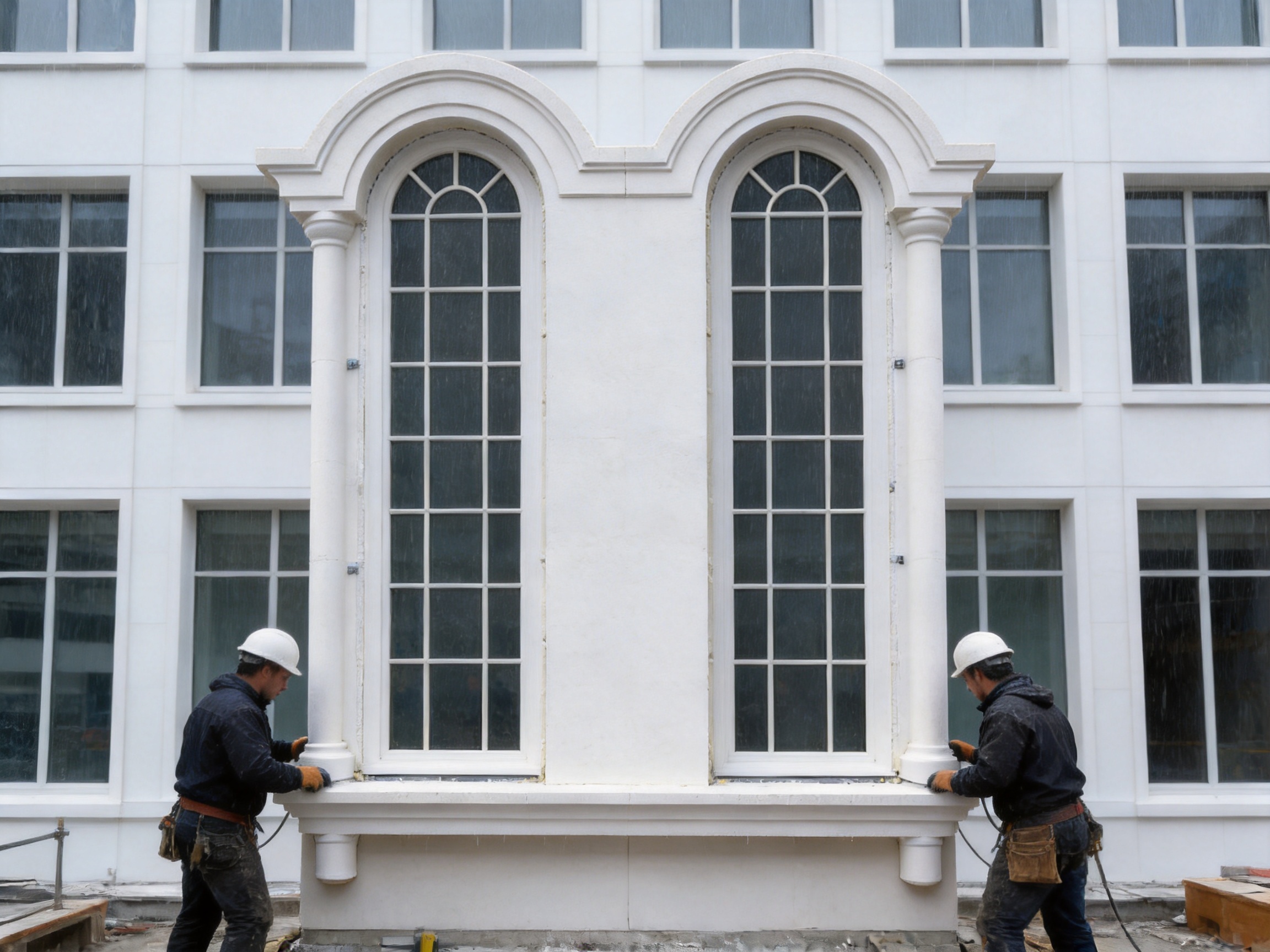
Even a high-quality GRC frame must be installed correctly to achieve maximum service life. Installation should follow approved drawings, fixing methods, joint design, and sealant requirements. The substrate should be stable, clean, and capable of supporting the frame. Anchors, brackets, adhesives, or mechanical fixing systems should be selected according to project conditions and component size. Joints should be properly spaced to accommodate movement and prevent stress concentration.
Water management is especially important. Frames should be designed and installed so that water does not collect in horizontal grooves or behind components. Sill areas should guide water outward. Sealant joints should be continuous and compatible with adjacent materials. Flashing and waterproofing layers should be coordinated with the door or window system. A weatherproof product performs best when the entire opening detail is designed as a complete system.
Handling during installation also matters. Although GRC is stronger and lighter than many alternatives, decorative edges can still be damaged by careless impact. Components should be lifted and supported properly, especially long sections. Site teams should avoid drilling without guidance, excessive force, or improper cutting that may weaken reinforcement. The company’s construction technical team can provide support to help contractors understand correct installation methods and reduce avoidable damage.
In the construction materials industry, quality control separates reliable manufacturers from ordinary suppliers. Weatherproof outdoor GRC frames require multiple inspection points throughout production. Raw materials must be checked for consistency. Molds must be verified before production. Mix proportions must be controlled. Fiber reinforcement must be monitored. Formed products must be cured correctly. Finished components must be inspected for dimension, color, surface condition, and strength-related defects.
Strong quality control provides advantages to architects, contractors, and distributors. It reduces replacement rates, installation delays, facade inconsistency, and after-sales disputes. It also supports long-term project reputation. A building facade is highly visible; defects in frames around windows and doors can affect the perceived quality of the entire project. By investing in professional manufacturing processes and inspection, the company helps customers protect both project performance and visual value.
Quality control is also connected to research and development. As market requirements evolve, GRC products must adapt to new design trends, environmental expectations, and installation methods. The company is committed to product research and development, with products sold in domestic and international markets. This market exposure encourages continuous improvement in material formulation, mold technology, production efficiency, and service capability.
Jiangsu Yameng Traffic Road Facilities Co., Ltd. is known for drainage ditch projects, drainage channel products, cover plates, manhole covers, drainage pipes, PE pipes, and related infrastructure products, in addition to GRC customization. This broader background is meaningful because drainage and weather protection are closely connected to building durability. A company experienced in drainage systems understands the importance of water movement, load conditions, material durability, and site coordination.
Products such as linear drainage ditches, finished drainage ditches, polymer-based drainage ditches, slot drainage ditches, U-shaped drainage ditches, ductile iron cover plates, stainless steel stamped cover plates, steel gratings, resin concrete cover plates, resin composite manhole covers, stainless steel manhole covers, and ductile iron manhole covers require technical understanding of strength, corrosion resistance, installation accuracy, and long-term outdoor exposure. This experience supports the company’s approach to weatherproof GRC products because the same principles of durability, precision, and practical construction service apply.
For customers, working with a manufacturer that understands both infrastructure drainage and architectural GRC can be helpful on comprehensive projects. Commercial plazas, municipal facilities, residential communities, industrial parks, and public buildings often require both drainage solutions and facade components. Coordinated supply and technical support can simplify procurement and improve overall project efficiency.
Sustainability in construction is not limited to using recyclable materials or reducing initial material consumption. It also includes service life, maintenance frequency, energy impact, safety, and waste reduction. Weatherproof outdoor GRC frames contribute to sustainability through durability and reduced maintenance. A frame that resists water, salt spray, ultraviolet aging, and cracking is less likely to require replacement or repair. This reduces material waste, labor consumption, and disruption over the building’s life cycle.
The material’s natural flame-retardant and non-toxic characteristics also support responsible building design. Its ability to be manufactured in thinner sections compared with heavy solid stone or concrete may reduce structural load and transportation difficulty. Its design flexibility allows architects to achieve durable facade details without relying on vulnerable materials that require frequent repainting or chemical treatment.
Energy efficiency is another part of life-cycle value. By supporting stable and well-sealed opening details, GRC frames can help reduce air leakage and thermal bridging risks around doors and windows. While the overall energy performance depends on the complete wall, glazing, sealant, and insulation system, accurate and stable frames contribute to the reliability of that system. In climates with hot summers, cold winters, or high humidity, small improvements across many openings can produce meaningful long-term benefits.
Professional buyers evaluate building products from several perspectives: technical performance, visual quality, supplier reliability, customization capacity, production scale, logistics, and after-sales support. Weatherproof outdoor GRC door and window frames offer a balanced solution. They are durable enough for severe environments, flexible enough for custom architecture, light enough for efficient installation, and refined enough for visible facade applications. They also benefit from a manufacturing process supported by design, mold making, CNC engraving, production experience, construction guidance, and after-sales service.
For developers, the product helps protect property value by maintaining facade appearance and reducing maintenance issues. For architects, it provides design freedom and material confidence. For contractors, it offers manageable installation and predictable dimensions. For distributors, it provides a competitive product category suitable for coastal regions, rainy climates, and demanding exterior projects. For building owners, it delivers long-term resilience, safety, and visual consistency.
The product’s competitive advantage is especially strong where ordinary decorative frames fail quickly. In coastal cities, acid rain regions, humid climates, and high-exposure facades, initial material savings can disappear if frames need frequent repairs. Weatherproof GRC provides a more durable alternative with lower life-cycle risk. Its combination of all-weather resilience, structural stability, eco-friendly mineral composition, and customized design capability makes it a practical and attractive choice for modern construction.
They are exterior architectural frame components made from glass fiber reinforced concrete. They are designed to surround or decorate door and window openings while resisting rain, salt spray, ultraviolet exposure, acid rain, temperature fluctuation, and long-term outdoor aging.
GRC combines a cement-based mineral matrix with alkali-resistant glass fiber reinforcement. This gives it strength, crack resistance, dimensional stability, fire resistance, and the ability to form detailed architectural profiles. When formulated for weatherproof use, it also provides low water absorption and strong environmental durability.
The weatherproof series is designed to resist salt spray corrosion and moisture exposure. Unlike many metal components that may corrode or wood components that may swell and decay, GRC provides a mineral-based, corrosion-free solution suitable for seaside buildings, coastal resorts, ports, waterfront communities, and humid marine climates.
Yes. The product is formulated to resist acid rain and outdoor pollutants more effectively than many ordinary decorative materials. Its dense matrix and durable surface help reduce staining, surface powdering, and premature aging in urban or industrial environments.
High-quality GRC frames reinforced with alkali-resistant glass fiber have strong dimensional stability. They are designed to reduce cracking and warping caused by thermal fluctuation, moisture cycles, and handling stress. Correct design and installation further improve long-term performance.
GRC is generally lighter than solid stone or many thick precast concrete components because it can achieve strength in thinner sections. This helps reduce handling difficulty, transportation burden, and facade load while still delivering a durable mineral appearance.
Yes. GRC can be molded into many profiles, including modern straight lines, classical decorative shapes, arched frames, cornices, lintels, sills, grooves, relief details, and project-specific designs. Precision mold making and CNC engraving support customized architectural requirements.
Yes. GRC is mineral-based and naturally flame-retardant. It does not burn like wood or many plastic materials, making it a safer choice for exterior architectural applications where fire performance matters.
They can support energy efficiency by helping create stable and well-sealed door and window openings. Accurate dimensions and resistance to warping help maintain better sealing performance, which can reduce air leakage and improve the overall thermal performance of the building envelope.
Important steps include design review, technical drawings, mold precision, CNC engraving, raw material batching, fiber reinforcement control, forming process, curing management, surface finishing, inspection, packaging, and installation guidance. Each step affects the final strength, appearance, and durability of the product.
Customers can receive support in detailed design, drawing preparation, mold making, production, construction guidance, and after-sales service. This integrated support helps reduce project risk and ensures the product matches both architectural and performance requirements.
Weatherproof outdoor GRC door and window frames represent a high-performance solution for buildings exposed to demanding environmental conditions. They combine architectural beauty with practical protection, offering low water absorption, resistance to acid rain and salt spray, ultraviolet aging resistance, structural stability, flame-retardant safety, non-toxic composition, and improved sealing support. Their alkali-resistant glass fiber reinforcement helps control cracking and maintain accurate dimensions, while their customizable molded form gives architects freedom to create distinctive facades.
Compared with wood, metal, PVC, natural stone, ordinary concrete, and low-grade decorative materials, weatherproof GRC frames provide a more balanced combination of durability, design flexibility, manageable weight, and life-cycle value. They are especially suitable for coastal buildings, high-rainfall regions, urban environments, public facilities, commercial developments, villas, resorts, renovation projects, and any facade where long-term appearance and performance are important.
The strength of the product is reinforced by professional manufacturing capabilities. With experienced designers, mold designers, CNC engravers, production teams, construction technicians, and after-sales support, Jiangsu Yameng Traffic Road Facilities Co., Ltd. provides more than a single component. It provides a complete product and service system from design concept to installation support. Its background in drainage channel products, cover plates, manhole covers, drainage systems, and GRC customization reflects a strong understanding of outdoor durability and practical construction needs.
As building owners and construction professionals increasingly demand materials that are durable, safe, attractive, and efficient, weatherproof outdoor GRC door and window frames offer a compelling solution. They protect openings, enhance facade design, reduce maintenance risk, and support long-term building value. For projects in harsh environments, they are not simply an optional decorative upgrade; they are a strategic material choice for resilient architecture.
1. PCI Committee on Glass Fiber Reinforced Concrete Panels. Recommended Practice for Glass Fiber Reinforced Concrete Panels.
2. Bentur, A., and Mindess, S. Fibre Reinforced Cementitious Composites. Modern Concrete Technology Series.
3. Neville, A. M. Properties of Concrete. Pearson Education.
4. ACI Committee 544. State-of-the-Art Report on Fiber Reinforced Concrete.
5. ASTM International. Standard Test Methods Related to Fiber-Reinforced Concrete, Water Absorption, and Weathering Performance.
6. GRCA. Practical Design Guide for Glassfibre Reinforced Concrete.
7. Allen, E., and Iano, J. Fundamentals of Building Construction: Materials and Methods.
Related Products
Our Modular GRC System merges installation speed with long-term durability, providing a high-perform...
READ MOREOur Modular GRC System merges installation speed with long-term durability, providing a high-perform...
READ MOREOur Modular GRC System merges installation speed with long-term durability, providing a high-perform...
READ MOREOur Modular GRC System merges installation speed with long-term durability, providing a high-perform...
READ MOREOur Modular GRC System merges installation speed with long-term durability, providing a high-perform...
READ MOREOur Modular GRC System merges installation speed with long-term durability, providing a high-perform...
READ MORE
Contact us
Factory Address
Group 12, Quanxin Village, Donghai Town, Qidong City, Nantong City, Jiangsu Province, China
phone
+86-13914963840
+86-13451754670
products
QR CODE
 Wholesale Drainage Ditch Manufacturers